Paleontology is the study of life in the past. It uses fossilized remains of living things.
This field helps us learn about Earth’s history. It shows how life and ecosystems have changed over time.
Paleontologists are key in uncovering the past. They study fossils and create pictures of old environments.
Key Takeaways
- Paleontology is the study of fossils to understand the history of life on Earth.
- Fossil hunting is a key part of paleontology, giving researchers the data they need.
- Paleontologists study fossils to build pictures of old ecosystems and learn about evolution.
- The study of paleontology helps us understand the natural world better.
- Paleontologists work in many fields, like biology, geology, and ecology.
The Science of Paleontology: Definition and Scope
Paleontology is the study of fossils. It helps us understand life on Earth long ago. By looking at fossils, scientists can learn about ancient worlds and how life changed over time.
This field is big, with many parts. Each part focuses on different types of fossils.
Key Branches of Paleontology
Fossils are diverse, leading to many branches in paleontology. Vertebrate paleontology looks at animals with backbones, like dinosaurs and mammals. Invertebrate paleontology studies animals without backbones, like shellfish and insects.
Paleobotany is about plant fossils. It helps us know about ancient plants and climates. Micropaleontology looks at tiny fossils. These are key for understanding Earth’s history and past environments.
Tools and Techniques Used in Paleontological Research
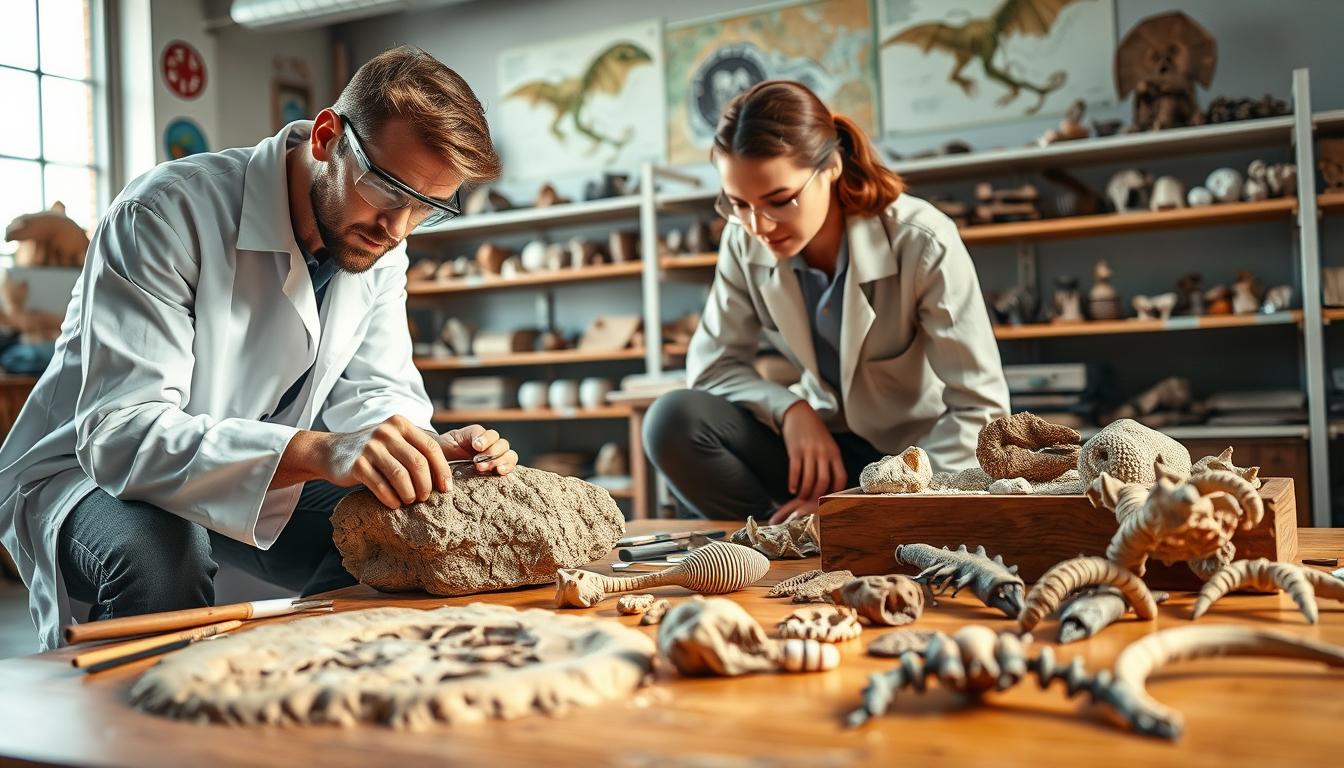
Paleontologists use many tools and methods. Fossil excavation is key. It involves digging up fossils carefully.
After digging, fossils are cleaned and studied. New tech like CT scans helps analyze them. This tech also lets scientists make detailed fossil models.
The Scientific Method in Paleontological Studies
The scientific method is key in paleontology. It guides how scientists study fossils. They start with ideas, then test them with more research.
This careful method makes sure findings are based on solid evidence. It helps scientists learn about ancient life and Earth’s history.
A Brief History of Paleontological Discoveries
The history of finding fossils is full of exciting moments. It spans centuries, with big discoveries that changed how we see Earth’s past. From dinosaur bones to the geological time scale, paleontology has grown into a complex science.
Early finds and guesses started paleontology. Dinosaur bones have amazed people for ages. The first dinosaur fossils were found in the 17th century in England. Robert Plot thought they were from giant humans or biblical giants.
But it took the 19th century to see dinosaurs as their own group of ancient animals.
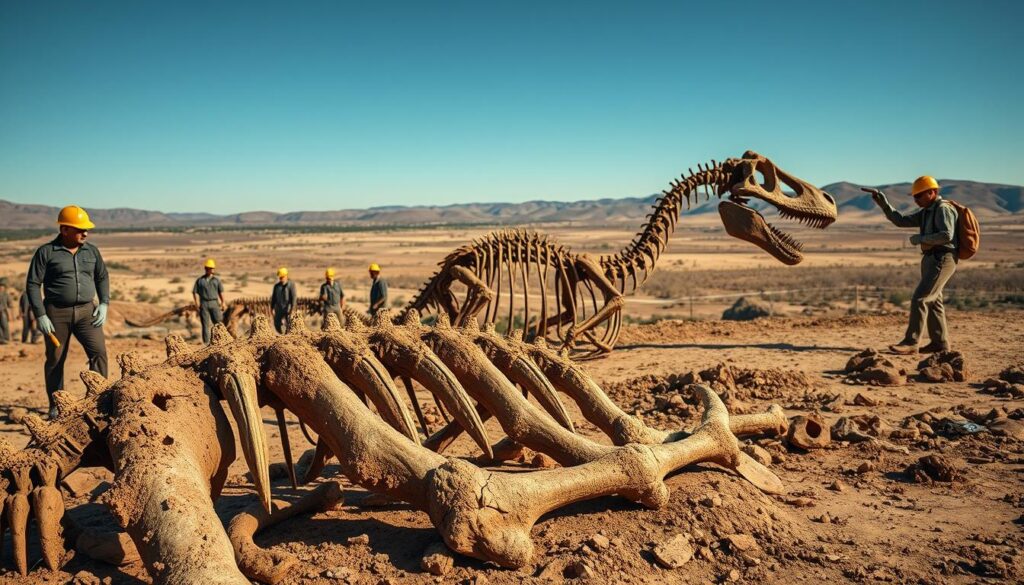
Big discoveries have really changed paleontology. The geological time scale helped scientists place fossils in time. This helped us understand Earth’s history, like mass extinctions and life’s evolution. Many paleontologists have helped us learn about Earth’s past.
Early Fossil Findings and Interpretations
Early fossil finds were often doubted but also sparked curiosity. As paleontology grew, so did how we understand fossils. Studying fossils has given us key insights into Earth’s history, like how life evolved and our planet changed.
- Dinosaur fossils have been key in paleontology, showing us about these ancient creatures’ biology and habitats.
- The geological time scale has helped scientists place fossils in time, giving us a bigger picture of Earth’s history.
Revolutionary Discoveries That Shaped the Field
Some finds have really changed paleontology, changing how we see Earth’s history. For example, finding feathered dinosaurs in China has changed what we know about dinosaurs. It shows dinosaurs and birds are connected.
| Discovery | Year | Significance |
|---|---|---|
| Dinosaur fossils | 17th century | First proof of ancient creatures |
| Geological time scale | 19th century | Time framework for Earth’s history |
| Feathered dinosaurs | Late 20th century | Proof dinosaurs and birds are related |
Notable American Contributions to Paleontology
American scientists have greatly helped paleontology. Their work, like that of Othniel Charles Marsh and Edward Drinker Cope, has shown us a lot about ancient life. Their discoveries have helped us understand how life evolved.
Their work keeps influencing science today. Scientists keep building on what came before to learn more about Earth’s history.
What Is Paleontology and How It Relates to Fossil Hunting
Paleontology is all about studying fossils. It’s a field that mixes adventure with science. Many people find it fascinating because it’s connected to fossil hunting.
Amateur Fossil Hunting: Getting Started
Starting with fossil hunting is exciting. First, learn about paleontology and the fossils you might find.
- Identify possible fossil spots: Look for places with exposed rocks like riverbanks and cliffs.
- Get the right tools: A hammer, hand lens, and brush can help.
- Find a fossil hunting group: Joining can teach you a lot.
Popular Fossil Hunting Locations in the United States
The U.S. has many great places for fossil hunting. Each spot has its own special features.
| Location | Geological Period | Common Fossils |
|---|---|---|
| Badlands, South Dakota | Oligocene | Mammals, early horses |
| Dinosaur National Monument, Utah/Colorado/Wyoming | Jurassic | Dinosaur bones |
| Gulf Coast, Texas to Florida | Cretaceous | Ammonites, marine reptiles |
Ethical Considerations and Legal Regulations
When fossil hunting, always follow the law and be respectful.
- Get the right permits: Make sure you have permission to collect fossils.
- Respect private property: Never take fossils without permission from the landowner.
- Report important finds: Tell scientists about big discoveries to help preserve them.
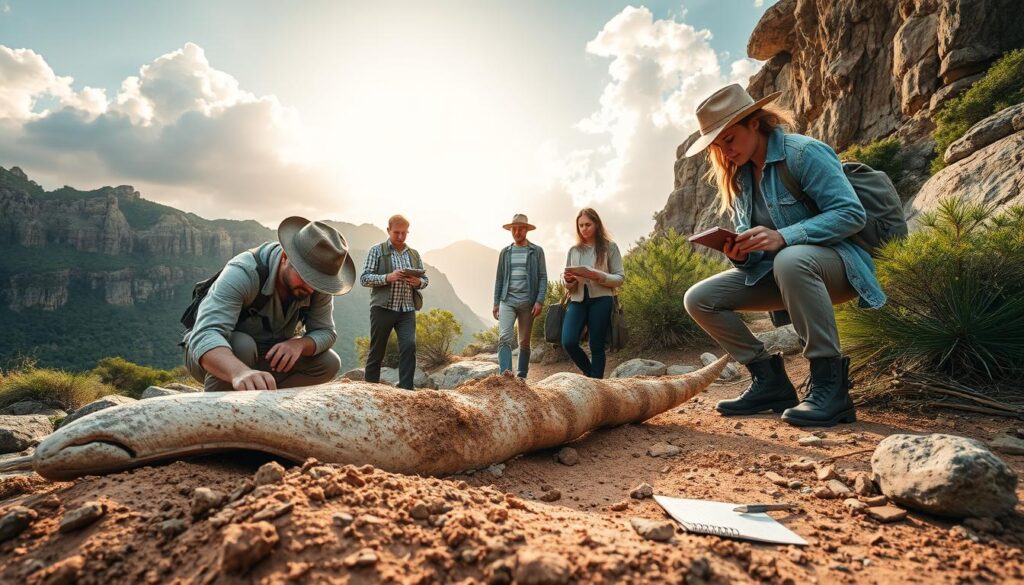
The Scientific Importance of Fossil Discoveries
Fossil discoveries have changed how we see the past. They let us peek into Earth’s history. The study of fossils, or paleontology, helps us understand how life evolved and the timeline of Earth.
Reconstructing Prehistoric Ecosystems
Fossils help us build pictures of ancient worlds. They show how life and its surroundings worked together. For example, fossilized dinosaur tracks tell us about these giants’ lives.
Key steps in building these pictures include:
- Looking at fossils to learn about old food chains
- Studying where fossils are found to figure out ancient places
- Using fossils to see how past climate changes affected life
Fossils and the Geological Time Scale
Fossils are key to understanding Earth’s timeline. They help scientists date rocks and learn about Earth’s past. For instance, fossil species help us know when rocks were formed and what the climate was like.
The timeline is split into big chunks:
- The Precambrian eon, from Earth’s start to about 541 million years ago
- The Phanerozoic eon, with the Paleozoic, Mesozoic, and Cenozoic eras
How Fossils Inform Evolutionary Biology
Fossils have greatly helped us understand how life evolved. By studying fossils, scientists see patterns of change and learn about life’s history. For more on paleontology, check outNational Geographic’s Paleontology Resource.
Some important findings in evolution include:
- Discoveries of transitional fossils show how species evolved
- Studying fossilized embryos helps us understand ancient development
In summary, fossils have greatly changed our view of the past and evolution. By studying fossils, scientists keep learning about Earth’s history and how life and environments interact.
[link-whisper-related-posts]Conclusion: The Enduring Significance of Paleontology
Paleontology is the study of fossils and ancient life. It fascinates scientists and the public. Through fossil excavation and research, we learn about Earth’s history and life’s evolution.
This field helps us understand how life and environments interacted over millions of years. Paleontology is key for knowing how life on Earth became so diverse. It tells us about evolutionary biology.
By studying fossils, scientists can build pictures of ancient worlds. They track species changes and understand past environmental impacts. This knowledge helps us face today’s environmental issues and predict future ones.
Exploring the fossil record shows us how vital it is to protect our natural heritage. We must safeguard fossil sites and promote safe excavation. This way, future generations can learn from the past.
FAQ
What is paleontology?
Paleontology is the study of fossils and ancient life. It helps us understand Earth’s history.
How does paleontology relate to fossil hunting?
Paleontology and fossil hunting go hand in hand. Fossils are key for scientists. Hunting for fossils helps find new ones.
What is the significance of dinosaur bones in paleontology?
Dinosaur bones are very important. They tell us about dinosaurs’ evolution, diversity, and extinction. They also help us see what ancient ecosystems were like.
What is the geological time scale, and how is it used in paleontology?
The geological time scale divides Earth’s history into parts. It helps scientists date and understand fossils.
How do paleontologists reconstruct prehistoric ecosystems?
Scientists use fossils to build pictures of ancient worlds. They look at what fossils show about life back then.
What are some popular locations for fossil hunting in the United States?
In the U.S., the Badlands of Montana and Utah’s fossil rocks are great spots. North Carolina’s coastal plain is also popular.
What are the ethical considerations and legal regulations surrounding fossil hunting?
Fossil hunting has rules to follow. These include laws about private and public lands. Scientists must follow these rules and think about the ethics of their work.
How do fossils inform our understanding of evolutionary biology?
Fossils show us how life has changed over time. They help scientists understand how different life forms evolved. This gives us insights into life’s diversity.

Subscribe to Our Newsletter