Starting a rockhounding adventure is exciting. It mixes exploration with discovery. For newcomers, knowing the basics is key to enjoying it.
Rockhounding means looking for and collecting rocks, minerals, and fossils. You can find them in places like streams, mountains, and fields. This hobby lets you connect with nature and learn about geology.
Starting rockhounding is easy. You need little gear and a desire to learn. Beginners should look up local spots known for their geology. They can also join clubs to learn from others.
Key Takeaways
- Rockhounding is a hobby that involves collecting rocks, minerals, and fossils.
- It requires minimal equipment and offers a chance to connect with nature.
- Researching local geological sites and joining community groups can enhance the experience.
- Understanding the basics of geology can add depth to the hobby.
- Rockhounding is a great way to explore the outdoors and learn about the natural world.
Getting Started in the World of Rockhounding
Starting your rockhounding journey is exciting. It’s full of discovery and adventure. Beginners need a good base of knowledge about this hobby.
Defining Rockhounding and Its Appeal
Rockhounding is collecting rocks, minerals, and fossils. It’s loved for mixing science, exploration, and adventure. Rockhounding lets people connect with nature and learn about geology.
Basic Terminology Every Beginner Should Know
Knowing basic terms is key for beginners. Important words include:
- Mineral: A naturally occurring solid with a specific chemical makeup.
- Rock: A solid mass of mineral material found naturally.
- Fossil: Remains or traces of animals, plants, or organisms preserved.
For more info, check out rockhounding.org to start your journey.
Setting Realistic Expectations for Your New Hobby
It’s important to set realistic goals for rockhounding. Beginners should know:
- Finding rare items takes time and patience.
- You’ll need to invest in gear and learn.
- Rockhounding is both an outdoor adventure and a scientific study.
Understanding these points helps beginners enjoy their hobby more. They can make better choices about their rockhounding journey.
Essential Equipment for the Novice Collector
Starting as a rockhound means you need the right tools. The right gear helps you find and collect rocks. It also keeps you safe and comfortable while exploring.
Basic Tools You Can’t Do Without
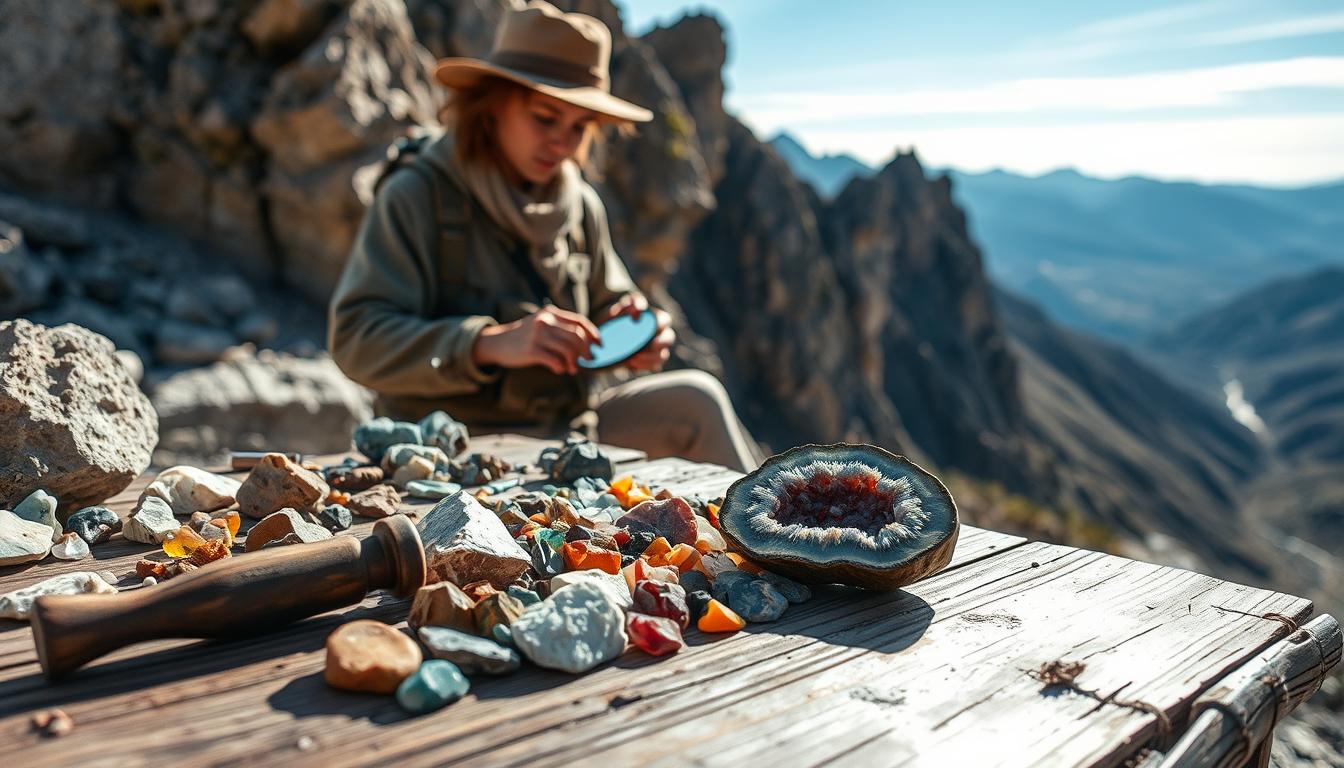
Every rockhound needs basic tools. A rock hammer is key for breaking rocks. A hand lens or magnifying glass lets you see details closely. A geologist’s pick is useful for detailed work. These tools are must-haves for any rock collecting trip.
Field Gear for Comfort and Safety
Field gear keeps you comfortable and safe. Sturdy hiking boots and protective clothing are important for rough terrains. Safety goggles and gloves protect you from flying rocks or sharp edges.
Budget-Friendly Starter Kits vs. Individual Purchases
Novice collectors often choose between starter kits and buying individual items. Starter kits are affordable and include essential tools. Buying individual items lets you customize based on your needs. Start with a starter kit and add more gear as you learn.
What Every New Rockhound Should Know About Safety
Rockhounding is fun but can be dangerous. Knowing how to stay safe makes it more enjoyable. It’s important for new rockhounds to understand safety.
Personal Protective Equipment Essentials
Wearing the right gear is key. You need sturdy gloves to protect your hands. Also, safety glasses keep your eyes safe from debris. Don’t forget a first aid kit for quick fixes.
Terrain and Weather Hazards to Watch For
Be careful of your surroundings. Watch out for terrain hazards like loose rocks and steep slopes. Also, be cautious of lightning and extreme temperatures.
Always check the weather before you go. Being ready for changes is important.
First Aid Preparedness for Field Excursions
Having a good first aid kit is essential. Knowing how to use it can save the day. Learn basic first aid for cuts, bruises, and sprains.
For more tips on rockhounding and safety, visit rockhounding for beginners.
| Safety Equipment | Purpose |
|---|---|
| Sturdy Gloves | Protect hands from sharp edges and abrasions |
| Safety Glasses | Prevent eye injuries from debris |
| First Aid Kit | Treat minor injuries promptly |
Finding Your First Collection Sites
Finding your first collection sites can be exciting and a bit scary. But, with the right help, you can start your gemstone hunting journey well. The secret to a great rockhounding experience is being well-prepared and doing your research.
Researching Local Geology and Promising Locations
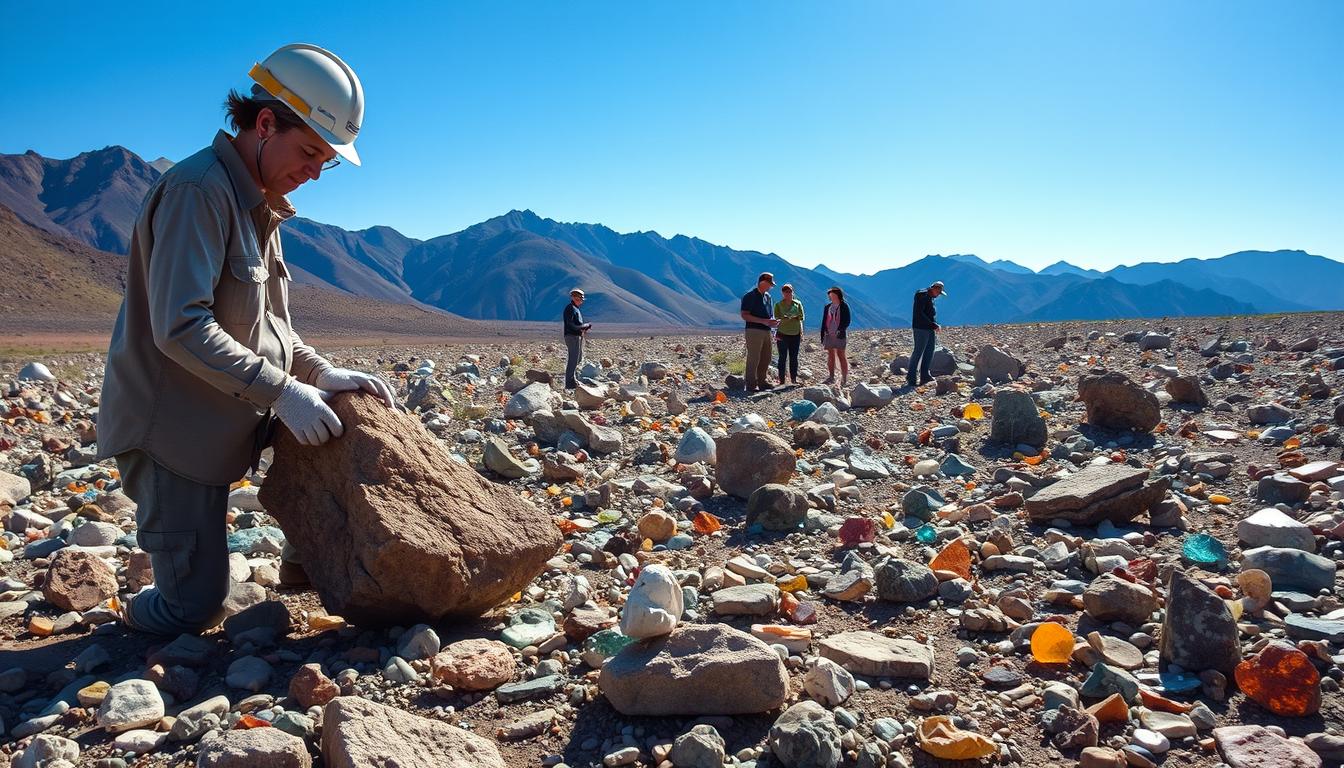
Knowing the local geology is key to finding good collection sites. Places with different rock types often have lots of minerals and gems. Start by looking at rockhounding guides and geological maps. They can show you where to find minerals.
Look for these geological features:
- Rock outcrops and exposures
- Streams and rivers where gems and minerals may have been deposited
- Areas known for historical mining activities
Public vs. Private Land: Access and Permissions
It’s important to know the difference between public and private land. Public lands usually let you rockhound in certain areas. But, private lands need permission from the owner.
| Land Type | Access | Permission Needed |
|---|---|---|
| Public Land | Generally accessible | No, but follow local regulations |
| Private Land | Restricted | Yes, obtain permission from landowner |
Digital Resources and Apps for Location Scouting
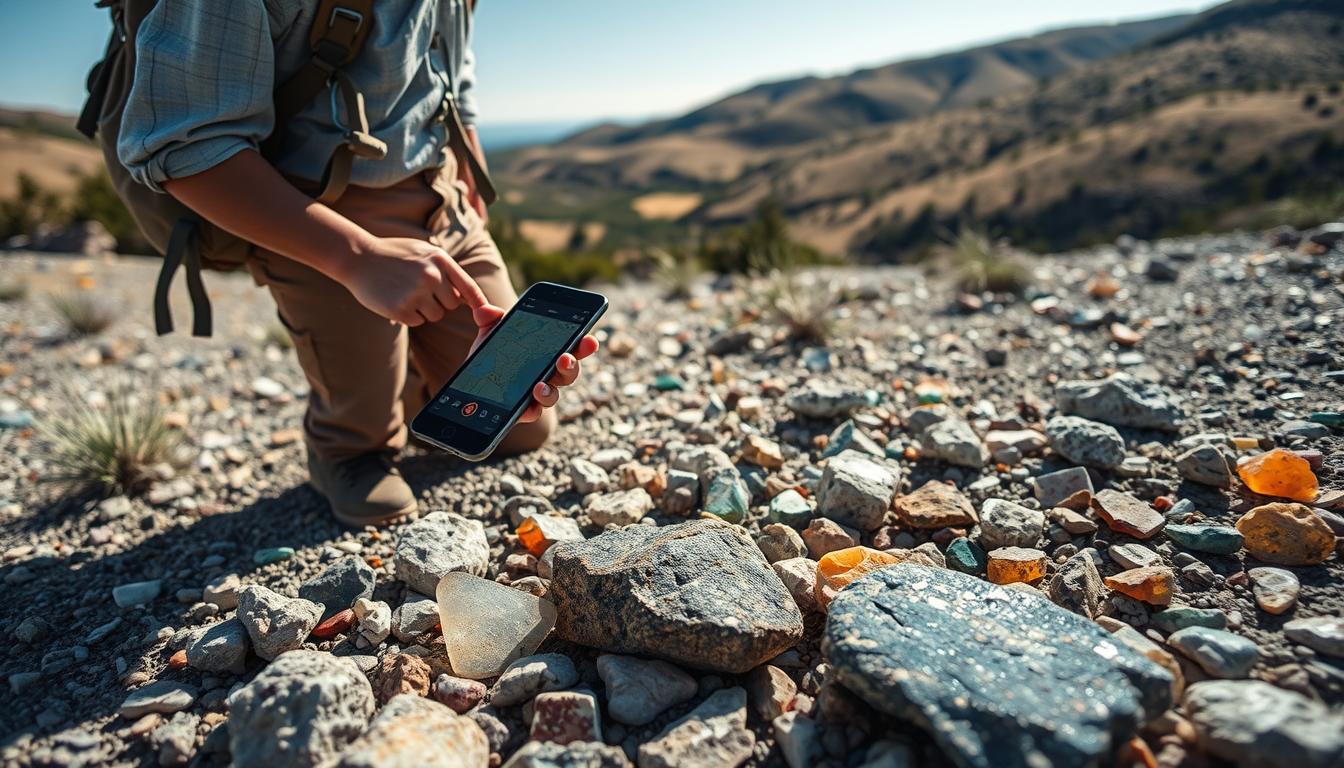
Today, there are many digital tools to help find collection sites. Mobile apps and online forums offer great tips and insights. They can help you find the best places to rockhound.
By using these digital tools and following beginner tips, you can make your rockhounding better. You’ll have a better chance of finding valuable gems.
Rock Identification Techniques for Beginners
Rockhounding is more than just collecting rocks. It’s about knowing what you’ve found. Learning rock identification techniques makes the hobby more fun and rewarding.
Visual Identification: Color, Luster, and Texture
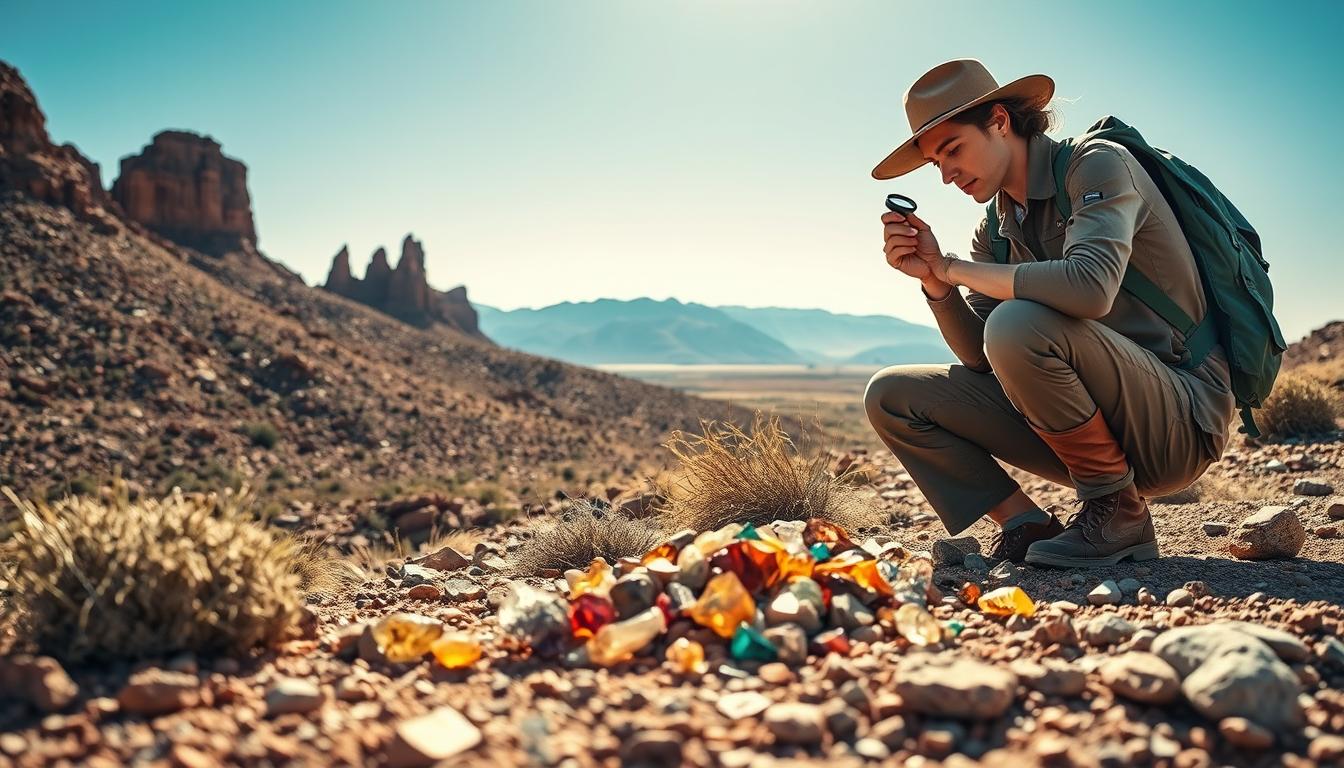
Seeing is the first step to figuring out a rock or mineral. Look at the color, luster, and texture. Color can be tricky because of weathering or dirt. Luster shows how light hits the surface, from shiny to dull. Texture tells you if it’s smooth, rough, or glassy.
Physical Tests: Hardness, Streak, and Specific Gravity
There are tests beyond just looking. The hardness test shows how well a mineral scratches. The streak test scratches it on a plate to see the powder color. Specific gravity checks the mineral’s density compared to water.
Common Minerals and Rocks You’ll Likely Encounter
When you start, you’ll see minerals like quartz, feldspar, and mica. You’ll also find rocks like granite, basalt, and sandstone. Knowing these common types helps you learn rock identification. It makes you better at figuring them out in the field.
Legal and Ethical Considerations in Rockhounding
Rockhounding is becoming more popular. It’s important for fans to know the laws and ethics of this hobby. Rockhounding is not just about finding rocks and minerals. It also means respecting the law, nature, and cultural sites.
Understanding Collection Limits and Restrictions
Every place has its own rules for collecting rocks and minerals. Some places might not let you collect anything because of the environment or cultural reasons. It’s key to know these rules to stay out of trouble. Always check local laws and get the right permits before you start collecting.

Environmental Stewardship and Leave No Trace Principles
Rockhounding should not harm the environment. Rockhounds should follow Leave No Trace principles. This means not disturbing nature, not taking too much, and leaving the area as you found it. This way, we can keep places beautiful for others to enjoy in the future.
Respecting Indigenous and Historical Sites
Many places where you can rockhound are also important culturally or historically. It’s important to not take artifacts or damage these sites. Rockhounds should know the cultural value of their spots and follow any rules to protect them.
By keeping these rules in mind, rockhounds can have fun while helping to preserve our world and its history.
Building Your Knowledge Base
Rockhounding is more fun when you know a lot about rocks and minerals. There’s always something new to learn. This hobby is all about discovery.
Essential Books and Field Guides for Beginners
For beginners, a few key books and guides are very helpful. They teach you how to identify minerals and understand geology. For example, irocks.com has great resources for newbies.
| Book Title | Author | Description |
|---|---|---|
| Peterson Field Guide to Rocks and Minerals | Frederick H. Pough | A guide to identifying rocks and minerals. |
| Rockhounding: A Guide to Finding and Collecting Rocks, Minerals, and Fossils | David W. Levering | Teaches the basics of rockhounding and where to find specimens. |
Online Communities and Forums for Learning
The internet has many forums and communities for rockhounding. They offer lots of information and a chance to meet other collectors. Sites like Mindat.org and Reddit’s r/Rockhounding are great places to learn and share.
Local Clubs and Societies Worth Joining
Joining a local rockhounding club is a great idea. It lets you meet other fans, go on field trips, and learn by doing. Clubs have meetings, workshops, and events that can really help you grow.
- Go to local gem and mineral shows to meet collectors.
- Join field trips to get hands-on experience.
- Use online forums for your local club to keep up with news and finds.
Caring for Your Growing Collection
Keeping your rock collection in top shape needs careful attention. As you add more rocks, make sure they’re clean, stored right, and documented well.
Cleaning and Preparing Your Finds
Cleaning rocks is a gentle task. Use soft brushes and mild soap to get rid of dirt. For tough spots, a soft toothbrush or rock cleaner might help.

Storage Solutions to Preserve Specimens
Storing rocks right is key to keeping them safe. Use acid-free paper, strong boxes, or display cases. Keep them away from sunlight and moisture to avoid damage.
Labeling and Cataloging Best Practices
Good labeling and cataloging help you keep track of your rocks. Use strong labels and make a digital catalog. Include details like where it’s from, its type, and any notes.
By following these rock collecting tips, your collection will stay in great shape. It will keep bringing you joy for many years.
Taking Your Hobby to the Next Level
To take your rockhounding to the next level, think about getting specialized equipment and learning lapidary arts. As you get better, the right tools and skills will make your hobby even more fun.
Specialized Equipment for Advanced Collecting
Advanced rockhounds use specialized gear like geological hammers, rock saws, and ultraviolet lamps. These tools help you identify and prepare specimens better. For example, a rock saw cuts through hard minerals, and an ultraviolet lamp shows hidden features.
- Geological hammers for precise breaking
- Rock saws for cutting through tough specimens
- Ultraviolet lamps for identifying fluorescent minerals
Lapidary Arts: Cutting, Polishing, and Beyond
Lapidary arts are about cutting, grinding, and polishing stones to show their beauty. This not only makes your specimens look better but also helps you understand them better. Getting a lapidary kit or going to workshops is a good way to learn this.
Important lapidary techniques include faceting, cabbing, and carving. Each one needs special tools and skills, but the results are worth it.
From Hobbyist to Expert: Educational Pathways
For deeper knowledge, many educational paths are open. You can take online courses, geology classes, or rockhounding workshops. Joining local clubs or societies also offers mentorship and hands-on learning.
By mixing practical experience with formal learning, you can turn your hobby into a career. You’ll get essential rockhounding advice too.
[link-whisper-related-posts]Conclusion
Starting a rockhounding hobby is exciting and rewarding. You need the right tools, knowledge, and attitude. Now, you’re ready to explore geology and find hidden treasures.
Rockhounding is more than a hobby. It lets you learn about Earth’s history and enjoy its beauty. By following this guide, you’re on your way to enjoying this hobby.
Remember to care for the environment and follow rules as you rockhound. Keep learning about geology. Each find will grow your collection and your love for nature.
So, get your gear and field guides ready. Your rockhounding adventure is waiting. It’s full of wonder and discovery.
FAQ
What is rockhounding, and how do I get started?
Rockhounding is collecting rocks, minerals, and gemstones. Start by learning geology basics. Then, get the right tools and find local spots to collect.
What are the essential tools for rockhounding?
You’ll need a geologist’s hammer, hand lens, and rock chisels. Don’t forget a sample container. Also, wear gloves and safety glasses for protection.
How do I identify the rocks and minerals I find?
Look at color, luster, and texture to identify rocks. Do hardness and streak tests too. Use field guides and online resources for help.
Where can I find collecting sites?
Look up local geology and use online resources. Join rockhounding clubs for tips. Know the rules for public and private lands.
What are some common hazards to watch out for while rockhounding?
Watch for steep slopes and bad weather. Also, be careful of health risks like dehydration and toxic minerals.
How do I care for my rock collection?
Clean and store your rocks in a dry place. Label and catalog them. Use display cases and boxes for storage.
Are there any laws or regulations I need to be aware of while rockhounding?
Yes, know about collection limits and environmental rules. Respect indigenous and historical sites. Always follow local laws and best practices.
How can I continue learning and expanding my knowledge of rockhounding?
Read books and field guides. Join online forums and local clubs. This will help you learn more.
What are some ways to take my rockhounding hobby to the next level?
Get specialized equipment and try lapidary arts. Take geology courses or get certified. This will enhance your hobby.
Can I make a profit from rockhounding?
Some sell their finds, but it’s not the main goal. Enjoy collecting first. Always follow local sale rules.

Subscribe to Our Newsletter