Rockhounding can be dangerous if you don’t follow safety rules. The Arizona State Mine Inspector’s Office says many rockhounds in Arizona got hurt or even died. This happened because they ignored basic safety steps.
To have fun and stay safe while rockhounding, you need to know the dangers. By following rockhounding safety advice, you can lower your chances of getting hurt. This way, you can enjoy rockhounding without worrying about safety.
Key Takeaways
- Be aware of your surroundings while rockhounding.
- Follow safety guidelines to minimize risks.
- Take necessary precautions to avoid accidents.
- Stay informed about possible dangers.
- Enjoy rockhounding while keeping a safe space.
Understanding the Risks of Rockhounding
Rockhounding is a fun hobby but it has many dangers. You might use heavy tools, walk on rough ground, and go to far-off places. This can lead to accidents and injuries.
Common Hazards in Different Rockhounding Environments
Each place for rockhounding has its own dangers. Knowing these risks helps you stay safe. It’s key for rock hunting safety tips and rockhounding hazard prevention.
Quarry and Mine Hazards
Quarries and mines are very dangerous. They have unstable rocks, deep holes, and old equipment. Be careful of loose rocks and steep areas.
Beach and Coastal Collection Risks
Beaches and coasts have slippery rocks, strong currents, and changing tides. Always know the tide times and watch the weather.
Mountain and Desert Dangers
Mountains and deserts have extreme weather, tough terrain, and wild animals. Stay hydrated and be ready for sudden changes.
Statistics on Rockhounding Accidents and Injuries
There aren’t many stats on rockhounding accidents. But mining and hiking get a lot of injuries each year. For more info, check out Oakrocks.net on rockhounding dangers and safety.
| Environment | Common Hazards | Safety Measures |
|---|---|---|
| Quarry/Mine | Unstable rock, deep pits | Wear protective gear, stay alert |
| Beach/Coastal | Slippery rocks, strong currents | Check tide times, watch weather |
| Mountain/Desert | Extreme weather, wildlife | Stay hydrated, be prepared |
Why Safety Should Be Your Top Priority
Rockhounding can be risky. So, safety should always come first. Be ready, use the right tools, and know about dangers.
Essential Preparation Before Your Rockhounding Trip
Before you go on a rockhounding trip, getting ready is very important. It makes sure you have a safe and fun time. You need to take a few key steps to avoid dangers and enjoy your adventure.
Researching Your Destination
Looking up your destination is a big part of getting ready. You need to find out about the place you’ll visit.
Topographic Maps and Geological Information
Getting topographic maps and knowing the geological information is very helpful. It shows you where to find rocks and where to stay away. The Bureau of Land Management has great resources for this.
Local Hazard Awareness
Knowing about local dangers is key. Things like wildlife, steep areas, and weather are important. Knowing these helps you stay safe.
Weather Considerations and Planning
Always check the weather forecast before you go. The weather can change your trip. Planning for good weather helps you stay safe and happy.
Creating a Trip Itinerary and Sharing Your Plans
Make a detailed plan for your trip and tell someone. This way, someone knows where you are and when you’ll be back.
Emergency Contact Protocols
Setting up emergency contact protocols is part of planning. Leave your plan with someone you trust. Make sure you can talk to someone during your trip.
Must-Have Safety Equipment for Rockhounds
The thrill of rockhounding can quickly turn to danger without proper safety precautions. Rockhounds must be well-prepared with the right safety equipment. This ensures a safe and enjoyable experience.
Protective Gear
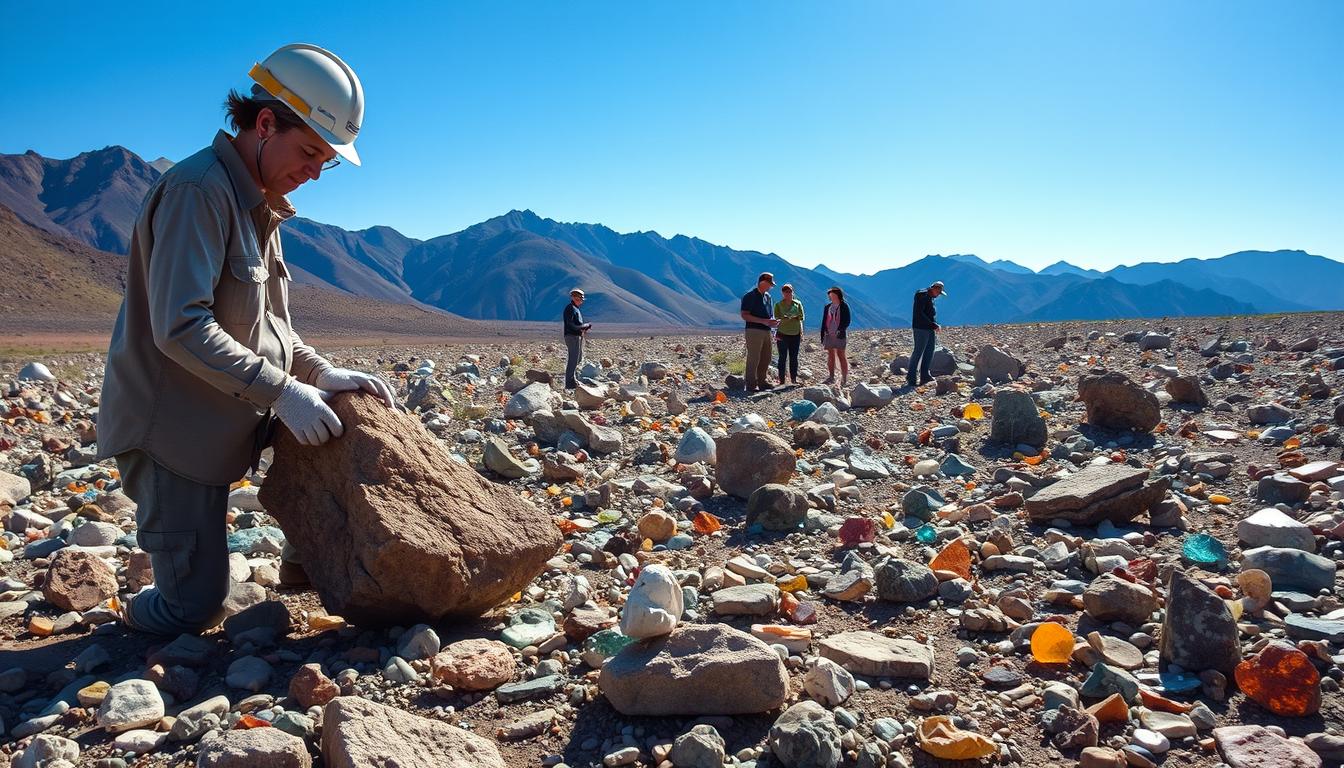
Protective gear is essential for safeguarding against injuries. The Arizona State Mine Inspector’s Office recommends that rockhounds wear protective gear. This includes safety glasses, hard hats, and gloves.
Helmets and Hard Hats
Helmets and hard hats protect the head from falling rocks and debris. They are a key piece of safety equipment. This is because of the risk of falling rocks in unstable areas.
Gloves and Hand Protection
Gloves provide hand protection from sharp edges and extreme temperatures. They also improve grip on tools. This reduces the risk of accidents.
Eye and Face Protection
Safety glasses and face masks protect the eyes and face from flying particles. They are vital when using power tools or working in dusty environments.
First Aid Supplies
A first aid kit is a must-have for any rockhounding trip. It should include essential medical items and emergency medications.
Essential Medical Items
Basic first aid items include bandages, antiseptic wipes, pain relievers, and any personal medications.
Emergency Medications
It’s also wise to carry emergency medications. This includes epinephrine auto-injectors for severe allergic reactions.
Navigation and Communication Tools
Navigation and communication tools are critical. They help rockhounds stay on track and call for help in case of an emergency.
GPS Devices and Maps
GPS devices and detailed maps help rockhounds navigate through unfamiliar terrain.
Emergency Beacons and Radios
Emergency beacons and two-way radios enable rockhounds to communicate with their group. They can also call for help when needed.
| Safety Equipment | Purpose |
|---|---|
| Helmets and Hard Hats | Head protection from falling rocks and debris |
| Gloves | Hand protection from sharp edges and extreme temperatures |
| Safety Glasses | Eye protection from flying particles |
| First Aid Kit | Treating minor injuries and preventing infections |
| GPS Devices and Maps | Navigation through unfamiliar terrain |
| Emergency Beacons and Radios | Communication and emergency response |
By equipping themselves with the necessary safety equipment, rockhounds can significantly reduce risks. They can enjoy a safer, more fulfilling experience.
Proper Clothing and Footwear for Safe Rockhounding
Rockhounding safety starts with the basics. You need the right clothes and shoes for the terrain and weather. The right outfit makes you comfortable and keeps you safe from accidents.
Dressing for Different Terrains and Weather Conditions
The terrain and weather affect what you should wear. Rocky areas need sturdy clothing to avoid cuts. Wet places require waterproof gear.
The WSMGS Field Trip guide says to dress right for safety. For more tips, check out American Geode’s guide on rockhounding attire.
Importance of Sturdy Footwear
Sturdy shoes are key for rockhounding safety. They support and protect your feet on tough terrains.
Ankle Support and Traction Features
Footwear with adequate ankle support and traction features is vital. They help prevent slips and falls on rough ground.
Waterproof Options for Wet Environments
In wet places, waterproof footwear keeps your feet dry. It makes your rockhounding trip better and prevents trench foot.
Layering Strategies for Changing Conditions
Layering clothing helps you adjust to weather changes. It keeps you comfortable and safe in any environment.
Tips for Staying Safe While Rockhounding in Remote Areas
Rockhounding in remote areas is exciting but needs careful planning. It’s important to know the risks and take steps to stay safe.
Buddy System Benefits
Using the buddy system is a great way to stay safe. Having a friend with you means you can help each other in emergencies. It also lowers the risk of getting lost or hurt.
Emergency Communication Options
In remote places, being able to call for help is key. Satellite phones and Personal Locator Beacons (PLBs) are essential for emergency calls. Even though cell phone boosters can help, they might not work in very remote spots.
Satellite Phones and Personal Locator Beacons
Satellite phones let you call emergency services even without cell service. PLBs send a distress signal to help you get rescued.
Cell Phone Signal Boosters
If there’s some cell service, boosters can make calls easier. This is helpful for getting help when needed.
Creating Emergency Response Plans
It’s vital to have an emergency plan. This includes knowing evacuation routes and where to meet if you get lost.
Evacuation Routes
Knowing the best way out is key for quick escapes in emergencies.
Meeting Points and Check-in Procedures
Setting meeting points and checking in regularly helps keep everyone safe. It makes sure everyone is found if someone gets lost.
By being prepared and following these tips, rockhounding in remote areas can be both safe and fun.
Safe Tool Usage and Proper Rockhounding Techniques
Using the right tools and techniques is key for a safe rockhounding trip. Rockhounds need to know how to use different tools. They also need to know the best ways to do various rockhounding tasks.
Handling Hammers, Chisels, and Other Tools
Rockhounds must be careful and precise when using tools like hammers and chisels. Proper striking techniques are important. They help avoid accidents and get the job done right.
Proper Striking Techniques
To strike safely and effectively, rockhounds should:
- Hold the hammer or chisel correctly, ensuring a firm grip.
- Keep their eyes on the striking point.
- Avoid striking at an angle that could cause the tool to slip.
Tool Selection for Different Materials
It’s important to pick the right tool for the job. Different materials need different tools. For example, a geologist’s hammer is great for breaking rocks. A chisel is better for getting fossils or specimens out of rock.
Proper Digging and Extraction Methods
Digging and extracting rocks or fossils can be dangerous if not done right. Rockhounds need to know the risks and take precautions.
Preventing Cave-ins and Collapses
To avoid cave-ins and collapses, rockhounds should:
- Check the ground’s stability before digging.
- Use shoring or other support when needed.
- Never dig alone or without telling others where they are.

Tool Maintenance for Safety
Keeping tools in good shape is important for safety. Dull or damaged tools can cause accidents. Rockhounds should check their tools often, keep them clean, and store them right.
By following these tips and being careful, rockhounds can have a safe and fun rockhounding adventure.
Environmental Awareness and Hazard Recognition
Knowing the environment is key for rockhounding safety. It helps spot dangers. Rockhounds need to watch for unstable ground, wildlife, and weather risks.
Identifying Unstable Ground and Rock Formations
Exploring rock formations means looking for signs of instability. Look for cracks, loose rocks, and uneven terrain.
Warning Signs of Possible Collapses
Areas with erosion or recent rockfalls are risky. They might collapse.
Safe Distances from Cliff Edges
Stay far from cliff edges to avoid falls. The safe distance depends on the terrain. But, a good rule is to keep at least 6 feet away.
Wildlife Safety Considerations
Rockhounds should know about local wildlife. This includes snakes, insects, and big animals. It’s important to know how to act when you meet wildlife.
Snake and Insect Awareness
Be careful of snakes and insects in rocky spots and underbrush. Wear clothes that protect you.
Large Animal Encounters
In places with big animals, make noise while you’re rockhounding. This helps avoid surprises. If you meet an animal, back away slowly.
Weather Hazards to Watch For
Weather can turn bad fast. Keep an eye out for flash floods and lightning storms.
Flash Flood Dangers
Flash floods can happen quickly in low spots. Check the weather forecast and stay away during heavy rain.
Lightning Safety
When there’s lightning, don’t be in open spots or near tall things. Find shelter right away.
Health Considerations for Rockhounding Expeditions
Rockhounding trips can be tough and need careful health steps for safety and fun. It’s important to stay hydrated and fed, protect from the sun, and manage how hard you work.
Staying Hydrated and Nourished
Drinking enough water and eating right keeps your energy up. The Bureau of Land Management (BLM) says to bring good water cleaners and food that gives lots of energy.
Water Purification Methods
Clean drinking water is key. Water purification tablets or filters make sure water from nature is safe. This is very important in places far from home where water might not be good.
Energy-Dense Food Options
Carry energy-dense foods like nuts, dried fruits, and jerky to keep your energy up. These foods are good for you, light, and easy to carry.
Sun Protection and Heat-Related Illness Prevention
It’s very important to protect yourself from the sun and heat, more so in open or desert areas. Wear the right clothes, use sunscreen, and drink lots of water to avoid getting sick from the heat.
Recognizing Heat Exhaustion and Heatstroke
Knowing the signs of heat exhaustion and heatstroke is critical. Look out for dizziness, nausea, and headaches. If you or someone with you feels these, find shade, rest, and drink water right away.
Managing Physical Exertion and Fatigue
It’s important to control how hard you work on your rockhounding trip. This means lifting right and not pushing too hard.
Proper Lifting Techniques
Using proper lifting techniques helps avoid back injuries. Bend your knees, keep the load near you, and lift with your legs, not your back.
Rest Schedules and Pacing
Make regular rest schedules and pace yourself to avoid getting too tired. Rest in cool spots and don’t push too hard when it’s hottest.

Safety Considerations for Different Rockhounding Locations
Different places for rockhounding have their own dangers. Rockhounds need to know these dangers to stay safe and have fun.
Quarry and Mine Safety
Quarries and mines are very dangerous. They can have rockfalls and unstable structures. The Arizona State Mine Inspector’s Office says to stay away from abandoned mines because they are very dangerous.
Abandoned Mine Dangers
Abandoned mines have hidden dangers. These include unstable structures, bad air, and hidden shafts. Rockhounds should be careful and not go into these areas.
Quarry Wall Stability Assessment
When rockhounding in quarries, check if the walls are stable. Unstable walls can cause rockfalls, which can be deadly. For more info on quarry safety, check the Arizona State Mine Inspector’s Office Rockhounding.
Beach and Coastal Collection Safety
Rockhounding on beaches and coasts has its own dangers. These include tide-related risks and cliff face hazards.
Tide Awareness
Rockhounds need to know the tide times. Plan your collecting to avoid getting caught in rising waters.
Cliff Face Hazards
Cliff faces can be unstable. Rockhounds should be careful when collecting near cliffs to avoid rockfalls and falls.
Mountain and Desert Rockhounding Safety
Rockhounding in mountains and deserts has its own challenges. These include altitude sickness and desert survival risks.
Altitude Sickness Prevention
Rockhounds should know about altitude sickness in mountains. Stay hydrated and climb slowly to avoid it.
Desert Survival Basics
In deserts, bring enough water, food, and ways to communicate. Services can be far away.
| Location | Primary Hazards | Safety Precautions |
|---|---|---|
| Quarries and Mines | Rockfalls, structural instability | Avoid abandoned mines, assess quarry wall stability |
| Beaches and Coastlines | Tide-related risks, cliff face hazards | Monitor tide times, avoid unstable cliffs |
| Mountains and Deserts | Altitude sickness, desert survival risks | Stay hydrated, bring necessary supplies |
Conclusion: Enjoying Rockhounding Safely
Following safety tips helps rockhounding fans enjoy their hobby safely. It’s important to stay safe to avoid accidents and injuries. Rockhounding can be very rewarding.
We talked about important safety steps like being prepared and using the right gear. Knowing these tips makes rockhounding safe and fun.
Whether you’re new or experienced, being careful is essential. By following these safety rules, you can have a great time rockhounding. You’ll also protect yourself and the environment.
FAQ
What are the most common hazards associated with rockhounding?
Hazards include unstable ground, wildlife, extreme weather, and accidents from tools.
How can I prepare for a rockhounding trip to minimize risks?
Research your destination and check maps and geological info. Plan for weather and create an emergency contact plan for a safe trip.
What safety equipment is essential for rockhounding?
You need protective gear like gloves and safety glasses. Also, first aid supplies, a compass, and a two-way radio are key.
What type of clothing and footwear is recommended for rockhounding?
Choose clothes for the terrain and weather. Wear sturdy shoes and use layers to stay comfortable and safe.
How can I stay safe while rockhounding in remote areas?
Rockhound with a buddy and carry emergency communication tools. Have a plan for emergencies, including evacuation routes and meeting points.
What are some safe tool usage and rockhounding techniques?
Use tools carefully and dig safely. Keep your tools in good shape to avoid accidents.
How can I identify potentially hazardous areas while rockhounding?
Watch for unstable ground and wildlife. Also, keep an eye on the weather to stay safe.
What health considerations should I keep in mind while rockhounding?
Drink water and eat well to stay hydrated and nourished. Protect yourself from the sun and manage your energy to avoid illness.
Are there specific safety considerations for different rockhounding locations?
Yes, each location has its own hazards. Follow safety rules and guidelines for places like quarries, mines, beaches, mountains, and deserts.
How can I stay safe while rockhounding in extreme weather conditions?
Check the weather forecast and be ready for changes. Know how to handle weather dangers like lightning or flash floods.
What are some general tips for staying safe while rockhounding?
Always be aware of your surroundings. Follow safety rules and take precautions to enjoy your rockhounding safely.

Subscribe to Our Newsletter