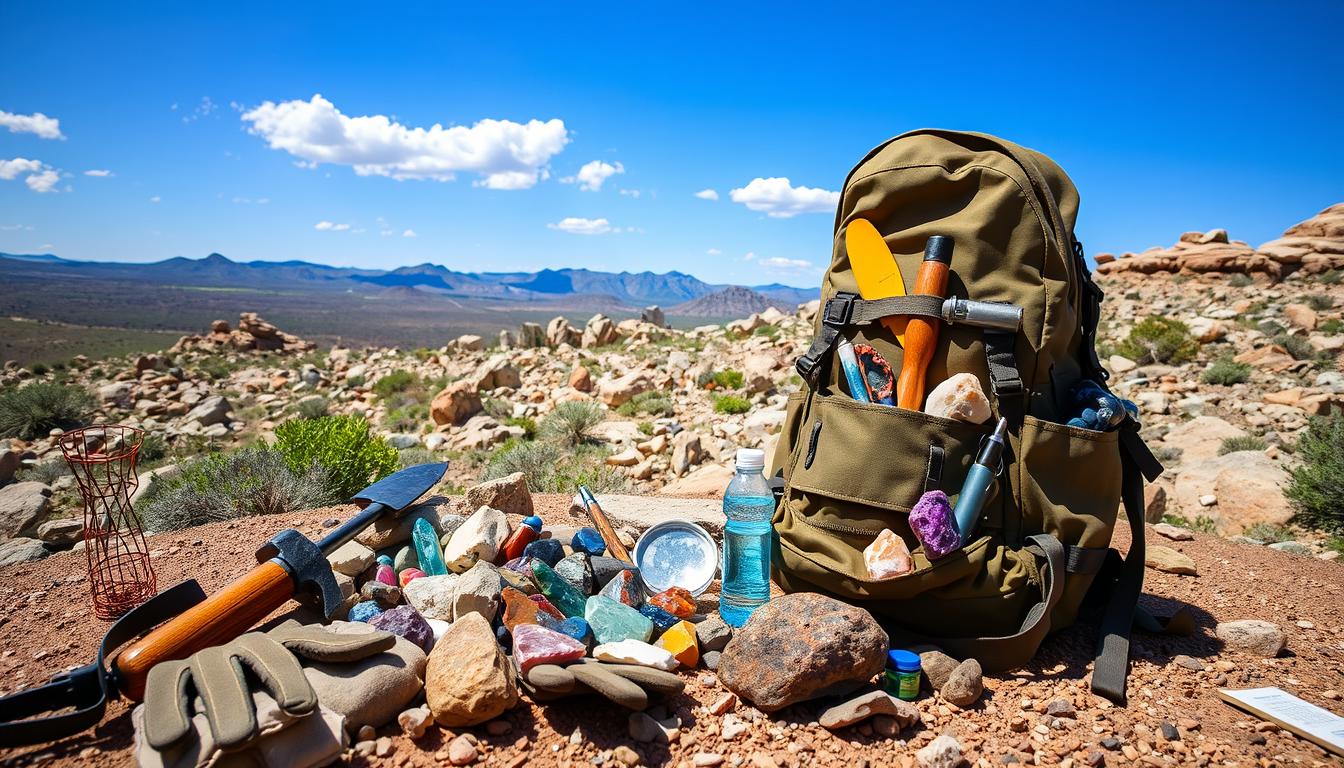
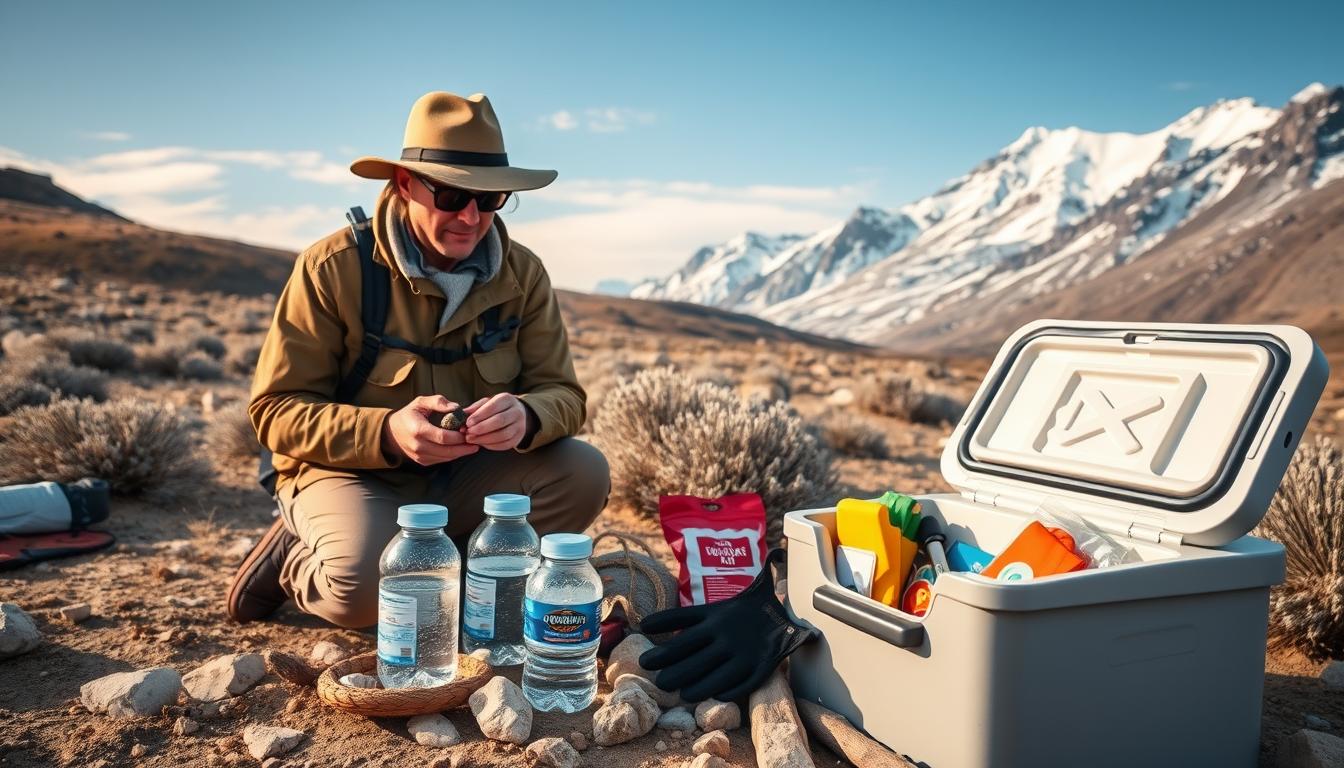
Rockhounding is a hobby where people collect rocks, minerals, and fossils. It lets them find hidden treasures and enjoy nature. But, it can be risky, mainly in extreme weather. Knowing the risks and being careful is key for a safe and enjoyable experience.
Exploring in hot or cold weather requires preparation. For tips on winter rockhounding, check out this guide on winter safety.
Key Takeaways
- Understand the risks associated with extreme weather conditions.
- Take necessary precautions to ensure a safe rockhounding experience.
- Dress appropriately for the weather.
- Bring essential gear and tools.
- Plan your route and itinerary according to weather conditions.
Understanding the Risks of Rockhounding in Extreme Weather
The excitement of rockhounding can quickly turn dangerous if you’re not ready for extreme weather. Rockhounding is about searching for rocks and minerals. It often takes you to rough, far-off places where the weather can change fast.
Weather awareness is key to stay safe while rockhounding. Knowing the weather can help you get ready and make smart choices about your safety.
Common Weather-Related Hazards for Rockhounders
Rockhounding in extreme weather can lead to many dangers, including:
- Dehydration and heatstroke in hot weather
- Hypothermia and frostbite in cold weather
- Flash floods, which can occur with little warning
- Slippery terrain and reduced visibility due to rain or snow
Knowing these risks is the first step to managing them well.
Why Weather Awareness Matters for Rock Collectors
Knowing the weather forecast before you go can greatly lower the risk of bad conditions. Rock collectors should always check the forecast. They should be ready to change their plans if bad weather is coming.
How Weather Affects Terrain and Collection Sites
Weather can change the terrain and how easy it is to get to rockhounding sites. For example, heavy rain can cause landslides or flooding. Snow can make paths hard to see and navigate. Knowing how weather changes the terrain helps rockhounds plan safer, more successful trips.
Essential Rockhounding Safety Tips for Hot and Cold Weather
Safety is key when you’re rockhounding, no matter the weather. This hobby is fun but can be risky, mainly in extreme weather.
Universal Safety Precautions for All Weather Conditions
Before you go, take some basic safety steps. These include:
- Telling someone where you’re going and when you’ll be back
- Carrying a first aid kit and knowing how to use it
- Having enough snacks, water, and a way to call for help
- Being ready for weather changes
These steps are key to staying safe while rockhounding. Always check the weather forecast before you leave and be prepared to adjust your plans.
Planning Your Trip Around Weather Forecasts
Planning is key for rockhounding in bad weather. Look at the weather forecast to avoid danger. Use weather apps to stay updated.
Communication and Emergency Contact Protocols
Having a way to communicate is very important. Make sure your phone is charged. Carry a portable charger or a two-way radio. Also, have a list of emergency contacts, like local authorities and your emergency contact.

First Aid Essentials for Weather-Related Emergencies
A good first aid kit is essential for any rockhounding trip. It should have items for weather-related injuries, like:
- Heat-related illnesses: cool packs, hydration salts
- Cold-related injuries: warm compresses, hypothermia blankets
- General injuries: bandages, antiseptic wipes, pain relievers
Knowing how to use your first aid kit is as important as having it. Take a basic first aid course to be ready for emergencies.
Hot Weather Rockhounding Safety
Rockhounding in hot weather is challenging. It’s important to be safe and prepared. Knowing the risks of heat-related illnesses is key.
Recognizing and Preventing Heat-Related Illnesses
Heat exhaustion and heatstroke are serious dangers. Look out for heavy sweating, pale skin, and a fast pulse. Nausea, vomiting, and dizziness are also signs.
Heatstroke is very dangerous. It can happen if heat exhaustion is not treated. To stay safe, drink lots of water and take breaks in the shade.
Key signs of heatstroke: High body temperature, confusion, and dry skin. A rapid pulse and unconsciousness are also signs. If you see these, call for help and give cool water to drink.
Hydration Strategies for Desert and Summer Collecting
Drinking enough water is very important. Aim to drink at least one gallon of water a day. Adjust this based on how much you sweat and the weather.
Drinks with electrolytes can also help. For more tips on staying hydrated, check out rock collecting resources.
| Hydration Tip | Description | Benefit |
|---|---|---|
| Drink regularly | Consume water at regular intervals | Maintains hydration levels |
| Electrolyte balance | Include electrolyte-rich drinks | Replaces lost salts |
| Avoid diuretics | Limit caffeine and alcohol intake | Reduces dehydration risk |
Protective Clothing and Gear for Sun Exposure
Wearing the right clothes and gear is important. Choose lightweight, light-colored, loose-fitting clothes. A hat with a wide brim protects your face and neck.

Timing Your Hunts to Avoid Peak Heat
Plan your trips for cooler times. Early morning or late afternoon is best. Avoid the hottest part of the day, between 10 am and 4 pm.
Vehicle Considerations for Hot Weather Expeditions
Make sure your vehicle is ready for the heat. Check the cooling system and have a spare tire and emergency kit. Never leave kids or pets in a hot car.
Cold Weather Rockhounding Safety
Rockhounding in cold weather needs special care to stay safe and have fun. Cold weather brings risks like hypothermia, frostbite, and slippery paths. Knowing these dangers and taking steps to avoid them lets rockhounds enjoy all year.
Preventing Hypothermia and Frostbite
Hypothermia and frostbite are big dangers in cold weather. Hypothermia happens when your body’s core gets too cold. Frostbite is when skin and tissues freeze. To avoid these, wear layers, stay dry, and don’t overwork yourself. Knowing the signs of hypothermia, like shivering and feeling sleepy, is key to treating it fast.
Proper Layering Techniques for Winter Collecting
Layering is key for staying warm in cold weather. Wear layers that you can add or remove as needed. Start with a moisture-wicking base layer, then insulating layers, and end with a waterproof outer layer. Don’t forget to cover your hands and head with hats, gloves, and scarves.
Essential Cold Weather Gear and Equipment
The right gear is essential for cold weather rockhounding. You’ll need insulated, waterproof boots, warm clothes, and emergency items like blankets and a first aid kit. A well-stocked emergency kit can save your life in bad weather or accidents.
| Essential Gear | Description |
|---|---|
| Insulated Boots | Waterproof, warm boots for cold and wet conditions |
| Layered Clothing | Moisture-wicking base layer, insulating mid-layer, and waterproof outer layer |
| Emergency Kit | Blankets, first aid supplies, communication device |
Special Considerations for Snow and Ice Conditions
Rockhounding in snow and ice needs extra care. The ground can be slippery and hidden dangers are common. Use crampons or traction devices for better footing. In areas with avalanches, have probes and avalanche transceivers ready.
Vehicle Preparation for Cold Weather Rockhounding
Make sure your vehicle is ready for winter before you go. Check the battery, antifreeze, and tires. Consider snow chains or snow tires for better grip. Keep a winter emergency kit in your car with a shovel, ice scraper, and warm blankets.
By following these safety tips, rockhounds can enjoy their hobby safely in winter. Stay informed, prepared, and watchful for a great rockhounding experience.
[link-whisper-related-posts]Conclusion
Rockhounding is a fun hobby that needs careful planning and safety, even in extreme weather. By following Best Management Practices, rockhounds can protect sensitive habitats and species.
It’s important to know the dangers of hot and cold weather. This includes spotting heat-related illnesses and preventing frostbite. Always wear the right clothes, stay hydrated, and protect yourself.
Planning, talking to others, and being ready for emergencies are key. Check the weather, tell someone where you’re going, and have safety gear. These steps help make rockhounding safe and fun for everyone.
Keeping safe and caring for the environment are essential for rockhounding. By being careful and responsible, we can keep our collecting spots beautiful for others in the future.
## FAQ
### Q: What are the most common weather-related hazards for rockhounds?
A: Rockhounds often face dehydration, heat exhaustion, hypothermia, and frostbite in extreme weather. Knowing these risks is key for a safe rockhounding experience.
### Q: Why is weather awareness important for rock collectors?
A: Weather awareness is key for rock collectors. It helps them prepare for and respond to extreme weather, reducing illness and injury risks.
### Q: How does weather affect terrain and collection sites?
A: Weather can greatly change terrain and collection site accessibility. For example, heavy rain makes trails slippery, while extreme heat causes dehydration.
### Q: What are some universal safety precautions for rockhounding in all weather conditions?
A: Universal safety precautions include staying hydrated, wearing protective clothing, and knowing the weather forecast. Rockhounds should also tell someone their itinerary and expected return time.
### Q: How can rockhounds plan their trips around weather forecasts?
A: Rockhounds can plan by checking the weather forecast before going. They should adjust their schedule and be ready for weather changes.
### Q: What are some essential first aid tips for weather-related emergencies?
A: Essential first aid tips include recognizing heat-related illnesses and hypothermia signs. Rockhounds should carry a first aid kit and know how to use it.
### Q: How can rockhounds stay safe while rockhounding in hot weather?
A: To stay safe in hot weather, rockhounds should drink lots of water, wear protective clothing, and avoid collecting during peak heat. They should also watch for heat-related illness signs.
### Q: What are some hydration strategies for desert and summer collecting?
A: Hydration strategies include drinking lots of water, avoiding hard activities during peak heat, and eating hydrating foods. Rockhounds should also check their urine to ensure they’re hydrated.
### Q: How can rockhounds protect themselves from sun exposure?
A: Rockhounds can protect themselves from sun exposure by wearing protective clothing, applying sunscreen, and wearing a hat. They should also seek shade when possible.
### Q: What are some vehicle considerations for hot weather expeditions?
A: Vehicle considerations include ensuring the vehicle is in good condition, carrying a spare tire, and having a plan for emergencies. Rockhounds should also be aware of heat-related vehicle risks.
### Q: How can rockhounds prevent hypothermia and frostbite in cold weather?
A: To prevent hypothermia and frostbite, rockhounds should dress in layers, stay dry, and avoid cold and wind. They should also know the signs of hypothermia and frostbite.
### Q: What are some essential cold weather gear and equipment for rockhounding?
A: Essential cold weather gear includes warm clothing, insulated gloves, and a hat. Rockhounds should also carry a first aid kit and have a plan for emergencies.
### Q: How can rockhounds prepare their vehicles for cold weather rockhounding?
A: Rockhounds can prepare their vehicles by ensuring they are in good condition, carrying a winter emergency kit, and having snow chains or snow socks ready.

Subscribe to Our Newsletter