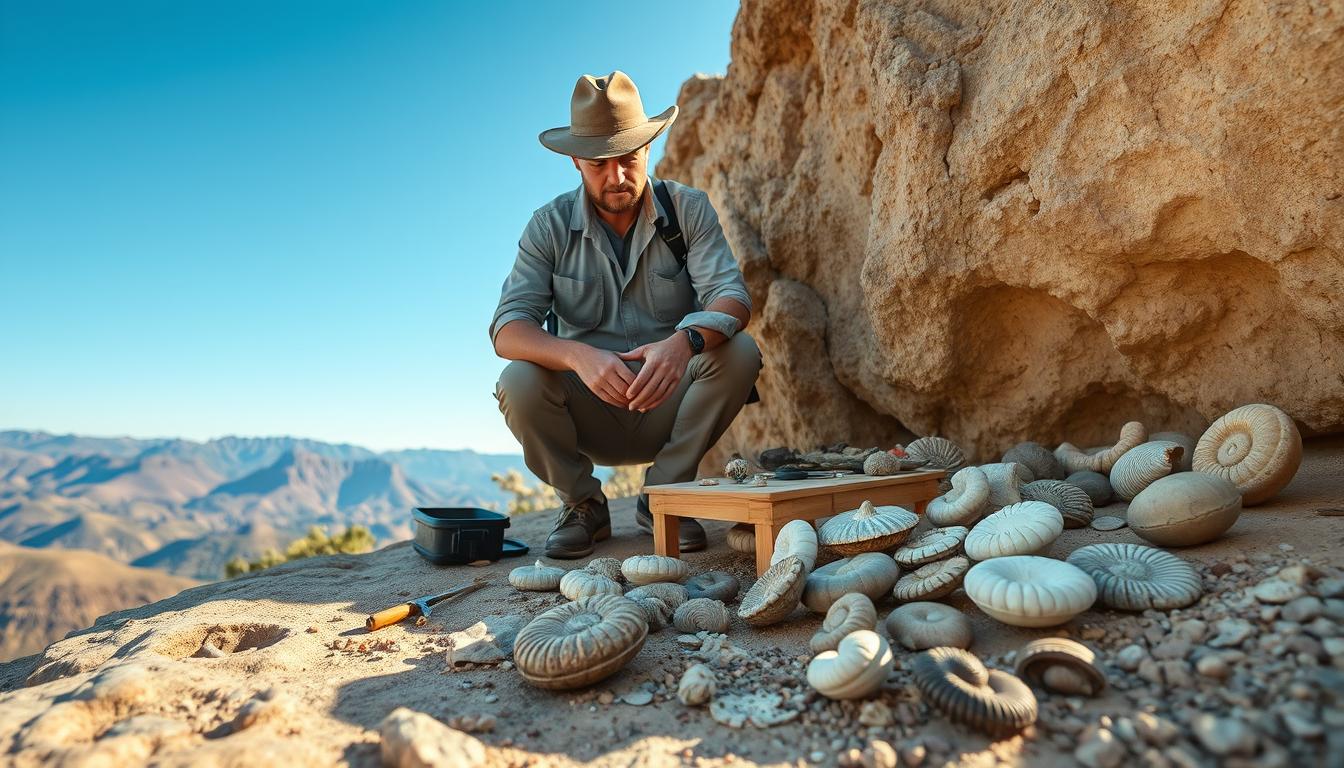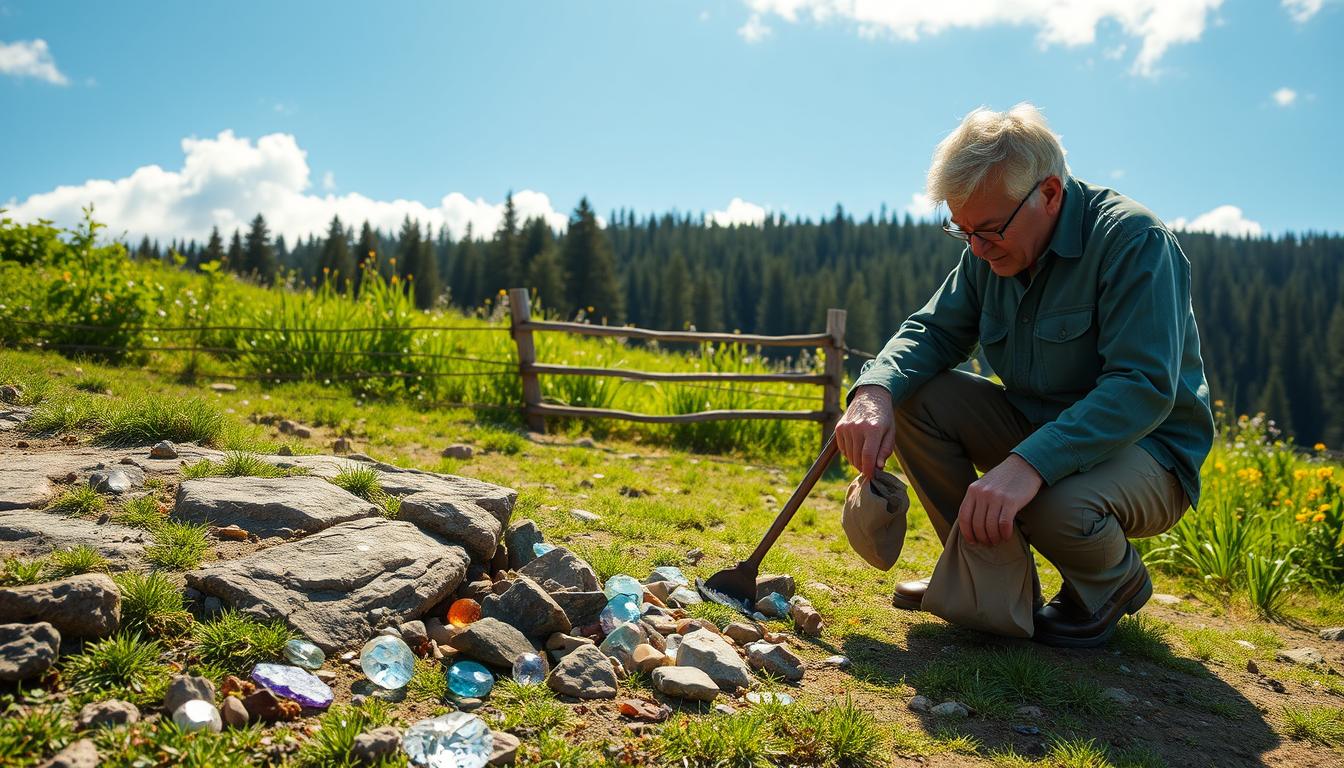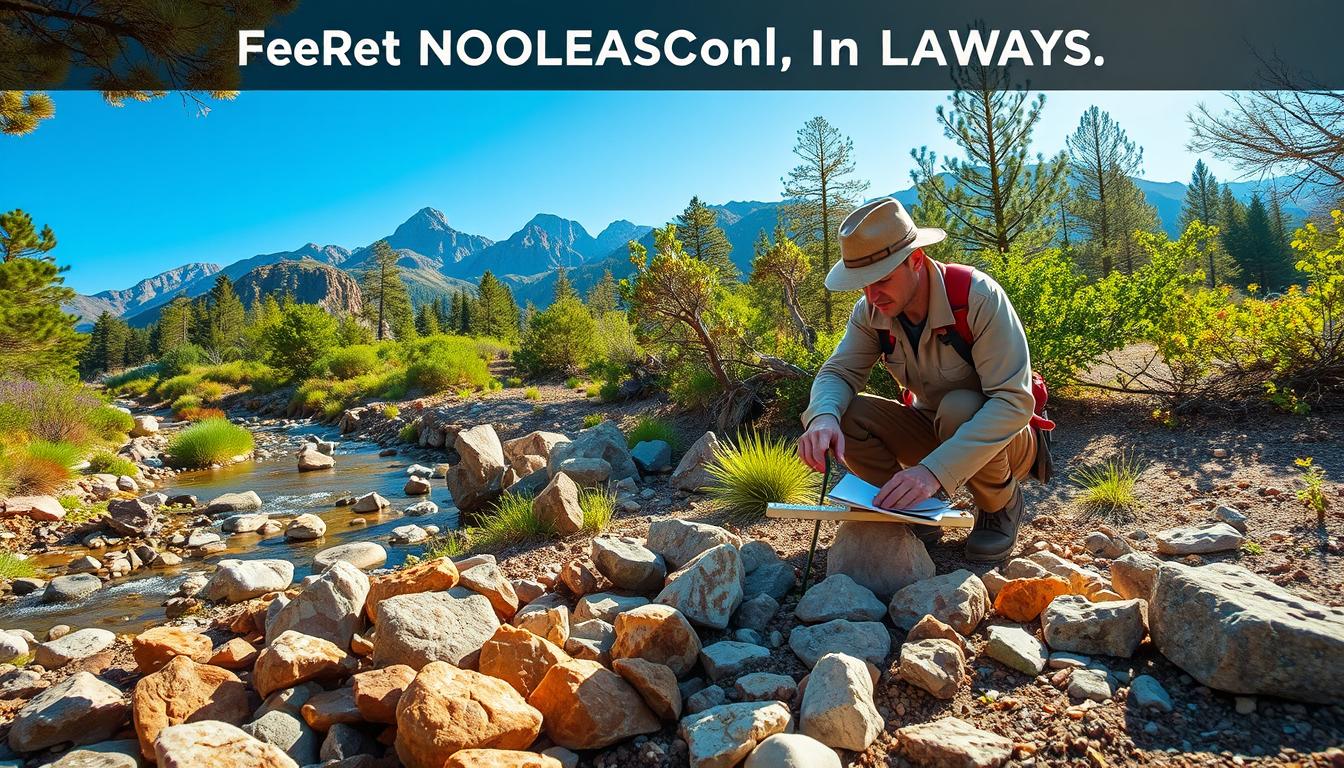

Rock collecting, or rockhounding, is a fun hobby. It involves finding and collecting rocks, minerals, and fossils. When you’re in rivers and streams, you need to know the laws.
The rules for rock collecting in these places change. It’s important to know them to stay out of trouble. Rivers and streams are not just pretty. They also have unique rocks and minerals to find.
Key Takeaways
- Understand local rockhounding laws before collecting.
- Familiarize yourself with private property rights.
- Know the regulations regarding protected areas.
- Be aware of the types of rocks and minerals that are protected.
- Respect the environment and other users of the waterways.
The Basics of Waterway Rockhounding
Waterway rockhounding is about finding minerals, gemstones, and fossils in rivers and streams. It’s both fun and educational. You learn about the earth and its secrets.
What Constitutes Rockhounding
Rockhounding means looking for and collecting rocks and minerals. You need to know a bit about geology. Rockhounds use tools like pans and magnifying glasses to find treasures.
Benefits of Rockhounding
Rockhounding has many benefits. It gets you outside, helps you love nature, and can find valuable items for your collection or science.
Minerals and Gemstones
Rivers and streams have many minerals and gemstones. You can find quartz, agate, and jasper. These are smooth and beautiful, perfect for any collection.
Fossils and Petrified Wood
Fossils and petrified wood are also treasures to find. If you’re into riverbed mineral leases, knowing the rules is important.
Rockhounding Laws for Rivers and Streams: Federal Regulations
Federal laws for rockhounding in waterways are complex. They involve many government agencies. These rules aim to balance fun in rivers and streams with protecting the environment and keeping people safe.
Bureau of Land Management (BLM) Guidelines
The Bureau of Land Management looks after public lands, including rivers and streams. The BLM lets people rockhound for fun without a permit. But, there are rules on how to do it and where.
For example, casual use of tools like gold pans and small sluice boxes is okay. But, there are limits.
U.S. Forest Service Policies
The U.S. Forest Service manages national forests and grasslands. These include many rivers and streams. Their rockhounding rules change by forest, but usually, it’s allowed for fun.
But, some places might be off-limits because of environmental reasons or other reasons.
National Park Service Restrictions
National parks are run by the National Park Service. They have strict rules about rockhounding. Often, collecting rocks or minerals is not allowed or is very limited.
It’s best to ask park rangers about the exact rules.
Army Corps of Engineers Waterway Rules
The Army Corps of Engineers manages many waterways, including navigable ones. Their rules can impact rockhounding, mainly in areas near dams or water management spots. Always check with local Corps offices for the latest info.
State-by-State Rockhounding Regulations
Rockhounding rules change a lot from state to state. It’s key for fans to know the laws in their area. This knowledge helps ensure a safe and legal time rockhounding, whether by rivers or streams.
Western States
In California, many places allow rockhounding, but national parks have strict rules. Oregon and Washington let you rockhound, but they focus on protecting the environment. Colorado, Montana, and Idaho have their own rules, sometimes needing permits.
Eastern States
New York and Pennsylvania protect their waterways with laws. They need specific permits for rockhounding in some spots. New Jersey, Virginia, North Carolina, and Florida also have rules to keep natural habitats safe.
Midwest and Southern States
Ohio, Indiana, and Illinois have different rules, depending on the waterway and activity. Southern states like Texas, Louisiana, and Georgia also have their own rules. These focus on keeping aquatic ecosystems safe.
Alaska and Hawaii Special Considerations
Alaska’s vast wilderness has special rules, like restrictions on certain habitats. Hawaii, with its delicate ecosystems, has strict laws to protect its natural resources, including rockhounding.
Public vs. Private Waterways: Legal Boundaries
Knowing the difference between public and private waterways is key for legal rockhounding. It helps rockhounds stay out of trouble and follow the law.
Determining Public vs. Private Waterways
What makes a waterway public or private varies. It depends on its history and local laws. For example, some rivers are public because they can be navigated. Others are private and need mineral collecting permits from owners.

Navigable Waters Doctrine
The Navigable Waters Doctrine decides if a waterway is public or private. It says waters that can be navigated are public. For more info, check the Washington Rules for Mineral Prospecting and Placer document.
Obtaining Permission from Private Landowners
Rockhounding in private waterways needs permission from landowners. This might mean getting mineral collecting permits or just asking for permission.
Trespassing Concerns and Consequences
Trespassing on private land can lead to big legal problems. Rockhounds could face fines or even criminal charges. They must know the boundaries and avoid trespassing.
Required Permits and Authorizations
To enjoy rockhounding, knowing the law is key. Rockhounding is fun but also has rules for the earth and safety.
Recreational Mining Permits
Rockhounding needs permits, mainly in places run by the government. These permits keep the earth safe.
Cost and Application Process
Permit costs change based on where you are and who issues it. For example, the BLM and state agencies charge differently. You’ll need to apply with details like where and how long you’ll be rockhounding.
Duration and Renewal
Permits last from a day to years, based on the rules. Renewals also differ, from yearly to more complex processes.
Special Use Authorizations
In areas with special ecosystems, you might need special permits. These ensure rockhounding doesn’t hurt the environment. For more info, check state websites.
Seasonal and Quantity Restrictions
Some places have rules to protect wildlife, like during breeding times. There are also limits on how much you can take to avoid harming the earth.
Following these rules is important for rockhounding to continue. With the right permits and rules, we can keep the earth safe for all.
Environmental Protection Regulations
Environmental rules are key for rockhounding. They help keep our natural resources safe for the future. These rules protect the environment from harm caused by rockhounding, like destroying habitats and polluting water.
Protected Species Habitats
Protecting habitats of endangered species is a big part of these rules. Rockhounding must not harm these habitats. It’s important to stay away from areas that are home to endangered species.
- Check with local wildlife agencies for information on protected species and their habitats.
- Be aware of your surroundings and avoid disturbing wildlife or their habitats.
Water Quality Preservation Requirements
Keeping water clean is also a big deal. Rockhounding must not make water dirty or harm aquatic life. It’s important to avoid using chemicals that could pollute waterways.
Best practices for preserving water quality include:
- Using environmentally friendly equipment and methods.
- Minimizing sedimentation and erosion.
Erosion and Sedimentation Limits
Rules are in place to stop rockhounding from harming the environment too much. These rules help control sediment and prevent erosion near waterways.

Restoration Responsibilities
If rockhounding causes damage, fixing it is part of the rules. This might mean fixing habitats, removing invasive plants, or making damaged areas healthy again.
By following these rules, rockhounding can be done in a way that’s good for the environment.
Equipment and Methods: Legal Guidelines
Some tools and methods in riverbed mining are controlled by law to protect the environment. Rockhounding fans need to know these rules to stay out of trouble.
Allowed Tools and Techniques
You can use non-motorized equipment like gold pans, sluice boxes, and rock hammers. These are usually okay, but always check the local rules.
Prohibited Equipment and Methods
Some tools and ways are banned because they harm the environment. Motorized dredges and other big machines are examples.
Motorized vs. Non-Motorized Restrictions
Using motorized gear is often not allowed in sensitive spots. It’s better to use non-motorized tools to help the environment.
Sluicing and Panning Regulations
Sluicing and panning are common in rockhounding. But, they have rules, mainly in protected places. Knowing the local rules is key.
| Technique | Allowed Equipment | Restrictions |
|---|---|---|
| Sluicing | Sluice boxes | Check local regulations for permit requirements |
| Panning | Gold pans | Generally allowed, but check for protected areas |
Conclusion: Responsible Rockhounding and Compliance
Rockhounding responsibly is key to keeping our nature safe while we enjoy it. Knowing and following rockhounding laws and river rules is vital. It helps keep our hobby and nature in balance.
Learn about local rules, get the right permits, and respect private land. This way, you help rockhounding last longer. Also, following environmental rules protects our habitats and water.
When you go rockhounding in rivers and streams, remember to follow the rules. Stay updated, follow the guidelines, and encourage others to do the same. This way, we can all enjoy rockhounding for years to come.
FAQ
What is rockhounding, and what materials can be found in rivers and streams?
Rockhounding is a hobby where people search for and collect rocks, minerals, and fossils. Rivers and streams are full of treasures like agate, jasper, quartz, and gold. This makes them great places for rockhounds to explore.
Do I need a permit to go rockhounding in rivers and streams?
Whether you need a permit depends on where you are and what you plan to collect. Always check with local authorities, like the Bureau of Land Management or state agencies, to see if you need a permit.
What are the federal regulations regarding rockhounding in rivers and streams?
Federal rules are set by agencies like the Bureau of Land Management and the U.S. Forest Service. They have specific rules and restrictions for rockhounding activities.
How do I determine if a waterway is public or private?
To figure out if a waterway is public or private, you need to look at property boundaries and local laws. The Navigable Waters Doctrine can guide you in this decision.
What are the environmental protection regulations for rockhounding?
Rockhounds must follow rules to protect the environment. This includes not harming habitats, keeping water clean, and not causing erosion. These steps help keep the environment safe.
What equipment and methods are allowed for rockhounding?
What you can use depends on where you are and what you’re doing. Hand tools like rock hammers and chisels are usually okay. But things like motorized dredges or explosives might be banned.
Can I use motorized equipment for rockhounding?
Whether you can use motorized equipment depends on where you are and what you’re doing. Always check with local authorities to see if it’s allowed and what rules apply.
What are the consequences of trespassing while rockhounding?
Trespassing can lead to fines, having your equipment taken, and even arrest. Always get permission from landowners or check with local authorities to make sure you’re in the right place.
Are there seasonal or quantity restrictions on rockhounding?
Yes, some places have rules about when and how much you can collect. Always check with local authorities to see if there are any restrictions for your rockhounding plans.
How can I ensure responsible rockhounding practices?
To rockhound responsibly, follow local rules, get the right permits, respect private land, and try not to harm the environment. This helps keep rockhounding fun and safe for everyone.

Subscribe to Our Newsletter