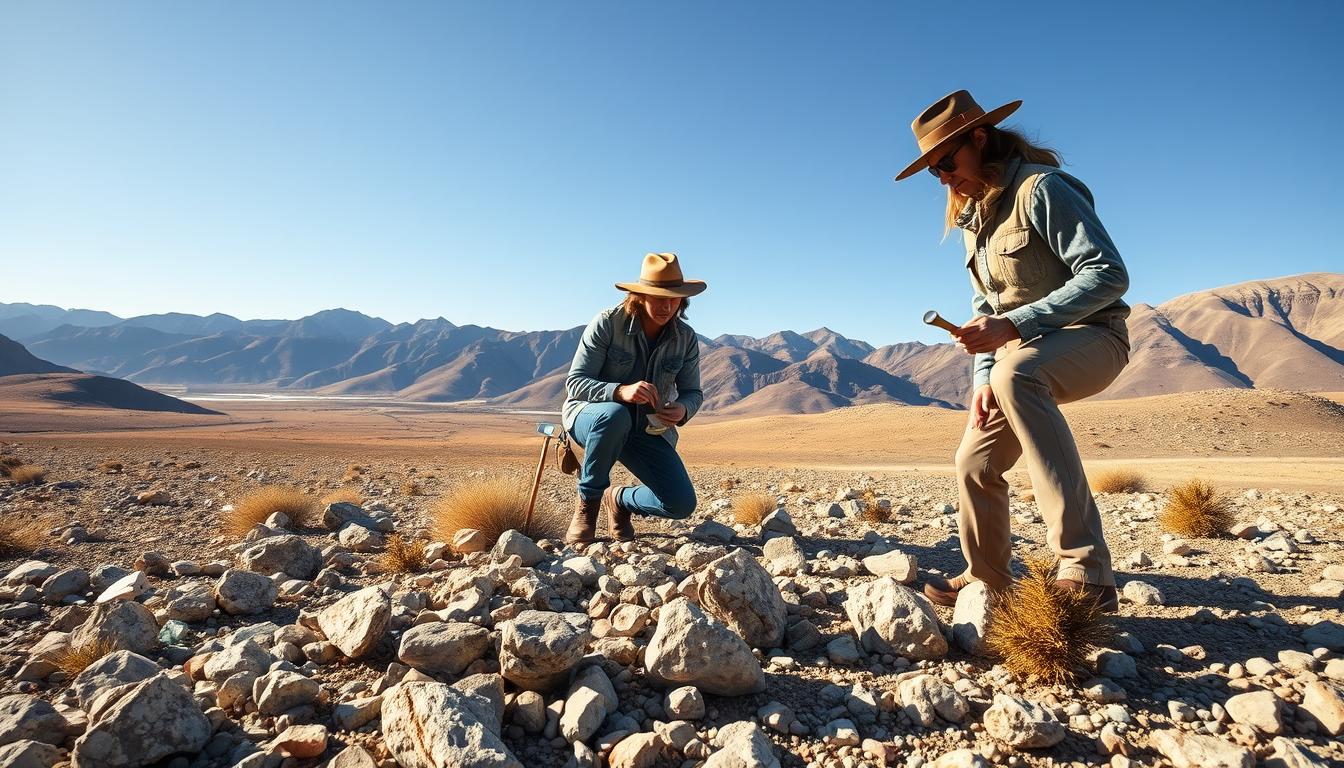
Wyoming is famous for its rich minerals and wide public lands. It’s a great place for rockhounding fans. With almost 18 million acres of public land, knowing the rules is key for fun and success.
Rock collecting regulations differ by state, and Wyoming has its own rules. The Bureau of Land Management (BLM) manages a big part of Wyoming’s public lands. These lands are mostly open for rockhounding for fun, not for making money. For more on Wyoming’s rockhounding rules, check out the BLM’s rockhounding pamphlet.
Key Takeaways
- Wyoming has 18 million acres of public land open to rockhounding.
- The BLM administers a significant portion of Wyoming’s public lands.
- Rockhounding is allowed for non-commercial purposes.
- Special regulations apply to certain areas, such as archaeological sites.
- Permits may be required for commercial use or large quantities of minerals.
Understanding Rockhounding Laws and Rules in Wyoming
Wyoming is a great place for rockhounds because of its rich history. But, it’s important to know the laws about this hobby. The state has rules to help rock collectors be responsible and sustainable.
Definition of Rockhounding in Wyoming
In Wyoming, rockhounding means collecting rocks, minerals, and fossils on public lands. The Bureau of Land Management (BLM) says you can do this on most public lands, but with some rules. Knowing these rules helps rockhounds stay within the law.
Overview of Wyoming’s Mineral Resources
Wyoming has many minerals like jade, agate, and quartz. It also has fossils. This makes it a great place for rockhounds. Knowing what minerals are there helps rockhounds follow the law.
Legal Framework for Rock Collecting
The laws for rock collecting in Wyoming come from both the state and federal governments. The BLM and U.S. Forest Service have rules for public lands. Some places might be off-limits because of the environment or culture. It’s important for rockhounds to know these rules to avoid trouble.
| Regulatory Body | Key Regulations | Impact on Rockhounding |
|---|---|---|
| Bureau of Land Management (BLM) | Restrictions on collecting in certain areas, limits on quantity | Ensures sustainable rockhounding practices |
| U.S. Forest Service | Regulations on collecting in national forests, permits required | Manages rockhounding in forest areas |
| State of Wyoming | Laws governing fossil collection, mineral rights | Protects state interests and resources |
By knowing the laws and what rockhounding means, hobbyists can enjoy it legally in Wyoming.
Public Land Regulations for Rock Collectors
To enjoy rockhounding in Wyoming, you need to know the rules for public lands. Wyoming’s public lands are managed by different agencies. Each has its own rules for rock collecting.
Bureau of Land Management Rules
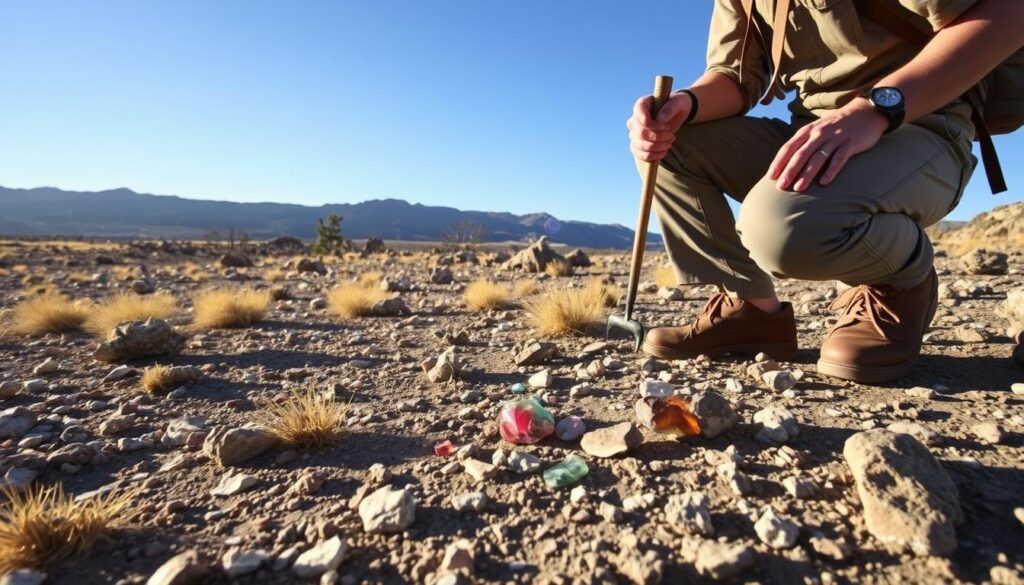
The Bureau of Land Management (BLM) manages a lot of Wyoming’s public lands. The BLM lets you collect rocks for personal use, but there are rules. You can take a reasonable amount of rocks, minerals, and fossils without a permit.
Critical areas or sensitive habitats may be closed to collecting. It’s important to check with local BLM offices for specific guidance on areas of interest.
U.S. Forest Service Regulations
The U.S. Forest Service manages Wyoming’s national forests. Rock collecting is allowed for personal use, but there are rules. You must avoid closed areas and not use mechanized equipment.
- Collectors should be aware of any special management areas with unique rules.
- Permits may be required for certain activities or in specific locations.
State Trust Lands Policies
State Trust Lands in Wyoming are managed for the state’s schools and institutions. Rock collecting on these lands has specific rules. Access may be restricted or require a permit. Contact the Wyoming State Land Department for information on accessing State Trust Lands for rockhounding.
Knowing these regulations is key for rock collectors to enjoy Wyoming’s rich mineral resources. It helps preserve the state’s natural heritage.
Fossil Collecting Regulations in Wyoming
It’s key to know Wyoming’s rules for fossil collecting. The state is full of fossils, and laws help manage them. These rules make sure fossil hunting is done right, keeping Wyoming’s ancient history safe.
Vertebrate Fossil Restrictions
Wyoming is very strict about vertebrate fossils. Vertebrate fossils are protected and cannot be collected without a permit. This means dinosaurs, mammals, and other animals with backbones are off-limits. The rules help keep important scientific info safe.
Invertebrate and Plant Fossil Guidelines
But, you can collect invertebrate and plant fossils for personal use. Yet, there are rules to follow. It’s important to know the difference between common and rare fossils. If you find something special, tell the right people.
Famous Fossil Sites and Their Specific Rules
Wyoming has many famous fossil spots, each with its own rules. For instance, Como Bluff is famous for its Jurassic dinosaur fossils. There are special rules to protect these sites. Make sure to follow them.
By following Wyoming’s fossil collecting rules, fans help save the state’s ancient treasures. Whether it’s collecting common fossils or reporting big finds, being careful is key.
Mineral Collection Limits and Permits
Knowing the rules for collecting minerals in Wyoming is key. This is true for both hobbyists and those collecting for business. Wyoming’s vast mineral resources are managed to ensure they last.
Quantity Restrictions for Casual Collection
Casual rock collectors in Wyoming can collect minerals for personal use. But, there are limits to how much you can take without a permit. You can usually collect up to 25 pounds of minerals per day for personal use. But, this can change based on where you are and what mineral you’re collecting.
Required Permits and Licenses
If you’re collecting minerals for business or more than the casual limit, you need permits and licenses. The Bureau of Land Management (BLM) and the U.S. Forest Service issue these permits. The type of permit you need depends on where you are, what mineral you’re collecting, and how big your operation is.
Private Land and Mineral Rights
Wyoming has a lot of private land, and mineral rights can be tricky. Sometimes, the mineral rights are separate from the land rights. This means the landowner might not own the minerals under their land.
Obtaining Permission from Landowners
Before collecting minerals on private land, you must get permission from the landowner. You need to contact the landowner, explain why you want to collect minerals, and get their written okay.
Understanding Claim Stakes and Markers
Mineral claims are marked on public land to show who can extract minerals. Claim stakes and markers show where a claim is. It’s important for rockhounds to know how to spot and respect these markers to avoid legal trouble.
| Permit Type | Issuing Authority | Purpose |
|---|---|---|
| Casual Use Permit | BLM or U.S. Forest Service | Personal mineral collection |
| Commercial Permit | BLM or U.S. Forest Service | Commercial mineral extraction |
Preserving Wyoming’s Natural Resources Through Responsible Rockhounding
It’s important to know and follow Rockhounding Laws and Rules in Wyoming. This helps keep the state’s mineral resources safe and protects everyone. Wyoming has rules for rockhounding on public lands. These rules come from the Bureau of Land Management and the U.S. Forest Service.
Rockhounding in Wyoming must be done responsibly. This means following the guidelines set by the state. You need to know how much you can collect and get the right permits. Also, you must respect private land and mineral rights.
For more info on how to manage land and mines, check out this government report.
By rockhounding legally in Wyoming, we help protect the state’s resources for the future. This way, we make sure Wyoming’s minerals are safe for many years to come.
## FAQ
### Q: What is rockhounding, and what does it entail in Wyoming?
Rockhounding is collecting rocks, minerals, and fossils. In Wyoming, it means exploring public lands to find geological treasures.
### Q: What are the main laws and regulations governing rockhounding in Wyoming?
The Bureau of Land Management, U.S. Forest Service, and State Trust Lands set the rules. They say what you can collect, where, and how.
### Q: Are there any specific restrictions on fossil collecting in Wyoming?
Yes, there are rules for fossil collecting. You need special permits for vertebrate fossils. There are also rules for invertebrate and plant fossils.
### Q: Can I collect rocks and minerals on any public land in Wyoming?
No, not all public lands allow collecting. Some areas are closed for environmental or cultural reasons. Always check with local authorities first.
### Q: Do I need a permit to collect rocks and minerals in Wyoming?
For casual collecting, you might not need a permit. But, there are limits on how much you can take. For commercial collecting or certain activities, you’ll need specific permits and licenses.
### Q: How do private land and mineral rights affect rockhounding in Wyoming?
Private landowners own the minerals on their land. To collect on private land, you need permission from the landowner. It’s important to understand mineral rights.
### Q: What should I do if I find a significant fossil or mineral deposit on private land?
If you find a valuable fossil or mineral on private land, tell the landowner and authorities. There might be special rules or requirements.
### Q: Are there any famous fossil sites in Wyoming that I can visit?
Yes, Wyoming is famous for its fossils. Sites like the Fossil Butte National Monument are open for visits. Each site has its own rules.
### Q: How can I ensure that I’m rockhounding responsibly in Wyoming?
To rockhound responsibly, follow local rules, get the right permits, respect private property, and try not to harm the environment.

Subscribe to Our Newsletter