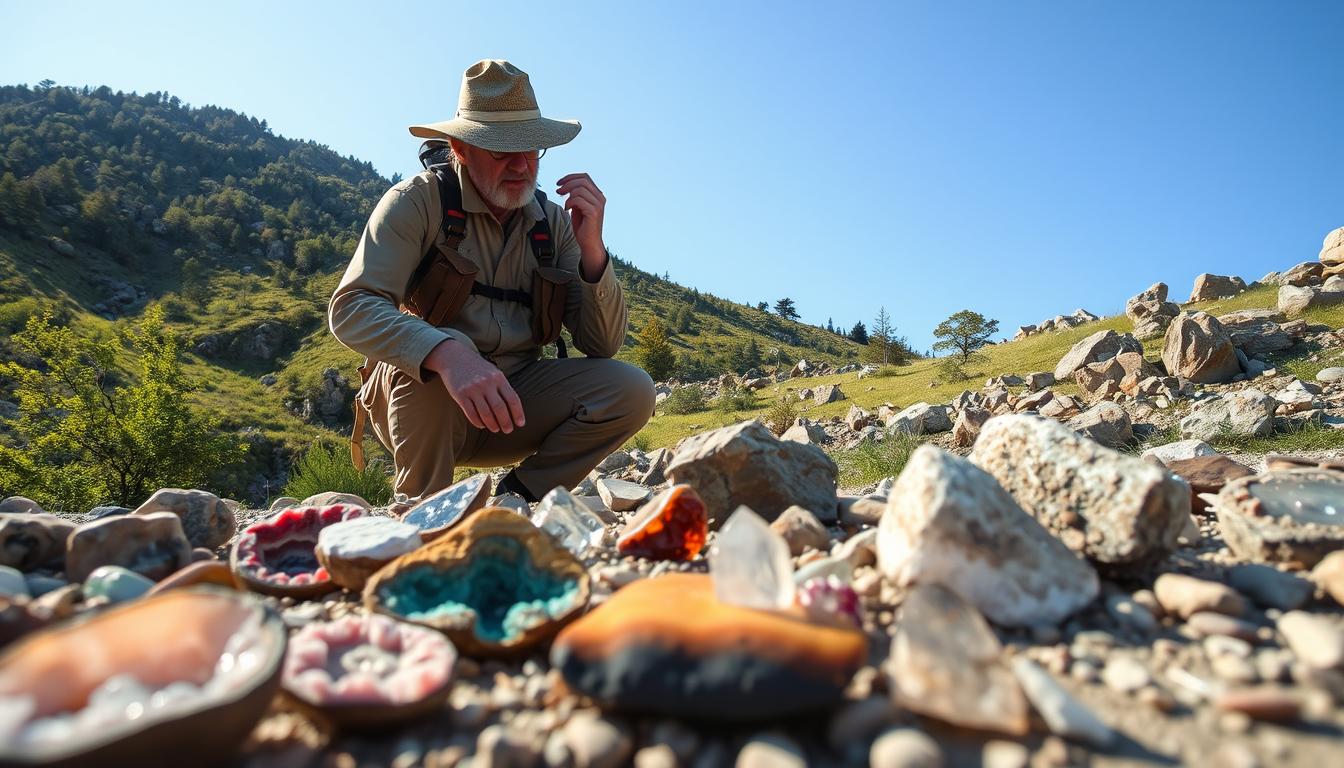
West Virginia is perfect for rockhounds because of its varied geology. The state’s rich geological history offers many types of rocks and minerals. These can be found from the Appalachian Mountains to the Ridge and Valley Province.
To enjoy rockhounding in West Virginia, you must follow the rules. For more details on rockhounding laws and regulations, visit Rockhounding Rules.
Understanding Rockhounding in West Virginia
West Virginia has a rich geological history. This makes it perfect for rockhounding. Rockhounding is about finding and collecting rocks, minerals, and fossils. The state’s varied landscapes offer many opportunities for this hobby.
What is Rockhounding?
Rockhounding is a fun activity where people search for and collect geological items. It needs patience, knowledge, and a good eye for detail. Rockhounds look in streams, mountains, and caves for special rocks, minerals, and fossils.
West Virginia’s Unique Geological Features
West Virginia has many geological features. These include the Appalachian Plateau and the Ridge and Valley Province. These areas are full of minerals like coal, limestone, and sandstone.
Popular Rocks, Minerals, and Fossils Found in the Mountain State
The state is famous for its fossil finds, like trilobites and crinoids. Some common rocks and minerals in West Virginia are:
- Coal
- Limestone
- Sandstone
- Fossils like trilobites and crinoids
These items can be found in many places in the state. West Virginia is a great place for rockhounding. It’s important to know the laws about rockhounding to enjoy it responsibly.
Rockhounding Laws and Rules in West Virginia
It’s important to know the laws about rockhounding in West Virginia. The state’s rich geological history is protected by these rules. They help collectors while keeping the environment safe.
State Regulations Governing Rock and Mineral Collection
The Bureau of Land Management (BLM) and the U.S. Forest Service (USFS) set rules for collecting rocks and minerals. In West Virginia, you need permits for some activities. The West Virginia Department of Environmental Protection watches over mining, including rockhounding.
You can collect rocks and minerals for fun, but not for business without a permit. Knowing the difference is key to staying out of trouble.
Fossil Collection Laws and Restrictions
Fossil hunting is a big part of rockhounding in West Virginia. The state has rules for collecting fossils, mainly on public lands. Fossils found on state lands are considered state property, so taking them without permission is illegal.
Permits and Licenses Required for Collectors
To rockhound, you might need permits or licenses. The kind you need depends on where and what you’re doing. For example, collecting in Monongahela National Forest needs a USFS permit.
Penalties for Illegal Collection Activities
Breaking the rules can lead to big fines and losing your gear. It’s vital to know the laws to avoid these problems.
By sticking to the rules, collectors help keep rockhounding alive in West Virginia.
Where to Legally Rockhound in West Virginia
West Virginia is a great place for rockhounds. It has lots of natural areas for collecting rocks and minerals. The state’s varied landscapes, from mountains to waterways, are full of treasures waiting to be found.
National Parks and Forests Regulations
West Virginia has many national parks and forests where you can rockhound. The Monongahela National Forest is a big area for collectors. Always follow the U.S. Forest Service rules, which let you collect rocks and minerals for yourself.
State Parks and Recreation Areas
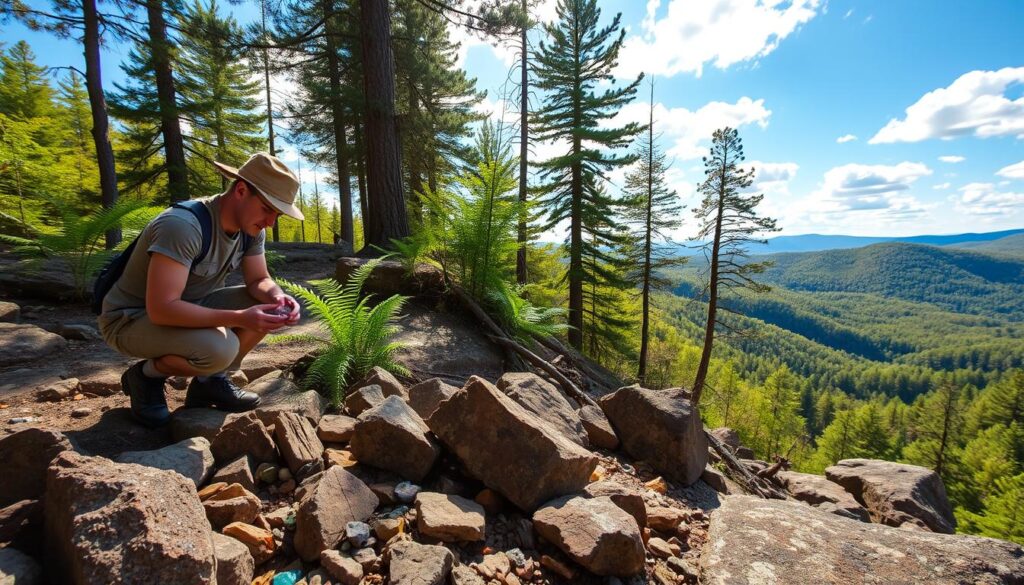
State parks and recreation areas in West Virginia also let you rockhound. But, each park has its own rules. Always check with park rangers or visitor centers for the latest info. For more details, visit rockhounding rules.
Monongahela National Forest Guidelines
The Monongahela National Forest has its own rules for rockhounding. You can collect rocks, minerals, and fossils for yourself. But, you must not use machines or harm the environment.
Streams, Rivers, and Waterways Access
West Virginia’s waterways are also great for rockhounding. The New River Gorge and the Ohio River and its tributaries are full of opportunities.
New River Gorge Collection Rules
The New River Gorge National River has its own rules for rockhounding. You can look for rocks and minerals in some areas. But, you must stay out of protected zones and follow park ranger guidelines.
Ohio River and Tributaries
The Ohio River and its tributaries have a wide variety of geological specimens. Rockhounds can search gravel bars, riverbanks, and more. But, remember to check for any local rules or restrictions.
Private Property and Commercial Sites for Rockhounding
Rockhounding in West Virginia is fun, but knowing the rules is key. Private property and commercial sites have their own rules. It’s important to follow these to enjoy rockhounding.
Obtaining Permission from Landowners
Always get permission before collecting rocks on private land. This keeps you legal and builds good relations with landowners. You can reach out to the landowner or look up who owns the land. For more info on rockhounding rules, check rockhounding rules in West Virginia.
Commercial Mining Claims and Restrictions
Commercial mining claims in West Virginia have their own rules. These places might let you rockhound, but you might need a special permit. The West Virginia Department of Environmental Protection has info on mining claims and their rules.
Fee Mining Sites in West Virginia
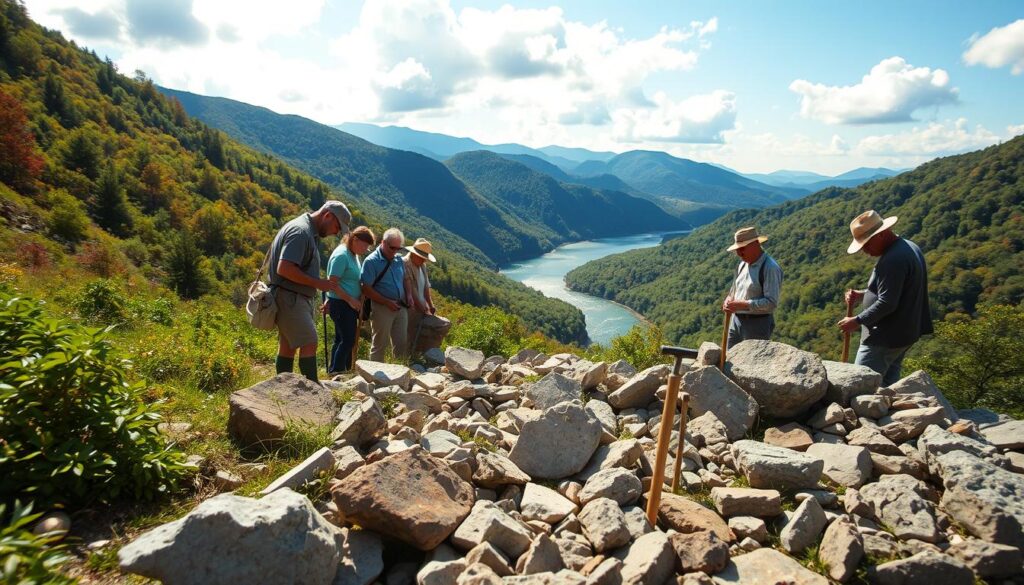
Fee mining sites let you rockhound for a fee. They’re a good way to see West Virginia’s geology. But, each site has its own rules on what you can collect and how much.
Liability Considerations for Collectors
Rockhounds need to think about liability when collecting. Accidents can happen, and you could be responsible without permission. Always be safe and know the rules of any permission you get.
| Site Type | Permission Required | Restrictions |
|---|---|---|
| Private Property | Yes, from landowner | Varies by owner |
| Commercial Mining Claims | Yes, often special permits | Limited access, specific regulations |
| Fee Mining Sites | Yes, through paid access | Site-specific rules |
Conclusion
Rockhounding in West Virginia can be very rewarding. But, it’s key to follow the state’s laws and rules. Knowing about West Virginia rockhounding regulations makes it safer and more fun. This way, you help keep West Virginia’s rocks and minerals safe for others in the future.
To keep enjoying rockhounding in West Virginia, always get the right permits. Also, respect private property. This makes your rockhounding better and helps protect the state’s natural treasures.
For more tips and places to go rockhounding, check out other articles and resources. Happy rockhounding!
FAQ
What is rockhounding, and why is it popular in West Virginia?
Rockhounding is about finding and collecting rocks, minerals, and fossils. West Virginia is great for this hobby because of its varied geology. It’s full of different rocks, minerals, and fossils.
What are the state regulations governing rock and mineral collection in West Virginia?
West Virginia has rules to help rockhounding stay sustainable. These rules cover what you can collect and where. Some places need a special permit.
Are there any restrictions on fossil collection in West Virginia?
Yes, there are rules for fossil collecting in West Virginia. Fossils from state or federal lands have their own rules. Knowing these rules helps avoid trouble.
Where can I rockhound in West Virginia?
You can rockhound in many places in West Virginia. This includes national parks, state parks, and streams. But, you must follow the rules for each place.
Can I rockhound on private property in West Virginia?
Yes, but you need permission from the landowner first. Also, check if there are any mining claims or restrictions.
What are the penalties for illegal rockhounding activities in West Virginia?
Breaking the rules can lead to fines and other penalties. It’s important to follow the laws to avoid these.
Do I need a permit to collect rocks, minerals, or fossils in West Virginia?
It depends on where and what you’re collecting. Check with the right people to see if you need a permit.
Can I sell the rocks, minerals, or fossils I collect in West Virginia?
Selling what you collect has its own rules. Commercial collectors need to know these laws and get the right permits.

Subscribe to Our Newsletter