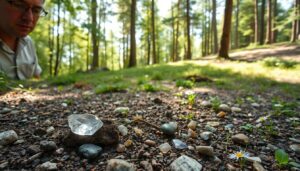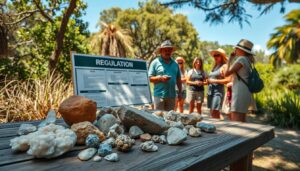
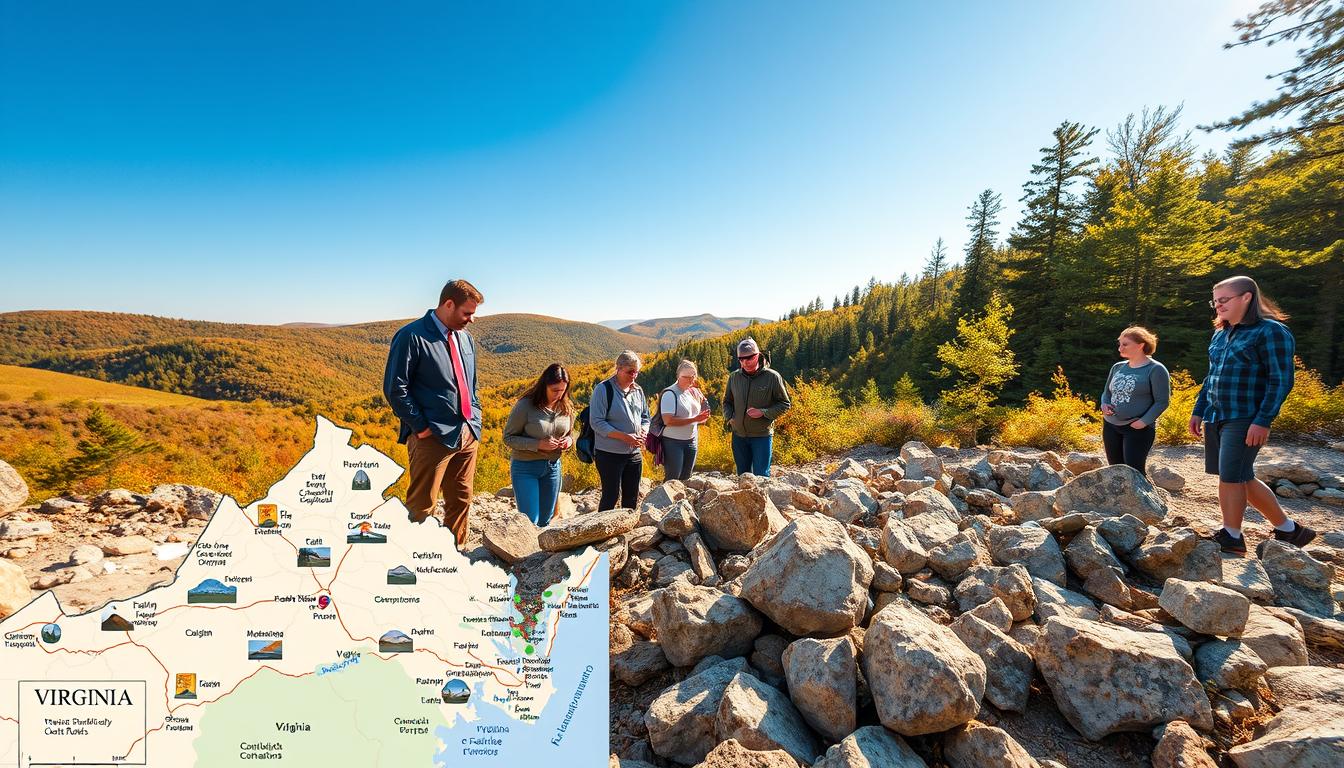
Rockhounding fans need to know the regulations for collecting rocks, minerals, and fossils. In Virginia, these rules help protect the environment and culture.
The USDA Forest Service guide is a great resource for rockhounding on public lands. Knowing these rules makes rockhounding fun and responsible. For more info, check out the USDA Forest Service guide.
Key Takeaways
- Understand Virginia’s rockhounding regulations to ensure a responsible hobby.
- Familiarize yourself with the USDA Forest Service guidelines for public lands.
- Collection rules vary depending on the type of rock, mineral, or fossil.
- Some areas may require permits or have specific restrictions.
- Respect private property and cultural sites.
Understanding Rockhounding in Virginia
Virginia’s rich geological history makes it perfect for rockhounding. This hobby involves searching for and collecting geological specimens. The state’s diverse landscape is full of minerals and fossils, attracting rockhounds.
What is Rockhounding?
Rockhounding is a fun activity where people collect rocks, minerals, and fossils. The USDA Forest Service says it’s a popular hobby. It lets people connect with nature and learn about geology.
Popular Minerals and Fossils in Virginia
Virginia is full of minerals and fossils, like coal and ancient marine life fossils. Its geological formations offer a wide range of specimens. Rockhounds often find quartz crystals, staurolite, and trilobite fossils here.
The Importance of Following Regulations
Following regulations is key for sustainable rockhounding in Virginia. The state has laws to protect its natural resources. By following these rules, rockhounds help preserve minerals and fossils for the future. This includes knowing Virginia rockhounding regulations and legal guidelines for rockhounding in Virginia.
Rockhounding Laws and Rules in Virginia
To enjoy rockhounding in Virginia, you need to know the laws. Rockhounding is a hobby with rules to protect the environment and private property.
State-Level Regulations
Virginia has its own rules for rockhounding. These rules help balance the hobby with protecting natural resources.
Virginia Department of Mines, Minerals and Energy Guidelines
The Virginia Department of Mines, Minerals and Energy regulates mining. Rockhounding enthusiasts must follow their guidelines when collecting on state lands.
State Park Regulations
Virginia’s state parks have their own rockhounding rules. Some parks let you collect rocks, but others don’t. Always check with park rangers or websites for the latest info.
Federal Land Regulations
Federal lands have their own rules for rockhounding. These lands are managed by different agencies with their own rules.
Bureau of Land Management Rules
The Bureau of Land Management (BLM) manages public land. The BLM lets you collect rocks for personal use in many areas. But, there are rules on what you can collect and how.
U.S. Forest Service Policies
The U.S. Forest Service manages national forests. Rockhounding is allowed for personal use. But, you must follow their policies, which might include getting permits or avoiding certain areas.
Private Property Laws and Rights
Rockhounding on private property is different. You must get permission from the landowner before entering.
Obtaining Permission
Before collecting on private property, getting permission from the landowner is key. It’s legal and helps keep good relations with landowners.
Liability Considerations
Liability is important on private property. Landowners might worry about being sued if you get hurt. Talking about this and possibly signing a waiver can be part of getting permission.
By following these laws and rules, rockhounding can be enjoyed while respecting others and the environment.
Legal Rockhounding Locations in Virginia
Virginia is a great place for rockhounding. You can find many places where you can collect rocks, minerals, and fossils. State parks, public lands, national forests, and mining sites are all open for rockhounding.
State Parks and Public Lands
Virginia’s state parks and public lands are perfect for rockhounding. They are managed well to keep nature and fun together.
National Forests in Virginia
The George Washington and Jefferson National Forests in Virginia are great for rockhounding.
Commercial and Fee Mining Sites
Commercial and fee mining sites in Virginia are another option for rockhounding. You can pay to dig for minerals and fossils here.
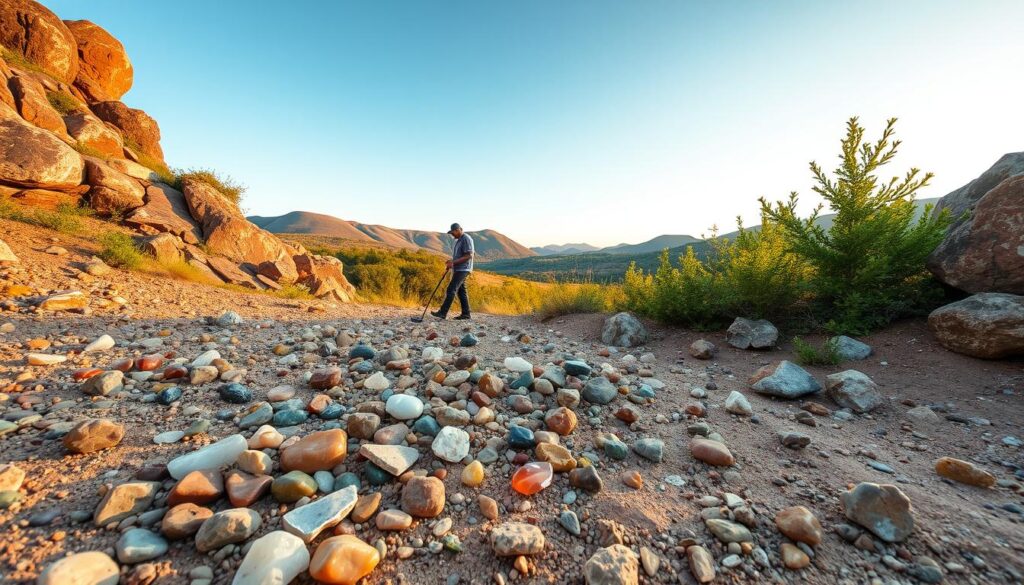
What to Expect at Commercial Sites
At commercial sites, you’ll pay a fee to dig. This fee might include renting equipment or getting a guided tour.
To have a good time rockhounding in Virginia, know the rules. This means understanding permits for rockhounding in Virginia and following Virginia mineral collecting regulations.
Permits, Restrictions, and Ethical Considerations
Virginia is great for rockhounding, but there are rules to follow. Knowing these rules helps keep rockhounding fun and safe for everyone.
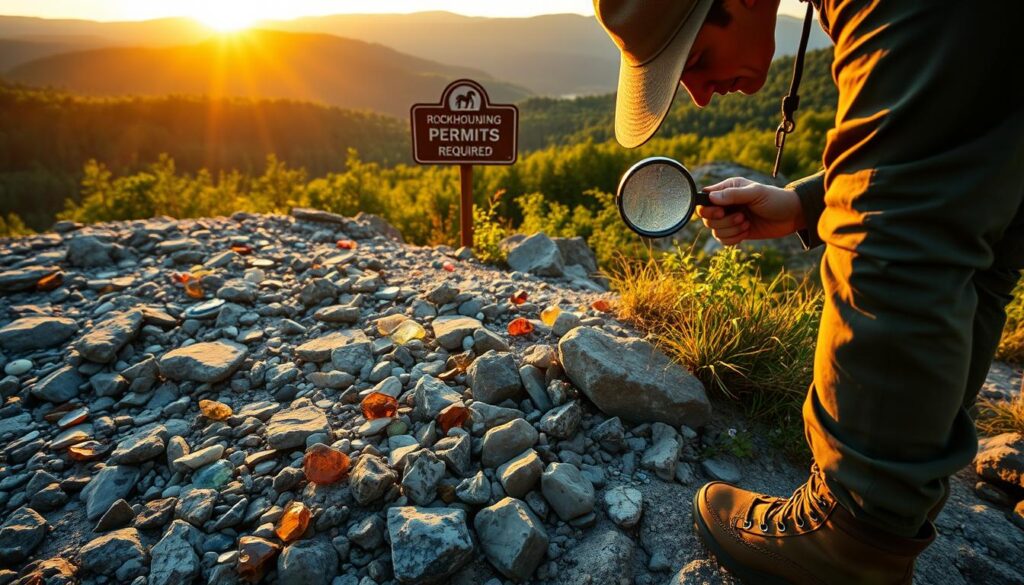
Required Permits and How to Obtain Them
In Virginia, some rockhounding needs permits, like for certain fossils and minerals on public lands. To get these permits, follow these steps:
- Contact the land management agency to ask about permits.
- Give them details about what you plan to collect and where.
- Follow the rules and guidelines they give you.
Getting the right permits is key to avoid legal trouble.
Collection Limits and Quantity Restrictions
Virginia has rules to stop over-collecting and protect nature. These rules change based on where you are and what you’re collecting. For example:
- For personal use, you can collect a fair amount.
- For commercial use, you need special permits and follow stricter rules.
Protected Specimens and Sites
Some things and places in Virginia are protected by law. They are important for science, history, or nature. Rockhounding fans should know about these places to avoid harm or breaking the law.
Ethical Rockhounding Practices
Being ethical is important for rockhounding. It helps keep the hobby good for the environment and future generations. Key things to do include:
- Always get permission before collecting on private land.
- Try not to mess up the environment and leave things as you found them.
- Tell the authorities if you find something really special.
By following these tips, rockhounding can be good for Virginia’s nature for years to come.
[link-whisper-related-posts]Conclusion
Understanding and following Rockhounding Laws in Virginia lets enthusiasts enjoy this hobby. Virginia’s rich history offers many places to search for rocks. From mountains to rivers, there’s much to explore.
It’s key to know the rules for state parks, national forests, and private lands. For example, you need permission to collect fossils at York River State Park. Also, collecting specimens in the George Washington & Jefferson National Forests is governed by federal law. You can find more info on Gator Girl Rocks.
Practicing rockhounding responsibly helps protect Virginia’s natural beauty. It also makes sure this hobby stays open for others in the future. By following the rules, rockhounding fans help save the state’s geological treasures.
## FAQ
### Q: What are the laws and regulations governing rockhounding in Virginia?
In Virginia, rockhounding is guided by many rules. These include state laws, federal land rules, and private property laws. The Virginia Department of Mines, Minerals and Energy, State Park Regulations, Bureau of Land Management Rules, and U.S. Forest Service Policies all help regulate rockhounding.
### Q: What is rockhounding, and what types of minerals and fossils can be found in Virginia?
Rockhounding is collecting rocks, minerals, and fossils. Virginia has a rich geological history. Rockhounds can find many minerals and fossils here, like quartz, calcite, and ancient marine life fossils.
### Q: Where are the best places to go rockhounding in Virginia?
Top spots for rockhounding in Virginia include state parks, public lands, national forests, and mining sites. Shenandoah National Park, George Washington National Forest, and the James River are favorites.
### Q: Do I need a permit to go rockhounding in Virginia?
Yes, sometimes you need a permit for rockhounding in Virginia. The permit type depends on the location and activity. For example, collecting fossils or minerals on federal land might need a permit from the Bureau of Land Management or U.S. Forest Service.
### Q: What are the collection limits and quantity restrictions for rockhounding in Virginia?
Collection limits and quantity restrictions change by location and material. Some places limit how much you can collect each day. Others might not let you collect certain rocks or minerals.
### Q: Are there any protected specimens or sites that I should be aware of when rockhounding in Virginia?
Yes, Virginia has protected specimens and sites. These include rare or endangered species and areas with sensitive habitats or cultural importance.
### Q: What are some best practices for ethical rockhounding in Virginia?
For ethical rockhounding in Virginia, respect private property and follow all laws. Minimize environmental impact. Be aware of your surroundings and avoid damaging the natural environment.

Subscribe to Our Newsletter