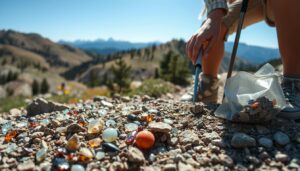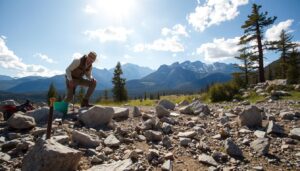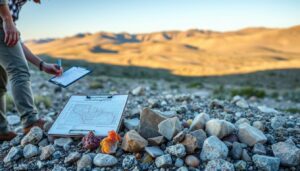
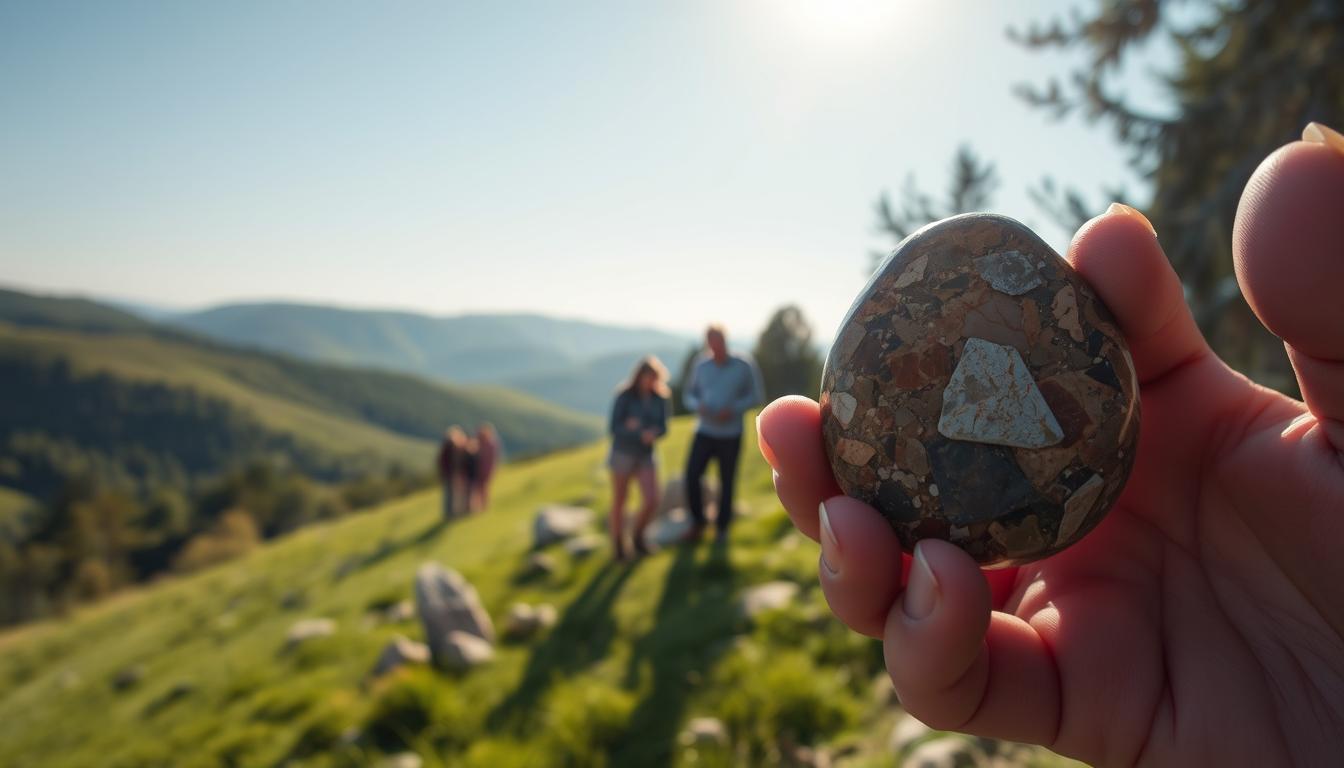
Vermont is a special place for rock and fossil lovers. It’s not famous for minerals, but it has a lot to offer. Rockhounding, or collecting rocks, minerals, and fossils, is a fun hobby here.
The state’s geology is unique, with many minerals and gems. This makes it great for rockhounds. But, there are rules to follow to enjoy this hobby right. For more info, check out the Vermont Geological Survey’s guide.
Key Takeaways
- Understand Vermont’s rockhounding regulations before you start collecting.
- Respect private property and obtain permission before collecting.
- Familiarize yourself with restricted areas, including certain federal lands.
- Practice responsible collecting: take only what you need and leave some for others.
- For further guidance, contact the Vermont Geological Survey.
Understanding Rockhounding in Vermont
The Green Mountain State is great for rockhounding. You can find many minerals and gems here. Rockhounding is a hobby where people collect rocks, minerals, and fossils. It’s popular in Vermont because of its diverse geology.
What is Rockhounding?
Rockhounding is collecting rocks, minerals, and fossils. People do it for fun or to learn. They look for these items in places known for their geology.
Popular Minerals and Gems in Vermont
Vermont is famous for its minerals and gems. You can find quartz, calcite, garnet, and tourmaline here. These are loved by collectors for their beauty and rarity.
| Mineral/Gem | Characteristics | Locations in Vermont |
|---|---|---|
| Quartz | Common mineral, often found in crystalline form | Throughout the state, particularlly in pegmatites |
| Calcite | Calcium carbonate mineral, often found in caves | Caves and limestone areas |
| Garnet | Metamorphic mineral, often found in schist | Metamorphic regions, such as the Green Mountains |
Vermont’s Geological Significance
Vermont’s geology is complex. Rocks and minerals formed over different times, like the Ordovician Era. The state has metamorphic, igneous, and sedimentary rocks. This makes it interesting for rockhounds.
Knowing Vermont’s geology helps rockhounds. It tells them where to find minerals and gems.
Rockhounding Laws and Rules in Vermont
It’s important for rockhounding fans to know Vermont’s laws. The state has rules for rockhounding, watched over by state agencies. Knowing the difference between federal and state rules is key. This is because federal lands have their own rules, different from state or private lands.
State Regulations Overview
Vermont has rules for rockhounding. These include permits for some activities and areas off-limits for collecting. The goal is to protect the environment and keep rockhounding going.
Federal vs. State Jurisdiction
Rockhounding on federal lands has its own rules. Agencies like the Bureau of Land Management (BLM) and the U.S. Forest Service (USFS) manage these areas. It’s important to know who is in charge to follow the laws.
Recent Legal Updates
New laws have made some rules clearer. It’s vital for rockhounds to keep up with these changes. This way, they can enjoy rockhounding legally and responsibly.
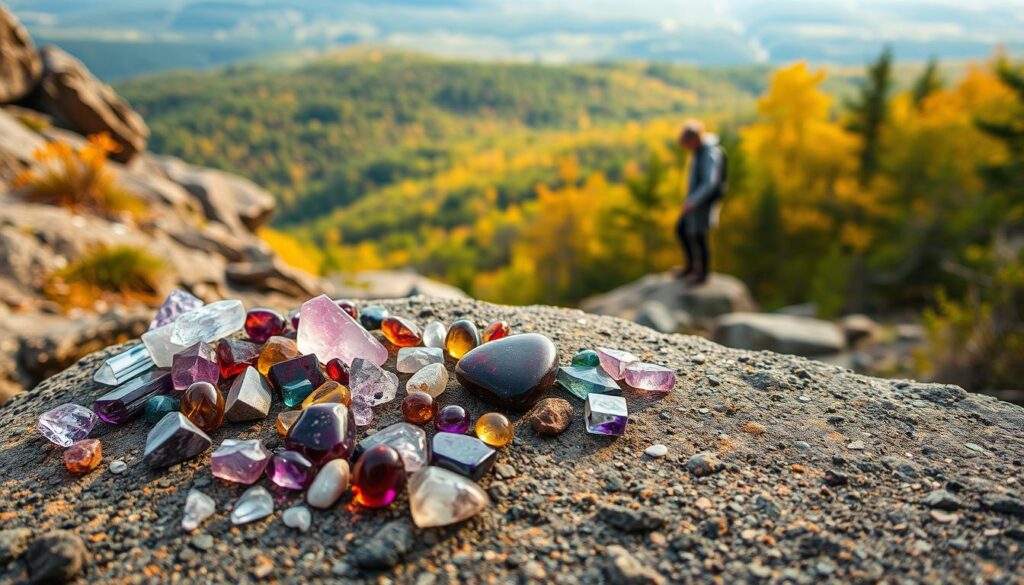
Permits and Permissions Required
Rockhounding in Vermont can be very rewarding. But, you often need the right permits and permissions. Knowing the rules is key for a good and legal rockhounding time.
When Permits Are Necessary
Permits are usually needed for rockhounding on public lands. This includes areas managed by state or federal agencies. The kind of permit you need depends on where you are, what you’re collecting, and how much.
How to Obtain Proper Permissions
To get permits, rockhounds should reach out to the land management agency. For state lands, contact the Vermont Department of Forests, Parks, and Recreation. For federal lands, like national forests, talk to the U.S. Forest Service.
Costs and Processing Times
Permit costs can be different. They range from small fees for casual collecting to bigger costs for commercial activities. It’s important to plan ahead. This way, you have enough time for your permit application to be processed.
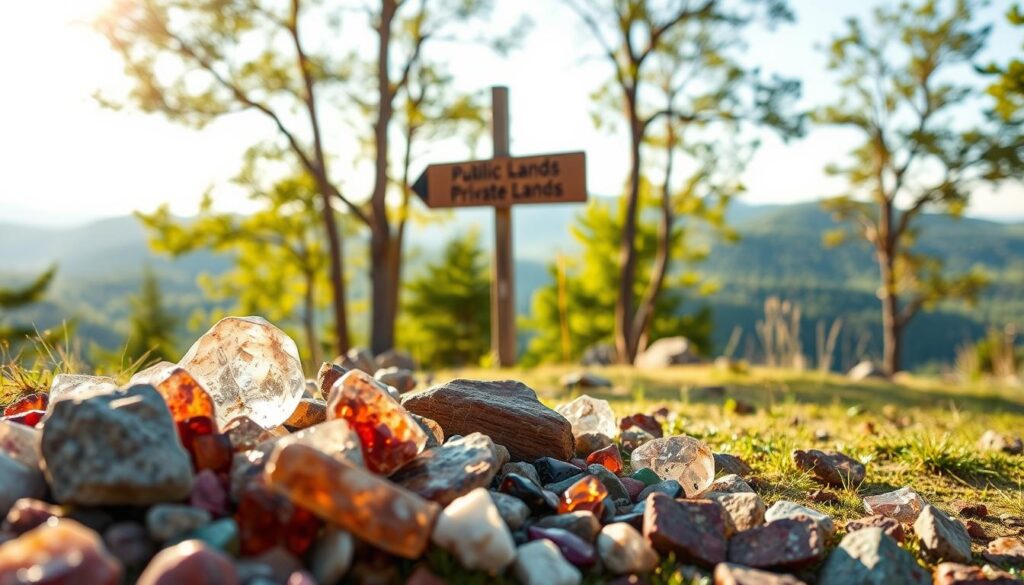
Public vs. Private Land Regulations
Rockhounding in Vermont needs you to know the rules for public and private lands. The state has different rules for each. Knowing these rules is key for a good and legal rockhounding trip.
Rules for State Parks and Public Lands
In Vermont, state parks and public lands have their own rockhounding rules. Rockhounding for personal use is usually okay. But, some activities might need permits or be only allowed in certain spots.
Private Property Considerations
On private land, you need the owner’s okay to rockhound. It’s very important to get permission before collecting rocks or minerals. Some private lands, like those with mining claims, might have extra rules.
Mining Claims in Vermont
Mining claims in Vermont have their own set of rules. Knowing the difference between active and abandoned claims is important.
Active vs. Abandoned Claims
Active mining claims are being worked on now. Abandoned claims are not. The rules for these claims are different. Rockhounds need to know if a claim is active or abandoned before collecting.
| Land Type | Regulations | Permissions Needed |
|---|---|---|
| State Parks and Public Lands | Generally allowed for personal use; some restrictions | Permits may be required |
| Private Property | Requires landowner permission | Explicit consent from landowner |
| Active Mining Claims | Subject to mining regulations | Permission from claim holder |
| Abandoned Mining Claims | May be open to rockhounding with restrictions | Verification of claim status needed |
Protected Areas and Restrictions
Rockhounds in Vermont need to know about protected areas and rules. Some places in Vermont are special because of their nature or history. It’s important for rockhounds to follow these rules.
National Forests and Wilderness Areas
National forests and wilderness areas in Vermont have their own rules. Some places might need a permit. Others might limit what tools you can use.
Historical and Archaeological Sites
Places with history or old ruins are off-limits for rockhounding. Laws protect these sites to keep them safe.
Seasonal and Environmental Restrictions
Some areas have rules based on the season or environment. Rockhounds should think about these rules when planning their trips.
| Protected Area | Restrictions | Permits Required |
|---|---|---|
| National Forests | Equipment restrictions | Yes |
| Wilderness Areas | Activity limitations | Yes |
| Historical Sites | No rockhounding allowed | No |
Knowing about these protected areas and rules helps Vermont rockhounds have a safe and legal time.
Tools and Equipment Regulations
It’s important to know the rules about tools and equipment for rockhounding in Vermont. The state has rules to make sure rockhounding is done right.
Permitted Tools
Rockhounds can usually use rock hammers, hand lenses, and chisels to find specimens. But, always check with local authorities for any special rules.
Restricted Equipment
Some tools, like motorized diggers or explosives, might be off-limits or need special permits. Knowing what’s okay and what’s not is key.
Transportation of Specimens
When moving specimens, make sure you’re not breaking any rules about moving geological stuff. Here’s a quick summary:
| Tool/Equipment | Permitted | Restricted |
|---|---|---|
| Rock Hammers | Yes | No |
| Motorized Diggers | No | Yes |
| Hand Lenses | Yes | No |
Penalties and Enforcement
To keep Vermont’s natural resources safe, it’s key to know the rules. Breaking these laws can lead to big fines and legal trouble.
Legal Consequences
Vermont can fine violators from $100 to $1,000. If you break the rules again, you might face misdemeanor charges.
| Offense | Fine | Additional Penalty |
|---|---|---|
| First-time violation | $100-$500 | Warning |
| Repeat offense | $500-$1,000 | Misdemeanor charge |
Reporting Violations
It’s important to report any rule breaks. If you see someone breaking the rules, tell Vermont State Authorities or local police.
Common Infractions
Some common mistakes include collecting minerals where you shouldn’t, not getting the right permits, and harming the environment. Knowing these can help you avoid trouble.
Rockhounding in Vermont: A Responsible Hobby
Rockhounding in Vermont is a fun hobby if done right. It’s important to know the state’s laws and rules. This way, we can enjoy it now and keep it for the future.
Rockhounds should always respect private and public lands. Knowing the Rockhounding Laws in Vermont helps a lot. It makes sure everyone has a good time.
Following the rules for hunting gems in Vermont is key. It makes the hobby better and helps protect the state’s rocks. Vermont has a lot to show for its geological history, whether you’re new or experienced.
FAQ
What are the rockhounding regulations in Vermont?
Vermont has rules for rockhounding. State agencies oversee these rules. It’s important to know the difference between federal and state rules.
Do I need a permit to go rockhounding in Vermont?
Yes, you might need a permit for rockhounding in Vermont. This depends on where you go and what you collect. Knowing when and how to get a permit is key.
What are the rules for rockhounding on private property in Vermont?
On private land, you need permission to collect rocks or minerals. Always respect the landowner’s wishes to avoid problems.
Are there any restricted areas for rockhounding in Vermont?
Yes, some areas in Vermont are off-limits. This includes national forests and wilderness areas. Historical and archaeological sites are also protected.
What tools are allowed for rockhounding in Vermont?
Vermont has rules for rockhounding tools. Some tools are okay, but others might need special permission. Knowing what’s allowed helps you follow the rules.
What are the penalties for violating Vermont’s rockhounding regulations?
Breaking the rules can lead to fines and legal trouble. It’s important to report any violations to protect Vermont’s natural resources.
How do I obtain a permit for rockhounding in Vermont’s state parks?
To get a permit for state parks, contact the state agency. Follow their application process. Remember, permits can take time, so plan ahead.
Can I collect rocks and minerals in Vermont’s national forests?
National forests in Vermont have their own rules for rockhounding. It’s important to follow these rules to avoid any issues.

Subscribe to Our Newsletter