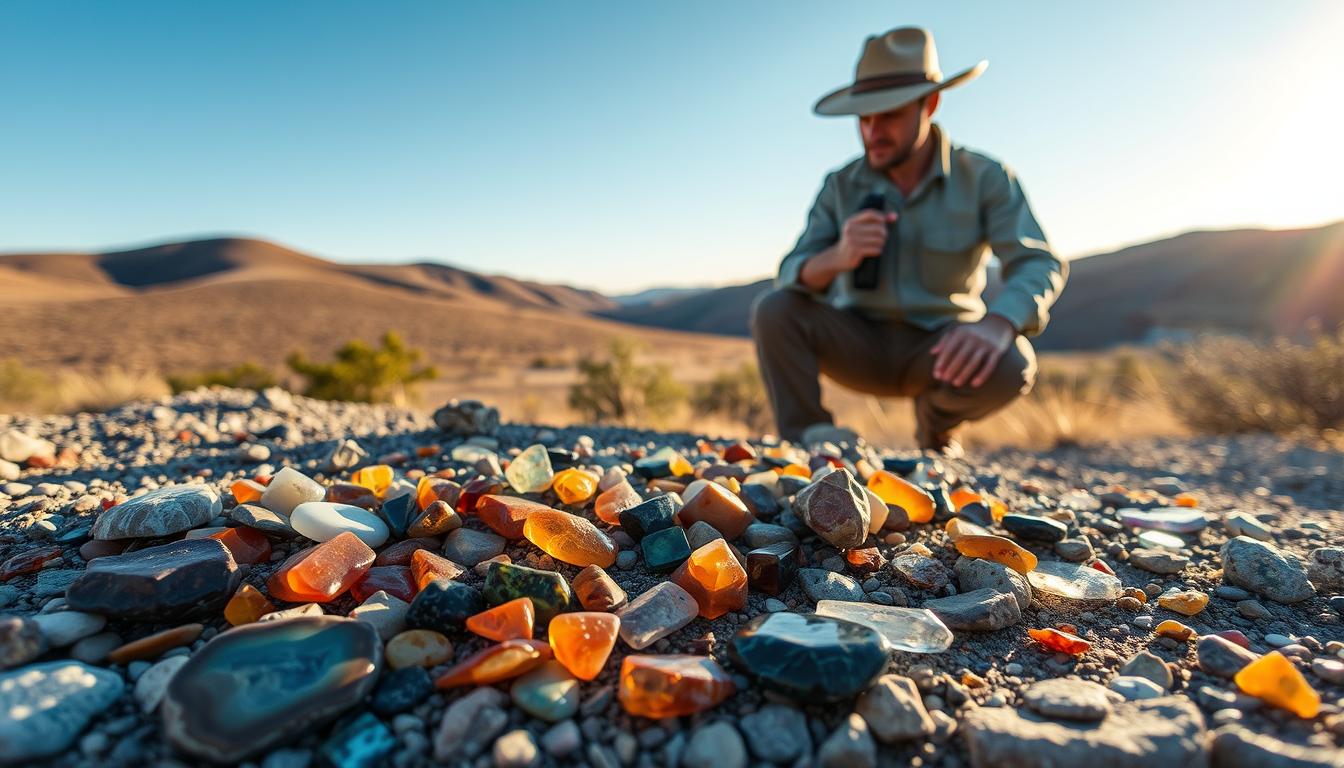
Texas is a great place for rockhounds because of its rich geological history. But, collecting minerals, artifacts, and fossils here has rules. It’s important to know these rules to avoid trouble and help keep these resources safe.
Rockhounds need to know the laws for different lands. This includes state and federal parks, Bureau of Land Management (BLM) land, and private property. A guide on rockhounding in Texas explains that rules change a lot. Some places even ban collecting altogether.
Key Takeaways
- Understand the different types of land and their respective rockhounding regulations.
- Familiarize yourself with Texas state and federal laws regarding mineral and fossil collection.
- Obtain necessary permissions before collecting on private land.
- Be aware of the restrictions on collecting artifacts and vertebrate fossils.
- Check local guidelines for specific areas, such as state parks and BLM land.
Understanding Rockhounding in Texas
Rockhounding in Texas means collecting rocks, minerals, and fossils. It lets people explore the state’s geological wonders. They can find unique specimens along the way.
What Constitutes Rockhounding
Rockhounding is about finding and collecting rocks, minerals, and fossils. People search for these materials on public and private lands.
Types of Materials You Can Collect
In Texas, rockhounding fans can find many geological treasures. These include rocks, minerals, fossils, and artifacts. What you can collect depends on where you are.
Rocks and Minerals
Rocks and minerals are the main attraction for rockhounds. Texas has many different types to discover.
Fossils and Artifacts
Fossils and artifacts are also sought after. They tell us about Texas’s past and can be found in many places.
Equipment Regulations
There are rules about the equipment used for rockhounding. It’s important to follow these to stay within the law.
Rockhounding Laws and Rules in Texas
To enjoy rockhounding in Texas, you need to know the laws. Texas has strict rules for rock collecting. It’s important to understand these laws and get the right permits.
State Laws Governing Rock Collection
Texas state laws control rockhounding, mainly in state parks and public lands. The Texas Parks and Wildlife Department (TPWD) manages rock, mineral, and fossil collection. Collectors can gather some materials for personal use, but commercial collection needs special permits.
- Check with TPWD for specific rules on what can be collected in state parks.
- Some areas may be closed to collection due to environmental or conservation concerns.
Federal Regulations Applicable in Texas
Federal laws also apply to rockhounding in Texas, in areas managed by the Bureau of Land Management (BLM) and the U.S. Forest Service. Federal lands have their own rules for rock collection, including permits and restrictions on certain materials.
- Check with the relevant federal agency for specific regulations on the land you’re interested in.
- Understand the difference between recreational and commercial collecting on federal lands.
Permit Requirements and How to Obtain Them
Depending on where and what you collect, you might need permits. The type of permit needed can vary, from a simple recreational permit to more complex permissions for commercial activities. To get a permit, collectors should:
- Contact the relevant state or federal agency managing the land.
- Provide necessary information, such as the purpose of collection and the materials sought.
Penalties for Illegal Collection
Illegal rock collection can lead to fines and confiscation of materials. It’s important to understand and follow Texas rockhounding laws to avoid penalties. Collectors should know the laws to have a safe and legal rockhounding experience.
Public vs. Private Land Regulations
To rockhound legally in Texas, knowing the rules for public and private lands is key. The state’s varied landscapes offer many spots for rockhounding. But, the laws for collecting minerals and rocks differ based on the land type.
Collecting on State Parks and Public Lands
Texas state parks and public lands have areas where rockhounding is allowed. But, there are rules to follow. These rules help protect the environment and preserve natural resources.
Quantity Limitations
On state parks and public lands, there are limits on how much you can collect. These limits help prevent over-collection. For example, you might only be allowed a certain amount per day.
Protected Areas
Some areas in state parks and public lands are off-limits due to their importance. Rockhounds must stay away from these areas. It’s important to check with park rangers or local authorities to know which areas are protected.
Rules for Private Property
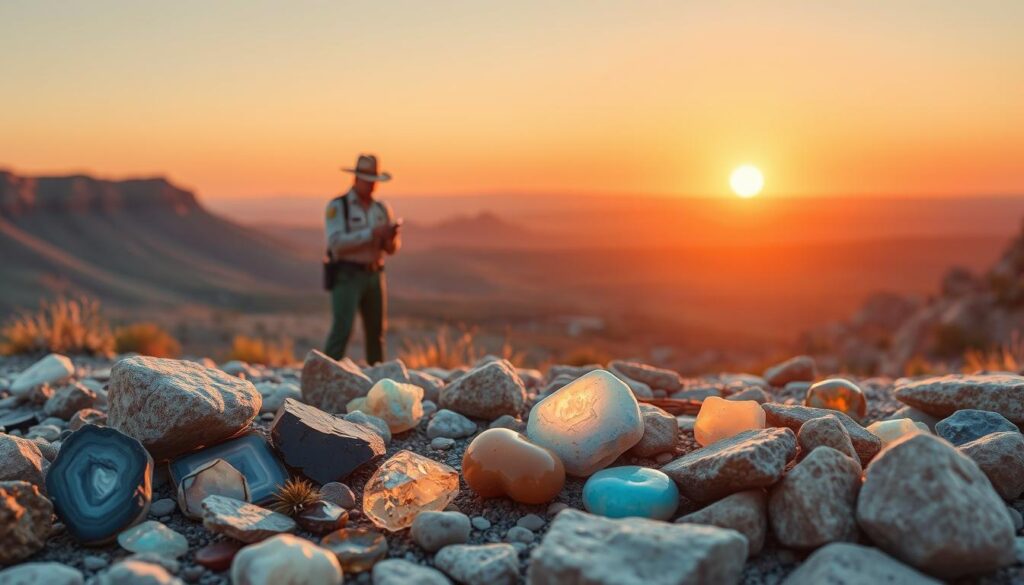
Before collecting on private property, you need the landowner’s permission. Getting written consent is a must. Also, you should follow any specific rules the landowner sets.
BLM and National Forest Lands in Texas
The Bureau of Land Management (BLM) and National Forest lands in Texas also offer rockhounding spots. These federal lands usually allow mineral collecting. But, you must follow regulations, including getting any needed permits and following local rules.
Knowing and following these rules is important. It helps you enjoy rockhounding in Texas. It also helps protect the state’s natural beauty and resources for the future.
Legal Rockhounding Locations in Texas
Texas has many places where you can rockhound legally. You can find rocks, minerals, and fossils in state parks and fee dig areas. It’s a great way for rock lovers to explore and collect.
State Parks That Allow Collection
Many state parks in Texas let you collect rocks and minerals. Big Bend Ranch State Park is famous for its unique rocks. Hueco Tanks State Park has a wide variety of rocks and minerals.
Popular Legal Collection Sites
There are many legal places to collect rocks in Texas. They are found all over the state.
North Texas Locations
In North Texas, around Dallas and Fort Worth, you can find many places to collect. Gravel pits and creek beds have agate, jasper, and more.
Central and West Texas Locations
Central and West Texas are full of geological wonders. Places like Llano and San Angelo are great for finding quartz crystals and fossils.
| Location | Region | Notable Finds |
|---|---|---|
| Big Bend Ranch State Park | West Texas | Agate, Jasper, Quartz |
| Hueco Tanks State Park | West Texas | Rocks, Minerals, Fossils |
| Llano | Central Texas | Quartz Crystals, Topaz |
Fee Dig Areas and Rock Shops
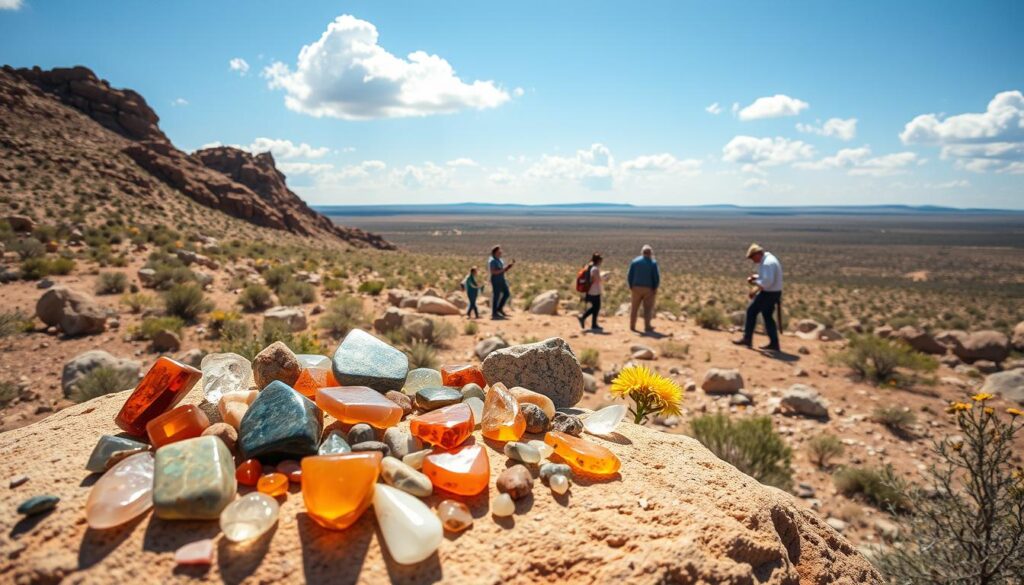
Fee dig areas let you dig for rocks and minerals for a fee. Many rock shops in Texas also have these areas. They are perfect for finding special rocks.
Conclusion
Knowing and following rockhounding laws is key for the hobby’s future in Texas. The state’s varied geology provides many chances for rockhounding. But, it’s important to know the rules that guide this activity.
Rockhounding laws in Texas change depending on where you are. This includes state parks, national forests, and BLM areas. Knowing these rules helps avoid trouble and keeps the hobby alive.
By sticking to the rules, rockhounding fans can enjoy their hobby and protect Texas’ natural beauty. This means getting the right permits, respecting private land, and not taking too much.
Good rockhounding habits not only save Texas’ geological wonders but also make the hobby look good. So, rockhounding fans should keep exploring Texas’ geological wonders while following the laws.
## FAQ
### Q: What is rockhounding, and what does it entail?
A: Rockhounding is a hobby where people collect rocks, minerals, fossils, and artifacts. They search for these items in different places. This includes public and private lands, following the laws and rules.
### Q: What types of materials can I collect while rockhounding in Texas?
A: In Texas, you can find rocks, minerals, fossils, and artifacts. But, what you can collect depends on where you are. For example, some state parks let you collect fossils, while others don’t.
### Q: Do I need a permit to go rockhounding in Texas?
A: Yes, sometimes you need a permit to collect certain items. This is true for public lands or protected areas. The rules change based on where you are and what you’re collecting. Always check with the right people before you start.
### Q: Can I collect rocks and minerals on private property in Texas?
A: To collect on private land, you must get the owner’s okay. Trespassing is against the law. Collecting without permission can lead to trouble. Always ask for permission first.
### Q: What are the rules for collecting on BLM and National Forest lands in Texas?
A: BLM and National Forest lands have their own rules for rock collecting. You can usually collect small amounts for personal use. But, collecting for money or in certain areas might need a permit.
### Q: Are there any specific laws or regulations I should be aware of when rockhounding in Texas?
A: Yes, Texas has laws for rockhounding. These include rules on permits, how much you can collect, and protected areas. Knowing these laws helps you avoid trouble and rockhounds responsibly.
### Q: Can I collect fossils in Texas state parks?
A: Some Texas state parks let you collect fossils, but others don’t. Or they might have special rules. Always check with park rangers or the Texas Parks and Wildlife Department.
### Q: What are some popular rockhounding locations in Texas?
A: Texas has many places for rockhounding, like the Llano River and Big Bend National Park. State parks are also good spots. But, each place has its own rules. Always ask before you collect.
### Q: Are there any fee dig areas or rock shops in Texas?
A: Yes, Texas has places where you can collect rocks and minerals for a fee. These spots have their own rules. Make sure to check them before you start collecting.

Subscribe to Our Newsletter