Pennsylvania is a great place for rockhounds. Its varied landscape, shaped by the Appalachian Mountains, is full of rocks, gemstones, and minerals. Before you start collecting rocks, you need to know the rules.
Rockhounding is allowed in Pennsylvania, but some places may not let you. Always check the rules for the land you’re on. Some places, like quarries and mines, are only open to certain groups, like mineral clubs.
To learn more about rockhounding in Pennsylvania, check out this guide. It has tips on the best places and rules to follow.
Key Takeaways
- Check land access rules before collecting rocks.
- Some quarries and mines are restricted to sanctioned groups.
- Rockhounding is legal in Pennsylvania, but some state lands may prohibit it.
- Always check with park rangers about specific rules for fossil or rock collecting in state parks.
- Be aware of safety signs and avoid areas that look unsafe.
Understanding Rockhounding Laws and Rules in Pennsylvania
Rockhounding is a hobby of collecting rocks and minerals. In Pennsylvania, there are laws and rules to follow. It’s important for hobbyists to know these to enjoy their hobby legally and protect the environment.
Definition of Rockhounding in Legal Terms
In Pennsylvania, rockhounding is seen as a fun activity. It means collecting rocks, minerals, and fossils for personal use, not for selling. The state’s laws say what can be collected, where, and how.
Current Legal Framework for Rock Collecting in PA
Pennsylvania’s laws for rock collecting focus on public lands. The Bureau of Land Management (BLM) and the Pennsylvania Department of Conservation and Natural Resources (DCNR) play big roles. The BLM lets people collect rocks and minerals for personal use on public lands, as long as it’s not for money.
Governing Bodies Overseeing Mineral Collection
The Pennsylvania Department of Conservation and Natural Resources (DCNR) and the Bureau of Land Management (BLM) lead the way. The DCNR looks after state parks and forests. The BLM manages federal lands. The Pennsylvania Geological Survey also helps with geological questions.
Public Land Regulations for Rock Collectors
Pennsylvania’s public lands are great for rockhounds. But, it’s key to know the rules for collecting rocks.
State Parks and Forests Regulations
In Pennsylvania, state parks and forests are run by the Department of Conservation and Natural Resources (DCNR). Rock collecting is okay here, but there are rules. For example, metal detecting is allowed in some parks, but you need a permit.
State Game Lands and Wildlife Areas
State Game Lands, managed by the Pennsylvania Game Commission, have their own rules. Rock collecting for personal use is okay, but it can’t disrupt hunting or other activities. Some areas might be off-limits for collecting because of environmental reasons.
Quantity Limitations and Tool Restrictions
In Pennsylvania, there are limits on how much you can collect. Hand tools are usually okay, but mechanical equipment might need a permit.
Hand Tools vs. Mechanical Equipment Rules
Hand tools like rock hammers and hand lenses are usually fine for collecting. But, mechanical tools like rock saws or excavators often need special permission. Always ask the right people before using mechanical tools.
Collection Limits by Weight and Volume
There are also limits on how much you can collect by weight and volume. These limits change based on where you are. Collecting for personal use is usually okay within reasonable limits. But, for bigger or commercial collections, you might need more permits.
Permit Requirements and Documentation
Rockhounding in Pennsylvania is a fun hobby. But, you must know the rules for collecting rocks, minerals, and fossils.
When Permits Are Required for Rockhounding
Some collecting needs permits, like for selling items. If you want to sell rocks, minerals, or fossils, get a permit.
How to Apply for Collecting Permits
To get a permit, contact the Pennsylvania Department of Conservation and Natural Resources (DCNR) or the Pennsylvania Game Commission.
Documentation to Carry While Collecting
Always carry important documents when collecting. This includes your collecting permit, ID, and other necessary permits.
Commercial vs. Recreational Collection Permits
There are permits for selling and for personal use. Commercial permits are for selling, and recreational permits are for personal use.
| Permit Type | Description | Required For |
|---|---|---|
| Commercial Permit | Required for collecting for sale | Businesses or individuals selling collected materials |
| Recreational Permit | For personal use | Hobbyists or individuals collecting for personal use |
Private Property and Permission Requirements
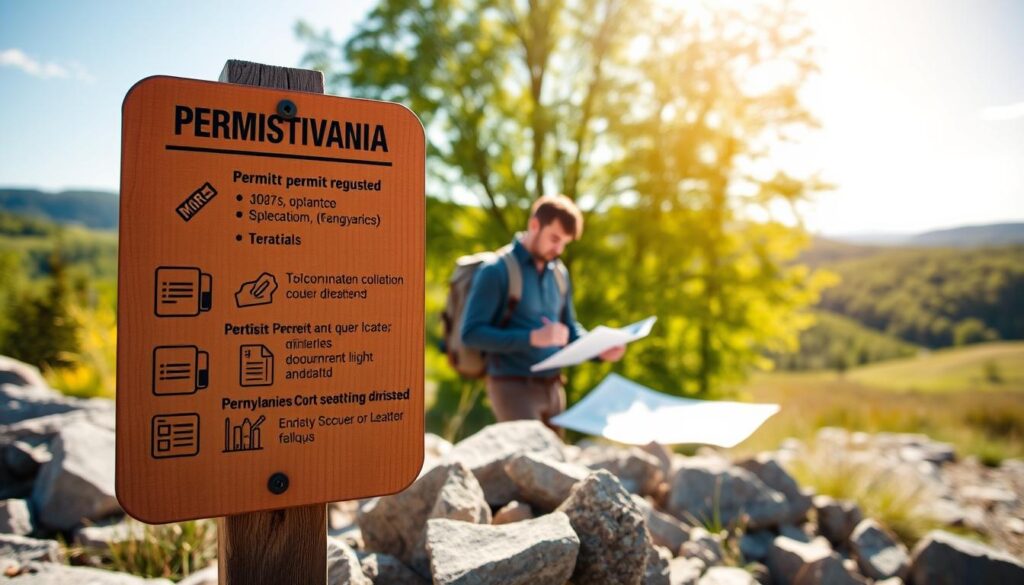
In Pennsylvania, rockhounding on private land needs permission. Without it, you could face trespassing charges.
Legal Requirements for Collecting on Private Land
Pennsylvania law says you must get written permission to collect on private land. This permission should be in writing. It’s smart to keep a copy of it.
To collect safely and smoothly, do the following:
- Find out who owns the land and where it is.
- Get written permission from the owner.
- Know any special rules or limits on the land.
Obtaining Written Permission from Landowners
To get permission, you can use a permission slip or a letter. The slip or letter should have:
- Your name and how to reach you.
- A clear description of the land and what you plan to collect.
- The owner’s signature and when they signed it.
Adding a map or diagram of the land is a good idea too.
Liability Considerations When Rockhounding
Rockhounding on private land can be risky. You should know these risks and how to avoid them.
Insurance Recommendations
Getting liability insurance is a good idea. It can help if accidents or damages happen.
Waiver Forms and Agreements
Landowners might ask you to sign a waiver or agreement. These documents can protect both you and the landowner in case of problems.
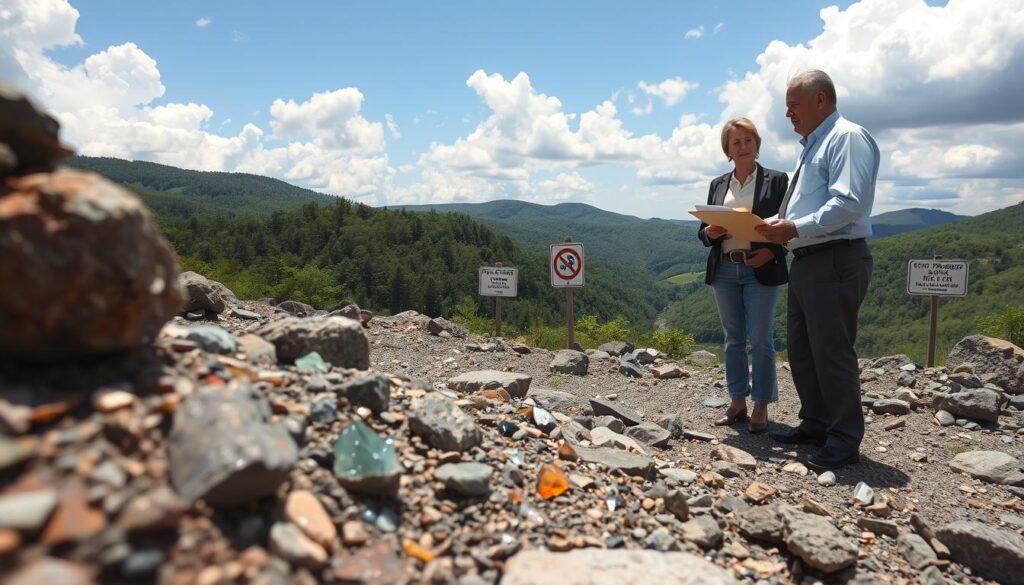
Specific Material Regulations and Protected Sites
Pennsylvania has a rich geological history. It offers many sites for rockhounding and fossil hunting. But, the state also protects its natural and cultural resources. It’s important for collectors to know these rules to collect responsibly.
Mineral Collecting Guidelines
In Pennsylvania, you can collect minerals on public lands for personal use. But, there are specific guidelines. For example, collecting minerals for money often needs a permit. Some areas might be closed due to environmental or cultural reasons.
Fossil Collection Rules in Pennsylvania
Fossil collecting is popular in Pennsylvania. The state is known for its fossil-rich areas. You can collect fossils on public lands for personal use, but there are rules. Some fossils in state parks might need a special permit.
Protected Sites and Environmental Considerations
Pennsylvania has many protected sites. These include state parks, wildlife areas, and historical sites. These places are protected for their environmental, cultural, or historical value. Collecting in these areas is often restricted or banned.
Wetlands and Waterways Protections
Wetlands and waterways in Pennsylvania are protected by law. They are important for biodiversity and ecosystems. Certain collecting activities in these areas are regulated or banned.
Endangered Species Habitats
Pennsylvania has endangered species and their habitats are protected. Collecting that could harm these species or their homes is regulated or banned. It’s important for collectors to know these rules to avoid harm.
For more information on rockhounding in Pennsylvania, check out theBureau of Land Management’s guidelines. Knowing and following these rules helps preserve Pennsylvania’s natural and cultural heritage.
[link-whisper-related-posts]Conclusion
Rockhounding Laws and Rules in Pennsylvania protect the state’s geological treasures. These rules help keep the hobby sustainable. They require rockhounds to follow certain guidelines.
To rockhound responsibly, you need to know the laws. This means getting the right permits and respecting private land. You also have to follow rules about collecting minerals and fossils.
Following Pennsylvania’s rules helps keep the state beautiful. It also makes sure rockhounding can continue for a long time. This is key for protecting the state’s geological wonders.
In short, knowing and following Pennsylvania’s rockhounding laws is very important. It lets rockhounds enjoy their hobby while helping to save the state’s geological treasures.
FAQ
What is rockhounding, and is it allowed in Pennsylvania?
Rockhounding is collecting rocks. In Pennsylvania, it’s allowed but with rules. Knowing these rules helps you enjoy the hobby and protect the state’s rocks.
What are the governing bodies overseeing mineral collection in Pennsylvania?
State and federal agencies watch over rock collecting in Pennsylvania. The Pennsylvania Department of Conservation and Natural Resources and the U.S. Bureau of Land Management are in charge.
Can I collect rocks in Pennsylvania state parks and forests?
Yes, you can collect rocks in state parks and forests. But, there are rules about what you can take and how much. Also, the tools you use matter.
Are there any restrictions on collecting fossils and minerals in Pennsylvania?
Yes, collecting fossils and minerals has its limits. Places with historical or environmental value are off-limits. You might need a special permit to collect there.
Do I need a permit to collect rocks in Pennsylvania, and how do I apply for one?
A permit might be needed, depending on where and why you’re collecting. To get one, contact the Pennsylvania Department of Conservation and Natural Resources. They’ll guide you through the application.
Can I collect rocks on private property in Pennsylvania?
Yes, but you need the landowner’s permission first. It’s also important to know your responsibilities when collecting on private land.
What are the rules for collecting on state game lands and wildlife areas?
Collecting on state game lands and wildlife areas has its own rules. It’s mostly for personal use, but there are some restrictions.
Are there any specific regulations for collecting minerals and fossils in Pennsylvania?
Yes, collecting minerals and fossils has its own set of rules. There are guidelines for each, and some places are off-limits due to their historical or environmental value.
How can I ensure that my rockhounding activities are environmentally sustainable?
To rockhound sustainably, follow the rules and respect private property. Also, try to leave as little impact as possible on the environment.

Subscribe to Our Newsletter