

For those who love rockhounding, knowing the rules is key. In Ohio, there are specific rules and laws for this hobby. They tell you where and how to rockhound.
Ohio’s varied landscapes make it great for rockhounding. You can find unique minerals and fossils at many sites. But, it’s important to follow the regulations to do it right.
Knowing Ohio’s rockhounding laws lets you enjoy your hobby. You can do it without hurting private property, protected areas, or the environment.
Key Takeaways
- Understanding Ohio’s rockhounding regulations is essential for responsible hobby practice.
- Ohio’s geological diversity offers numerous rockhounding opportunities.
- Familiarity with local laws helps protect the environment and private property.
- Rockhounding laws vary by location within Ohio.
- Responsible rockhounding ensures the sustainability of the hobby.
Understanding Rockhounding in Ohio
Ohio is full of rocks and minerals for rockhounds to find. Its varied landscapes make it perfect for this hobby. Many types of rocks and minerals can be discovered here.
What Defines Rockhounding Activities
Rockhounding is about collecting rocks, minerals, and fossils. It’s a hobby that needs patience and a good eye. People search different places to find these treasures.
Geological Treasures of the Buckeye State
Ohio has many geological wonders. The Ohio Department of Natural Resources says there are many types of rocks and minerals here. Places like glacial deposits, limestone caves, and riverbeds are full of fossils and minerals.
For more info on rockhounding rules in Ohio, check out OakRocks.net. It’s a great site for rockhounds.
| Rock/Mineral Type | Common Locations | Notable Characteristics |
|---|---|---|
| Limestone | Southwestern Ohio | Often contains fossils |
| Geodes | Central and southern Ohio | Contain crystals like calcite or quartz |
| Flint | Northwestern Ohio | Used historically for tool-making |
Rockhounding Laws and Rules in Ohio: The Legal Framework
It’s important for rockhounding fans in Ohio to know the laws. The state has a lot of geological history and minerals. But, there are rules to follow.
State Legislation Governing Rock and Mineral Collection
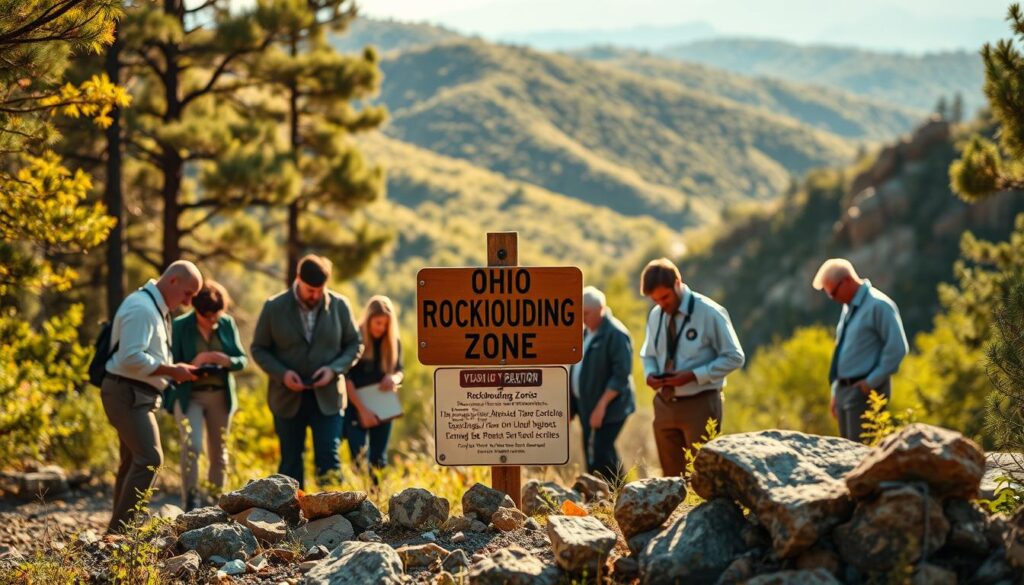
The Ohio Department of Natural Resources (ODNR) sets rules for collecting rocks and minerals. Rockhounds need to know these rules to stay out of trouble.
- Permits are needed for collecting on some state lands.
- Some places are off-limits for collecting because of the environment.
- Always get permission before collecting on private land.
Ohio’s laws try to please rockhounds and protect the environment at the same time.
Federal Laws Affecting Ohio Rockhounds
Federal laws also play a part in rockhounding in Ohio. National parks and federal lands have their own rules for collecting rocks and fossils.
- The Antiquities Act of 1906 protects archaeological sites on federal lands.
- The Paleontological Resources Preservation Act controls fossil collecting on federal lands.
Rockhounds need to know these federal laws when collecting on federal lands in Ohio. This ensures they follow both state and federal rules.
Public vs. Private Land Regulations
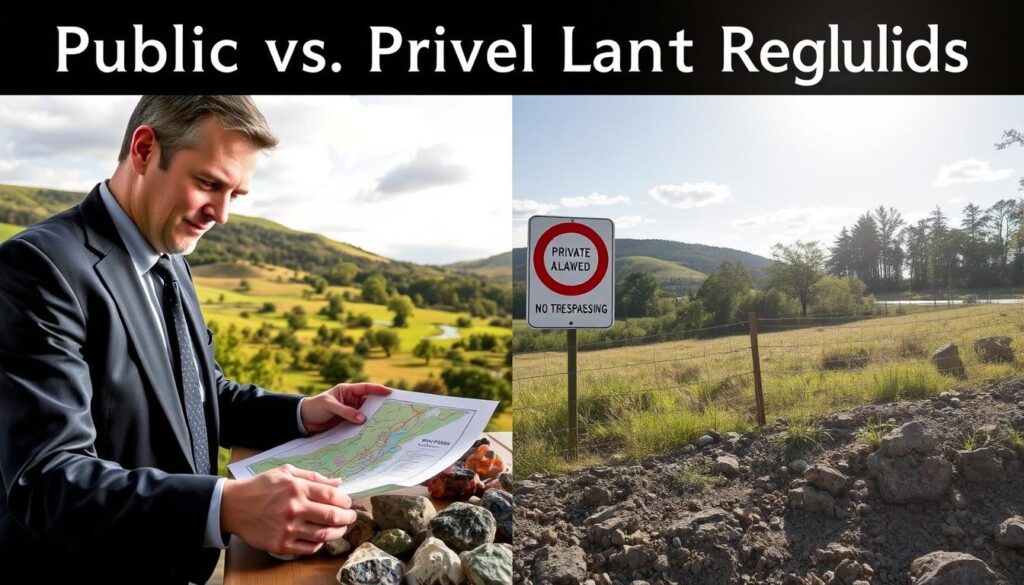
Rockhounding in Ohio means knowing the rules for public and private lands. The state’s varied geology offers many spots for collecting. But, it’s key to know where and how to do it legally.
Collecting on Public Lands in Ohio
Public lands in Ohio are great for rockhounds. The Bureau of Land Management (BLM) lets you collect rocks and fossils. But, there are rules. For example, you can collect for personal use, but commercial activities need extra permits.
Some public lands are closed for collecting. This is because of environmental or cultural reasons. To follow the rules, check the Ohio Department of Natural Resources (ODNR) website. It has guides and publications on Ohio geology to help you.
Private Property Permissions and Restrictions
On private property, you need permission to collect. Trespassing laws in Ohio are strict. Without permission, you could face penalties. Always respect private property and get the right permissions.
Key things to remember for private property include:
- Get written permission from landowners
- Know any special rules or limits set by landowners
- Make sure collecting doesn’t damage the environment or other rights
Waterways and Riparian Rights for Collectors
Ohio’s waterways and riparian areas are full of geological wonders. But, there are rights to consider. Riparian rights affect water and land use. Collectors should be careful in or near waterways, as rules can change.
Knowing the rules for public and private lands, and waterways, is key for rockhounds in Ohio. This way, they can enjoy collecting while respecting landowners and the environment.
State Parks and Protected Areas
The Ohio Department of Natural Resources (ODNR) manages rockhounding in state parks and protected areas. They make sure recreation and conservation go hand in hand. This balance keeps these places beautiful and important for science.
Ohio State Parks Rockhounding Policies
Ohio state parks let you rockhound, but with rules. You can collect rocks, minerals, and fossils for yourself. But, you can’t use power tools or dig a lot. The ODNR wants you to collect responsibly, so you don’t hurt the environment.
Key policies include:
- No use of power tools or explosives
- No collecting in sensitive or protected areas
- Limits on the quantity of materials collected
Wilderness and Conservation Areas Restrictions
Wilderness and conservation areas in Ohio have tough rules. Rockhounding here is often not allowed to keep these places natural. Always check with the ODNR or local authorities before you collect here.
Archaeological Sites and Historical Preservation Areas
Archaeological sites and historical areas are protected by law. Rockhounding here is very limited or not allowed. These places help us learn about Ohio’s past. Rockhounds must know and respect these sites.
Important considerations:
- Check with local authorities before collecting
- Be aware of sensitive or protected areas
- Follow all regulations to preserve Ohio’s natural and cultural resources
Fossil Collecting Regulations in Ohio
Ohio is great for finding fossils because of its rich history. The state has many fossils, like ancient sea creatures and plants and animals from long ago.
Legal Status of Fossil Collection
Fossil hunting in Ohio has rules, mainly for finding animal fossils. The Ohio Department of Natural Resources (ODNR) and the Bureau of Land Management (BLM) have rules. You need a permit to collect some animal fossils.
To learn more about the rules, check out this document. It explains the laws for collecting minerals and fossils.
Notable Fossil Sites and Their Specific Rules
Ohio has many famous fossil spots, each with its own rules. Some places, like state parks, might have special rules for finding fossils. Knowing these rules helps you collect responsibly.
Reporting Significant Finds: Requirements and Procedures
If you find a big fossil, you must report it. You should tell the ODNR. This way, important finds are saved for science and teaching others.
By following the rules, fossil hunters in Ohio help keep the state’s history alive.
Legal Rockhounding Locations and Best Practices
Rockhounds in Ohio need to know the legal spots and how to collect. Ohio’s varied landscapes are perfect for rockhounding. But, it’s important to know where and how to do it right.
Recommended Legal Collection Sites in Ohio
Ohio has many places where you can rockhound. The Ohio Department of Natural Resources (ODNR) manages many spots. These include state parks and wildlife areas. Some top places are:
- The shores of Lake Erie, known for its diverse array of rocks and minerals.
- The Ohio River Valley, which offers a variety of geological formations.
- State parks such as Shawnee State Forest and Tar Hollow State Park, where rockhounding is allowed in designated areas.
Ethical Code of Conduct for Ohio Rockhounds
Rockhounds must follow an ethical code. The ODNR and the Bureau of Land Management (BLM) guide us. They teach us to respect the land and others. Key rules are:
- Collect only what you need and are allowed to take.
- Leave the area as you found it.
- Respect private property and other users.
Penalties and Consequences for Violations
Breaking the rules can lead to big penalties. You might face fines, lose your finds, or even get charged with a crime. It’s vital to know and follow the laws to avoid trouble.
By following the rules and respecting the land, rockhounds can enjoy Ohio’s geology. They also help keep it for others to enjoy in the future.
[link-whisper-related-posts]Conclusion
Knowing the rockhounding laws in Ohio is key for hobbyists. It helps them enjoy their hobby and protect the state’s natural beauty. The rules cover public and private lands, state parks, and protected areas.
Rockhounds can stay out of trouble by learning the laws. This way, they help save Ohio’s geological wonders. There are also recommended spots and best practices for rockhounding responsibly.
In short, following the rockhounding laws in Ohio is vital. It balances the fun of collecting with protecting the environment. This way, rockhounds can keep enjoying their hobby and preserve Ohio’s geological treasures.
FAQ
What is rockhounding, and what activities are involved?
Rockhounding is a hobby where people collect rocks, minerals, and fossils. They search, collect, and preserve these geological treasures.
What are the most common rocks and minerals found in Ohio?
Ohio has many geological wonders. You can find limestone, dolostone, sandstone, agate, and minerals like calcite and quartz.
Do I need a permit to collect rocks and minerals on public land in Ohio?
Yes, some public lands in Ohio need permits for collecting rocks and minerals. Always check with the Ohio Department of Natural Resources for rules.
Can I collect rocks and minerals on private property in Ohio?
To collect on private land, you need the owner’s permission. Always respect private property rights to avoid legal trouble.
Are there any specific rules for collecting fossils in Ohio?
Yes, fossil collecting in Ohio has its own rules. Public lands and protected areas may need permits. Always report big finds to the right authorities.
What are the penalties for violating rockhounding regulations in Ohio?
Breaking the rules can lead to fines or worse. Knowing and following the regulations is key to avoiding penalties.
Where are some recommended legal collection sites in Ohio?
Ohio has many places for rockhounding, like state parks and public lands. Always check the rules for each site.
What is the ethical code of conduct for rockhounds in Ohio?
Rockhounds should respect private property and follow the rules. They should also minimize harm to the environment and report big finds. This helps keep the hobby alive and protects Ohio’s geology.
Can I collect rocks and minerals in Ohio’s state parks?
Some state parks in Ohio let you collect rocks and minerals. But, the rules differ. Always ask the park authorities about any permits needed.
How do I report a significant fossil find in Ohio?
To report a big fossil find, contact the Ohio Department of Natural Resources. The steps may change based on where and what you found.

Subscribe to Our Newsletter