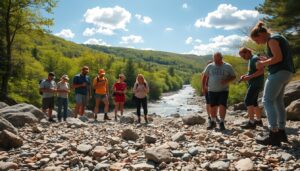
It’s important for rockhounding fans to know the rules in North Dakota. The state has laws for rockhounding on public and private lands. Knowing these laws helps avoid legal trouble.
Rockhounding fans need to learn the rules for different lands. The North Dakota rockhounding regulations explain what’s allowed and what’s not. This way, collectors can enjoy their hobby and help protect the state’s nature.
Key Takeaways
- Understand the laws governing rockhounding on public and private lands.
- Familiarize yourself with regulations on fossil collection and ownership.
- Know the rules regarding metal detecting and gold panning.
- Be aware of the restrictions on collecting rocks and minerals.
- Check the specific regulations for different areas, such as national parks and forests.
Understanding Rockhounding in North Dakota
North Dakota is a great place for rockhounding. Its varied landscapes and rocks offer many minerals to find. People can visit different spots to see what treasures they can find.
Popular Minerals and Rocks in North Dakota
North Dakota is famous for its minerals like agate, quartz, and calcite. You can also find fossils of old plants and animals. These fossils are a big part of the state’s history.
The diversity of minerals and rocks makes it a fun place for rockhounds.
The Importance of Following Legal Guidelines
It’s important to follow rock collecting laws North Dakota. Knowing the legislation on rockhounding in North Dakota is key. These rules help keep the state’s resources safe for everyone.
Defining Recreational vs. Commercial Collection
There’s a big difference between collecting for fun and selling rocks. Recreational collecting is for personal joy. Commercial collecting is when you sell what you find.
Knowing North Dakota mineral collecting guidelines helps you follow the right rules.
Rockhounding Laws and Rules in North Dakota
Rockhounding in North Dakota follows state and federal laws. These rules help balance rockhounding fun with protecting the state’s nature. Knowing these laws is key for anyone wanting to rockhound in North Dakota.
State Legislation Governing Rock and Mineral Collection
North Dakota has laws for collecting rocks, minerals, and fossils. These laws manage these resources on state lands. For example, collecting rocks and minerals for personal use is usually okay on most state lands.
But, there are rules on how and how much you can collect. It’s important to check with state authorities for the latest rules.
Federal Regulations Applicable in North Dakota
Federal laws also apply to rockhounding in North Dakota, mainly on federal lands. The Paleontological Resource Protection Act is a key federal law. It stops people from taking fossils from public lands without a permit.
This law helps protect fossils and ensures collections are done right. Rockhounding fans need to know these federal rules when collecting on federal lands.
Penalties for Violations
Breaking rockhounding rules in North Dakota can lead to big penalties. These can be fines or even criminal charges. The penalty depends on the violation and the land type.
For example, taking fossils from federal lands without a permit can result in big fines. It’s vital for collectors to follow all laws to avoid these penalties.
Public vs. Private Land Regulations
Rockhounding in North Dakota needs clear rules for public and private lands. The state’s varied geology is perfect for finding minerals and fossils. But, knowing the laws for each land type is key.
Collecting on State-Owned Lands
State lands in North Dakota are open for rockhounding. But, there are rules to follow. The North Dakota Geological Survey lists where you can collect.
Collecting for personal use is usually okay. But, always check with local authorities for any special rules.
Federal Land Policies in North Dakota
Federal lands, like those managed by the BLM, have their own rules. The BLM lets you collect rocks and minerals for personal use. But, some areas might be off-limits for environmental or cultural reasons.
National Parks and Protected Areas
National parks and protected areas in North Dakota have strict rules. These rules help keep the areas safe for the future. Collecting rocks, minerals, or fossils is often not allowed.
Private Property Considerations
On private land, you need the owner’s permission to collect. Breaking trespassing laws can lead to serious penalties. Always get permission before collecting on private property.
| Land Type | Collecting Regulations | Permission Required |
|---|---|---|
| State-Owned Lands | Generally allowed for personal use; check local guidelines | No |
| Federal Lands | Allowed for personal use; certain areas restricted | No |
| National Parks and Protected Areas | Collecting often prohibited | No |
| Private Property | Permission required from landowner | Yes |
Specific Collection Restrictions and Permits
North Dakota has rules and permits for rockhounding. These rules help both rockhounds and the state’s nature.
Permit Requirements for Different Areas
Each area in North Dakota has its own permit rules. For example, the BLM needs a permit for fossil collecting on its lands. Always check with local officials for the right permits for your spot.
Quantity Limitations and Size Restrictions
There are limits on how much and how big you can collect. These rules change based on where you are and what you’re collecting. Some places might only let you take a few fossils or certain sizes of minerals.
Special Rules for Fossil Collection
Fossils have their own set of rules. In North Dakota, laws for fossils on state or federal lands might need permits. Knowing these rules is key to avoid trouble.
Protected Specimens and Prohibited Collections
Some things can’t be collected because they’re protected. This includes rare fossils, endangered species, and materials in national parks. Knowing what’s off-limits is important for rockhounding responsibly.
Learning about these rules helps you enjoy rockhounding in North Dakota. It also helps protect the state’s natural treasures.
[link-whisper-related-posts]Conclusion: Responsible Rockhounding in North Dakota
Rockhounding in North Dakota is fun and rewarding if done right. It’s important to know and follow the rules to protect the state’s natural treasures.
Learning about rock collecting laws in North Dakota helps you enjoy your hobby legally and safely. This means respecting where you can collect rocks, getting the right permits, and knowing what you can take.
Being a responsible rockhound helps keep North Dakota’s geology safe for everyone. As you search for minerals and explore, try not to harm the environment. This way, you help keep the hobby alive for others in the future.
By taking care of North Dakota’s beauty, you also help rockhounding stay a fun activity for years to come.
FAQ
What are the rockhounding laws and rules in North Dakota?
Rockhounding laws in North Dakota change based on the land type. State-owned lands, federal lands, national parks, and private property have different rules.
Do I need a permit to go rockhounding in North Dakota?
Whether you need a permit for rockhounding in North Dakota depends on where you go. Some places need permits, while others don’t.
What is the difference between recreational and commercial rockhounding in North Dakota?
Recreational rockhounding is for fun. Commercial rockhounding is for selling rocks, minerals, or fossils. Each has its own rules.
Can I collect rocks, minerals, or fossils on private property in North Dakota?
To collect on private property in North Dakota, you must get permission from the owner.
Are there any restrictions on collecting fossils in North Dakota?
Yes, collecting fossils in North Dakota has special rules. There are areas and specimens you can’t collect.
What are the penalties for violating rockhounding regulations in North Dakota?
Breaking rockhounding rules in North Dakota can lead to fines and penalties. The severity of the violation determines the punishment.
Can I collect rocks, minerals, or fossils in North Dakota’s national parks?
Collecting in North Dakota’s national parks has its own rules. You might need a permit.
Are there any quantity limitations or size restrictions on rockhounding collections in North Dakota?
Yes, there are limits on how much and how big you can collect in North Dakota. These vary by location and type of collection.
What is considered a protected specimen in North Dakota?
In North Dakota, protected specimens include certain fossils, rocks, and minerals. Collecting them might be banned or restricted.
Where can I find more information on rockhounding laws and rules in North Dakota?
For more on rockhounding laws in North Dakota, contact state and federal agencies. The North Dakota Geological Survey and the Bureau of Land Management can help.

Subscribe to Our Newsletter