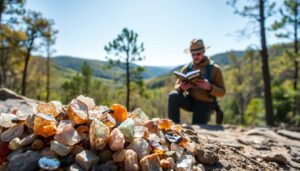
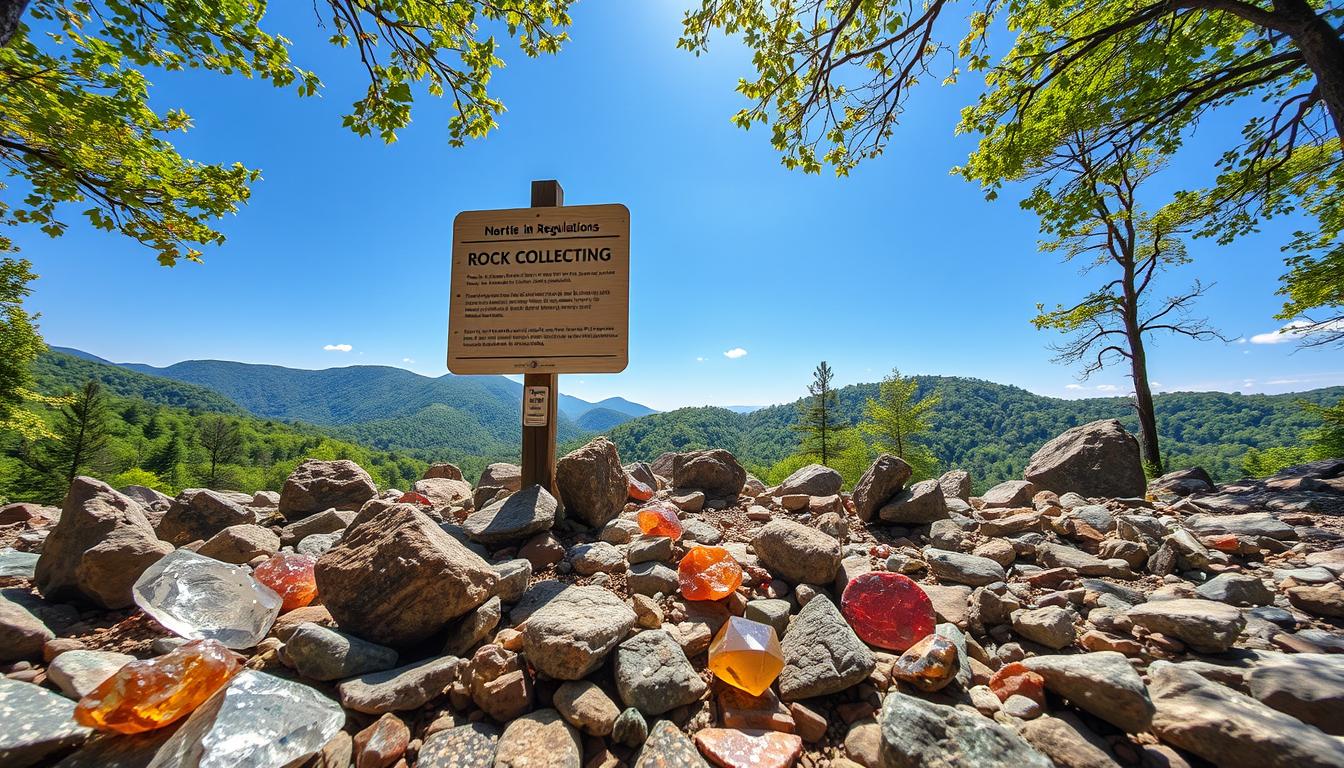
For rockhounding fans, North Carolina is a treasure trove. It has many gem and gold mines. Here, you can search for rubies, sapphires, garnets, emeralds, aquamarines, and gold. Knowing the rules is key for a fun and legal adventure.
The state’s varied geology is perfect for rockhounds. But, it’s important to know the North Carolina rock collecting regulations. This way, you can avoid legal trouble. Rules change depending on where you are, like public, national forest, or private lands.
For example, on public lands managed by the Bureau of Land Management (BLM), you can collect up to 25 pounds a day. Or, you can collect 250 pounds a year.
To learn more about where to go and the rules, check out rockhounding in North Carolina. It has all the details you need.
Key Takeaways
- Understand the regulations before you start rockhounding.
- Different rules apply to public, national forest, and private lands.
- BLM land allows collection up to 25 pounds per day.
- Permission is required for rockhounding on private property.
- Some commercial sites offer rockhounding with an entry fee.
Understanding Rockhounding in North Carolina
North Carolina is famous for its gem-rich rocks. Rockhounding is a fun hobby here. The state’s varied landscape makes it great for finding gems and minerals.
Popular Minerals and Gemstones in NC
North Carolina has many precious gems. Rubies, sapphires, garnets, and emeralds are highly sought. These can be found in mountains and piedmont areas. Rockhounding fans search these spots for treasures.
The Importance of Knowing Local Regulations
Knowing local rules is key for rockhounding in North Carolina. It’s important to follow laws for collecting minerals and gemstones. This ensures the hobby is done right and doesn’t harm the environment.
General Rockhounding Laws and Rules in North Carolina
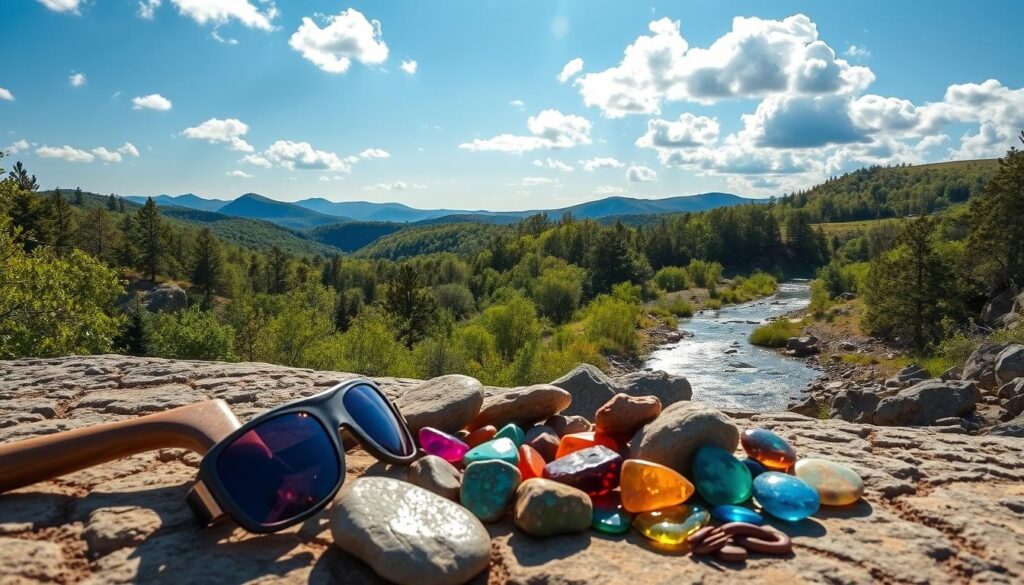
North Carolina has rules for rockhounding. These rules help both rockhounding fans and the state’s nature. They make sure everyone is happy and the environment is safe.
State-Level Regulations
At the state level, North Carolina has rules for rockhounding on state lands. Gemstone collecting laws in North Carolina say what you can collect, where, and how much. Some places let you collect certain things, while others don’t.
Rockhounds need to know the rules can change. It’s important to keep up with the latest laws and any special rules for the places you visit.
Federal Regulations Affecting NC Rockhounds
Federal rules also affect rockhounding in North Carolina. NC mineral collecting restrictions help protect special places and ecosystems. These rules are in areas managed by the U.S. Forest Service and the National Park Service.
For example, national forests in North Carolina have their own rules. Rockhounds must follow these rules to avoid trouble.
Public Land Rockhounding Regulations
It’s key for rockhounding fans in North Carolina to know the rules. This way, they can enjoy their hobby legally and help protect nature. Rockhounding on public lands can be very rewarding, but knowing the rules is important.
National Forests in North Carolina
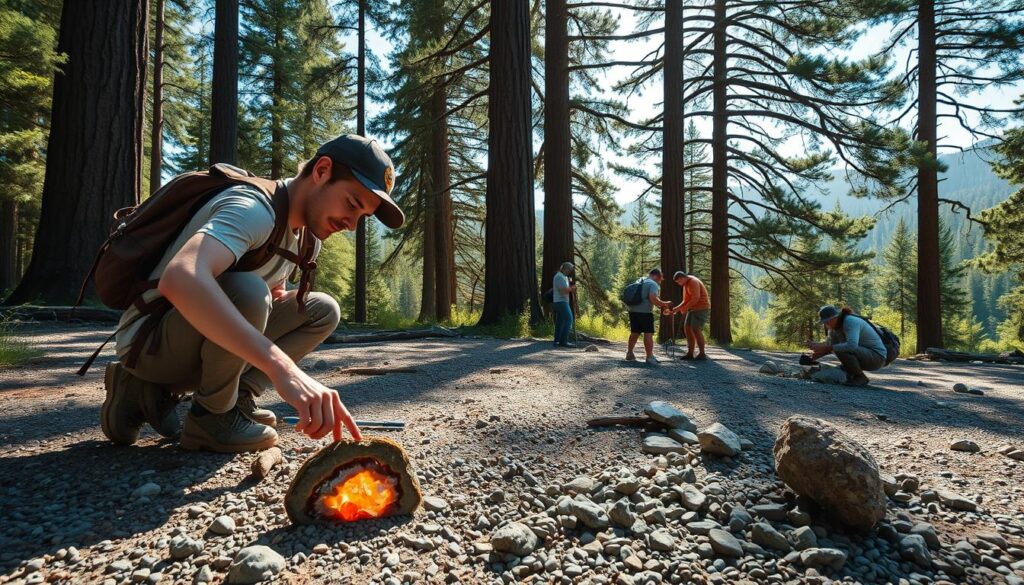
North Carolina’s National Forests are great for rockhounding. The U.S. Forest Service lets you collect rocks and minerals for personal use. But, there are some rules to follow.
For example, you can’t collect in some areas. These areas might be too sensitive for collecting. Always check the rules of the forest you plan to visit.
State Parks and Recreation Areas
State Parks and Recreation Areas in North Carolina are managed by the North Carolina State Parks. These places are mostly for nature and fun, but rockhounding is sometimes allowed. But, you must follow the park’s rules.
This might mean getting a permit or following certain collection guidelines. It’s important to know the rules of each park.
Bureau of Land Management Areas
The Bureau of Land Management (BLM) manages some lands in North Carolina. They let you collect rocks and minerals for personal use, but only in certain ways. You can’t collect in developed areas or where mining is happening.
Before you go, check with the local BLM office for the latest rules. This way, you can enjoy rockhounding while helping to protect North Carolina’s nature for the future.
Private Property and Commercial Mine Regulations
Rockhounding in North Carolina is not just about public lands. It also includes private properties and commercial mines. Each has its own rules. It’s important for rockhounds to know these to collect minerals and gemstones legally and safely.
Fee Mining Operations in North Carolina
North Carolina has many commercial mines for fee mining. Here, rockhounds can dig for minerals and gemstones by paying a fee. The Crabtree Emerald Mine and the Little Pine Garnet Mine are examples.
Fee mining is good for both the mines and the rockhounds. Mines get money, and rockhounds get to find geological treasures safely. It’s key to follow the mine’s rules for a good time for all.
Obtaining Permission for Private Land Access
Rockhounds need permission to search for minerals and gemstones on private land. North Carolina’s trespassing laws are strict. Getting permission is a must to avoid legal trouble.
To get permission, rockhounds should talk to landowners nicely. Explain why they want to rockhound there. A good relationship can lead to more access and even tours. It’s also important to follow any rules the landowner sets.
| Aspect | Fee Mining Operations | Private Land Access |
|---|---|---|
| Access Method | Pay a fee to mine | Obtain landowner’s permission |
| Regulations | Follow mine’s rules | Adhere to landowner’s conditions |
| Benefits | Guided experience, relatively safe | Potential for long-term access, personalized experience |
For more info on rockhounding rules, including federal lands, check the USDA Forest Service website.
Fossil Hunting Guidelines and Restrictions
Fossil hunting in North Carolina has rules to follow. It’s a fun hobby that connects us to nature and helps us learn about Earth’s past.
Fossil collection is subject to specific laws and regulations to protect important fossils. Knowing these rules helps rockhounds enjoy their hobby and help save North Carolina’s fossil history.
Legal Aspects of Fossil Collection in NC
In North Carolina, laws control fossil hunting. The National Park Service doesn’t let you collect rocks, minerals, or fossils in national parks. Also, some fossils are protected by law. It’s important to know these rules to avoid trouble.
Protected Paleontological Resources
Some fossils are very important and need to be protected. These include fossils found on state or federal lands. Rockhounds should know that taking fossils from these places without permission can lead to fines.
To follow the law, it’s best to check with the North Carolina Department of Natural and Cultural Resources or the U.S. Bureau of Land Management before you start fossil hunting.
Permit Requirements and Legal Consequences
Rockhounding in North Carolina needs to follow the law. The state has rules to make sure it’s done right. This helps keep the environment safe.
When Permits Are Required
In North Carolina, you need a permit for some rockhounding. This is true for commercial mining or protected lands. Rockhounds must get the right permits before collecting on state or federal lands. The kind of permit needed depends on where and what you’re doing.
Quantity and Size Restrictions
There are limits on how much you can collect. For personal use, you can take a fair amount. But, collecting too much or using big machines might need a special permit or be banned. Always check with local officials for specific rules.
| Location | Quantity Limit | Size Restrictions |
|---|---|---|
| State Parks | Personal use quantities | No mechanized equipment |
| National Forests | Reasonable amounts for personal use | Hand tools only |
| Private Property | Varies by landowner permission | As agreed with landowner |
Penalties for Violating Rockhounding Laws
Breaking rockhounding laws in North Carolina can lead to big fines. Fines can be hundreds to thousands of dollars, based on the offense. If you keep breaking the rules, things can get worse. You might lose your gear or face criminal charges.
By following the rules, rockhounds can enjoy their hobby. They also help protect North Carolina’s nature for others to enjoy in the future.
[link-whisper-related-posts]Conclusion
North Carolina has many places for rockhounding, like mines and public lands. The Uwharrie National Forest is one of them. It’s important to follow the laws to keep this hobby alive.
The Uwharrie National Forest has a plan for managing these areas. It talks about what activities are allowed and how they will benefit the public. You can find more about it on the USDA Forest Service website.
Rockhounding spots in NC, like national forests and state parks, have rules. These rules help protect important sites and mines. By following these rules, rockhounds can enjoy their hobby and help it last.
Being responsible with rockhounding helps follow the laws in North Carolina. It also keeps the state’s natural and cultural treasures safe for the future.
FAQ
What is rockhounding, and why are there laws governing it in North Carolina?
Rockhounding is collecting rocks, minerals, and gemstones. In North Carolina, laws help protect the environment and lands. They ensure rockhounding is done responsibly.
What are some popular minerals and gemstones found in North Carolina?
North Carolina has many minerals and gemstones. You can find quartz, feldspar, mica, and rubies. The state’s geology offers a wide variety of specimens.
Do I need a permit to go rockhounding in North Carolina’s national forests?
Usually, you don’t need a permit for casual rockhounding in national forests. But, some areas might have special rules. Always check with the U.S. Forest Service first.
Can I collect fossils in North Carolina’s state parks?
Fossil collecting in state parks has its own rules. You can collect fossils for personal use. But, always check with park rangers or the North Carolina State Parks website for details.
What are the rules for rockhounding on private property in North Carolina?
To rockhound on private land, you need the landowner’s permission. Respect the property and any rules the landowner has.
Are there any quantity or size restrictions on rockhounding in North Carolina?
Yes, there are limits on how much and how big you can collect. This is true in national forests and state parks. Always check the rules.
What are the penalties for violating rockhounding laws in North Carolina?
Breaking rockhounding laws can lead to fines or worse. It’s important to know and follow the rules to avoid trouble.
Can I sell the rocks and minerals I collect in North Carolina?
Selling rocks and minerals has its own rules, mainly for public lands. Make sure you understand the laws about selling geological specimens.
How can I ensure I’m rockhounding responsibly in North Carolina?
To rockhound responsibly, follow local laws and get the right permits. Respect private property and the environment. Always leave the area as you found it.

Subscribe to Our Newsletter