New Hampshire is great for rockhounding, collecting rocks and minerals. Its geology is rich and varied, with lots of igneous and metamorphic rocks. The White Mountains offer a special place for rockhounding fans.
It’s important to know the regulations for rockhounding in New Hampshire. Different places have different rules. For example, you need a permit to rockhound on US Forest Service lands. But on BLM lands, you can collect some for yourself. To find out more, check out rockhounding rules.
Key Takeaways
- New Hampshire’s diverse geology makes it a prime location for rockhounding.
- Understanding local regulations is essential for responsible rockhounding.
- Different lands have different rules for rockhounding, such as US Forest Service and BLM lands.
- Permits may be required for rockhounding in certain areas.
- Collecting for personal use is generally allowed, but commercial collecting has stricter rules.
Understanding Rockhounding in New Hampshire
New Hampshire has a special rockhounding scene. It’s full of different rocks and minerals. The state’s mountains and valleys offer many places to search for rocks.
What is Rockhounding?
Rockhounding is a hobby where people look for and collect rocks and minerals. They explore different areas to find interesting specimens. In New Hampshire, this hobby is rewarding because of the state’s rich mineral resources.
Popular Minerals and Gemstones in New Hampshire
New Hampshire is famous for smoky quartz, amethyst, and beryl. These minerals can be found all over the state. Smoky quartz is very popular because of its unique look.
Why Regulations Matter
Rules are important for rockhounding to be done right. They help protect New Hampshire’s natural resources. Knowing these rules is key for a good rockhounding experience.
| Mineral/Gemstone | Location | Significance |
|---|---|---|
| Smoky Quartz | Various locations | Highly valued for its unique color |
| Amethyst | Mountainous regions | Prized for its deep purple hue |
| Beryl | Granite areas | Notable for its hardness and clarity |
Knowing about rockhounding and New Hampshire’s minerals helps appreciate the need for rules. This knowledge ensures rockhounding is done right.
Rockhounding Laws and Rules in New Hampshire
It’s important to know the laws about rockhounding in New Hampshire. This hobby is popular because of the state’s rich geological history. It’s good for both hobbyists and professionals.
State-Level Regulations
New Hampshire has rules for rockhounding. You can collect rocks and minerals for personal use. But, there are limits on how much you can take and where you can go.
Key state regulations include:
- Prohibitions on collecting in state parks and forests without permission.
- Restrictions on the use of certain collecting tools.
- Requirements for reporting significant discoveries.
Federal Regulations Applicable in New Hampshire
Federal laws also apply, like in the White Mountain National Forest. The Bureau of Land Management (BLM) lets you collect small amounts of nonrenewable resources for fun on public lands.
For more on federal rules, check out the guide on mineral collecting regulations.
Commercial vs. Recreational Collection
It’s key to know the difference between commercial and recreational rockhounding. Recreational collecting is usually okay on public lands. But, commercial activities need special permits or mining claims.
Considerations for commercial collectors include:
- Obtaining the necessary permits and licenses.
- Complying with environmental impact assessments.
- Adhering to specific regulations regarding the sale of collected materials.
By following these rules, rockhounds can enjoy their hobby. They also help manage New Hampshire’s geological resources well.
Public Land Rockhounding Regulations
Rockhounding on public lands in New Hampshire is exciting. But, it’s important to know the rules. These rules help protect the environment and the rockhounding community.
State Parks and Forests
In New Hampshire, state parks and forests are great for rockhounding. But, there are rules to follow. For example, you can collect minerals for fun, but selling them needs a special permit.
Always check with park rangers or the New Hampshire Division of Parks and Recreation for the latest rules.
White Mountain National Forest Rules
The White Mountain National Forest is a favorite spot for rockhounds. Here, you can gold pan for free, and collect minerals on the surface in certain areas with a permit. For more details, visit the official forest service website.
Other Public Lands
New Hampshire has more public lands, like conservation areas and town-owned properties. Each has its own rules.
Conservation Areas
Conservation areas are special because of their natural beauty. Rockhounding here might need permission or be limited. It’s important to talk to local groups or land managers to know the rules.
Town-Owned Properties
Town-owned lands have different rules for rockhounding. Some let you collect for fun, while others are stricter. Always check with local offices or land managers to follow the rules.
In summary, rockhounding in New Hampshire’s public lands needs understanding of the rules. Knowing these rules helps everyone enjoy rockhounding while helping protect the state’s nature.
Private Property and Claim Considerations
Rockhounding in New Hampshire means knowing about private property rights. It’s key to follow the rules to avoid trouble.
Permission Requirements
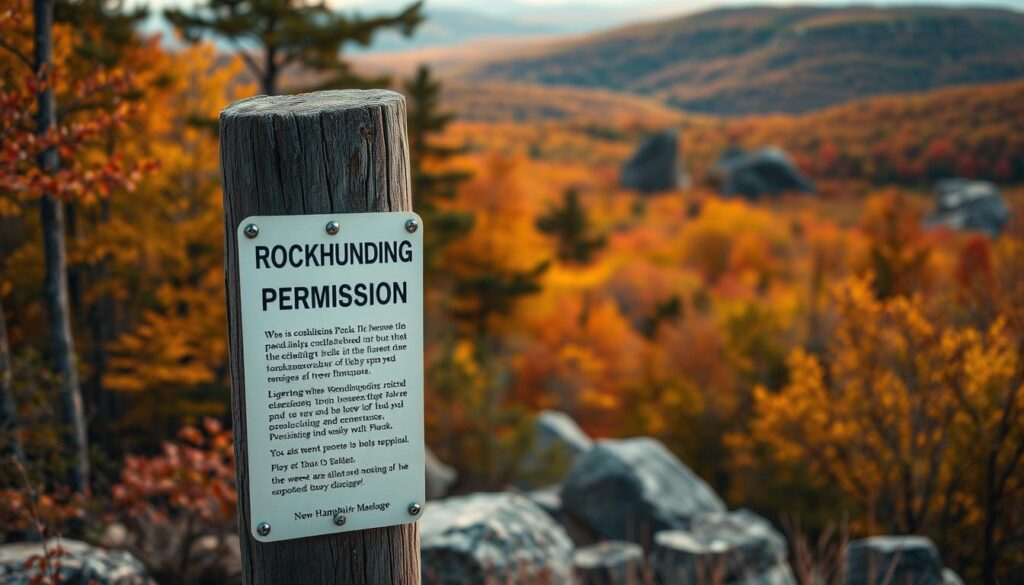
Getting permission from the landowner is a must before collecting rocks or minerals. Trespassing or collecting without permission can cause big legal problems. Always get the right permits and approvals before going on private land for rockhounding.
Mining Claims in New Hampshire
New Hampshire has its own rules for mining claims. Rockhounds need to know these rules to follow them. Mining claims can be tricky, and knowing the difference between recreational and commercial collecting is important.
| Type of Claim | Description | Regulations |
|---|---|---|
| Recreational | For personal use, not for commercial purposes | Must follow state and federal guidelines |
| Commercial | For business purposes, selling minerals or rocks | Requires special permits and licenses |
Liability Issues
Liability is a big worry when rockhounding on private property or mining claims. If you damage something or hurt someone, you might be blamed. Knowing your duties and being careful can lower these risks.
By knowing and respecting private property and mining claims, rockhounds can have fun while staying out of trouble. Always check and follow New Hampshire’s laws and rules about rockhounding.
Permits, Restrictions, and Penalties
To enjoy rockhounding in New Hampshire, you need to know the rules. There are permits and restrictions to protect the hobby and the environment.
Required Permits and Documentation
Before you start collecting minerals or gemstones, learn about the permits needed. Some areas, like state parks or national forests, may require permits. Always check with local authorities for specific requirements.
Quantity and Tool Restrictions
There are limits on how much you can collect and the tools you can use. For example, power tools, mechanized equipment, or explosives are banned in the White Mountain National Forest. Knowing these rules helps avoid penalties.
Penalties for Violations
Breaking the rules can lead to fines and losing your equipment. It’s important to follow all laws and regulations to avoid these problems.
Protected Minerals and Resources
Some minerals and resources in New Hampshire are protected. Their collection has specific rules or is banned. Rockhounds must know about these protected resources to follow state and federal laws.
[link-whisper-related-posts]Conclusion
It’s important to know and follow rockhounding rules in New Hampshire. This helps keep the hobby alive and protects the environment. The state’s laws let people enjoy rock collecting while saving its geological treasures.
Rockhounding fans should learn about state and federal rules. This way, they can make sure their hobby doesn’t hurt the environment or break private property laws. They need to get the right permits, follow rules on how much they can collect, and know which minerals are off-limits.
Following New Hampshire’s rock collecting laws is key to keeping the state beautiful. It also means future rockhounding fans will have a place to enjoy. So, it’s vital for collectors to be careful and respect both the environment and private lands.
FAQ
What are the basic rules for rockhounding in New Hampshire?
Rockhounding in New Hampshire has rules for public and private lands. You need to know the difference between collecting for fun and for profit. Also, you must follow the rules and get the right permits for each area.
Do I need a permit to collect rocks and minerals on public lands in New Hampshire?
Yes, you need a permit for some public lands in New Hampshire. For example, the White Mountain National Forest requires permits for activities like gold panning. The type of permit needed depends on where and what you’re collecting.
Can I collect rocks and minerals on private property in New Hampshire?
To collect on private property, you must get permission from the owner. Without permission, you could face legal trouble and personal liability.
What is the difference between commercial and recreational rockhounding in New Hampshire?
Commercial rockhounding is for selling rocks and minerals, while recreational is for personal use. New Hampshire has different rules for each. Commercial activities often need special permits or mining claims.
Are there any protected minerals or resources in New Hampshire that are subject to specific regulations?
Yes, some minerals and resources in New Hampshire are protected. Their collection is regulated or banned. It’s important for collectors to know about these to avoid breaking the law.
What are the penalties for violating rockhounding regulations in New Hampshire?
Breaking rockhounding rules in New Hampshire can lead to fines. The fine depends on the violation and the broken rule.
Can I use any tools for rockhounding on public lands in New Hampshire?
No, tool use on public lands in New Hampshire is restricted. Some areas ban certain tools or require special permits for their use.
How can I ensure that my rockhounding activities are sustainable and environmentally friendly?
For sustainable rockhounding, follow New Hampshire’s rules, respect private property, and use environmentally friendly practices. This helps protect the environment.
Where can I find more information on rockhounding laws and regulations in New Hampshire?
For more info on rockhounding laws in New Hampshire, check state and federal agency websites. Look at the New Hampshire Department of Environmental Services and the U.S. Forest Service.

Subscribe to Our Newsletter