
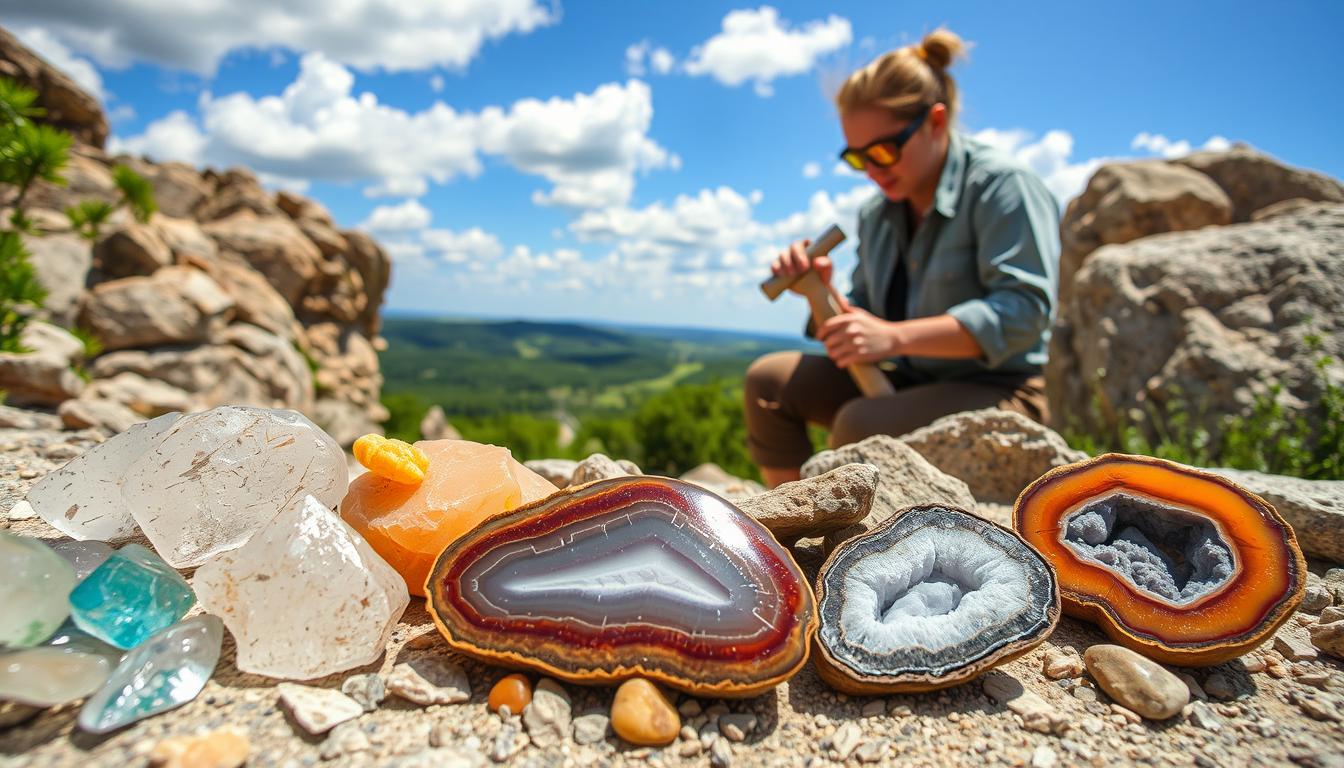
Rockhounding is a fun hobby in Missouri. It lets people collect rocks and minerals. The state has a rich history and beautiful landscapes.
When you go to a State Park, Historic Site, or National Forest, know the rules. It’s important to follow local regulations.
Missouri rockhounding regulations change by place. It’s key to learn the rules for where you’re going. This way, you can enjoy your time collecting rocks without breaking the law.
Key Takeaways
- Understand local regulations before rockhounding in Missouri.
- Regulations differ across State Parks, Historic Sites, and National Forests.
- Familiarize yourself with specific rules for each location.
- Compliance with local laws ensures a enjoyable rockhounding experience.
- Missouri’s diverse landscapes offer a rich rockhounding experience.
Understanding Rockhounding in Missouri
Missouri’s rocks and minerals draw many rockhounding fans. They search for treasures hidden in the state. Rockhounding is a fun hobby that lets people collect rocks, minerals, and fossils.
What is Rockhounding?
Rockhounding is about finding and collecting rocks, minerals, and gems. It’s a mix of adventure, science, and exploration. It attracts many people who love the outdoors and learning.
Missouri’s Geological Significance
Missouri is great for rockhounding because of its varied geology. The state has areas full of minerals like lead, zinc, and copper. It also has places with lots of fossils. Knowing the geology helps rockhounding enthusiasts find more.
Why Legal Compliance Matters
Following the law is key for rockhounding in Missouri. Rules protect the environment and the hobby. For example, rockhounding is okay on Mark Twain National Forest Lands, but not in some areas.
It’s important to know Missouri mineral collecting laws and Missouri fossil hunting rules. This helps avoid trouble and keeps the hobby going strong.
Rockhounding Laws and Rules in Missouri: An Overview
Missouri is known for its rich geological history. It has many sites perfect for rockhounding. Knowing the laws and rules is key for a fun and successful time.
### State-Level Regulations
Missouri has rules for rockhounding. The Missouri Department of Conservation (MDC) manages many public lands. These include state parks and forests where rockhounding is allowed.
But, there are some rules to follow:
* You can collect for personal use, but commercial activities need special permits.
* Some areas are closed for environmental or conservation reasons.
* It’s important to follow best practices to protect the environment.
### Federal Regulations Applicable in Missouri
Federal laws also guide rockhounding in Missouri, mainly on federal lands. The U.S. Forest Service and the Bureau of Land Management (BLM) manage these areas. Their rules might be different from state laws.
Important federal regulations include:
* You might need permits for activities like collecting fossils or minerals.
* Environmental impact assessments are done to protect the ecosystem.
* Federal agencies work with state authorities to manage these areas.
### Local Ordinances to Consider
Local laws also impact rockhounding in Missouri. Municipalities and counties have their own rules. These can affect land use, environmental protection, and more.
It’s important to know these local regulations. This way, you can avoid any problems. Some examples include:
* Zoning laws that restrict certain activities or land uses.
* Environmental ordinances that protect local ecosystems.
* Permitting requirements for specific types of collecting or excavation.
By following these regulations, rockhounds can enjoy their hobby. They also help in conserving and managing Missouri’s geological resources.
Public Land Rockhounding Regulations
Rockhounding on public lands in Missouri can be fun. But, you must know the rules. These lands include state parks, national forests, and areas managed by the Missouri Department of Conservation and the Corps of Engineers.
State Parks and Recreation Areas
Missouri State Parks have strict rules about rock collecting. Rock collecting is not allowed in these parks. The main goal is to protect the natural and cultural resources.
Mark Twain National Forest Rules
Mark Twain National Forest has different rules. You can collect rocks and minerals for personal use. But, you need a special permit for commercial collecting. Always follow the U.S. Forest Service’s guidelines.
Missouri Department of Conservation Areas
The Missouri Department of Conservation manages many lands. The rules vary by location. Some places let you collect rocks for personal use, while others have restrictions. Always check with local offices for specific rules.
Corps of Engineers Land Regulations
Lands managed by the Corps of Engineers have their own rules. Rock collecting might be allowed in some places. But, you need permission or must follow certain guidelines to avoid legal trouble.
Private Property Considerations
Missouri’s private lands are great for rockhounding. But, you need to know a few things first. Always get permission from the landowner before you start.
Permission Requirements
Getting explicit permission from the landowner is key. It makes sure you’re allowed to be there. It also keeps things good between rockhounds and landowners.
Liability Issues
Knowing about liability issues is important. If you get hurt on someone’s land, they might be responsible. Always watch out for dangers and be careful.
Respecting Property Boundaries
It’s important to respect property boundaries. Know where the property lines are and stay within them. Trespassing can cause legal problems and harm the rockhounding community’s image.
Mining Claim Awareness
Some lands in Missouri have active mining claims. Know about these claims and their rules. For more info on mining laws, check out related resources.
Important things to remember for rockhounding on private land in Missouri are:
- Get landowner permission
- Understand liability
- Respect property lines
- Know about mining claims
By keeping these tips in mind, rockhounds can enjoy Missouri’s private lands. They can do so while being respectful and positive towards landowners.
Specific Collecting Rules by Material Type
Missouri’s landscape is perfect for collecting minerals, fossils, gemstones, and more. But, there are rules to follow. These rules help protect the land and ensure collecting is done right.
Mineral Collecting Regulations
In Missouri, collecting minerals is governed by state laws. These laws say what you can collect, where, and how. Rockhounds can collect minerals for personal use in most places. But, some areas might be off-limits due to environmental concerns.
Fossil Hunting Rules
Fossil hunting is big in Missouri because of its rich fossil history. You can hunt for fossils in public areas. But, you must follow rules to protect the environment and report important finds.
Gemstone Collection Guidelines
Gemstone collecting is exciting in Missouri. The state has many gemstones like agate, jasper, and quartz. Know the rules for collecting gemstones, mainly in areas known for them.
Archaeological Artifacts Protection Laws
Collecting archaeological artifacts is strictly regulated in Missouri. These laws protect the state’s cultural heritage. Rockhounds need to know these laws to avoid breaking them.
Tools, Equipment, and Collection Limits
To rockhound legally in Missouri, knowing the rules about tools, equipment, and limits is key. These rules help keep rockhounding safe for the environment.
Permitted Tools and Equipment
In places like the Mark Twain National Forest, you can use rock hammers or garden trowels. But, using sluice boxes or digging in stream banks is not okay. Always check the rules for each area before you go.
Quantity Restrictions
There are no strict limits on how much you can collect, but it’s for personal, non-commercial use only. For more details, visit the Missouri Department of Conservation website.
Seasonal Limitations
Some spots in Missouri close or have rules at certain times. This is to protect wildlife and the environment. Knowing these times helps you avoid trouble.
Environmental Protection Requirements
Rockhounds must follow environmental protection guidelines. This means filling in holes and taking all trash and equipment with you when you leave.
Popular Rockhounding Locations and Their Specific Regulations
Missouri is famous for its rich geological history. It has many sites for rockhounding fans. From lead mines to scenic lake areas, there’s a lot to explore. Knowing the rules for each spot is key for a good rockhounding trip.
Potosi Area Lead Mines
The Potosi Area is known for its lead mining history. Rockhounds can check out old mine sites. But, they need to watch out for private property rules and safety risks. For more info, check rockchasing.com.
Lake of the Ozarks Region
This area is great for finding agates, jaspers, and more. But, collectors must follow lake rules and respect private property lines.
St. Francois Mountains
The St. Francois Mountains have ancient volcanic origins. They’re a top spot for rockhounding. But, collectors must respect the environment.
Viburnum Trend
This area is known for lead mining and other minerals. Rockhounds need to know about mining activities and access rules.
Crowley’s Ridge
Crowley’s Ridge is a special geological spot. It’s good for finding fossils and other specimens. Collectors must follow rules to protect these finds.
| Location | Regulations |
|---|---|
| Potosi Area Lead Mines | Private property restrictions, safety hazards |
| Lake of the Ozarks Region | Lake regulations, private property boundaries |
| St. Francois Mountains | Environmental protections |
| Viburnum Trend | Ongoing mining activities, access restrictions |
| Crowley’s Ridge | Regulations protecting fossils and geological specimens |
Rockhounding Resources in Missouri
Missouri is a treasure trove for rockhounding enthusiasts, with numerous resources available to aid in your quest for geological wonders. Whether you’re a seasoned prospector or a beginner, these resources will help you navigate the state’s rich mineral deposits and ensure a safe and rewarding experience.
Public Lands and Private Property
Understanding the distinction between public lands and private property is essential when searching for rocks and minerals in Missouri. Public lands, managed by the U.S. Forest Service and the Bureau of Land Management, offer ample opportunities for rockhounding. These areas are open to the public and do not require any permits for collecting rocks and minerals. On the other hand, private property is subject to the landowner’s permission, and it’s important to respect their rights and obtain any necessary permissions before collecting.
Rockhounding Clubs and Organizations
Joining a rockhounding club or organization can be a valuable resource for connecting with like-minded individuals and gaining valuable insights into Missouri’s rockhounding scene. These groups often organize field trips, provide access to private lands, and offer guidance on the best locations and techniques for finding rocks and minerals. By becoming a member, you can tap into a wealth of knowledge and expertise that can enhance your rockhounding experience.
Online Resources and Guides
For those who prefer to explore independently, there are numerous online resources and guides available to help you navigate Missouri’s rockhounding landscape. Websites such as the Missouri Geological Survey and the U.S. Geological Survey provide valuable information on the state’s geology, including maps, reports, and guides on rockhounding locations. These resources can help you identify the best spots to search for specific types of rocks and minerals, saving you time and effort in your rockhounding adventures.
By utilizing these rockhounding resources in Missouri, you can enhance your chances of finding unique and valuable specimens. Whether you’re searching for quartz crystals, agate, or other geological treasures, these resources will help you navigate the state’s rockhounding scene and ensure a rewarding experience.
| Resource | Description |
|---|---|
| Missouri Geological Survey | Provides detailed information on Missouri’s geology, including maps, reports, and guides on rockhounding locations. |
| U.S. Geological Survey | Offers valuable resources on the geology of Missouri, including maps, reports, and guides on rockhounding locations. |
| Missouri Rockhounding Clubs | Connects you with like-minded individuals and provides access to private lands, field trips, and expert guidance. |
| Rockhounding Online Communities | Provides a platform to connect with other rockhounding enthusiasts, share knowledge, and exchange tips and resources. |
FAQ
What is rockhounding, and why is it popular in Missouri?
Rockhounding is collecting rocks, minerals, and fossils. Missouri is loved by rockhounds. It has a rich geological history and many minerals.
What are the general rockhounding laws and rules in Missouri?
Rockhounding laws in Missouri change by location. State parks, national forests, and private land have different rules. Knowing these rules is key.
Do I need a permit to go rockhounding in Missouri state parks?
Some Missouri state parks need a permit for rockhounding. Others have special rules. Always check with park rangers or the Missouri Department of Natural Resources.
Can I collect fossils in Missouri, and are there any specific rules?
Yes, you can collect fossils in Missouri. But, there are rules. For example, you need permission from landowners on private property. Some places are closed to fossil collecting.
What are the regulations for collecting gemstones in Missouri?
Collecting gemstones in Missouri has its rules. Public lands and private property have different regulations. The St. Francois Mountains have special gemstone collecting rules.
Can I use any tools or equipment for rockhounding in Missouri?
Missouri has rules for rockhounding tools and equipment. Some places ban heavy machinery or certain digging tools.
Are there any environmental protection requirements for rockhounding in Missouri?
Yes, rockhounds must protect the environment in Missouri. They should minimize their impact, respect private property, and follow habitat protection rules.
What are some popular rockhounding locations in Missouri?
Popular spots in Missouri include the Potosi Area Lead Mines and Lake of the Ozarks Region. Also, the St. Francois Mountains, Viburnum Trend, and Crowley’s Ridge are favorites. Each place has its own rules.
Can I collect rocks and minerals on private property in Missouri?
To collect on private property in Missouri, you need permission. Always get permission first. Respect property lines and mining claims.
Where can I find more information on rockhounding laws and regulations in Missouri?
For more info on Missouri’s rockhounding laws, contact the Missouri Department of Natural Resources or the Missouri Department of Conservation. Local rockhounding clubs and organizations can also help.

Subscribe to Our Newsletter