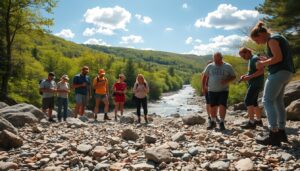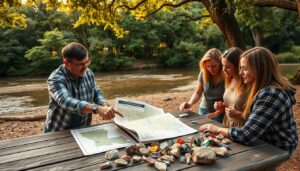
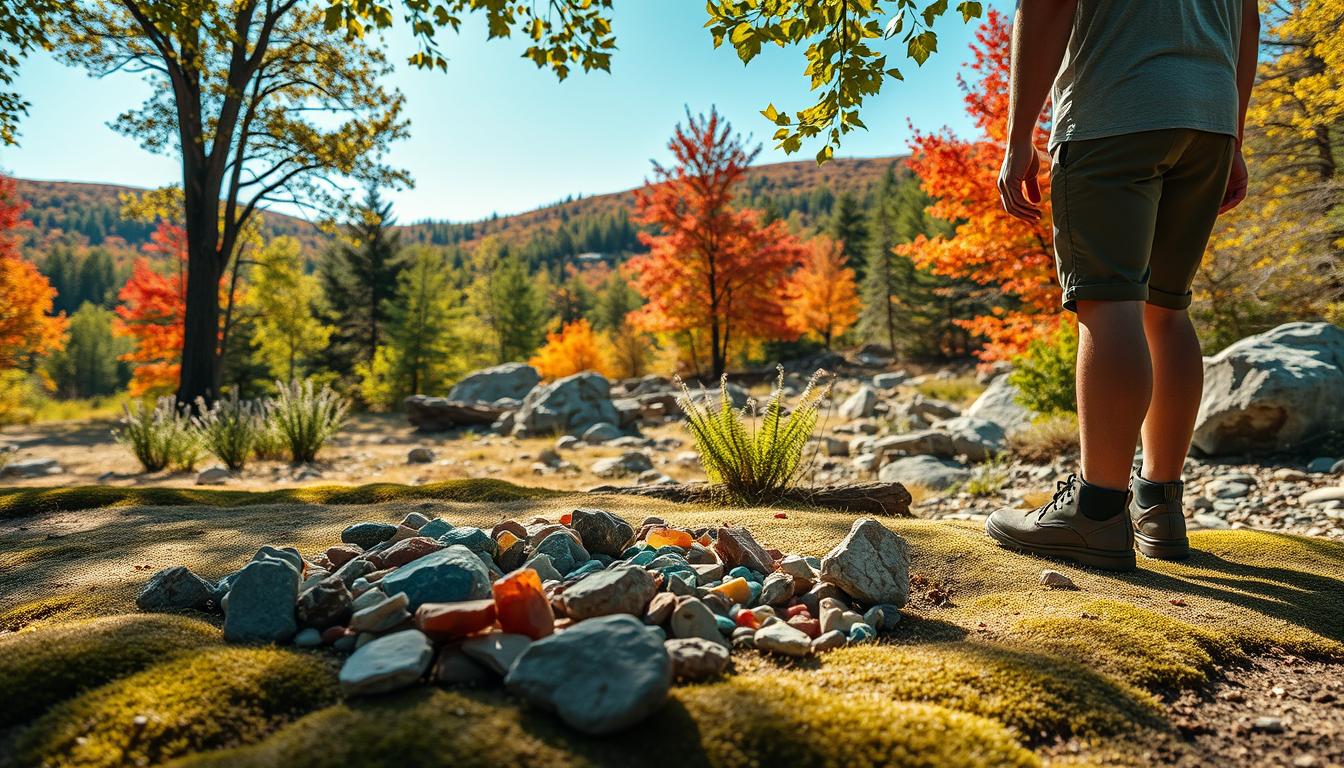
Michigan is a great place for rockhounds. It has many rocks, minerals, and fossils. The Upper Peninsula is famous for copper, and the Lower Peninsula for fossils. But, you need to know the rules for collecting these treasures.
To enjoy rockhounding in Michigan, you must know the regulations. These rules help protect the environment while you have fun. They differ based on where you are, like federal, state, or private lands.
Key Takeaways
- Understand the regulations before you start rockhounding.
- Federal lands have specific limits on rock collection.
- State-owned lands allow up to 25 lbs of rock collection per person per year.
- Private property rules vary; always seek landowner permission.
- Some areas are restricted or prohibited for rockhounding.
Understanding Rockhounding in Michigan
Michigan’s complex geological past makes it a great place for rockhounds. This hobby involves finding and collecting rocks, minerals, and fossils. Its diverse landscape makes it rewarding for rockhounds.
What is Rockhounding?
Rockhounding is about searching for and collecting geological specimens. It needs patience, knowledge, and a sharp eye. In Michigan, rockhounds can find many things, like agates, jaspers, copper, and iron ore.
Michigan’s Geological Treasures
Michigan’s history has shaped its landscape. Glacial activity, tectonic movements, and erosion have created many treasures. These include glacial erratics, Lake Superior agates, and Yooperlites.
Types of Collectibles in Michigan
Michigan has a wide range of collectibles. This reflects its complex geological history. Some popular finds are:
- Minerals like copper and iron
- Fossils from ancient sea creatures
- Unique rock formations from glacial activity
- Lake Superior agates and other gemstones
- Yooperlites, which glow under UV light
Here’s a quick look at some common finds in Michigan:
| Specimen | Location | Characteristics |
|---|---|---|
| Lake Superior Agates | Lake Superior shoreline | Colorful, banded patterns |
| Copper | Upper Peninsula | Native copper, often found in crystalline form |
| Yooperlites | Lake Superior shoreline | Glow under UV light, unique composition |
Rockhounding Laws and Rules in Michigan: The Legal Framework
It’s key for rockhounding fans in Michigan to know the laws. The state’s geology and landscapes are perfect for rockhounds. But, there are state and federal rules to follow.
State Laws Governing Rock Collection
In Michigan, there are rules for collecting rocks on state lands. You can collect up to 25 pounds of rocks and minerals each year. These rules help keep Michigan’s nature safe for everyone.
Key aspects of state laws include:
- Permits may be needed for some activities or places.
- Collectors must not take too much to avoid fines.
- Some places are off-limits for collecting.
Federal Regulations Applicable in Michigan
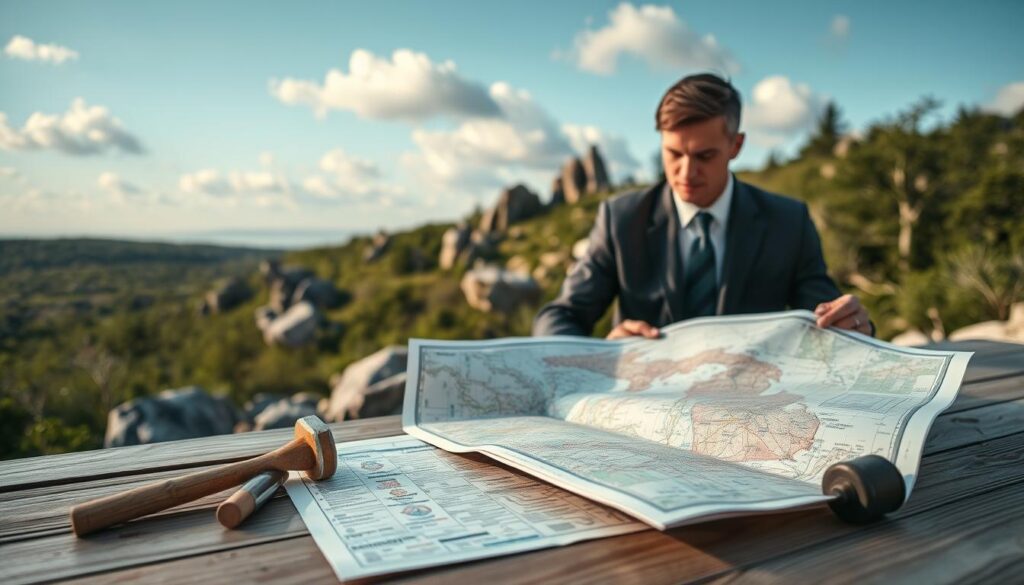
Federal rules are important in areas like national forests. Here, you can collect a small amount for personal use. It’s important to know these rules when collecting in federal areas.
Penalties for Violations
Breaking rockhounding laws in Michigan can lead to big penalties. This includes fines and losing what you collected. It’s vital to follow the laws to avoid these problems.
Penalties may include:
- Fines for taking too much or collecting where you shouldn’t.
- Having your rocks and minerals taken away.
- Legal trouble for serious offenses.
Public vs. Private Land Regulations
Rockhounding in Michigan means knowing the rules for different lands. The state has many geological formations and places to rockhound. But, the rules change a lot depending on if you’re on public or private land.
State Parks and Recreation Areas
The Michigan Department of Natural Resources manages state parks and recreation areas. These places have many rockhounding spots. But, there are rules to follow.
Usually, you can take rocks and minerals for personal use. But, it’s key to talk to park officials first. For more info, check the Michigan Rockhounds Legal Reference Guide.
- Collecting for personal use is usually permitted.
- Some areas may be closed to collecting due to environmental concerns.
- Always check with park officials before collecting.
National Forests and BLM Land
National forests and BLM lands have lots of rockhounding spots. Federal rules let you collect more for personal use. But, there are rules to keep in mind:
- Check local regulations before collecting.
- Some areas may be closed due to conservation efforts.
- Collecting for commercial purposes usually requires a permit.
Great Lakes Shoreline Rules
The Great Lakes shoreline in Michigan has both public and private lands. It’s important to know where you can collect rocks. Public areas usually allow rockhounding, but watch for local rules. Private property needs permission from the owner.
- Be mindful of public vs. private land distinctions.
- Check for any local ordinances or regulations.
- Respect private property rights.
Private Property Considerations
Private property means you need permission to collect rocks. Trespassing laws are strict, and breaking them can lead to big problems. Always get permission and be kind to private property owners.
Key Points:
- Always ask for permission before collecting on private land.
- Be aware of trespassing laws.
- Respect the rights of private landowners.
Permit Requirements and Restrictions
Rockhounding in Michigan is a fun hobby. But, you must know the rules. The rules change based on where you are and what you’re doing.
When Permits Are Required
In Michigan, you need a permit for rockhounding in some places. This includes state or national parks. You also need one if you collect too much stuff.
Key situations that necessitate a permit include:
- Collecting in protected areas such as state or national parks
- Exceeding personal use limits for collected materials
- Engaging in commercial collecting activities
Quantity Limitations
Michigan has rules on how much you can collect. These rules vary by place. Always check the local rules before you start collecting.
Protected Specimens and Prohibited Collection
Some things, like fossils or cultural artifacts, are protected in Michigan. You might not be allowed to collect them. This depends on their importance and where they are found.
Examples of protected specimens include:
- Fossils of rare or significant species
- Cultural artifacts found on protected lands
- Specimens within designated natural or historical areas
Popular Legal Rockhounding Locations in Michigan
Michigan is a great place for rockhounds. It has many places to find minerals, fossils, and other treasures. The Upper Peninsula is known for copper, while the Lower Peninsula has fossils.
Upper Peninsula Sites
The Upper Peninsula is famous for its copper. The Copper Country is a top spot for finding copper, agate, and more.
- The Keweenaw Peninsula is a must-see. It has lots of copper and beautiful views.
- The Porcupine Mountains have copper, silver, and other minerals. It’s a favorite among rockhounds.
Lower Peninsula Opportunities
The Lower Peninsula is great for finding fossils. It’s less known for minerals but has many fossil sites.
- The Thumb region is full of fossils. Many places let you find fossils of old creatures.
- The Grand Rapids area has gravel pits and quarries. Here, you can find agate, jasper, and more.
Seasonal Considerations for Michigan Rockhounding
Michigan’s weather changes affect rockhounding. Knowing when to go is key for a good trip.
- Spring is great for finding new spots. The snow and ice melt, revealing areas to explore.
- Summer is warm and perfect for visiting sites.
- Fall is cool and less crowded. It’s a good time to see popular spots.
- Winter is tough but some like searching in the snow.
Knowing the best times and places in Michigan helps rockhounds have great trips. They can enjoy the state’s rich geological history.
[link-whisper-related-posts]Conclusion
Rockhounding in Michigan is a fun hobby. It needs you to know the laws about collecting rocks, minerals, and fossils. Knowing Michigan rockhounding regulations makes sure you have fun and protect the state’s geology.
Following Rockhounding Laws in Michigan lets you see the state’s different landscapes. You can find minerals in the Upper Peninsula and fossils in the Lower Peninsula. Knowing these rules helps you explore safely.
Michigan is great for rockhounds, whether you’re new or experienced. By following the rules and caring for the environment, you can enjoy your hobby. This way, you help keep Michigan’s natural wonders safe for everyone.
FAQ
What is rockhounding?
Rockhounding is a hobby. It involves searching for and collecting rocks, minerals, and fossils.
How much can I collect in Michigan state-owned lands and public trust lands?
In state-owned lands and public trust lands, you can collect up to 25 pounds per person per year.
What are the rules for collecting in national forests and BLM lands?
In national forests and BLM lands, you can collect a small amount for personal use. Federal rules apply.
Do I need permission to collect rocks on private property?
Yes, you need permission from the landowner to collect rocks on private property.
Are there any restrictions on collecting fossils or cultural artifacts?
Yes, collecting fossils or cultural artifacts is restricted or prohibited. They are protected.
When are permits required for rockhounding in Michigan?
Permits are needed for certain activities. This includes collecting in protected areas or exceeding personal use limits.
What are some popular rockhounding locations in Michigan?
Michigan has many rockhounding spots. The Upper Peninsula is known for its minerals. The Lower Peninsula has fossil sites.
Are there any seasonal considerations for rockhounding in Michigan?
Yes, seasons affect rockhounding trips. Weather and access change throughout the year.
What are Yooperlites?
Yooperlites are unique rocks in Michigan. They glow under UV light.
Can I collect rocks in Michigan state parks?
Rock collection is allowed in state parks for personal use. But, check the rules for each park.

Subscribe to Our Newsletter