
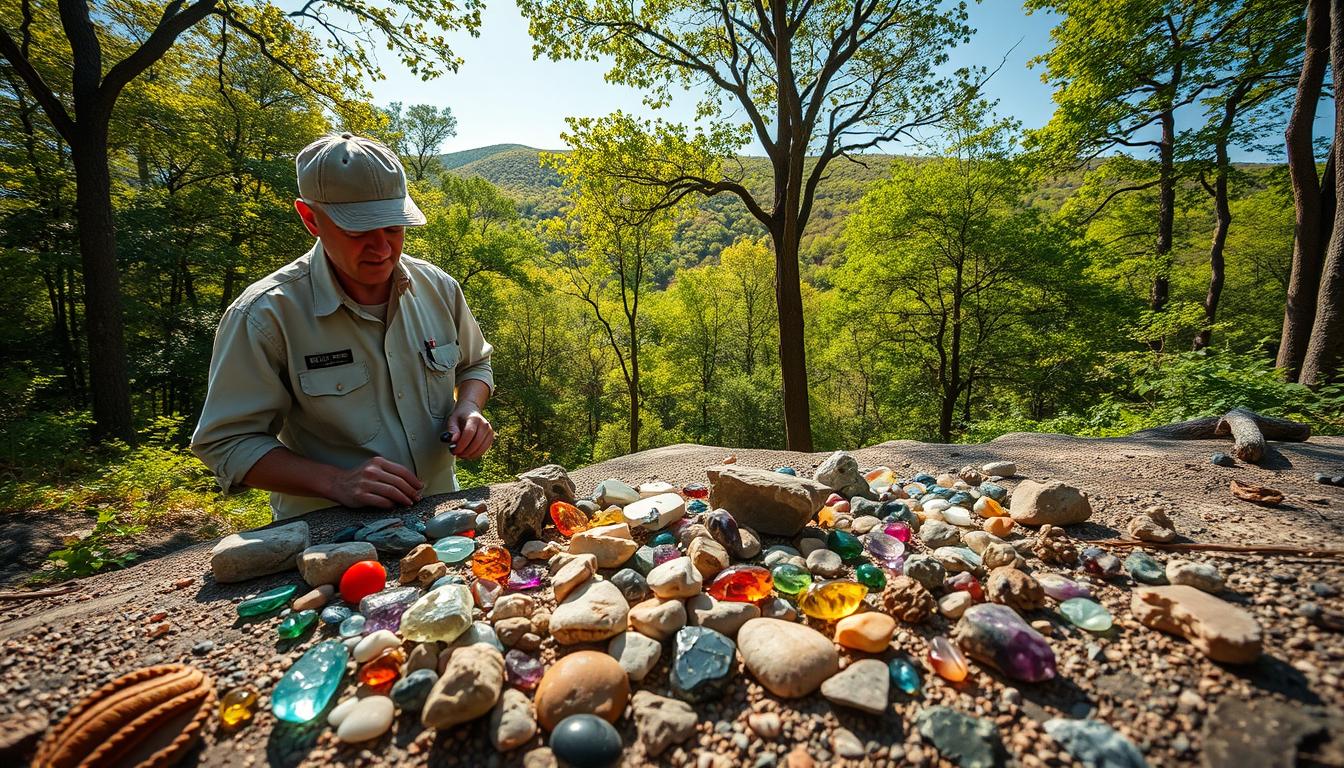
Rockhounding is a fun hobby in Maryland where people collect rocks and minerals. But, it’s important to know the rules to do it right. Maryland has laws about collecting rocks and minerals. Knowing these rules helps you enjoy your hobby without trouble.
Before you start collecting, learn the rules. You can’t collect rocks on big roads or in state parks. But, you can collect on private land if the owner says it’s okay. Knowing the rules helps you respect the environment and private property.
### Key Takeaways
- Understand Maryland’s regulations on rock and mineral collection.
- Collecting is prohibited along major roadways and public lands.
- Obtain consent from landowners before collecting on private property.
- Federal and local governments may have additional restrictions.
- Always check the rules before searching for rocks and minerals.
Understanding Rockhounding in Maryland
Maryland’s geology is like ‘America in Miniature.’ It offers a wide range of rocks to collect. The state’s rocks are a mix of igneous, sedimentary, and metamorphic types. This makes it a great place for rockhounding.
What Constitutes Rockhounding
Rockhounding is about collecting rocks, minerals, and fossils for fun and learning. It helps people appreciate the earth’s sciences. It’s a fun hobby for those who love nature.
Maryland’s Geological Diversity
Maryland has a complex geological history. This has created a varied landscape. The state’s geology includes:
| Rock Type | Description | Notable Locations |
|---|---|---|
| Igneous Rocks | Formed from the cooling and solidification of magma or lava. | Western Maryland |
| Sedimentary Rocks | Composed of sediments that have been compressed or cemented together. | Coastal Plain Region |
| Metamorphic Rocks | Result from the alteration of existing rocks under high pressure and temperature. | Piedmont Region |
Knowing about the different rocks and where to find them is key. Maryland’s varied geology makes it exciting for rockhounding enthusiasts.
Rockhounding Laws and Rules in Maryland: Legal Framework
It’s important for rockhounding fans to know the laws in Maryland. The hobby is regulated to protect the environment and culture.
State Regulations Overview
Maryland has rules for rockhounding. TheMaryland Department of Natural Resourcescontrols rock, mineral, and fossil collection on state lands. Rules change based on where you are.
In state parks, you might need permission or have limited areas to collect.
Federal vs. State Jurisdiction
Federal and state laws both apply to rockhounding. TheBureau of Land Management (BLM)lets you collect rocks and minerals on public lands for personal use. But, Maryland’s rules apply on state lands.
This means you need to know both federal and state laws.
Recent Legislative Changes
New laws have changed rockhounding in Maryland. For example, some fossils or minerals might be off-limits in certain areas. It’s key to stay updated on these changes.
Knowing the laws helps rockhounding fans enjoy their hobby. It also respects Maryland’s natural and cultural treasures.
Permitted Collecting Areas in Maryland
Maryland has many places for rockhounding, like public lands and state parks. It’s key to know the rules for these spots.
Public Lands Open for Collection
Some public lands in Maryland let you rockhound. You can find rocks and minerals in:
- National forests
- Bureau of Land Management (BLM) areas
- State-owned lands
Make sure you have the right permits and follow local rules.
State Parks with Rockhounding Access
Maryland’s state parks are great for rockhounding. Some have special spots for collecting. Always check with park rangers or visitor centers for rules.
Private Property Considerations
Rockhounding on private land needs permission. Always get written consent first. This respects the landowner and keeps good relations.
Following these guidelines lets rockhounding fans enjoy their hobby. It also helps protect Maryland’s natural treasures.
Restricted Zones and Protected Sites
Maryland has many geological formations, historical sites, and areas for environmental conservation. These are protected by law. It’s important for rockhounding fans to know these rules to avoid harming the environment or breaking the law.
Protected Geological Formations
Some geological formations in Maryland are protected because they are unique or scientifically important. These places might be off-limits for rockhounding to keep them safe. For example, the Appalachian Mountains have areas where rockhounding is not allowed.
| Protected Area | Location | Restrictions |
|---|---|---|
| Appalachian Trail | Western Maryland | No rockhounding allowed |
| Patuxent Research Refuge | Central Maryland | Restricted access for rockhounding |
Historical and Archaeological Sites
Maryland is full of historical and archaeological sites, protected by laws. Rockhounding is usually not allowed here to avoid damaging these sites. The Maryland Department of Natural Resources lists places where rockhounding is not allowed.
- Places like Fort Frederick and the Historic Annapolis Museum are off-limits for rockhounding.
- The Piscataway Indian Nation archaeological site also has restrictions.
Environmental Conservation Areas
Maryland has areas set aside to protect its natural resources. These places often have rules against rockhounding to keep the environment balanced. For example, the Chesapeake Bay watershed is a protected area with limited rockhounding access.
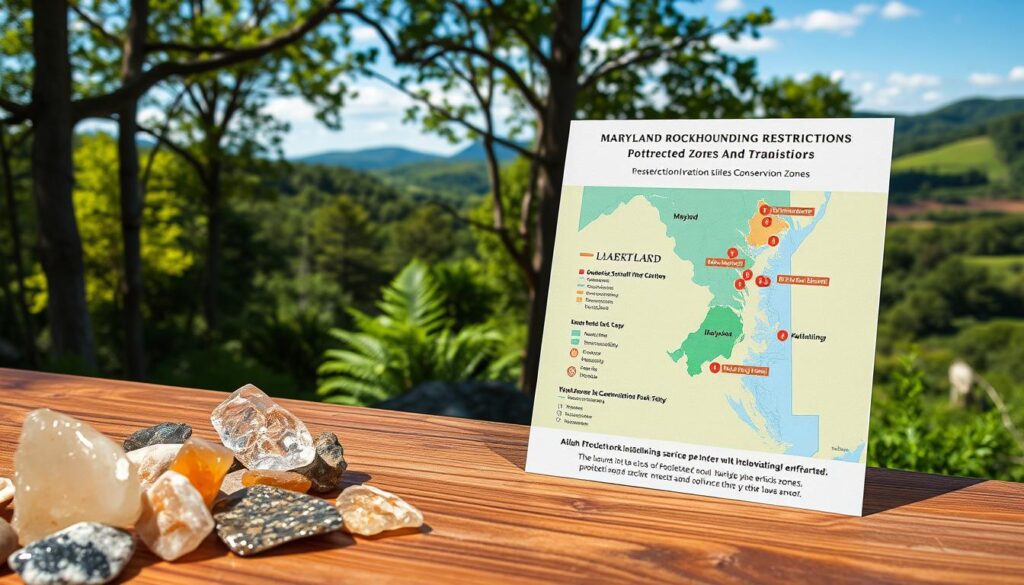
To rockhound responsibly, you need to know the rules for these protected areas. This way, you help keep Maryland’s natural and cultural treasures safe for the future.
Permits and Documentation Requirements
Knowing the rules for rockhounding in Maryland is key. It’s important for both fun and work. The state’s rules help protect its earth while letting people collect.
When Permits Are Required
Permits are needed for collecting on public lands or in state parks. Commercial collectors must get permits for big collections.
How to Apply for Collection Permits
To get a permit, you need to apply to the Maryland Department of Natural Resources. You’ll need to tell them where you plan to collect, what you’ll take, and how much. For more info, check https://www.nps.gov/subjects/geology/permits.htm.
Commercial vs. Recreational Collection
Rules for collecting vary based on if you’re doing it for fun or for work. Recreational folks can take small amounts without a permit. But, commercial folks need to follow stricter rules and get the right permits.
- Recreational Collectors: Can take small amounts for personal use.
- Commercial Collectors: Need permits and follow specific rules for what and how much they collect.
Following these rules helps keep Maryland’s earth safe. It also lets collectors enjoy their hobby or work.
Popular Rockhounding Locations in Maryland
Maryland is a great place for rockhounding because of its different landscapes. You can find rocks in mountains and coastal plains.
Western Maryland Mineral Sites
Western Maryland is full of minerals. You can find quartz, calcite, and pyrite in streams, rivers, and old mines.
Notable locations include the Potomac River and its tributaries. Here, you can find agate, jasper, and other semi-precious stones.
Coastal Plain Fossil Locations
The Coastal Plain in Maryland is great for finding fossils. You can look for shark’s teeth, shells, and other marine fossils. These can be found in beaches, cliffs, and streambeds.
- Calvert Cliffs State Park is famous for fossil hunting. Its cliffs show layers of fossil-rich sediments.
- The Chesapeake Bay’s beaches and shoreline are also good for finding fossils and interesting rocks.
Urban and Suburban Collection Opportunities
You don’t need to go far to find rocks. Local parks, stream beds, and even backyards can have interesting rocks and minerals.
Quarries and Mining Areas
Some quarries and mining areas in Maryland let you rockhound. They offer a variety of geological materials. These places are great for finding specific rocks or minerals.
Stream and River Deposits
Streams and rivers in Maryland are good for finding rocks and minerals. The water wears down rocks, revealing hidden gems and minerals.
In conclusion, Maryland has many places for rockhounding. You can explore Western Maryland’s minerals, search for fossils in the Coastal Plain, or collect in urban and suburban areas. There’s something for every rockhound in Maryland.
[link-whisper-related-posts]Conclusion
It’s important to know and follow rockhounding laws in Maryland. This helps keep the hobby alive for everyone in the future. By learning about the state’s rules, you help protect Maryland’s geological wonders.
Rockhounding laws in Maryland are made to safeguard the state’s natural treasures. These include minerals and historical sites. Following these rules lets rockhounding fans enjoy their hobby in a responsible way.
Whether you’re experienced or new, always respect private land, protected areas, and the environment. This way, you help make sure rockhounding can continue in Maryland for a long time.
FAQ
What is rockhounding, and is it allowed in Maryland state parks?
Rockhounding is collecting rocks, minerals, and fossils. In Maryland, it’s allowed in some state parks. Always check with park rangers or the Maryland Department of Natural Resources for rules and permissions.
Do I need a permit to go rockhounding in Maryland?
It depends on where and why you’re collecting. Recreational collectors usually don’t need a permit. But, commercial collectors or those in sensitive areas might need special permission.
Can I collect rocks and minerals on private property in Maryland?
You need permission from the landowner to collect on private property. Remember, trespassing laws apply. Always respect private property rights.
Are there any restricted areas for rockhounding in Maryland?
Yes, some areas are off-limits for rockhounding. This includes protected sites, historical areas, and conservation zones. Knowing these restrictions helps avoid fines or penalties.
What are some popular rockhounding locations in Maryland?
Western Maryland has mineral sites, while the Coastal Plain has fossil spots. Urban and suburban areas also have exposed formations. Don’t forget quarries, mining areas, and streams and rivers.
How do I apply for a rockhounding permit in Maryland?
Contact the Maryland Department of Natural Resources or the area’s managing agency for a permit. You’ll need to provide details about your collection location and purpose.
What is the difference between commercial and recreational rockhounding in Maryland?
Commercial rockhounding is for profit or sale. Recreational rockhounding is for fun. Commercial collectors face stricter rules and permits.
Are there any specific regulations for collecting fossils in Maryland?
Yes, fossil collection has its own rules. Know the laws and any permits needed. This is important for areas with valuable fossils.

Subscribe to Our Newsletter