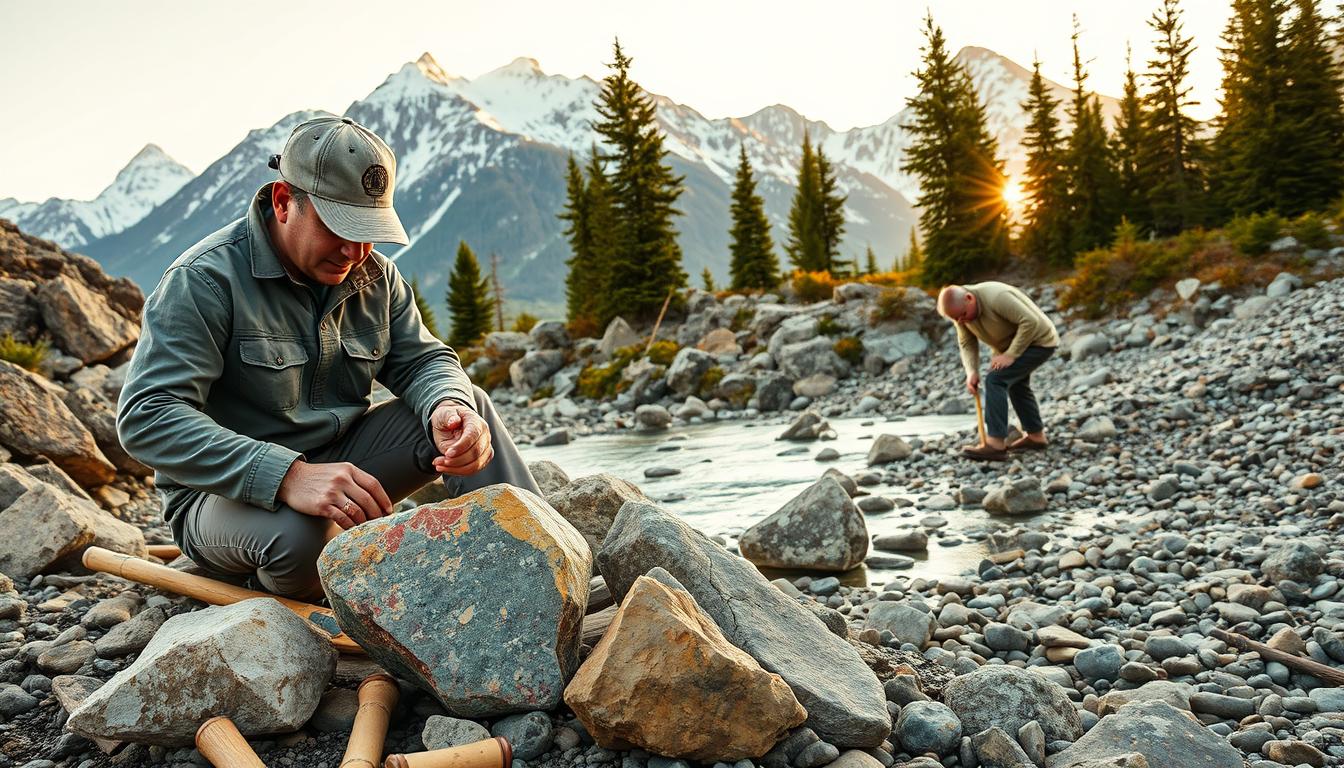
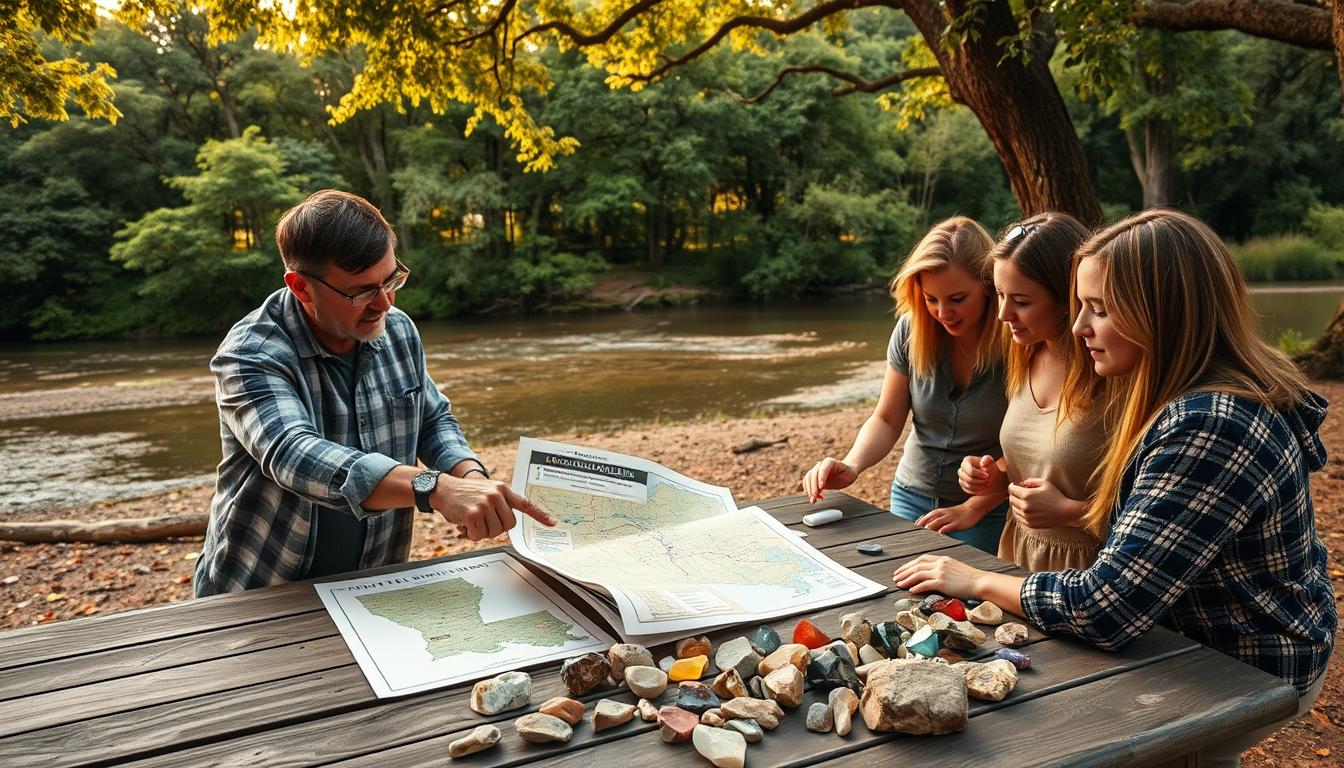
Rockhounding is a fun hobby where people collect rocks. But, there are rules to follow, like in Louisiana.
The state has rules to make rockhounding safe and green. Knowing these rules helps you avoid trouble and keeps the environment safe.
Key Takeaways
- Understand local regulations before collecting rocks.
- Familiarize yourself with protected areas.
- Follow guidelines for sustainable rockhounding.
- Be aware of permits required for collecting.
- Respect private property rights.
Understanding Rockhounding in Louisiana
Louisiana is full of geological treasures. It’s perfect for rockhounding. People can find unique rocks, minerals, and fossils all over the state.
What is Rockhounding?
Rockhounding is a fun hobby. It’s about searching for and collecting rocks, minerals, and fossils. It helps people connect with nature and learn about the earth’s history. Rockhounding can be a fun and educational experience, for everyone.
Popular Specimens Found in Louisiana
In Louisiana, you can find many interesting geological specimens. Some of the most sought-after include:
- Agate
- Petrified wood
- Fossils of ancient marine life
Geological Overview of Louisiana
Louisiana’s geology is shaped by its location in the Gulf Coastal Plain. Sediments have been deposited here for millions of years.
The state’s varied landscape offers many chances to find rocks, minerals, and fossils.
Rockhounding Laws and Rules in Louisiana
It’s important to know the rules for rockhounding in Louisiana. The state’s varied landscapes are great for finding minerals. But, there are rules to follow.
State Regulations Overview
Louisiana has laws to guide rockhounding. These rules help keep the activity safe and sustainable.
Permit Requirements
In Louisiana, some places need permits for rockhounding. For example, state lands and certain protected areas require them.
| Location | Permit Required |
|---|---|
| State Lands | Yes |
| Protected Areas | Yes |
| Private Property | No, but permission is needed |
Quantity Limitations
There are limits on how much you can collect. For personal use, you can gather a fair amount.
Penalties for Violations
Breaking the rules can lead to penalties. Fines and other consequences are possible for non-compliance.
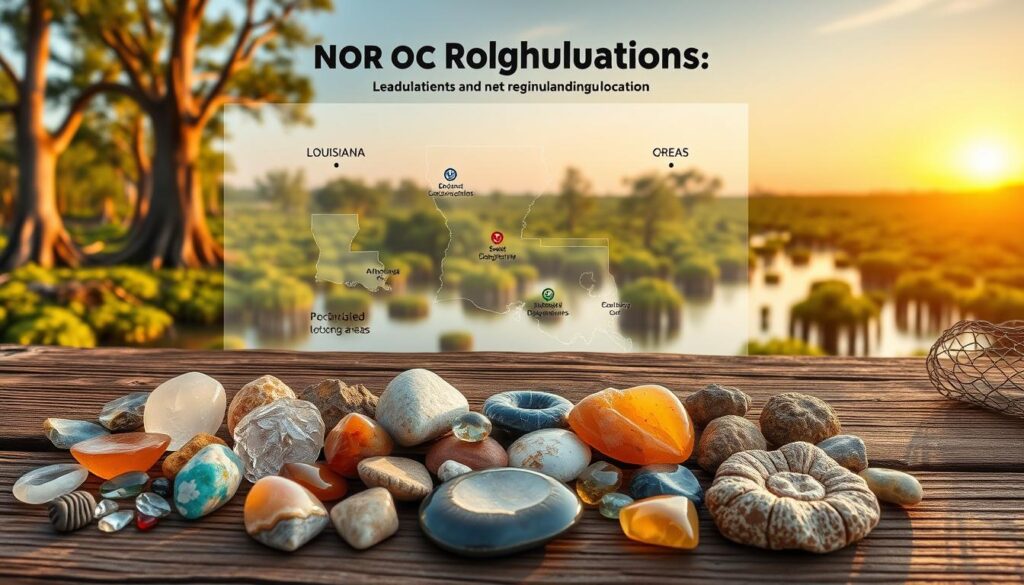
Rockhounding fans should learn about Louisiana’s laws. This way, they can enjoy their hobby while protecting the state’s resources.
Rockhounding on Public Lands in Louisiana
The state’s public lands are great for rockhounding. You can find national forests and state parks. Louisiana’s varied geology draws many rockhounding fans.
National Forests and BLM Land
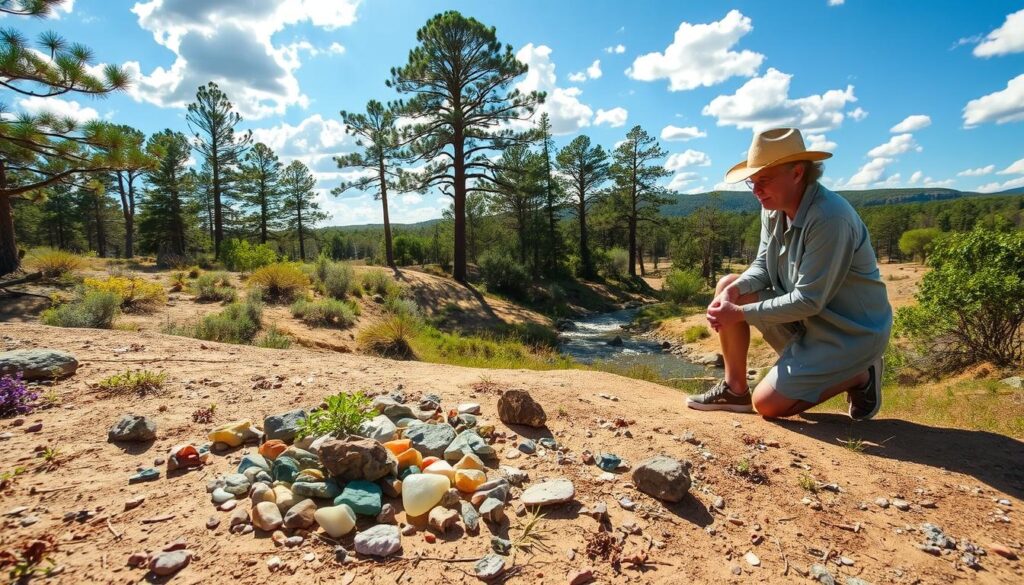
Rockhounding is usually okay on national forests and BLM lands in Louisiana. But, always check for any special rules. Some places might be off-limits for environmental or cultural reasons.
Key areas to explore include:
- Kisatchie National Forest, with its diverse geological features.
- BLM lands, where finding rocks can be exciting.
State Parks and Recreation Areas
Louisiana’s state parks and recreation areas are also good for rockhounding. But, there are rules to protect the environment.
Wildlife Management Areas
Rockhounding is allowed in some wildlife management areas. But, these places are mainly for wildlife. It’s important to follow the rules to not harm the habitat.
Waterways and Riparian Rights
Riverbeds and streams in Louisiana are full of geological treasures. Rockhounding here is governed by riparian rights and waterway access rules.
Before you go, learn about Louisiana gemstone hunting rules and local laws. This will help you have a good time rockhounding.
Collecting on Private Property
Rockhounding in Louisiana means knowing the rules for private property. Owners have rights that must be respected. Collectors must follow certain rules to avoid legal problems.
Permission Requirements
Getting permission from the landowner is a must before collecting on private property. This ensures you’re not trespassing and keeps relations good. Always get written permission to prevent any issues.
Liability Considerations
Collectors need to know their liability on private property. If you get hurt, the owner might not be responsible if you were trespassing or didn’t follow the rules.
Commercial Collection Rules
If you plan to collect for money, there are extra rules. Check the Louisiana rockhounding regulations for commercial collecting.
Trespassing Laws in Louisiana
Louisiana’s trespassing laws are strict, and breaking them can lead to big penalties. It’s important for rockhounds to know these laws to stay out of trouble. Key points include:
- Knowing the boundaries of private property
- Obtaining necessary permissions
- Respecting “No Trespassing” signs
Fossil Hunting Regulations in Louisiana
Fossil hunting in Louisiana is a fun hobby. It lets people explore the state’s ancient history. But, it’s important to know the rules to do it right.
Vertebrate Fossil Restrictions
Louisiana has laws to protect vertebrate fossils. These fossils are very important. Taking them from state lands without permission is not allowed.
Invertebrate Fossil Guidelines
Invertebrate fossils have less strict rules. But, collectors should always try to keep them safe for others to see in the future.
Paleontological Resources Protection
Protecting fossils and their sites is key in Louisiana. The state tries to keep a balance. This way, both collectors and preservation can happen.
Reporting Significant Finds
It’s good to tell the authorities about big fossil finds. This helps keep Louisiana’s fossil history safe for everyone to learn from.
Best Rockhounding Locations in Louisiana
Louisiana has a wide range of places for rockhounding. You can find rocks in the Ouachita Mountains and along the Gulf of Mexico. The state’s varied landscape is perfect for rockhounds.
Northern Louisiana Sites
Northern Louisiana is rich in geological history. The Ouachita Mountains are full of rocks and minerals. You can find quartz crystals and agate here.
Southern Louisiana Sites
Southern Louisiana is different for rockhounding. It has coastal plains and bayous. Here, you can find fossils and petrified wood.
Coastal Areas for Collecting
The coastal areas of Louisiana are great for finding marine fossils and shells. You can explore beaches and tidal flats to find treasures.
Seasonal Considerations
Weather is important when rockhounding in Louisiana. The hot summers and hurricanes can make some areas hard to reach.
Environmental Protections
Rockhounds must respect Louisiana’s natural habitats. This means staying out of protected areas and following local rules.
| Region | Common Finds | Best Time to Visit |
|---|---|---|
| Northern Louisiana | Quartz crystals, agate | Spring, Fall |
| Southern Louisiana | Fossils, petrified wood | Winter, Spring |
| Coastal Areas | Marine fossils, shells | Year-round, but beware of hurricanes |
For more info on rockhounding in Louisiana, visit https://rockchasing.com/rockhounding-in-louisiana/.
[link-whisper-related-posts]Conclusion
Understanding Louisiana’s mineral collecting laws is key for a good rockhounding experience. Knowing the state rules, permit needs, and how much you can collect helps. This way, you can enjoy collecting while keeping Louisiana’s nature safe.
Rockhounding in Louisiana lets you find many minerals and fossils. The state’s varied geology, from mountains to coast, is perfect for collectors.
Keep following best practices and respect private land as you rockhound in Louisiana. Also, share big finds. This helps protect the state’s natural treasures.
FAQ
What is rockhounding, and why is it popular in Louisiana?
Rockhounding is collecting rocks, minerals, and fossils. Louisiana’s varied landscape attracts many rockhounds. It offers a wide variety of specimens to find.
Do I need a permit to go rockhounding in Louisiana’s state parks?
Yes, some state parks in Louisiana need a permit for rockhounding. Always check with park officials before collecting.
Can I collect fossils on private property in Louisiana?
To collect fossils on private land, you must get permission from the owner. Not doing so can lead to trespassing charges.
Are there any restrictions on collecting vertebrate fossils in Louisiana?
Yes, collecting vertebrate fossils in Louisiana is restricted. These fossils are protected. You might need a permit or it could be banned.
Can I sell the rocks and minerals I collect in Louisiana?
Selling rocks and minerals in Louisiana has rules. Check with authorities to see if you need permits or licenses.
What are the penalties for violating rockhounding regulations in Louisiana?
Breaking rockhounding rules in Louisiana can lead to fines and equipment confiscation. It’s important to know and follow the rules.
Are there any specific rockhounding locations in Louisiana that are recommended?
Yes, Louisiana has great spots for rockhounding. Look into northern, southern, and coastal areas. Make sure to know the rules for each place.
Can I collect rocks and minerals in Louisiana’s national forests?
Yes, rockhounding is allowed in Louisiana’s national forests. But, there are rules to follow. Contact the US Forest Service for details.
How can I ensure I’m rockhounding responsibly and sustainably in Louisiana?
To rockhound responsibly, follow all rules and get necessary permits. Respect private property and the environment. Try to leave a small footprint.

Subscribe to Our Newsletter