
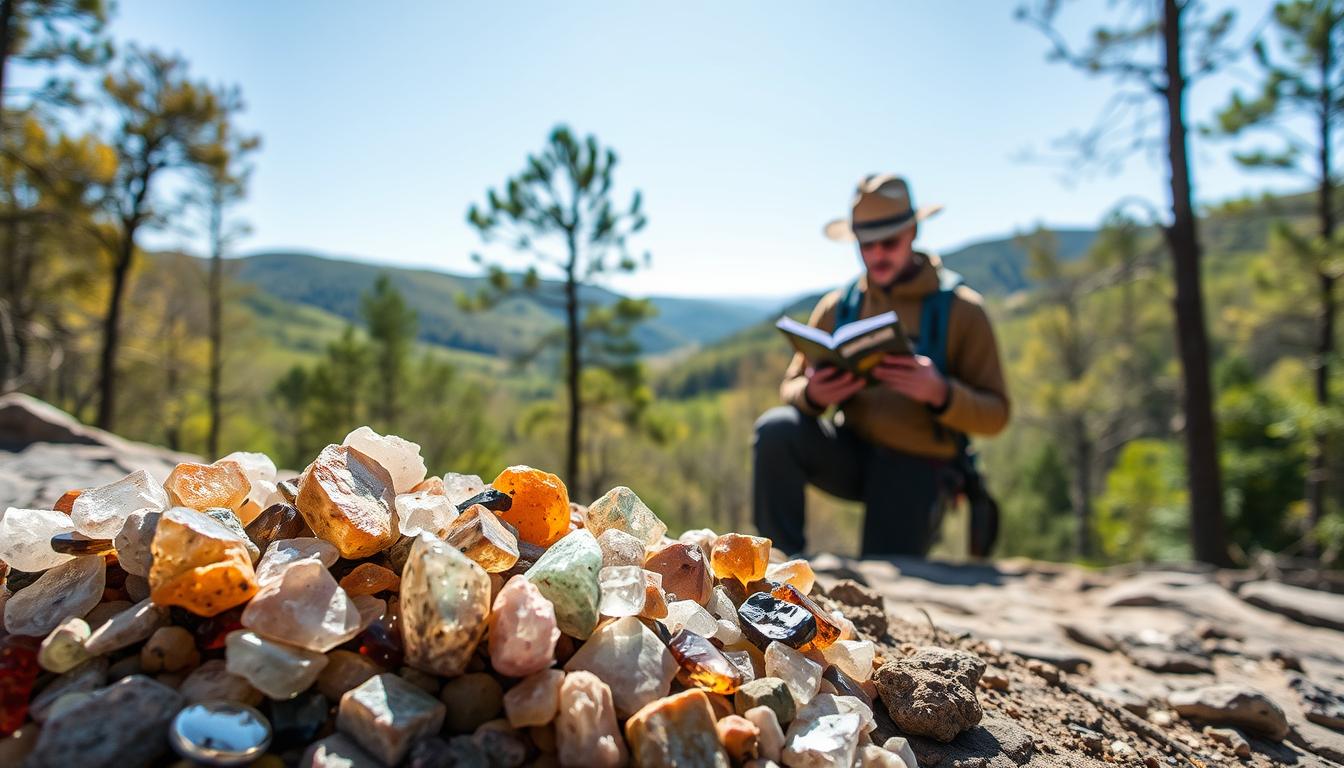
Rockhounding is a fun hobby where people collect rocks, minerals, and fossils. In Kentucky, there are rules to follow. The Bureau of Land Management (BLM) and the U.S. Forest Service manage public lands for rockhounding.
These groups have rules to keep rockhounding safe and respectful. It’s important to know these rules if you want to rockhound in Kentucky.
Key Takeaways
- Rockhounding in Kentucky is regulated by the BLM and U.S. Forest Service.
- Public lands have specific rules for rockhounding.
- Understanding regulations is key for safe rockhounding.
- Permits may be needed for some activities.
- Rockhounding laws protect our natural resources.
Kentucky’s Geological Treasures
Kentucky is famous for its rich geological history. It has many rocks and minerals formed over millions of years. This makes it a great place for rockhounds and geology fans.
Exploring the Bluegrass State’s Rich Geology
Kentucky’s geology goes back to the Paleozoic Era. Its rocks and minerals were shaped by tectonic activity, weathering, and erosion. This has created many geological formations, like fossil-rich limestone, sandstone, and shale.
The state is also known for its caves. Mammoth Cave National Park is one of the longest cave systems in the world. Its unique geology has made a complex network of passages and chambers. These are home to many plants and animals.
Key Geological Features of Kentucky:
- Fossil-rich limestone and sandstone formations
- Agate and geode deposits
- Caves and karst topography
- Diverse range of rocks and minerals
| Geological Feature | Description |
|---|---|
| Fossil-rich limestone | Rich in fossils of ancient marine life |
| Agate deposits | Found in a variety of colors and patterns |
| Caves | Complex networks of passages and chambers |
Rockhounding Laws and Rules in Kentucky
Kentucky is great for rockhounding because of its rich history. But, you must follow the laws and rules. Knowing these is key for a fun and legal rockhounding time.
Understanding the Regulations
In Kentucky, you need to know the rules for collecting rocks, minerals, and fossils. The Bureau of Land Management (BLM) and the U.S. Forest Service have rules. For example, you need a permit to collect for money.
Here are some important points about rockhounding in Kentucky:
- Permits are needed for collecting on some public lands managed by the BLM and U.S. Forest Service.
- Different rules apply to different types of land, such as national forests and state parks.
- Some areas may be closed to rockhounding due to environmental or conservation concerns.
For more details, check out theU.S. Forest Service’s rockhounding guide.

Key regulations include knowing the difference between casual and commercial collecting. Commercial collecting needs special permits. Also, always respect private property and follow public land rules.
By following these rules, rockhounding can be both fun and help protect Kentucky’s geological treasures.
Public Land Collecting Guidelines
Kentucky’s public lands are full of geological treasures. But, collectors must follow certain rules. Knowing these rules helps rockhounds enjoy their hobby and protect the state’s nature.
National Forests and Parks Regulations
In national forests, rockhounds must follow U.S. Forest Service rules. These rules help protect the environment while allowing people to enjoy these areas.
- Collecting for personal use is usually okay, but you need a permit for commercial collecting.
- You can’t dig or use heavy equipment that could harm the land.
- Some places might be off-limits because of environmental or cultural reasons.
Permits and Restrictions: For national forests, you might need a permit for things like metal detecting or collecting in special areas.
State Parks and Wildlife Management Areas
State parks and wildlife management areas have their own rules. These places are managed to keep both nature and culture safe. Collecting is regulated to protect these areas.
| Area Type | Collecting Allowed | Permit Required |
|---|---|---|
| State Parks | Limited to personal use | Yes, for certain activities |
| Wildlife Management Areas | Restricted, varies by area | Yes, often required |
Before collecting in state parks and wildlife management areas, it’s important to check with local authorities. Rules can change a lot, and some places might not allow collecting at all.

By following these guidelines, rockhounds can help keep Kentucky’s geological history safe. Always check the latest rules before you go collecting.
Private Property Rockhounding
Before you start rockhounding on private land, it’s key to know the permission requirements and liability considerations. Landowners can decide who gets to enter their land. Rockhounding without permission can cause legal problems.
Permission Requirements
To rockhound on private land, you need to get permission from the landowner. You can reach out to them directly to ask for consent. Always respect their wishes and any rules they set.
For more info on rockhounding laws, check out this resource.
Liability Considerations
Even with permission, rockhounding on private land has liability risks. You might be responsible if you damage the property. It’s important to know these risks and take steps to avoid them.
Understanding the need for permission and being careful about liability helps you enjoy rockhounding on private land. It also shows respect for landowners’ rights.
Material-Specific Collection Rules
It’s important to know the rules for collecting rocks in Kentucky. These rules help keep the state’s natural beauty safe.
The Bureau of Land Management (BLM) and the U.S. Forest Service have rules for collecting. These rules change based on what you’re collecting.
Rock and Mineral Collection Limits
There are rules for collecting rocks and minerals. Here are some:
- You can collect for fun, not to sell.
- There might be limits on how much you can take.
- Some places are off-limits because of the environment or culture.
Always check with local agencies before you go.
Fossil Collection Regulations
Fossils have special rules because they’re important for science and history. Here are some:
- Fossils on federal lands are protected by law.
- You need a permit to collect fossils for science.
- Selling fossils might be banned or limited.
Following these rules helps keep Kentucky’s geology safe. It also lets rockhounds enjoy their hobby.
Permits, Penalties, and Protected Resources
Rockhounding in Kentucky is more than just looking for rocks. You need to know about permits and penalties. It’s important to follow the rules to enjoy this hobby and protect Kentucky’s rocks.
Required Permits and Application Process
In Kentucky, some places need permits for rockhounding. The application process asks for your plans, where you want to go, and how long you’ll be there. Always check with the land management agency for the latest on permits.
- Find out who manages the area you want to visit.
- Look up the permit rules and how to apply.
- Apply early for your visit.
Penalties for Illegal Collection
Collecting rocks, minerals, or fossils without permission can lead to big fines. These fines help protect Kentucky’s nature and ensure rockhounding is done right. Here are some possible fines for breaking the rules.
| Offense | Penalty |
|---|---|
| First-time offense for minor violation | Warning and/or fine up to $100 |
| Repeated or serious violation | Fine up to $500 and/or confiscation of collected materials |
| Violation involving protected or endangered species | Fine up to $1,000 and/or legal action |
Knowing and following the rules helps avoid fines. It also helps keep Kentucky’s geological treasures safe for everyone.
[link-whisper-related-posts]Conclusion
Rockhounding is a fun hobby that needs you to know the laws. In Kentucky, there are rules to follow for a good time.
Kentucky’s rockhounding laws tell you what you can collect and where. It’s important to know these rules to avoid trouble. The rules change depending on where you are, like public lands or private properties.
Knowing the laws lets rockhounding fans enjoy Kentucky’s geological wonders. Looking for rocks, minerals, or fossils is fun. But following the rules helps keep Kentucky beautiful for everyone.
FAQ
What are the rockhounding laws and regulations in Kentucky?
In Kentucky, rockhounding is governed by laws. These include rules from the BLM and the U.S. Forest Service. They manage public lands where you can rockhound.
Do I need a permit to collect rocks, minerals, and fossils on public lands in Kentucky?
Yes, you need a permit to collect rocks, minerals, and fossils on public lands. The BLM and the U.S. Forest Service have specific rules. It’s important to know these before you start rockhounding.
What are the rules for collecting rocks, minerals, and fossils in national forests, state parks, and wildlife management areas in Kentucky?
The U.S. Forest Service and state park authorities have rules for collecting in these areas. It’s important to follow these rules to avoid penalties.
Can I collect rocks, minerals, and fossils on private property in Kentucky?
Yes, but you need permission from the landowner first. Also, be aware of the liability you might face.
Are there any specific regulations for collecting fossils in Kentucky?
Yes, there are special rules for collecting fossils in Kentucky. It’s important to know these to avoid penalties.
What are the penalties for violating rockhounding regulations in Kentucky?
Breaking rockhounding rules in Kentucky can lead to serious penalties. It’s key to understand the rules and get the right permits to avoid trouble.
Where can I find more information on rockhounding laws and regulations in Kentucky?
For more info, contact the BLM, the U.S. Forest Service, or state park authorities. They can help with Kentucky’s rockhounding laws and regulations.

Subscribe to Our Newsletter