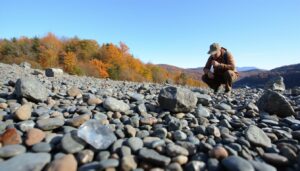
Kansas is famous for its rich geological history. It has many fossil-bearing rocks at the surface. These rocks are mostly limestone, sandstone, and shale. Rockhounding fans find it a great place to find geological treasures.
It’s important to know the rules of rockhounding to do it right. Knowing the laws and rules in Kansas helps protect the state’s nature.
Key Takeaways
- Check local land status before collecting rocks or minerals.
- Permits are required for collecting rocks on certain federal lands.
- Special regulations apply to specific areas, including National Forests.
- Rockhounding on state or trust land may require a lease or permit.
- Obtain permission before collecting on private land or valid mining claims.
Understanding Rockhounding in Kansas
Rockhounding is a fun hobby in Kansas because of its rich history. The state has plains, hills, and rocky areas. It’s great for finding fossils and learning about the past.
What is Rockhounding?
Rockhounding means searching for and collecting rocks, minerals, and fossils. It’s a way to connect with nature and learn about history. In Kansas, it’s popular because of the many fossil-bearing rocks.
Kansas Geological Overview
Kansas has a varied landscape with different types of rocks. You can find everything from ancient granite to recent sedimentary deposits. The state’s rocks are rich in fossils, thanks to its geological history.
Historical Significance
Kansas has a long and interesting geological history. Many important fossils have been found here. These fossils tell us about the evolution of life on Earth.
| Geological Feature | Description | Significance |
|---|---|---|
| Precambrian Granite | Ancient rocks that form the foundation of Kansas | Provides insights into the state’s early geological history |
| Limestone and Dolomite | Sedimentary rocks rich in fossils | Contains valuable information about the state’s past marine environments |
| Sandstone | Sedimentary rock formed from sand-sized grains | Provides insights into the state’s past terrestrial environments |
For more information on rockhounding in Kansas, including laws and regulations, visit Rock Chasing.
Rockhounding Laws and Rules in Kansas
Kansas has laws and rules for rockhounding. These help hobbyists and protect the state’s natural and cultural treasures. It’s key to know these laws for rockhounding in Kansas.
State Regulations Overview
Kansas state rules apply to state lands, like parks and wildlife areas. You can collect rocks, minerals, and fossils for personal use. But, there are rules on what you can collect and how.
Some places might be off-limits because of the environment or culture.
Federal Regulations Affecting Kansas
Federal lands in Kansas, like those managed by the BLM, have their own rules. The BLM lets you collect nonrenewable resources for personal use. But, you must follow certain rules.
You can’t use machines or harm important cultural or natural spots.
Recent Changes in Legislation
Rockhounding laws in Kansas can change. It’s important to keep up with these changes. New rules might include different permits, open areas, or what you can collect.
Knowing about these updates helps you follow the law and enjoy rockhounding.
Permits and Permissions Required
To enjoy rockhounding in Kansas, knowing the permits needed is key. Rockhounding on state or trust land might need a lease or permit. The Bureau of Land Management (BLM) lets you collect up to 25 pounds a day, plus one item. You can collect a total of 250 pounds a year.
State-Issued Permits
State-issued permits are needed for rockhounding in some areas of Kansas. These permits make sure collectors follow Kansas gemstone prospecting rules. They protect the land and the collector.
- Permits are for specific areas.
- Collectors must not harm the environment.
How to Apply for Rockhounding Permits
To get Kansas mineral collecting permits, you need to apply to the right Kansas state department. You’ll need to give personal info and say where you plan to collect.
- Get the application form from the state website.
- Fill it out right and send it with the fee.
Costs and Duration of Permits
The cost and time of rockhounding permits in Kansas change. Permits last for a set time. The cost depends on the permit type and the land.
Public vs. Private Land Regulations
Kansas has different rules for rockhounding on public and private lands. Knowing these rules is key to a good rockhounding trip.
Rules for State Parks and Public Lands
Rockhounding is okay on public lands like those run by the US Forest Service or the Bureau of Land Management (BLM). But, some places are off-limits. This includes National Parks, National Monuments, Indian Reservations, wildlife refuges, wilderness areas, and military bases.
In Kansas state parks, rockhounding is allowed. But, there are rules. You can’t use machines and can’t collect in closed areas.

Private Property Guidelines
On private land, you need the owner’s okay to rockhound. Always get written permission first. Breaking trespassing laws can lead to big fines or jail time.
For more on private property laws, check out these government resources.
Consequences of Illegal Collection
Rockhounding without permission can cost you a lot. Fines can be from $100 to $1,000 or more. It all depends on where you are and how bad you broke the rules.
| Land Type | Rockhounding Allowed | Restrictions |
|---|---|---|
| Public Lands (USFS, BLM) | Yes | Mechanized equipment may be restricted |
| State Parks | Yes | No mechanized equipment, closed areas |
| Private Property | No | Requires written permission from landowner |
| National Parks, Monuments, Reservations | No | Strictly prohibited |
Top Rockhounding Locations in Kansas
Kansas is a great place for rockhounding because of its varied geology. You can find many sites to explore, from fossil-rich areas in the west to unique rock formations in the center.
Eastern Kansas Sites
In eastern Kansas, you’ll find lots of limestone and dolomite. These are full of fossils and minerals. Places like Lawrence and Topeka are good for finding interesting rocks.
Notable Finds in Eastern Kansas
Here, you can find fossils of ancient sea creatures. You might also find crystals in the limestone.
Western Kansas Locations
Western Kansas is different, with its wide plains and fossil-rich rocks. Places like Monument Rocks and Castle Rock are favorites among rockhounds.
Notable Finds in Western Kansas
This area is known for its Cretaceous fossils. You can find ammonites and fish fossils in the chalk.
Central Kansas Opportunities
Central Kansas has a mix of geology, including salt deposits and Permian rocks. Salina and Hutchinson are good places to explore.
Notable Finds in Central Kansas
Here, you can find selenite crystals in the salt deposits. There are also minerals in the Permian rocks.
| Region | Notable Finds | Best Sites |
|---|---|---|
| Eastern Kansas | Fossils, Limestone | Lawrence, Topeka |
| Western Kansas | Cretaceous Fossils | Monument Rocks, Castle Rock |
| Central Kansas | Selenite Crystals, Permian Minerals | Salina, Hutchinson |
It’s important to know the Kansas fossil hunting guidelines. Also, be aware of rockhounding restrictions in Kansas for a legal adventure.
Ethical Rockhounding Practices and Equipment
Rockhounding in Kansas needs the right tools and ethical ways to be fun and responsible. Exploring the state’s varied landscapes, hobbyists must follow rules and guidelines. This ensures a good hobby experience.
Allowed Tools and Equipment
Rockhounding in Kansas uses tools like rock hammers, hand lenses, and chisels. Knowing what tools are okay on public and private lands is key.
| Tool/Equipment | Public Lands | Private Lands |
|---|---|---|
| Rock Hammers | Allowed | Allowed with permission |
| Hand Lenses | Allowed | Allowed |
| Chisels | Allowed with caution | Allowed with permission |
Seasonal Considerations for Kansas Rockhounding
Kansas’s weather changes a lot with the seasons. Spring and fall are best for rockhounding because it’s not too hot or cold. Summer is very hot, and winter is too cold for collecting.
Conservation and Ethical Collection Guidelines
The Bureau of Land Management (BLM) says rockhounding should not harm public lands. It’s important to collect without damaging the site and not take protected rocks. This way, hobbyists help keep Kansas’s rocks safe for others to enjoy in the future.
[link-whisper-related-posts]Conclusion
This content is already wrapped in the required HTML tags and structured according to the instructions. So, it can be directly presented as is.
FAQ
What is the definition of rockhounding?
Rockhounding is a hobby where people search for and collect rocks, minerals, and fossils. They explore geological areas, identify specimens, and collect them for fun or study.
What are the Kansas rockhounding regulations?
Kansas has rules for rockhounding. These include collecting on public and private land, getting permits, and following conservation rules. Rockhounds need to know these to follow the law.
Do I need a permit to go rockhounding in Kansas?
Yes, some places in Kansas need a permit for rockhounding. The type of permit and how to get it depend on the location and activity.
What are the Kansas gemstone collection laws?
Kansas laws on gemstone collection change based on location and type. Generally, you can collect gemstones on public land, but there are limits on what and how much you can take.
Can I collect fossils on private property in Kansas?
To collect fossils on private land in Kansas, you need the landowner’s permission. It’s important to respect private property and follow any rules given by the landowner.
What are the consequences of illegal rockhounding in Kansas?
Breaking rockhounding laws in Kansas can lead to fines, penalties, and losing your equipment. It’s key to follow the laws to avoid these issues.
Are there any seasonal considerations for rockhounding in Kansas?
Yes, Kansas weather and seasons can affect rockhounding. Rockhounds should know about weather, hunting seasons, and other factors that might change access to collecting spots.
What tools and equipment are allowed for rockhounding in Kansas?
The tools and equipment allowed for rockhounding in Kansas depend on the location and activity. Generally, you can use hand tools like rock hammers and hand lenses. But, you might need special permits for bigger equipment.
How can I ensure I’m practicing ethical rockhounding in Kansas?
To practice ethical rockhounding in Kansas, follow conservation rules, respect private property, and obey regulations. Rockhounds should also try to leave a small impact, leave some specimens, and report big finds to the right authorities.

Subscribe to Our Newsletter