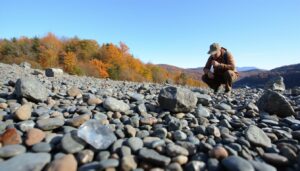
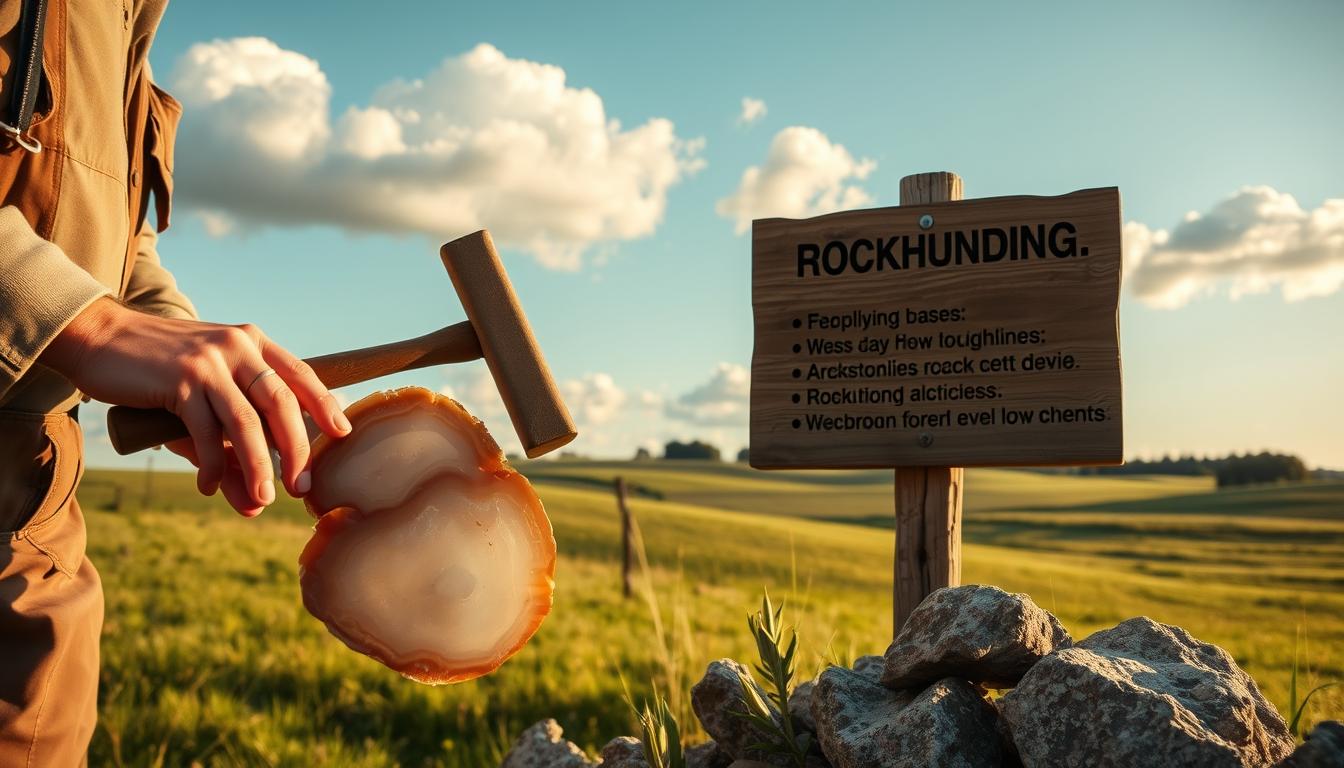
Iowa is a great place for rockhounding fans. It has many spots to find cool rocks, minerals, and fossils. Rockhounding is fun and teaches us about nature.
It’s important to know the rules to keep this hobby going. This way, we can all enjoy it for a long time.
To rockhound in Iowa, you need to know the rules. These rules apply to both public and private lands. Knowing them helps protect Iowa’s nature and lets hobbyists keep exploring.
Key Takeaways
- Understand Iowa’s specific rockhounding regulations.
- Know the difference between public and private land regulations.
- Familiarize yourself with permits required for collecting.
- Be aware of areas where rockhounding is prohibited.
- Respect private property rights.
Understanding Rockhounding in Iowa
Iowa’s varied landscapes make it great for rockhounds. Rockhounding is collecting rocks, semi-precious stones, and minerals for fun. It’s a favorite activity in the state.
Popular Rockhounding Sites in Iowa
Iowa has many spots for finding minerals and fossils. Rivers, streams, and quarries are top places. Volunteer State Parks and protected areas also have rockhounding spots, but some have rules.
Common Minerals and Fossils Found in Iowa
Iowa is rich in geodes, agates, and fossils from the Paleozoic era. These treasures can be found all over the state. It’s a great place for rock collectors.
Geodes and Agates
Geodes and agates are highly sought after in Iowa. Geodes are hollow rocks with crystals. Agates, a type of chalcedony, are found in rivers and streams.
Paleozoic Fossils
Iowa’s Paleozoic fossils show the state’s ancient past. You can find fossils of trilobites, brachiopods, and crinoids. They give us a peek into Iowa’s history.
Legal Framework for Rockhounding in Iowa
Rockhounding in Iowa has rules from state and federal agencies. These rules help both rockhounding fans and protect Iowa’s nature.
State Agencies Overseeing Rockhounding Activities
The Iowa Department of Natural Resources (DNR) watches over rockhounding. They make sure it’s okay in state parks and public lands. The Iowa Geological Survey also helps by sharing info on where to find rocks.
| Agency | Responsibility |
|---|---|
| Iowa DNR | Regulates rockhounding in state parks and public lands |
| Iowa Geological Survey | Provides information on geological resources |
Federal vs. State Regulations
State rules mostly cover rockhounding, but federal laws apply too. This is for places managed by the Bureau of Land Management (BLM). The BLM lets people collect some rocks for fun, but only in certain amounts.
It’s important to know both state and federal rules. This way, rockhounding fans can follow the law and have fun.
Rockhounding Laws and Rules in Iowa: What You Need to Know
Iowa has rules for rockhounding. These laws help both rockhounding fans and protect Iowa’s nature.
General Collecting Limitations
Iowa has rules on what and where you can collect. You can collect on public lands for personal use. But, there are limits on how much and what you can take.
Remember, taking a lot or using machines might need a special permit.
Tools and Equipment Regulations
There are rules for tools and equipment in Iowa. Knowing these rules is important.
Prohibited Tools and Methods
Some tools and methods are not allowed. For example, rock saws or excavators might need a permit.
Recommended Equipment
For most rockhounding, simple tools are best. Rock hammers, hand lenses, and bags are good. They help collect without harming the environment.
By following these rules, rockhounding can be fun and help protect Iowa’s geology.
Public Land Regulations
Iowa’s public lands are great for rockhounding. But, there are rules to follow. Knowing these rules helps you enjoy rockhounding legally.
Bureau of Land Management Areas
The Bureau of Land Management (BLM) manages public lands for rockhounding. There are rules to follow. Rockhounding is allowed, but you must follow certain guidelines.
Key regulations include: collecting for personal use is okay. But, you might need a special permit for commercial collecting.
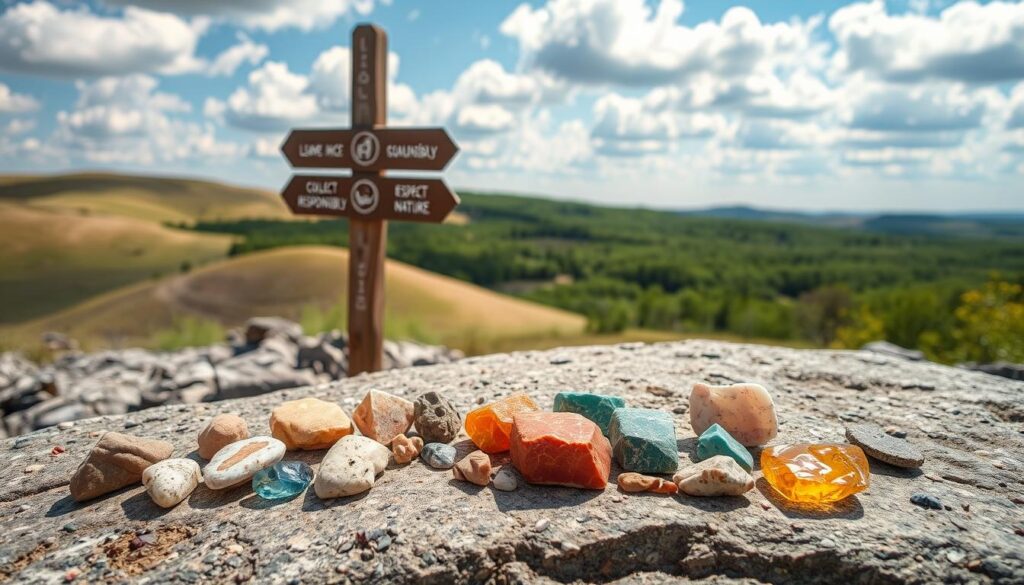
National Forests and Grasslands
National forests and grasslands in Iowa also welcome rockhounding. The U.S. Forest Service manages these areas. They have their own rules for collecting minerals.
Some areas in national forests might be off-limits. This could be for environmental or cultural reasons.
County and Municipal Lands
County and municipal lands in Iowa have different rules for rockhounding. Some places let you collect, while others don’t.
Always check with local authorities. They can tell you the specific rules for each area.
| Land Type | Regulations | Permits Required |
|---|---|---|
| Bureau of Land Management | Collecting for personal use allowed | No, for personal use |
| National Forests and Grasslands | Some areas may be closed | Yes, for commercial use |
| County and Municipal Lands | Varies by location | Check with local authorities |
State Parks and Recreation Areas
Visitors to Iowa’s state parks and recreation areas can enjoy rockhounding. But, they must follow specific rules. The Iowa Department of Natural Resources manages these areas. They aim to balance fun activities with protecting nature.
Permit Requirements
To rockhound in Iowa’s state parks, you might need a permit. The Iowa Department of Natural Resources gives out permits for collecting rocks, minerals, and fossils. The rules for getting a permit vary by park and type of collecting.
It’s essential to check with park officials before collecting any specimens.
Collecting Restrictions in Protected Areas
State parks and recreation areas have rules to protect sensitive habitats. These rules help make sure rockhounding can continue for everyone.
Quantity Limitations
There are limits on how many rocks, minerals, and fossils you can collect. These limits help prevent taking too much. They also protect resources for future rockhounds.
Seasonal Restrictions
Some areas have seasonal rules to protect wildlife and manage crowds. Knowing these rules is key to a successful rockhounding trip.
| Park/Recreation Area | Permit Required | Collecting Limits |
|---|---|---|
| Volga River State Recreation Area | Yes | Up to 25 pounds per person per day |
| Backbone State Park | No | Reasonable amounts for personal use |
| Pappajohn Sculpture Park | Not Applicable | No collecting allowed |
Private Property Considerations
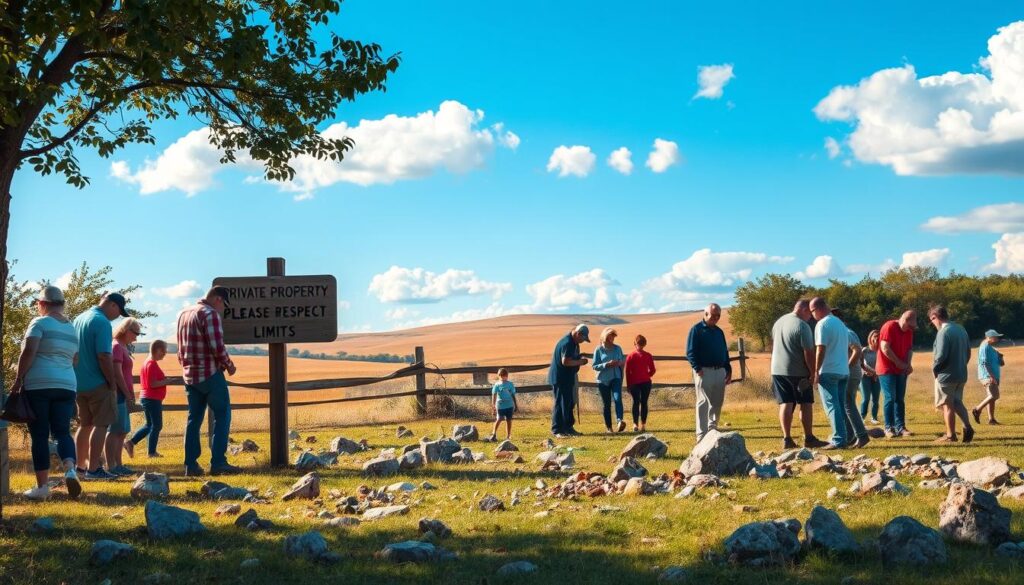
Private property rights are key in Rockhounding Laws and Rules in Iowa. Rockhounding fans must respect these rights. It’s important to know about trespassing laws and getting permission from landowners.
Obtaining Permission from Landowners
Before collecting rocks, minerals, or fossils on private land, you need permission. This follows Iowa rockhounding regulations and builds good relations with landowners.
The USDA Forest Service guide stresses respecting private property. It says you need permission to access. Getting written consent is wise to avoid problems.
Liability and Trespassing Laws
Knowing about liability and trespassing laws is important. Trespassing without permission can cause fines and lawsuits. For more info, check the Electronic Code of Federal Regulations.
Knowing these laws helps rockhounding fans enjoy their hobby safely. It’s also smart to learn about local laws on private property.
Penalties and Enforcement
It’s important to know the penalties for breaking rockhounding rules in Iowa. The state has rules to keep things fair for everyone. Breaking these rules can lead to big fines and legal trouble.
Fines and Legal Consequences
Those who break Iowa’s rockhounding laws face big fines. The BLM and other land management agencies make sure people follow the rules. The fines can be hundreds or even thousands of dollars, based on how bad the offense is.
- First-time offenders might get a warning or a fine.
- Those who break the rules again can get hit with bigger fines and might even face court.
- Really bad offenses can lead to criminal charges.
Reporting Violations
If you see or think someone is breaking Iowa’s rockhounding rules, you should tell the authorities. The Bureau of Land Management and local police are in charge of checking and enforcing these laws. Telling them helps keep Iowa’s rockhounding community safe and fair.
- Write down what you saw with as much detail as you can.
- Call the right agency or police to report it.
- Give them the evidence you have to back up your report.
Conclusion
Rockhounding in Iowa is a fun hobby. The state has many places to find minerals and fossils. It’s important to know and follow Iowa’s rules for rockhounding.
Iowa’s laws help both rockhounds and the environment. They make sure everyone respects the land and its owners. Knowing these rules lets you enjoy your hobby without harming nature.
Whether you’re new or experienced, following Iowa’s rules is key. It keeps the state’s geological wonders safe for others to enjoy. Always ask the right people for permission before you go rockhounding.
FAQ
What is rockhounding, and why is it popular in Iowa?
Rockhounding is collecting rocks, minerals, and fossils. Iowa is great for this hobby. It has many sites with geodes, agates, and fossils from the Paleozoic era.
What are some popular rockhounding sites in Iowa?
Popular spots include areas with exposed rocks, streams, and rivers. You can find them in state parks and along the Mississippi River.
What kinds of minerals and fossils can be found in Iowa?
Iowa is famous for its geodes, agates, and Paleozoic fossils. You can find trilobites, brachiopods, and crinoids here.
Are there any specific laws or regulations governing rockhounding in Iowa?
Yes, Iowa has rules for rockhounding. These include limits on what you can collect and the tools you can use. There are also rules for public lands, state parks, and private property.
Do I need a permit to go rockhounding in Iowa’s state parks?
Permit rules vary by park. It’s best to check with the park you plan to visit for their specific rules.
Can I collect rocks and minerals on private property in Iowa?
No, you need permission from the landowner to collect on private property.
What are the penalties for violating rockhounding regulations in Iowa?
Breaking the rules can lead to fines and legal trouble. The severity of the penalty depends on the violation.
How do I report a rockhounding regulation violation in Iowa?
Report violations to state or local authorities. This includes park rangers or conservation officers.
Are there any specific tools or equipment that are prohibited for rockhounding in Iowa?
Yes, using power tools or explosives in certain areas is not allowed.
What type of equipment is recommended for rockhounding in Iowa?
Hand tools like rock hammers and chisels are recommended. Don’t forget gloves and safety glasses.
Can I collect fossils in Iowa’s state parks?
Collecting fossils has specific rules. It may be restricted in some areas. Always check with park officials first.
Are there any Iowa state agencies responsible for overseeing rockhounding activities?
Yes, the Iowa Department of Natural Resources manages and regulates rockhounding activities.

Subscribe to Our Newsletter