
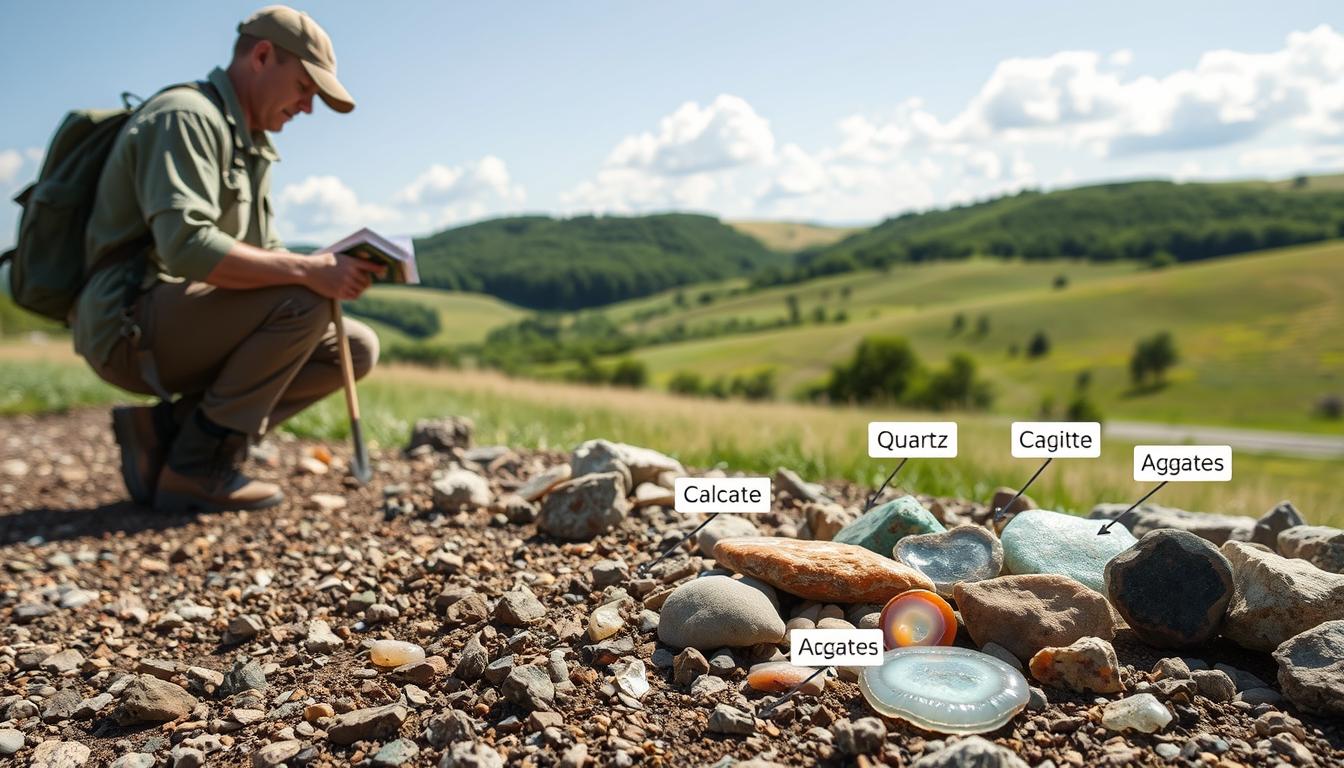
Indiana is a great place for rockhounds because of its varied landscapes. The state has a rich history, with everything from glacial deposits to fossils. It’s important to know the regulations governing rockhounding to keep it safe and fun.
Rockhounds need to follow the rules. You can usually collect rocks on public lands managed by the US Forest Service or the Bureau of Land Management (BLM). But, there are some places you can’t go. To find out more, check out rockhounding rules online.
Key Takeaways
- Understand Indiana’s rockhounding regulations to ensure sustainability.
- Rockhounding is permitted on most public lands managed by the US Forest Service or BLM.
- Familiarize yourself with exceptions and special regulations.
- Collecting for personal use is generally allowed, but commercial collecting may require permits.
- Always check local guidelines for specific rules and restrictions.
Understanding Rockhounding in Indiana
Indiana’s rich geological history makes it perfect for rockhounding. Rockhounding is about collecting rocks, minerals, and fossils for fun or science.
What is Rockhounding?
Rockhounding is a hobby where people collect geological specimens. They search for and collect rocks, minerals, and fossils in nature. This can be in streams, hills, or rock outcrops.
Popular Rocks, Minerals, and Fossils in Indiana
Indiana is famous for its fossil-rich deposits, from the Mississippian and Pennsylvanian periods. Rockhounds love to find agate, geodes, and various types of quartz. The state’s varied geology offers a wide range of specimens.
- Agate
- Geodes
- Quartz
- Fossils from the Mississippian and Pennsylvanian periods
The Importance of Legal Compliance
Following the law is key in rockhounding. Laws differ by land management agency. For example, the Bureau of Land Management (BLM) lets you collect some specimens for personal use. But, you need a permit for commercial collecting. Knowing and following these rules is vital to avoid trouble.
Rockhounding Laws and Rules in Indiana
It’s important for rockhounding fans in Indiana to know the laws. The state’s rules help protect its natural and cultural treasures. They also let rockhounds enjoy their hobby.
State Legislation Overview
Indiana’s laws are the base for rockhounding rules. The Indiana Department of Natural Resources (DNR) manages the state’s natural spots. They have rules for collecting in parks and forests.
Rockhounds need to know these rules to follow the law.
Department of Natural Resources Regulations
The Indiana DNR has its own rules for rockhounding. For example:
- Collecting is usually okay in state forests, but some areas are off-limits.
- Rockhounds must follow rules for taking rocks, minerals, and fossils.
Federal Laws Applicable in Indiana
Indiana also follows federal laws for rockhounding. Two key laws are:
Paleontological Resources Preservation Act
The Paleontological Resources Preservation Act stops people from taking fossils from federal lands without a permit. It helps keep important fossils safe for the future.
Archaeological Resources Protection Act
The Archaeological Resources Protection Act guards artifacts and sites on federal and tribal lands. Rockhounds need to know this to avoid harming protected areas.
By following these laws, rockhounds in Indiana can have fun while helping protect the state’s treasures.
Public Land Regulations
Indiana’s varied landscape is perfect for rockhounding on public lands. Knowing the rules is key for a fun and successful time.
State Parks and Recreation Areas
Indiana’s state parks and recreation areas are run by the Indiana Department of Natural Resources (DNR). You can usually rockhound for personal use. But, some spots might be off-limits for environmental reasons.
- Always check with park rangers or visitor centers for specific rules and regulations.
- Some areas may require a permit for collecting.
- Be respectful of other park users and the environment.
State Forests and Wildlife Areas
Indiana’s state forests and wildlife areas are great for rockhounding. The DNR manages these places, focusing on conservation and sustainability.
| Area Type | Regulations | Permits Required |
|---|---|---|
| State Forests | Collecting for personal use allowed | No |
| Wildlife Areas | Restricted areas may apply | Yes, in some cases |
Corps of Engineers Properties
Properties managed by the Corps of Engineers, near lakes and rivers, have their own rules. Rockhounding for personal use is usually okay, but check for any special rules.
Key considerations include:
- Understanding the boundaries of Corps-managed properties.
- Awareness of any protected areas or species.
- Compliance with federal regulations.
Roadside Collecting
Roadside collecting is easy and convenient. But, remember the local laws, private property rights, and any collecting restrictions.
By following these rules, rockhounding fans can explore Indiana’s geological wonders. They also help protect and preserve public lands.
Private Property and Permission Requirements
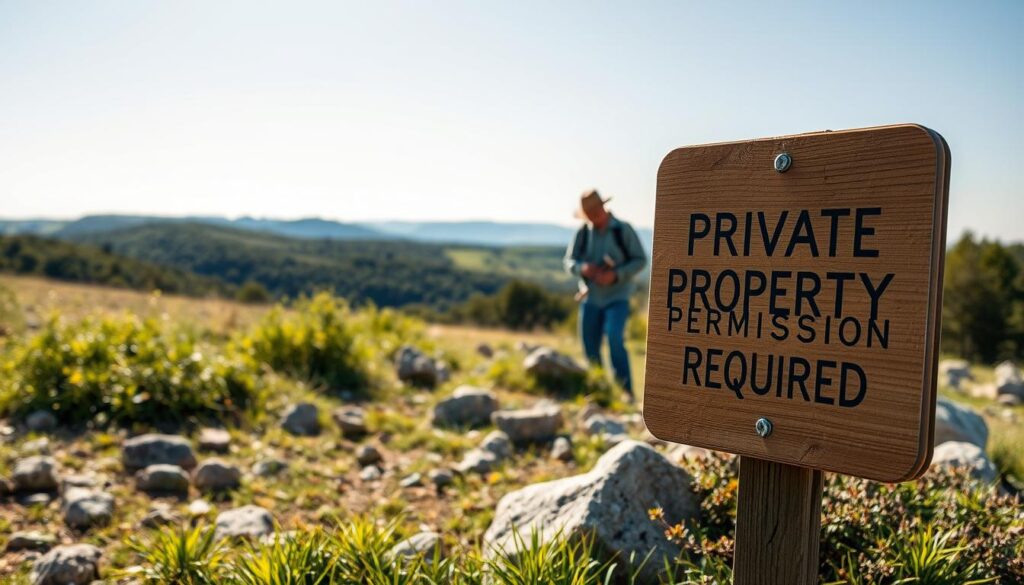
Before you start collecting rocks or minerals on private land, you need to know the rules. In Indiana, rockhounds must get permission from the landowner. This is because trespassing laws are very strict.
Legal Requirements for Collecting on Private Land
To collect legally on private land, you should talk to the landowner nicely. Explain why you want to collect rocks or minerals. It’s a good idea to have a written agreement or permit to avoid any problems.
How to Properly Obtain Permission
Getting permission is not just about asking. It’s about showing respect for the landowner’s property. You should be ready to tell them about your collecting plans. You might also need to offer something in return, like money or other benefits.
Liability Considerations
Landowners might worry about being held responsible if someone gets hurt on their land. You should understand their concerns. You might need to sign a waiver or liability release to make them feel better.
Commercial Collecting Sites in Indiana
If you want to collect rocks or minerals for money, Indiana has special places for that. These sites have their own rules. You might need a license or permit, and there could be more rules to follow.
| Collecting Site | Permit Required | Regulations |
|---|---|---|
| Private Land | Yes | Written permission from landowner |
| Commercial Sites | Yes | Licenses or permits, additional regulations |
Special Regulations and Restrictions
Fossil collectors and rockhounds need to know Indiana’s laws. The state has rules to protect its natural and historical treasures.
Fossil Collection Rules
In Indiana, you need a permit for vertebrate fossils like dinosaur bones. This rule helps keep important scientific finds safe.
Archaeological and Historical Artifacts
It’s illegal to remove or damage archaeological and historical items. These items are key parts of Indiana’s cultural history.
Protected Species and Materials
Some species and materials are protected because they’re rare or important for the environment. Collectors must make sure they’re not taking these protected items.
Penalties and Enforcement
Breaking these rules can lead to serious penalties.
Civil Penalties
Civil penalties might include fines and taking away what you’ve collected.
Criminal Charges
In serious cases, you could face criminal charges for breaking these rules.
[link-whisper-related-posts]Conclusion
Rockhounding in Indiana can be very rewarding. It’s important to do it right and follow the law. By knowing and sticking to Indiana gemstone hunting regulations, you can enjoy the state’s rich earth while keeping it safe for future generations.
Indiana has lots of places to find rocks, minerals, and fossils. From the Falls of the Ohio State Park to the Hoosier National Forest, there’s something for everyone. It’s key to respect the land, get the right permits, and follow the rules.
This way, rockhounds help keep Indiana’s earth and culture safe. So, pick up your rock hammer and explore Indiana’s amazing geological wonders. Make sure to do it legally and have fun.
FAQ
What is rockhounding, and why is it popular in Indiana?
Rockhounding is collecting rocks, minerals, and fossils. Indiana’s history and landscape attract many. They search for agate, geodes, and fossils from old times.
What laws govern rockhounding in Indiana?
Laws in Indiana cover rockhounding. The state and federal governments have rules. These include the Paleontological Resources Preservation Act and the Archaeological Resources Protection Act.
Can I collect rocks and fossils on public land in Indiana?
Yes, but there are rules. State parks and forests allow collecting for personal use. But, some places are closed or have special rules.
Corps of Engineers properties and roadside areas also have their own rules.
Do I need permission to collect on private property?
Yes, you need permission from the landowner. It’s best to have a written agreement. Also, know about liability.
Are there special regulations for collecting fossils and archaeological artifacts?
Yes, there are special rules. Vertebrate fossils are protected. Archaeological and historical artifacts cannot be removed or destroyed.
What are the penalties for violating rockhounding regulations in Indiana?
Breaking the rules can lead to serious penalties. This includes fines and criminal charges. It’s important to follow Indiana’s laws.
Can I collect rocks and minerals for commercial purposes?
Commercial collecting needs licenses or permits. It has different rules than personal use. You must understand the regulations and get the right permits.
How can I ensure I’m rockhounding sustainably and responsibly?
To rockhound responsibly, respect public and private lands. Get the necessary permits. Follow special rules. This way, you can enjoy the hobby while helping preserve Indiana’s heritage.

Subscribe to Our Newsletter