Hawaii is a paradise for rockhounds with its unique rocks and volcanic history. The islands are full of different gemstones and minerals. Before you start exploring, you need to know the rules.
It’s important to follow rock collecting regulations to do it right. The rules change based on where you are. For example, places managed by the US Forest Service or the Bureau of Land Management have their own rules. For more info on rockhounding rules, check out this resource.
Key Takeaways
- Understand local regulations before engaging in rockhounding.
- Federal and state lands have different rules for rock collecting.
- Permits may be required for collecting rocks and minerals.
- Some areas are restricted or protected.
- Responsible rockhounding practices are essential.
Understanding Rockhounding in Hawaii
Hawaii’s volcanic landscapes and coastal areas make it great for rock collecting. It’s not just about finding rocks. It’s about learning about Hawaii’s geological history.
The Unique Geological Landscape of Hawaii
Hawaii’s geology is mainly volcanic. The islands were made by volcanoes. This has led to many different minerals and rocks.
Volcanic Origins and Mineral Formation
The volcanoes in Hawaii have created many minerals and rocks. This includes lava rocks and other volcanic materials. For more info on collecting these, check this resource.
Coastal and Marine Geology
Hawaii’s coast is also unique geologically. The ocean shapes the shoreline and creates cool formations like beach glass.
The mix of volcanic and marine geology makes Hawaii exciting for rockhounds. There’s a lot to discover here.
Rockhounding Laws and Rules in Hawaii
Rockhounding in Hawaii is a fun hobby. It lets people explore the islands’ unique rocks. But, there are laws to protect Hawaii’s nature and culture.
Federal Regulations Affecting Hawaiian Rockhounding
Federal rules shape rockhounding in Hawaii. They focus on land management.
Bureau of Land Management Guidelines
The Bureau of Land Management (BLM) looks after public lands. They let people collect rocks and minerals for fun. But, some places are off-limits for environmental or cultural reasons.
U.S. Forest Service Regulations
The U.S. Forest Service manages Hawaii’s national forests. Rockhounding is okay for personal use. But, there might be special rules or permits needed.
State-Specific Regulations in Hawaii
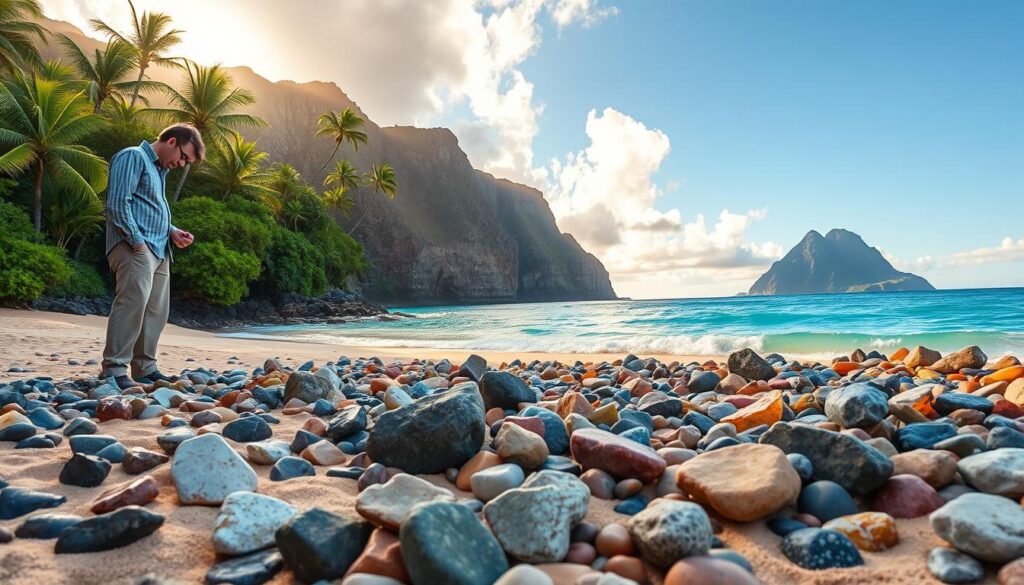
Hawaii also has its own rockhounding rules.
Hawaii Department of Land and Natural Resources
The Hawaii Department of Land and Natural Resources (DLNR) oversees natural resources. They control rock and mineral collecting. Sometimes, they need permits for certain spots or activities.
County-Level Ordinances
County laws in Hawaii can affect rockhounding too. Rules vary by county. Rockhounds should know the local laws.
Where Rockhounding is Permitted in Hawaii
Hawaii is a great place for rockhounding. It has many spots where you can find cool rocks and minerals. The state’s unique landscape makes it perfect for this hobby.
Public Lands Open for Collection
Public lands in Hawaii are full of treasures. Many places are open for rockhounding. You can find state forests, recreation areas, and some beaches.
State Forests and Recreation Areas
State forests and recreation areas are great for rockhounding. They are managed by the State of Hawaii’s Department of Land and Natural Resources. Some top spots include:
- Na Ala Hele State Forest
- Kohala State Forest
- Puu Waawaa Forest Reserve
Public Beaches with Collection Allowances
Some public beaches in Hawaii let you rockhound. You can find cool beach glass and driftwood. Popular beaches include:
- Kaanapali Beach
- Wailea Beach
- Hapuna Beach
Private Property Considerations
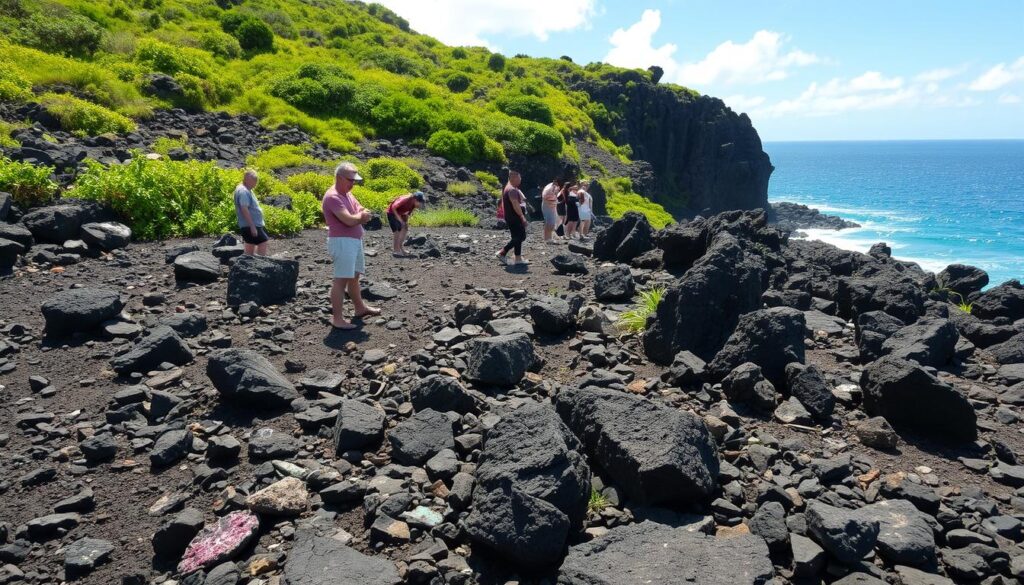
Rockhounding on public lands is great, but private property needs permission. Always get the right permits and follow local rules.
Obtaining Landowner Permission
Always get permission from the landowner before collecting on private property. This keeps good relations with landowners and helps rockhounding stay allowed.
Commercial Collection Sites
For commercial rockhounding, special sites with permits are available. These are managed by private companies or government agencies.
| Location Type | Permission Required | Regulating Body |
|---|---|---|
| Public Lands | No | State of Hawaii’s Department of Land and Natural Resources |
| Private Property | Yes | Landowner |
| Commercial Sites | Yes | Private Companies or Government Agencies |
Prohibited Collection Areas
To keep Hawaii’s nature and culture safe, some places are off-limits for rockhounding. Knowing these areas is key for rockhounding responsibly.
National Parks and Preserves
National parks in Hawaii are protected. Rockhounding is usually not allowed here. These parks have special rocks and cultural sites.
Hawaii Volcanoes National Park
Hawaii Volcanoes National Park is a UNESCO World Heritage Site. It’s one of the most unique places on Earth. Rockhounding is not allowed here to keep it safe. Visitors must follow rules to protect the park. For more info, visit the DLNR website.
Haleakalā National Park Rules
Haleakalā National Park on Maui also bans rockhounding. It’s famous for its volcanic landscapes and cultural importance. Visitors must follow the park’s rules to help preserve it.
Cultural and Historical Sites
Cultural and historical sites in Hawaii are protected by law. Rockhounding is often not allowed here to keep them safe.
Native Hawaiian Sacred Sites
Native Hawaiian sacred sites are culturally sensitive. Rockhounding is not allowed here to respect and protect their cultural value.
Archaeological Preserves
Archaeological preserves are protected for their historical value. These sites have important artifacts and structures for future generations.
Environmentally Sensitive Areas
Certain areas in Hawaii are environmentally sensitive. They are protected from rockhounding to keep their ecosystems balanced.
Wildlife Refuges
Wildlife refuges protect Hawaii’s unique and endangered species. Rockhounding is not allowed here to keep their habitats safe.
Marine Protected Areas
Marine protected areas are vital for Hawaii’s marine ecosystems. These areas are closed to rockhounding to protect marine life and habitats.
Legal Status of Specific Materials
Hawaii’s unique rocks have laws about collecting them. Rockhounds need to know the rules for different materials.
Lava Rocks and Volcanic Materials
Lava rocks and volcanic stuff are wanted by collectors. But, there are rules to follow.
The Curse of Pele Myth and Legal Reality
The Pele curse myth is famous. But, the real law is that taking lava rocks from some places, like national parks, is not allowed.
Recent Volcanic Deposits
Recent volcanic deposits are public property. State and federal laws might control their collection. Always check the laws first.
Beach Glass and Driftwood
Beach glass and driftwood are favorites among rockhounds. But, collecting them has its limits.
Collection Limits and Restrictions
How much you can collect depends on where you are. Public beaches have different rules than private ones.
Commercial Use Regulations
Using collected items for business needs special permits. Following these rules is key to avoid trouble.
Fossils and Petrified Materials
Fossils and petrified stuff are valuable for science and beauty. Their collection is regulated to protect Hawaii’s ancient history.
Paleontological Resources in Hawaii
Hawaii’s rocks hold a treasure trove of paleontological resources. Laws protect these to keep their scientific worth.
Fossil Collection Regulations
Fossil hunting is tightly controlled, even more so in protected areas. You might need a permit to collect them.
Permits and Enforcement
Before you start rockhounding in Hawaii, you need to know about permits and rules. Hawaii has rules to keep rockhounding safe for the environment and cultural sites.
How to Obtain Necessary Permits
To rockhound in some areas, you might need a permit. You’ll need to fill out an application with your rockhounding plans.
Application Process and Requirements
You’ll need to tell us where, how long, and what you plan to do. For more info, check legal resources.
Fees and Duration
Permit fees change based on your activity and how long you need it. Make sure to follow the time limit to avoid fines.
Penalties for Unauthorized Collection
Rockhounding without a permit can lead to big penalties. Knowing the laws is key.
Fines and Legal Consequences
Fines can be high, and sometimes, you might face court. The penalty depends on the violation and if it’s a first or second offense.
Reporting Violations
If you see or think someone is rockhounding without a permit, tell the authorities. Reporting helps keep Hawaii’s nature and culture safe.
[link-whisper-related-posts]Conclusion
Knowing the laws about rockhounding in Hawaii is key for a fun and safe time. Learning about federal and state rules helps make sure you’re doing it right. This way, you can enjoy rockhounding without harming the environment.
Hawaii has many places to find interesting rocks and glass. But, some spots are off-limits. These include national parks, cultural sites, and areas that are very sensitive to the environment.
To rockhound right in Hawaii, you need to get the right permits. Also, follow the rules about what you can collect. This helps keep Hawaii’s natural and cultural treasures safe for everyone.
By knowing and following Hawaii’s rockhounding rules, you can have a great time. You’ll also help protect the islands’ special environment for the future.
FAQ
What are the general rockhounding regulations in Hawaii?
Rockhounding in Hawaii follows federal and state rules. It’s key to know these before collecting rocks, gems, or minerals.
Are there any specific laws governing rock collecting on public lands in Hawaii?
Yes, public lands in Hawaii have rules for rock collecting. Some places allow it, while others are off-limits or need permits.
Can I collect rocks or minerals on private property in Hawaii?
To collect on private land in Hawaii, you need the owner’s okay. Always get permission first.
Are there any restrictions on collecting lava rocks or volcanic materials in Hawaii?
Yes, collecting lava rocks or volcanic materials is limited. National parks and preserves often need permits or have rules.
Can I collect beach glass or driftwood on Hawaiian beaches?
Collecting beach glass or driftwood is usually okay on public beaches. But, check local rules and avoid protected spots.
Are fossils or petrified materials protected in Hawaii?
Yes, fossils and petrified materials are protected in places like national parks and cultural sites. You might need a special permit.
How do I obtain a permit for rockhounding in Hawaii?
To get a permit, reach out to the Hawaii Department of Land and Natural Resources or the National Park Service. Follow their application steps.
What are the penalties for unauthorized rock collecting in Hawaii?
Unauthorized rock collecting can lead to fines or worse. It depends on where you are and what you collect.
Are there any environmentally sensitive areas in Hawaii where rockhounding is restricted?
Yes, places like marine sanctuaries and protected habitats limit rockhounding. It’s to keep the ecosystem safe.
Can I remove rocks or minerals from cultural or historical sites in Hawaii?
No, taking rocks or minerals from cultural or historical sites is not allowed. These sites are protected for their history and culture.

Subscribe to Our Newsletter