
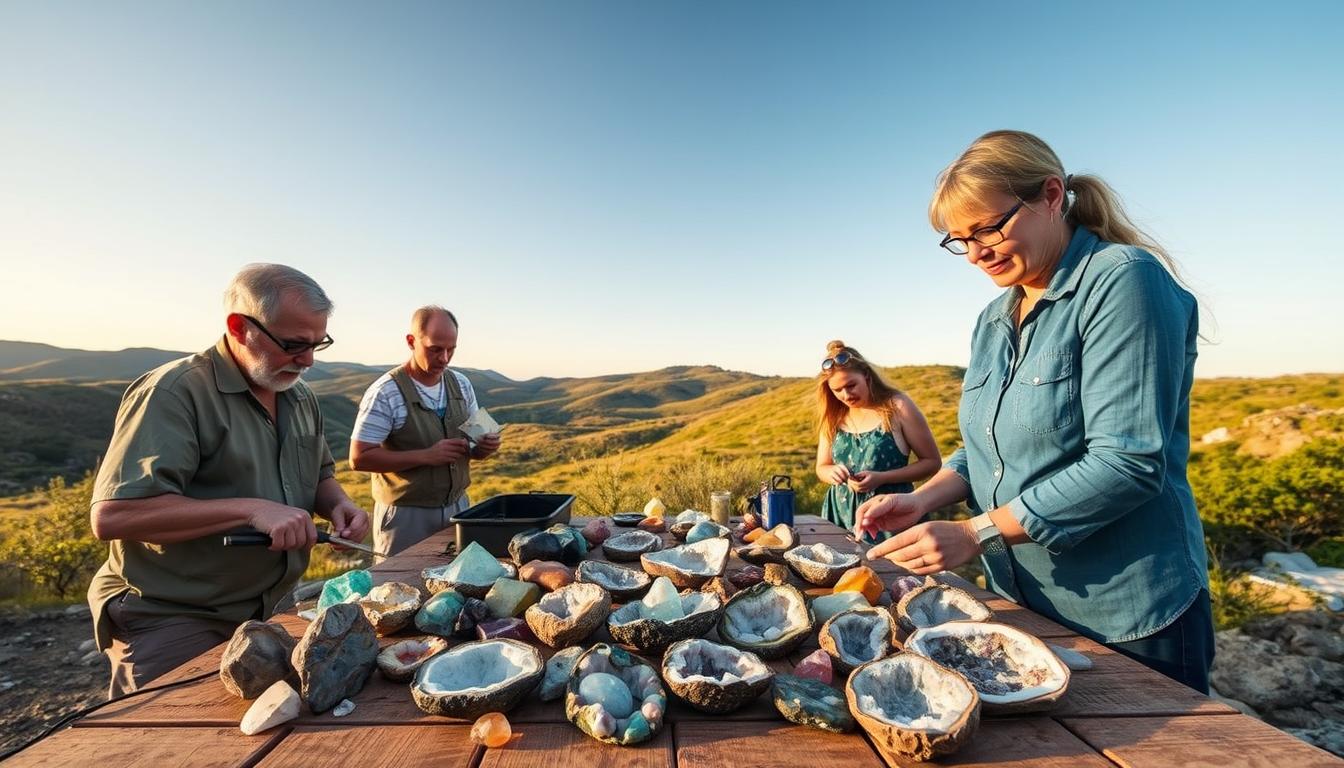
For those who love rockhounding, knowing the rules is key. This hobby involves collecting rocks, minerals, and fossils. In Georgia, it’s a favorite pastime. But, it’s important to follow the laws to enjoy it safely.
Georgia has rules to keep its natural treasures safe. These rules let hobbyists collect geological finds. Knowing these regulations helps avoid trouble and helps protect Georgia’s geological wonders.
Key Takeaways
- Understanding Georgia’s rockhounding laws is essential for enthusiasts.
- Regulations are in place to protect Georgia’s natural resources.
- Familiarity with the laws ensures a safe and enjoyable rockhounding experience.
- Georgia’s laws allow for the collection of rocks, minerals, and fossils under certain conditions.
- Preserving Georgia’s geological heritage is a key aspect of rockhounding regulations.
Understanding Rockhounding in Georgia
## Understanding Rockhounding in Georgia
Georgia is a great place for rockhounding. It has a rich geological landscape. This makes it perfect for those who love collecting rocks, minerals, and fossils.
### What Constitutes Rockhounding
Rockhounding is about collecting rocks, minerals, and fossils. People search for these in places like streams and mountains. Rockhounding enthusiasts find cool things like quartz and amethyst.
They need patience and to know about geology. They also need permission to collect on some lands.
Georgia’s geology is rich and varied. It has many rock types and mineral deposits. The state’s geology ranges from ancient rocks to sedimentary deposits.
This variety makes Georgia great for rockhounding. It offers many chances to find unique geological specimens. Georgia’s geological history has given it a wide range of minerals and rocks.
### Why Regulations Matter
Rules are important in rockhounding. They help the hobby be sustainable and responsible. Laws protect public and private lands and preserve geological resources.
Knowing and following these rules is key. It lets rockhounding enthusiasts enjoy their hobby without harming the environment.
Rockhounding Laws and Rules in Georgia
Rockhounding in Georgia needs you to know the laws. You must follow both state and federal rules. This ensures your hobby is legal.
State Statutes Governing Rock Collection
Georgia has laws for collecting rocks, minerals, and fossils. For example, OCGA 12-3-621 and OCGA 12-3-10(n) are key. They tell you what you can collect and where.
| Statute | Description | Relevance to Rockhounding |
|---|---|---|
| OCGA 12-3-621 | Regulates the collection of minerals and rocks. | Defines permissible collection areas. |
| OCGA 12-3-10(n) | Specifies rules for fossil collection. | Outlines conditions for collecting fossils. |
Federal Regulations Applicable in Georgia
Federal laws also apply, mainly in national forests and wildlife refuges. These laws might limit what you can collect and how. Following these rules is key to avoid trouble.
Penalties for Violations
Breaking the rules in Georgia can cost you. You might face fines, have to pay for damages, or even get charged with a crime. For instance, digging without a permit can lead to big fines and the cost to fix the damage.
Knowing and following these laws is vital for rockhounding in Georgia. It helps keep the hobby alive and protects the state’s geological treasures.
Public Land Rockhounding Regulations
Rockhounding on public land in Georgia follows rules to protect the environment. These rules help keep rockhounding safe for everyone and the land.
National Forests in Georgia
Georgia’s national forests are great for rockhounding. The Chattahoochee-Oconee National Forests stand out for their rich geology.
Chattahoochee-Oconee National Forests
The Chattahoochee-Oconee National Forests have rules for rock collecting. For example, caches must be ½ mile apart and not stay in one spot for over a year. Rockhounds should not use machines and must not disturb the ground too much.
Collection Limits and Restrictions
Rockhounds must follow certain limits when collecting. Using machines is usually not allowed. They should also try not to harm the environment. Knowing these rockhounding restrictions in Georgia helps make outings better and more responsible.
State Parks and Recreation Areas
Georgia’s state parks and recreation areas also allow rockhounding. But, they have their own rules. Some places might not let you collect rocks, or you might need a permit. Always check with park rangers or the Georgia State Parks website for the latest on rockhounding permits in Georgia.
| Location | Permits Required | Collection Limits |
|---|---|---|
| Chattahoochee-Oconee National Forests | No | No mechanical equipment; minimal disturbance |
| State Parks | Yes, in some areas | Varies by park |
| Wildlife Management Areas | Yes | Restricted; check with local authorities |
Wildlife Management Areas
Wildlife Management Areas (WMAs) in Georgia have their own rules for rockhounding. Usually, you need a permit, and there might be limits on what you can collect. For more details on regulations and permits, contact the Georgia Department of Natural Resources.
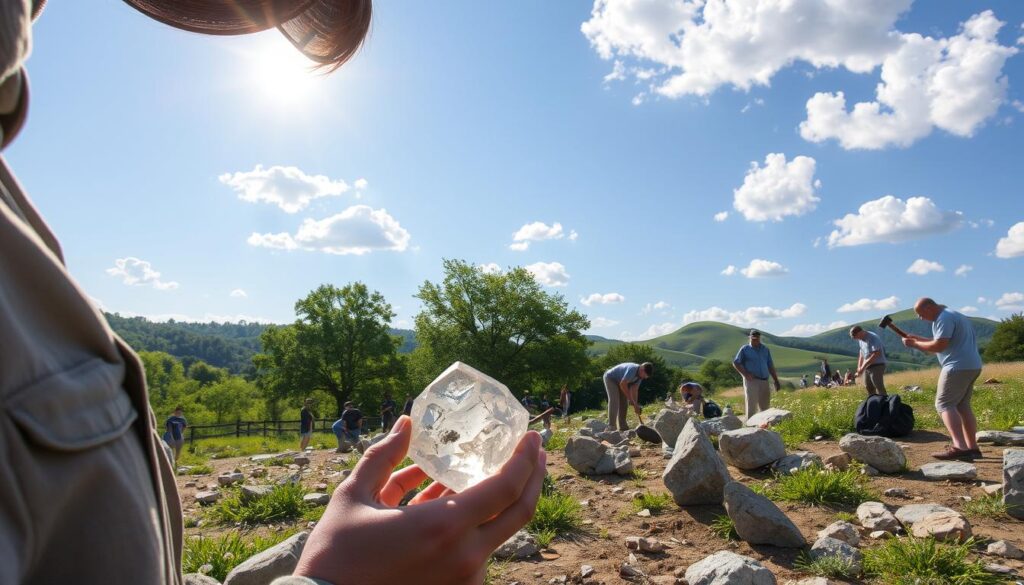
Private Land and Permission Requirements
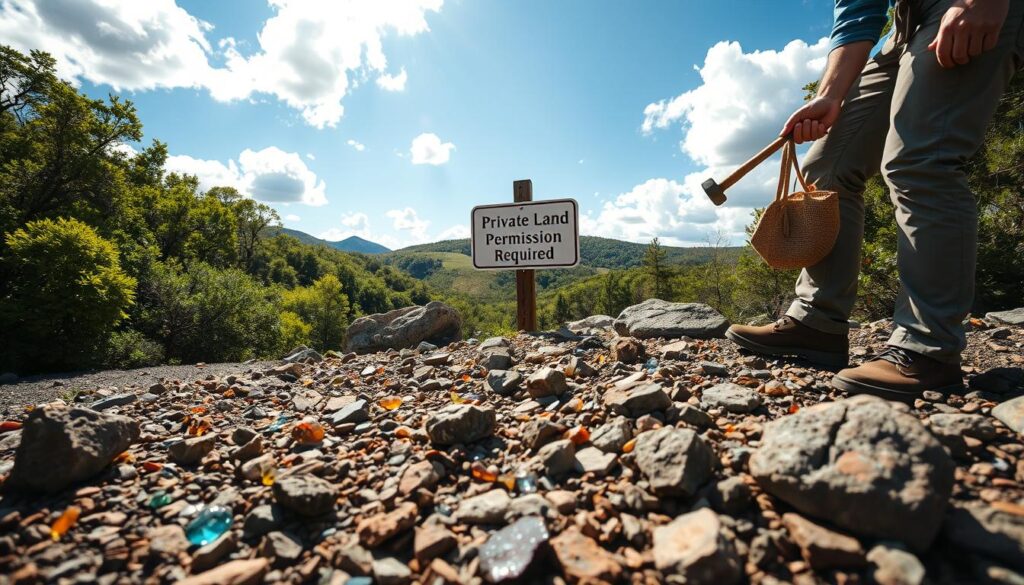
To rockhound on private land in Georgia, you need permission first. Rockhounding on private land can be rewarding. But, it’s important to respect the landowner’s rights and follow Georgia’s rockhounding laws.
Obtaining Landowner Permission
Getting written permission from the landowner is the first step. It’s not just polite; it’s also the law to avoid trespassing. Written permission clears up any confusion and makes sure both sides agree.
When asking for permission, explain why you want to rockhound. Being open can help build trust. You might also offer to share what you find or pay for access.
Commercial Mining Claims and Fee Sites
Some private lands have commercial mining claims or fee sites. Here, you can pay to collect minerals or fossils. It’s key to know the rules of these places. Commercial mining claims have their own rules on what you can collect and how.
Liability Considerations and Waivers
Landowners might ask you to sign a waiver or liability form. This is to protect them from lawsuits if something goes wrong. It’s important to understand what you’re signing.
By following these steps and respecting private property, rockhounding can be fun and safe. Knowing Georgia rockhounding regulations for private land is also a good idea.
Legal Rockhounding Locations and Materials in Georgia
Georgia’s landscape is perfect for rockhounding. From mountains to coastal plains, it’s full of minerals and fossils. This makes it great for rockhounding.
North Georgia Mountains
The North Georgia Mountains are famous for gold and gems. They are a top spot for rockhounds.
Gold and Gem Mining Areas
The Chattahoochee-Oconee National Forests have many rock types. This makes them perfect for rockhounding. Some areas are great for gold panning and gem hunting
Mineral Collection Sites
In the North Georgia Mountains, many sites let you collect minerals. You can find quartz, feldspar, and mica.
Central Georgia Sites
Central Georgia has a rich geological history. It’s full of sites for collecting fossils and minerals. The fall line is special for its geology.
| Region | Collectible Materials | Notable Sites |
|---|---|---|
| North Georgia Mountains | Gold, gems, quartz, feldspar, mica | Chattahoochee-Oconee National Forests |
| Central Georgia | Fossils, minerals | Fall line sites |
| Coastal Plain | Fossils, phosphate nodules | Beaches and riverbanks |
Coastal Plain Fossil Areas
The Coastal Plain in Georgia is rich in fossils. You can find shark teeth and shells by the beaches and rivers.
Legally Collectible Materials
Knowing what you can collect in Georgia is key. Many places let you collect rocks and minerals for yourself. But, some materials are off-limits, even in protected areas. Always check the local rules before you start collecting.
[link-whisper-related-posts]Conclusion
Knowing the Rockhounding Laws in Georgia is key to keeping the state’s earth safe. These rules help make sure we can enjoy the earth for many years.
Learn about state and federal laws, and what’s allowed on public lands. This way, you can rockhound without harming the environment. Always get permission to collect on private land. Also, watch out for places where mining is allowed.
Georgia has a wide range of places to rockhound, from mountains to coastal areas. By following the rules, you help keep these spots beautiful for everyone.
Being careful while rockhounding helps protect Georgia’s earth. It also makes sure we can enjoy it for a long time.
FAQ
What is rockhounding, and why is it popular in Georgia?
Rockhounding is collecting rocks, minerals, and fossils. Georgia’s geology is diverse. This makes it great for finding different types of rocks and minerals.
What are the main laws and regulations governing rockhounding in Georgia?
Laws in Georgia cover rockhounding. They say what you can collect and where. Rules also apply to public lands like national forests and state parks.
Do I need a permit to go rockhounding in Georgia’s national forests?
Yes, for some activities, like collecting gemstones, you need a permit. Check with the U.S. Forest Service for details.
Can I collect rocks and minerals in Georgia’s state parks?
You can collect rocks and minerals in state parks for personal use. But, there are rules and sometimes you need a permit. Always check with park rangers.
What are the rules for rockhounding on private land in Georgia?
To rockhound on private land, get permission from the owner. Also, know about commercial mining claims and fee sites. This helps avoid legal problems.
Are there specific areas in Georgia known for rockhounding?
Yes, places like the North Georgia Mountains and the Coastal Plain are great. They have gold, gems, and fossils. Each spot offers unique finds.
What are the penalties for violating rockhounding regulations in Georgia?
Breaking the rules can lead to fines or legal trouble. This includes collecting in banned areas or taking too much without permission.
How can I ensure I’m rockhounding responsibly in Georgia?
To rockhound right, follow the laws and respect private property. Also, try to leave the environment as you found it. This helps protect Georgia’s rocks and minerals for others.

Subscribe to Our Newsletter