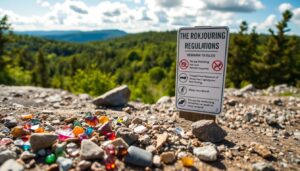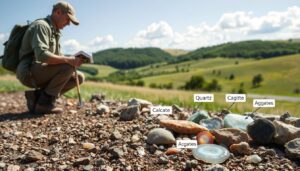
Connecticut is a great place for those who love the Earth’s history. The state’s varied geology lets people find fossilized wildlife and learn about its past. Rockhounding, or looking for rocks and minerals, is a fun hobby here.
It’s important to know the rules for rockhounding in Connecticut. This way, hobbyists can enjoy their time while keeping the state’s nature safe for others.
Key Takeaways
- Connecticut’s diverse geology makes it an ideal location for rockhounding.
- Understanding local regulations is key for responsible rockhounding.
- Rockhounding helps us appreciate the state’s natural history.
- Keeping natural resources safe is vital for the future.
- Connecticut is a special place to explore fossilized wildlife.
Understanding Rockhounding in Connecticut
Rockhounding is a fun hobby where people collect rocks, minerals, and fossils. Connecticut is great for this because of its rich history. The state’s geology, shaped over millions of years, offers many treasures to find.
What is Rockhounding?
Rockhounding is more than a hobby; it’s an adventure. It lets you explore the earth’s secrets. It’s perfect for learning about geology and nature.
Connecticut’s Geological Significance
Connecticut’s geology is very important. Its history includes mountains, volcanoes, and erosion. This history makes the state’s rocks, minerals, and fossils very diverse.
Common Minerals and Fossils Found
Connecticut has many minerals and fossils. You can find quartz, feldspar, and mica. There are also fossils of ancient creatures like trilobites and brachiopods.
| Mineral/Fossil | Location | Description |
|---|---|---|
| Quartz | Various locations | A common mineral found in many types of rocks |
| Feldspar | Appalachian Mountains | A group of rock-forming minerals |
| Trilobite fossils | Connecticut River Valley | Fossils of ancient arthropods |
To enjoy rockhounding in Connecticut, know the rules. This includes any permits needed and where you can collect.
Rockhounding Laws and Rules in Connecticut
Rockhounding in Connecticut has its own set of laws and rules. It’s important to know these to enjoy rockhounding responsibly. The state’s varied landscapes offer many minerals and fossils, but collecting them is regulated.
State Regulations Overview
Connecticut has laws for collecting rocks, minerals, and fossils on state lands. The Connecticut Department of Energy and Environmental Protection (DEEP) manages these rules. Rockhounds need to know the DEEP’s guidelines to follow the law.
Collecting for commercial use is usually not allowed. But, hobby or educational collecting might be okay with some rules.
Private vs. Public Land Distinctions
It’s key to know the difference between private and public lands in Connecticut. Public lands, like state parks, have rules for collecting minerals. Private lands need permission from the owner before collecting.
Respecting private property rights is important to avoid legal trouble.
Seasonal Restrictions and Considerations
Some places in Connecticut have rules based on the season. For example, some parks might be closed for conservation or safety reasons. Rockhounds should check with local authorities or the DEEP website for updates.
Key Takeaways:
- Familiarize yourself with Connecticut’s rockhounding laws and regulations.
- Understand the distinction between public and private lands.
- Check for seasonal restrictions and plan ahead.
By following these guidelines, rockhounds can enjoy their hobby while helping protect Connecticut’s natural resources.
Permit Requirements for Rockhounding in Connecticut
Connecticut has rules for rockhounding to protect its earth. It’s key for rockhounding fans to follow these rules. This way, they can collect minerals and fossils legally and without harming the environment.
When Permits Are Required
Permits are needed for rockhounding on state lands. This includes state parks and some recreational spots. The Connecticut Department of Energy and Environmental Protection manages these areas.
How to Obtain Rockhounding Permits
To get a permit, you must apply to the Connecticut Geological Survey. You’ll need to share where and how long you plan to collect rocks.
Costs and Validity Periods
The price of permits in Connecticut changes based on the type and how long it’s good for. Most permits last from a few months to a year.
Special Permissions for Educational Purposes
For educational collecting, you need a special permit. Apply to the Connecticut Geological Survey. This is for projects by educational clubs, nature centers, schools, or museums in Connecticut.
| Permit Type | Cost | Validity Period |
|---|---|---|
| Individual Recreational Permit | $10 | 1 year |
| Educational Group Permit | $20 | 6 months |
| Commercial Permit | $50 | 2 years |
Legal Collection Limits and Restrictions
Connecticut has rules to make rockhounding fun and safe. These rules help keep the state’s natural beauty for everyone. They let hobbyists enjoy collecting without harming the environment.
Quantity Limitations
The Department of Energy & Environmental Protection has rules. No one can damage any part of nature, like plants or rocks. This means there are limits on how much you can collect, mainly in protected areas.
It’s important to know these limits to stay out of trouble.
Protected Minerals and Fossils
Some minerals and fossils in Connecticut are special. They are rare or very important for science. Collectors need to know which ones are off-limits to avoid breaking the rules.
- Fossils of rare species
- Minerals found in limited quantities
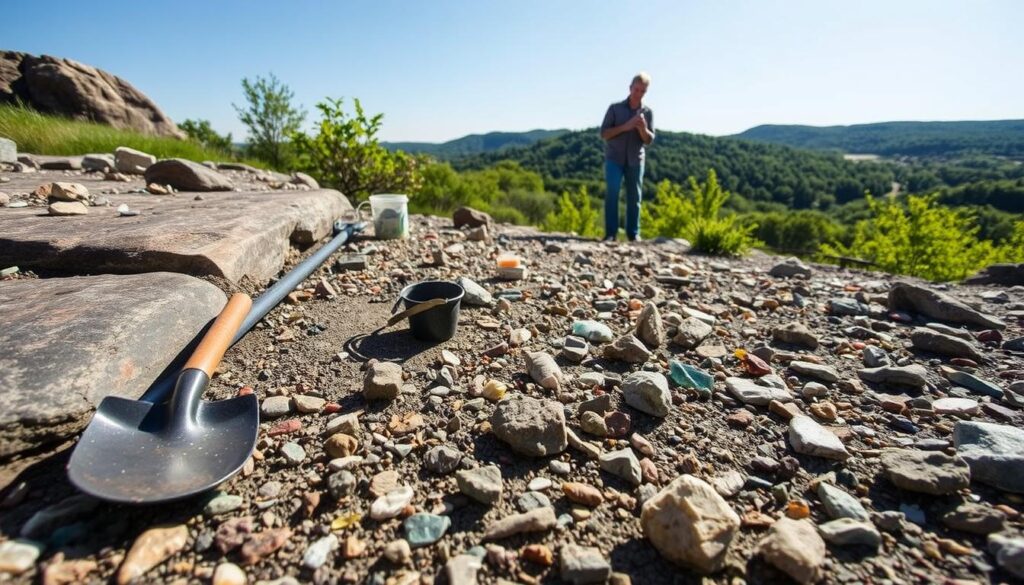
Tools and Equipment Regulations
Some tools and equipment are not allowed in certain places. This includes state parks and protected lands. Motorized tools or anything that can damage the ground are often banned.
Commercial Collection Rules
Commercial rockhounding has its own set of rules. You might need a special permit. These rules help keep the environment safe and prevent over-collecting.
If you plan to collect for money, talk to the right people. They can tell you what rules apply to your activities.
State Parks and Public Lands Regulations
Rockhounding in Connecticut’s state parks and public lands needs following certain rules. These rules help keep the environment safe for now and the future. They let people enjoy nature while protecting it.
Connecticut State Park Rules
Connecticut State Parks offer fun activities while keeping nature and culture safe. Rockhounding is okay in certain spots, but it must not hurt the environment. Everyone must follow park rules, like those for camping, hiking, and animal care.
Forest Land Policies
Forest lands in Connecticut are used for many things, like making timber and helping animals. Rockhounding is allowed, but there are rules. These rules might stop you from digging too much or taking away fossils or minerals. Always check with the Connecticut Department of Energy and Environmental Protection (DEEP) for the latest rules.
Wildlife Management Areas
Wildlife Management Areas are for protecting animals and their homes. Rockhounding might be okay here, but there are strict rules. These rules help keep animals safe. Always know about any closed areas or times when it’s not allowed.
Federal Land Considerations
Federal lands, like those run by the U.S. Forest Service or National Park Service, have their own rules. These rules might be different from state parks. Some places might need a permit to collect minerals or fossils. Always check with the right federal agency for the latest info.
| Land Type | Rockhounding Rules | Permit Requirements |
|---|---|---|
| State Parks | Allowed in designated areas | No permit required for personal use |
| Forest Lands | Subject to DEEP regulations | May require permit for large quantities |
| Wildlife Management Areas | Restricted to minimize wildlife disturbance | Permit may be required |
| Federal Lands | Varies by agency | Often requires a permit |
Top Legal Rockhounding Locations in Connecticut
Rockhounding fans can find many legal spots in Connecticut. The state has a rich geological history. You can explore state parks and specific mineral spots.
Dinosaur State Park
Dinosaur State Park is a top spot for rockhounding in Connecticut. It’s famous for its fossil exhibits and collections.
Available Specimens
The park is known for fossil tracks and dinosaur footprints. It’s perfect for those who love paleontology.
Visitor Guidelines
Visitors must follow rules to keep the site safe. This includes staying on trails and not taking fossils or rocks.
Lantern Hill
Lantern Hill is in the Nehantic State Forest. It’s famous for its geology and minerals.
Mineral Varieties
Here, you can find minerals like quartz and feldspar.
Access Information
Getting to Lantern Hill is limited. Check with local authorities for the latest info.
Roxbury Garnet Mine
The Roxbury Garnet Mine is great for finding garnets. It’s open to rockhounding fans.
Collection Opportunities
There are areas where you can collect garnets and other minerals. It’s a favorite among collectors.
Local Regulations
Collectors need to follow local rules. This includes getting permits and following site rules.
Other Notable Locations
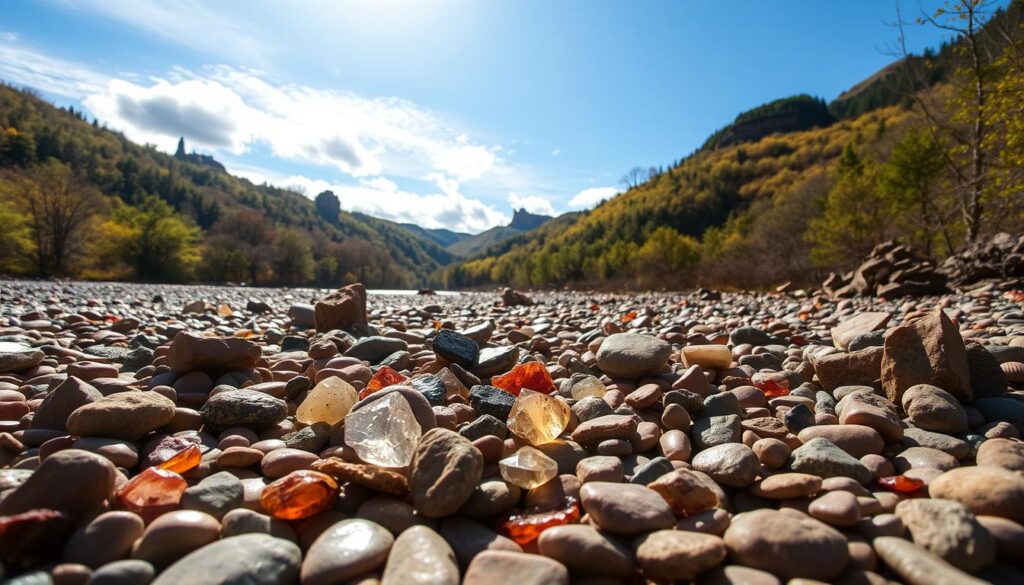
Don’t miss other spots like state forests and wildlife areas. They offer more chances to rockhound.
Ethical Rockhounding and Best Practices
Ethical rockhounding is key to keeping Connecticut beautiful for the future. It lets us explore the state’s rocks and minerals with care. We must respect the land and its owners.
Leave No Trace Principles
Rockhounds should follow Leave No Trace rules. This means taking all trash with you, staying away from sensitive areas, and not harming the rocks.
Respecting Private Property
It’s important to respect private land when rockhounding. Always ask for permission to enter private areas. Also, follow any rules given by the landowners.
Documentation and Record Keeping
Keeping detailed records of your finds is a good habit. It makes your rockhounding journey better. Write down where you found it, when, and any notes about it.
Joining Local Rockhounding Groups
Joining local rockhounding groups is a great idea. They share tips, new spots, and how to enjoy rockhounding responsibly.
Rockhounding in Connecticut: A Responsible Hobby
Rockhounding in Connecticut is a fun hobby. It lets people see the state’s different rocks and minerals. Knowing the laws is key for a good time.
Learning about Connecticut’s rockhounding rules makes your hobby better. It’s important for keeping the state’s nature safe. This way, everyone can enjoy it later.
Places like Dinosaur State Park and the Roxbury Garnet Mine show Connecticut’s geological past. By following the rules, you can enjoy rockhounding. This way, you also protect the environment and respect private land.
As you explore Connecticut’s rocks, always leave nature as you found it. Respect private property and share your finds. Joining local groups can also make your hobby better. You’ll learn more and meet others who love rocks.
FAQ
What is rockhounding, and is it allowed in Connecticut?
Rockhounding is collecting rocks, minerals, and fossils. Yes, it’s allowed in Connecticut. But, there are laws and rules to follow.
Do I need a permit to go rockhounding in Connecticut’s state parks?
Yes, you might need a permit for some state parks. Check with Connecticut State Parks for details.
What are the rules for collecting fossils in Connecticut?
Collecting fossils has rules, mainly in state parks. You can collect for personal use. But, commercial collecting might need a special permit.
Can I collect rocks and minerals on private property in Connecticut?
Yes, but you need the landowner’s permission first.
Are there any seasonal restrictions for rockhounding in Connecticut?
Yes, some places have seasonal rules to protect wildlife. Check with the right people for details.
What are the regulations regarding the use of tools and equipment for rockhounding in Connecticut?
Rules differ by place. But, heavy machinery is usually not allowed in state parks.
Can I sell the rocks and minerals I collect in Connecticut?
Selling might need a special permit. Contact Connecticut Department of Energy and Environmental Protection for more info.
Are there any notable rockhounding locations in Connecticut?
Yes, places like Dinosaur State Park and Roxbury Garnet Mine are famous. Always check local rules before collecting.
How can I ensure I’m rockhounding ethically and responsibly?
Follow Leave No Trace, respect private land, and keep records. Joining local groups can also teach you more.

Subscribe to Our Newsletter