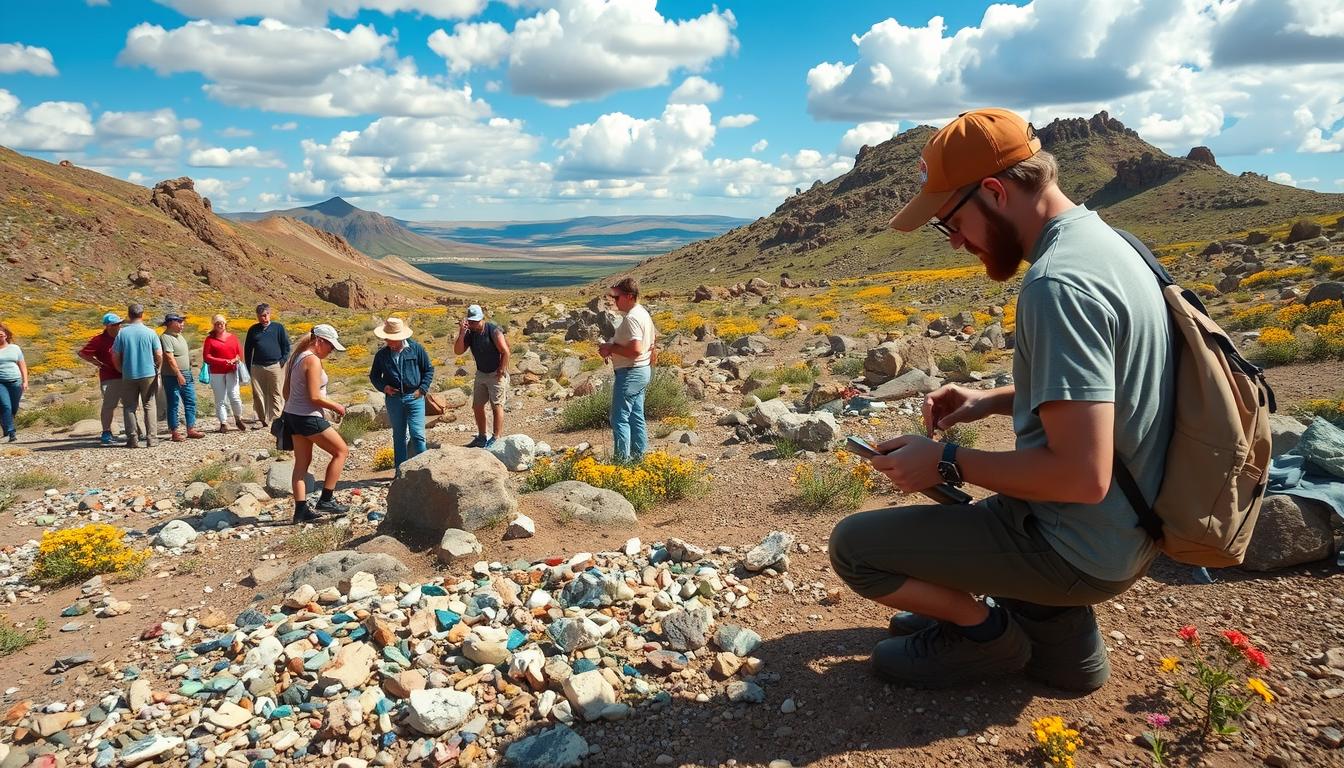
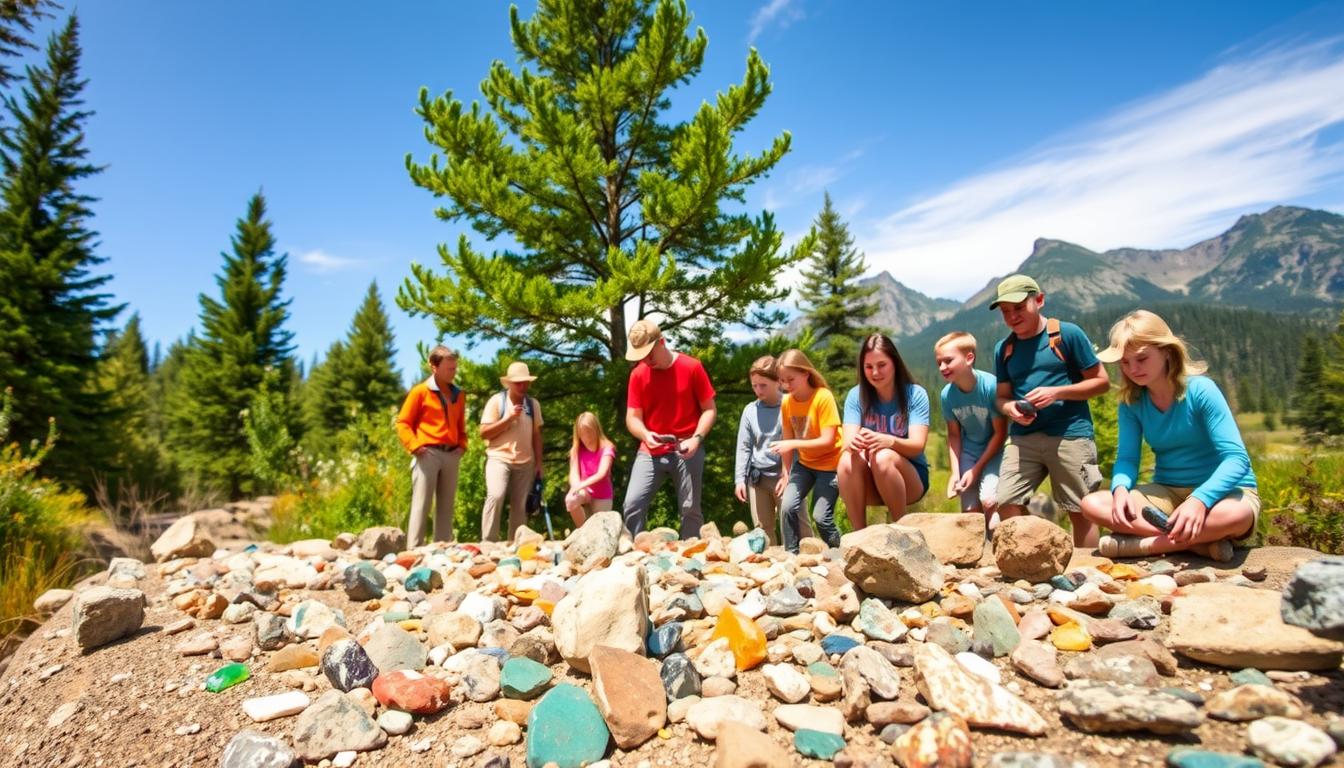
For those who love the outdoors and geology, rockhounding is a fun activity. It involves searching for rocks, minerals, and fossils in nature. The USDA Forest Service guide (FS-1091) lets you collect rocks and minerals for personal use in national forests. You just need a free use permit.
The guide says rockhounding is a way to enjoy and learn about national forests’ geological wonders. For more info on rules and guidelines, check out the USDA Forest Service guide.
Key Takeaways
- Rockhounding is allowed in national forests for personal use.
- A free use permit is required to collect rocks, semi-precious stones, and minerals.
- Certain items like petrified wood, fossils, and common rocks can be collected for personal use.
- Metal detecting and gold panning are subject to specific regulations.
- It’s essential to follow guidelines to minimize environmental impact.
The Basics of Rockhounding in Public Lands
Rockhounding is getting more popular. It’s important for collectors to know the rules for public lands. This hobby involves finding and collecting rocks and minerals.
Many people enjoy the thrill of finding treasures in national forests and public lands.
Definition and Growing Popularity of Rockhounding
Rockhounding is about collecting rocks, minerals, and gemstones. It’s becoming more popular because of public lands and outdoor activities. This hobby connects us to nature and lets us find hidden treasures.
The USDA Forest Service guide says it’s important to follow the rules. This helps keep the hobby alive.
National Forests vs. Other Public Lands
National forests are just one place where you can rockhound. The Bureau of Land Management (BLM) also has areas for collecting gems and minerals. But, the rules can differ.
For example, the USDA Forest Service guide talks about respecting private property near public lands.
Why Regulations Matter for Collectors
Rules help make rockhounding sustainable. By following them, collectors protect the environment and keep public lands open. Knowing the laws, like the 1872 Mining Law, is key.
Rockhounding fans who follow the rules have a better experience. They also help protect our natural resources. As more people join, it’s vital to collect responsibly.
Legal Framework for Rock and Mineral Collection
The history of rockhounding laws started with the 1872 Mining Law. This law has changed a lot over time. Now, collecting rocks and minerals in national forests needs you to know a lot of rules.
The 1872 Mining Law and Modern Regulations
The 1872 Mining Law was made to help mining and mineral development. It has been updated and added to by other laws. These changes protect the environment and public interests while allowing mineral collection.
Code of Federal Regulations for Mineral Collection
The Code of Federal Regulations (36 CFR 228) gives rules for collecting minerals in national forests. It explains how to collect minerals, including needing permits. It also has rules for different types of collections.

State-Specific Variations in Collection Rules
Federal laws give a basic framework, but state rules can be different. Rockhounds need to check with local ranger district offices. This helps them understand the specific rules in their area.
Rockhounding in National Forests: What You Can Collect
Rockhounding fans can collect many things in National Forests. This includes lapidary materials, petrified wood, and minerals for personal use. You need a free use permit, as the USDA Forest Service guide says. For more details, check the USDA Forest Service guide.
Agate prospecting and rock and mineral hunting are favorite hobbies. But, some items like artifacts, meteorites, and vertebrate fossils are off-limits. Knowing the rules is key before you start collecting.
It’s important to follow the rules when rockhounding in National Forests. This helps keep these activities going for everyone. By getting the right permits and knowing what not to collect, hobbyists can enjoy their time while protecting nature.
FAQ
What is rockhounding, and is it allowed in national forests?
Rockhounding is collecting rocks, minerals, and fossils. Yes, it’s allowed in national forests for personal use. But, you must follow certain rules and guidelines.
What is the difference between rockhounding in national forests and other public lands?
National forests have their own rules for collecting rocks and minerals. These rules might be different from other public lands. Always check the specific area’s rules before you go.
What is the 1872 Mining Law, and how does it relate to rockhounding?
The 1872 Mining Law deals with collecting minerals on public lands. It mainly focuses on mining but also covers rockhounding and mineral collection.
What are the Code of Federal Regulations for mineral collection?
The Code of Federal Regulations (CFR) gives guidelines for collecting minerals on public lands. This includes national forests. The CFR explains the rules, like needing a free use permit in some cases.
Can I collect lapidary materials, petrified wood, and mineral specimens in national forests?
Yes, you can collect these items in national forests. But, you must follow specific rules and guidelines. Always check with the local forest service office first.
What items are prohibited from collection in national forests?
You can’t collect artifacts, vertebrate fossils, or other protected resources. It’s important to know the specific rules for the area you plan to visit.
Do I need a permit to collect rocks and minerals in national forests?
Sometimes, you need a free use permit to collect rocks and minerals in national forests. The rules vary by location and the type of material.
How do state-specific variations in collection rules affect rockhounding?
State-specific rules can greatly affect rockhounding. It’s key to research and understand the regulations for the state and national forest you plan to visit.

Subscribe to Our Newsletter