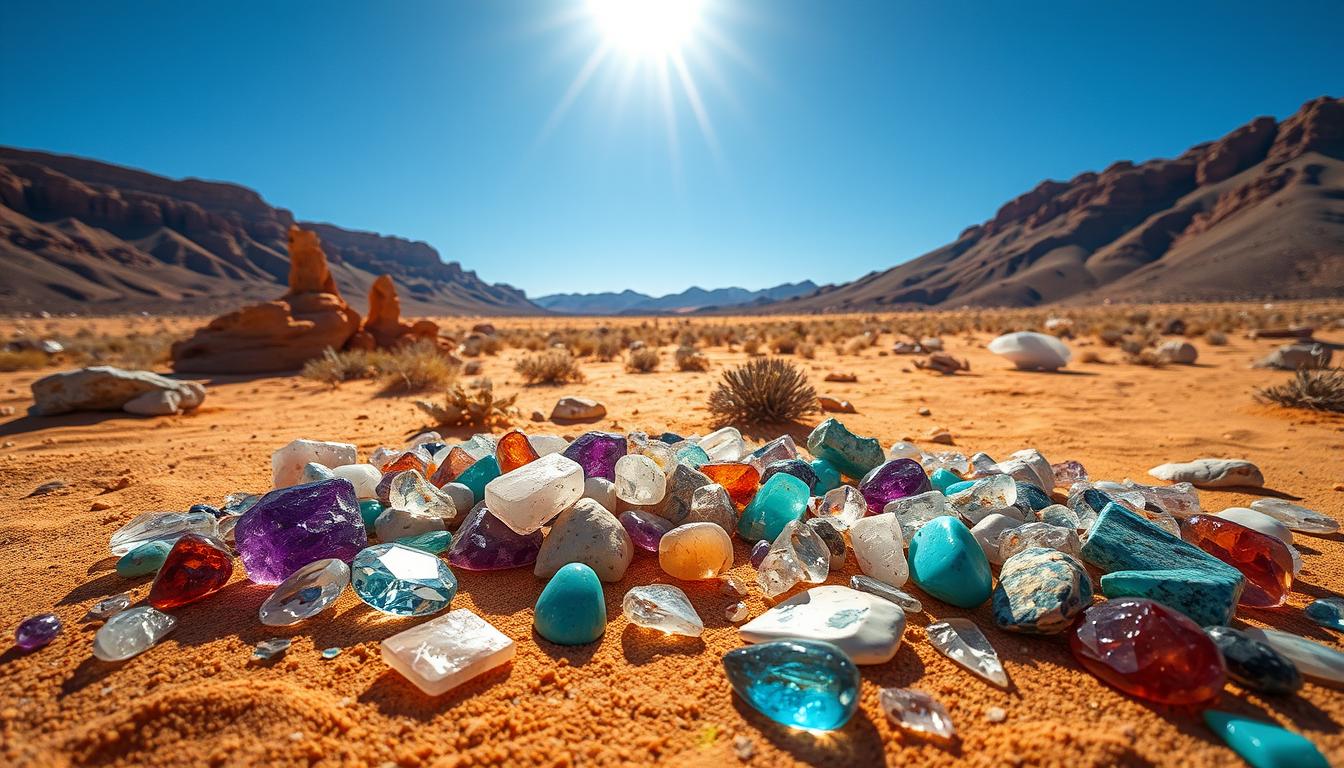
Desert landscapes are perfect for rockhounding. The dry areas of the United States have many geological wonders. They are great for finding desert gemstones and other minerals.
The excitement of rockhounding is in the hunt for hidden treasures. Desert areas are a big playground for rockhounding fans. With the right tips, you can find unique gemstones and minerals in the desert.
This guide will help you learn about rockhounding in desert areas. You’ll know what gemstones and minerals to look for. Plus, you’ll get tips on how to spot them.
Key Takeaways
- Desert regions offer a diverse range of geological formations.
- Unique gemstones and minerals can be found in desert areas.
- Proper guidance is essential for successful rockhounding.
- Identifying gemstones and minerals requires knowledge and skill.
- Rockhounding in desert areas can be a thrilling adventure.
The Unique Geology of Desert Environments
Deserts have special rocks because of their dry air and sun. This makes minerals gather in these places. It’s great for finding rocks and minerals.
How Desert Conditions Create Mineral Deposits
Deserts are very dry, which helps create mineral deposits. The dry air erodes rocks, moving minerals to new spots. For example, the Arizona Gemstone and Rockhound Guide shows how this works.
Common Geological Features in Desert Areas
Deserts have special rock features. These include dry washes, alluvial fans, exposed bedrock, and outcrops.
Dry Washes and Alluvial Fans
Dry washes and alluvial fans form from rock erosion. They carry minerals. Past water flow makes them rich in agate, jasper, and quartz.
Exposed Bedrock and Outcrops
Exposed bedrock and outcrops show the rock below. They are full of minerals. They are perfect for rockhounds to find valuable rocks.
Why Deserts Are Prime Locations for Rockhounds
Deserts are great for rockhounding. Minerals gather here because of the dry air and sun. This makes finding valuable minerals easy.
Rockhounding in Desert Areas: What to Look For
The desert is full of open spaces, perfect for finding gemstones and minerals. Its unique rocks and minerals make it great for rockhounds.
Common Desert Gemstones and Their Characteristics
Deserts have many gemstones, each special in its own way. You’ll find quartz and copper minerals here.
Quartz Varieties (Amethyst, Citrine, Smoky Quartz)
Quartz is everywhere in the desert, in colors like amethyst, citrine, and smoky quartz. These are loved for their bright colors and clear look. Amethyst shines with deep purple, and citrine glows with warm orange.
Turquoise, Azurite, and Copper Minerals
Turquoise, azurite, and copper minerals are common in the desert. Turquoise is sought for its blue-green color. Azurite, with its bright blue, often comes with copper.

Desert Minerals Worth Collecting
Deserts also have minerals like gypsum, selenite, barite roses, and petrified wood. These are all worth collecting.
Gypsum and Selenite Formations
Gypsum and selenite create striking crystals in the desert. Selenite, a type of gypsum, looks like glass and can grow big.
Barite Roses and Desert Roses
Barite roses, or desert roses, are unique. They are made of barite crystals that grow in a rosette shape.
Petrified Wood and Desert Concretions
Petrified wood and desert concretions are also interesting. Petrified wood is wood turned into minerals, keeping its shape.
Identifying Promising Collection Sites
Finding good spots for rockhounding means looking for color changes and geode beds. For tips, check https://wheretofindrocks.com/.
Color Changes in Soil and Rock
Soil and rock color changes can show mineral deposits. Iron oxide makes things red or orange, while copper minerals turn them blue or green.
Geode Beds and How to Spot Them
Geode beds are great for rockhounding. Look for geodes, hollow rocks with crystals, in areas with lots of volcanic activity.
Best Desert Locations for Rockhounding in the United States
## Best Desert Locations for Rockhounding in the United States
Rockhounding in U.S. deserts is rewarding. Many places are easy to get to. The southwestern deserts, like Arizona and Nevada, are rich in minerals.
### Southwestern Deserts (Arizona, New Mexico, Nevada)
The southwestern deserts have many geological wonders. Arizona is a top spot for rockhounding. You can find turquoise in theSuperstition Mountains and quartz crystals in theSan Tan Mountains.
#### Famous Sites and What You’ll Find There
Some famous spots include:
- The Turquoise Mine in Arizona, known for its high-quality turquoise
- The Organ Pipe Cactus National Monument in Arizona, where visitors can find a variety of minerals, including quartz and calcite
- The Virgiliana Mine in Nevada, a popular spot for finding turquoise and other minerals
### California Desert Regions (Mojave, Colorado)
California’s Mojave and Colorado Deserts are full of wonders. TheMojave National Preserve offers many rockhounding spots. You can find agate, jasper, and quartz there.
#### Accessible Public Land Collection Areas
Some places in California include:
- The Bureau of Land Management (BLM) lands in the Mojave Desert, where visitors can collect rocks and minerals
- The Joshua Tree National Park, which offers rockhounding opportunities, though permits may be needed
| Location | Notable Minerals |
|---|---|
| Arizona | Turquoise, quartz crystals |
| California | Agate, jasper, quartz |
| Nevada | Turquoise, quartz, calcite |
Utah and Colorado also have great spots for rockhounding. Utah’sUinta Basin is famous for dinosaur fossils. Colorado’sSan Juan Mountains have quartz, amethyst, and topaz.
#### Seasonal Considerations for Desert Collecting
Plan your trip with the weather in mind. Summer in the desert is very hot. It’s better to go in spring or fall.
### Legal Considerations and Permissions
Know the laws before you start rockhounding. TheBureau of Land Management (BLM) manages many public lands. Rockhounding is usually allowed, but some areas have rules.
#### BLM Land Rules vs. Private Property
Make sure to know the difference between BLM land and private property. Always check local rules and get any needed permits before collecting.
By following these tips and caring for the environment, rockhounding in U.S. deserts can be fun and rewarding.
Essential Tools and Preparation for Desert Rockhounding
Going on a desert rockhounding adventure needs the right tools and knowledge. You’ll need rock hammers, chisels, and bags to collect specimens. Also, don’t forget water, sun protection, and a first-aid kit for safety.
Basic Rockhounding Equipment
When you go rockhounding in the desert, you need the right gear. Rock hammers and chisels are key for breaking rocks and getting minerals. A strong rock hammer helps you open geodes or break rocks. Chisels let you get specimens more precisely.
Hammers, Chisels, and Collection Bags
A good rock hammer should be tough and easy to hold. Chisels come in different sizes for prying open rocks or getting specimens out. Use bags with parts to keep your finds safe and organized.

Screening and sifting tools are also great for rockhounding. They help find small specimens or mineral pieces in dirt and gravel. You can make or buy a simple screen or sifter, which is handy in areas with loose soil.
Desert-Specific Gear and Safety Supplies
Deserts are hot and can cause dehydration. You need water and sun protection. Wear a wide-brimmed hat, sunglasses, and sunscreen. Also, carry a first-aid kit for minor injuries.
Water, Sun Protection, and First Aid
Drinking enough water is key in the desert. Bring enough for your trip and consider drinks with electrolytes. Protect yourself from the sun with sunscreen and reapply often.
Vehicle Considerations for Remote Areas
If you’re going to remote areas, make sure your vehicle is ready. Check your tires, oil, and brakes before you go. Carry a spare tire, jumper cables, and a basic toolkit.
Navigation and Location Tools
Navigation is important in the desert, where landmarks are few and far between. GPS devices and offline maps are essential for finding your way and rockhounding sites.
GPS Devices and Offline Maps
A GPS device makes desert navigation easy. Choose one that lets you use offline maps, as cell service can be bad in remote spots. Offline maps on your device mean you can navigate even without cell service.
Field Identification Techniques
Knowing how to identify your finds in the field makes rockhounding better. Basic tests include checking a mineral’s hardness, streak, and luster.
Basic Tests for Mineral Identification
Learning basic mineral identification can help you know what you’ve found. Use the Mohs scale to test hardness. You can also check a mineral’s streak by scratching it on a porcelain plate and see if it’s shiny or not.
| Mineral Property | Description |
|---|---|
| Hardness | Measure of a mineral’s resistance to scratching |
| Streak | Color of a mineral when scratched on a porcelain plate |
| Luster | Way light reflects off the surface of a mineral |
For more info on rockhounding and mineral identification, visit wheretofindrocks.com.
Desert Minerals and Rockhounding Locations
Rockhounding in the desert is a thrilling adventure. It’s a chance to find unique minerals and gems. The desert is full of hidden treasures waiting to be discovered.
When you go rockhounding, it’s important to follow responsible practices. This means respecting the environment and other rockhounds. It’s also important to know the laws and regulations of the area you’re in.
There are many amazing rockhounding locations in the desert. Each place has its own special minerals and gems. You can find everything from quartz and agate to amethyst and jasper.
One of the best places to go rockhounding is the Mojave Desert. It’s known for its stunning landscapes and rich mineral deposits. You can find beautiful geodes, colorful jasper, and even rare minerals like opal.
Another great location is the Sonoran Desert. It’s home to a wide variety of minerals and gems. You can find quartz crystals, amethyst geodes, and even turquoise.
Rockhounding is not just about finding minerals and gems. It’s also about the journey and the adventure. Exploring the desert, searching for hidden treasures, and learning about geology is all part of the experience.
So, if you’re ready for an exciting adventure, grab your rockhounding gear and head out into the desert. You never know what amazing minerals and gems you might find.
Responsible Rockhounding Practices
When you go rockhounding, it’s important to follow responsible practices. This means respecting the environment and other rockhounds. Here are some tips to help you rockhound responsibly:
- Always follow local regulations and obtain any necessary permits or permissions.
- Respect private property and obtain permission from landowners before collecting minerals or gems.
- Leave the area as you found it. Avoid damaging the environment or disturbing the natural habitat.
- Only collect minerals and gems that are legal to collect. Avoid removing protected or endangered species.
- Be mindful of your impact on the environment. Take only what you need and leave enough for others to enjoy.
- Practice safe rockhounding practices. Wear appropriate clothing and footwear, and bring necessary tools and supplies.
- Share your knowledge and experiences with others. Help educate and inspire new rockhounds.
By following these responsible practices, you can enjoy the thrill of rockhounding while also protecting the desert environment and preserving its natural beauty for future generations.
FAQ
What are the best desert locations for rockhounding in the United States?
Arizona and Nevada are top spots for rockhounding. They have lots of minerals. California’s Mojave and Colorado Deserts also have great public lands for finding gems.
What should I look for when rockhounding in desert areas?
Look for color changes in soil and rocks. Also, search for geode beds. These signs can lead you to good spots.
What are some common desert gemstones and their characteristics?
Quartz gems like amethyst and citrine have bright colors. Gypsum and selenite create beautiful crystals.
What tools do I need for desert rockhounding?
You’ll need rock hammers, chisels, and bags. Don’t forget water, sun protection, and a first-aid kit for safety.
How can I identify minerals in the field?
Check the mineral’s hardness, streak, and cleavage. These simple tests can help you figure out what you have.
What are some responsible rockhounding practices?
Always follow local rules and protect the environment. Be careful not to trespass on private land.
Are there any specific legal considerations for rockhounding in desert areas?
Know the difference between BLM land and private property. Get any needed permits before you start collecting.
How can I navigate remote desert areas while rockhounding?
Use GPS and offline maps. They help you find the best spots and stay on track in the desert.

Subscribe to Our Newsletter