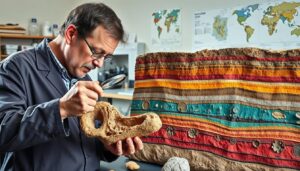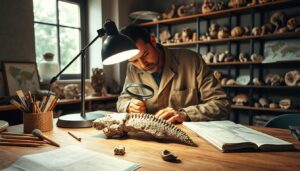
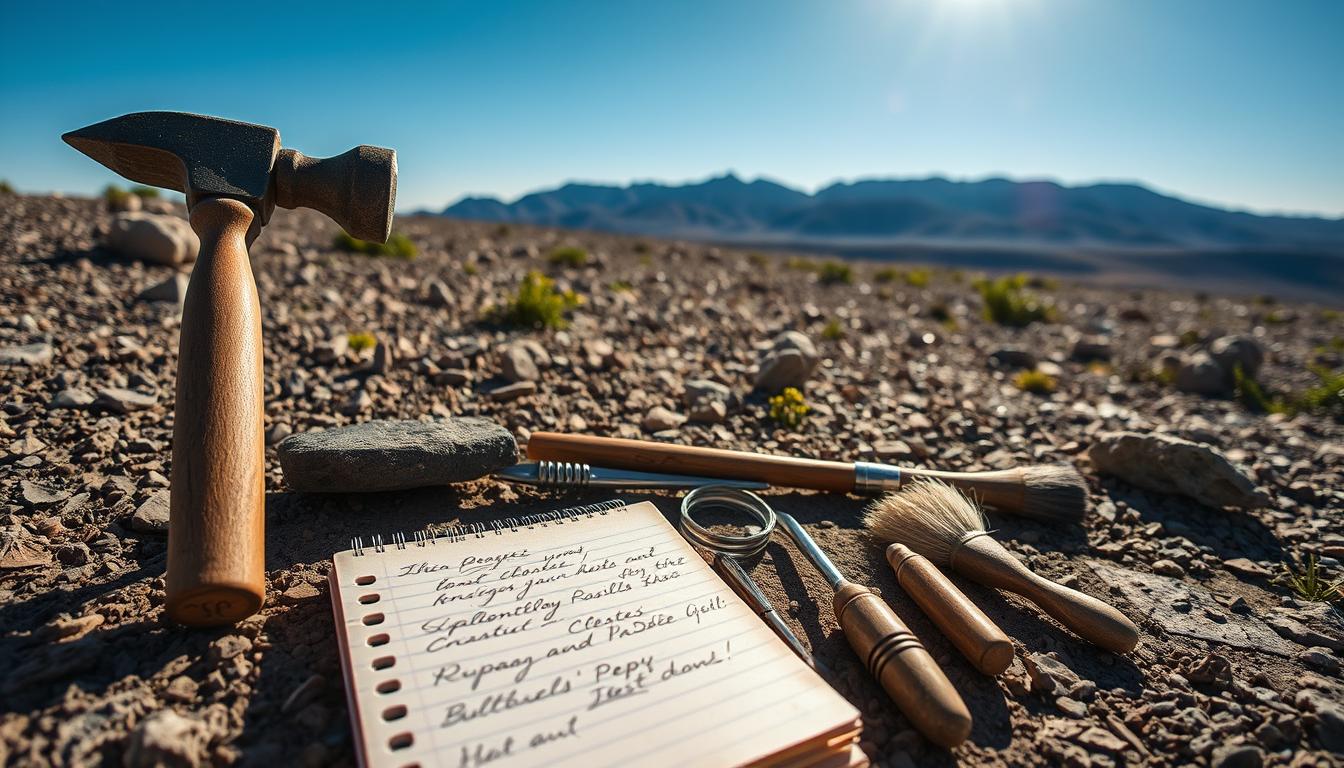
Paleontologists use specialized equipment to find fossils. They need to plan carefully and use the right field paleontology equipment.
The right tools help paleontologists get fossils out of rocks. They face tough conditions in the field. Chisels, rock hammers, and brushes are key tools for their work.
Key Takeaways
- Paleontologists use specialized equipment for fossil excavation.
- The right tools are key for getting fossils from rocks.
- Chisels, rock hammers, and brushes are vital tools.
- Field conditions can be tough, needing careful planning.
- Good equipment makes fossil digging efficient and effective.
The Essentials of Field Paleontology
Field paleontology is a detailed process. It needs a deep understanding of fossil excavation science. You also need the right tools and careful planning.
The Science Behind Fossil Excavation
Fossil excavation is based on geological principles. Paleontologists must know the site’s geological history. Proper field gear and safety are also key for success.
Preparing for Fieldwork: Basic Requirements
Getting ready is important for a good fossil hunt. Paleontologists use tools like awls, dental picks, and trowels. Knowing the site’s geology and having the right fossil hunting gear are vital.
| Tool | Description | Use in Paleontology |
|---|---|---|
| Awls | Sharp, pointed tools | Careful excavation around fossils |
| Dental Picks | Precision instruments | Detailed work on fossils |
| Trowels | Flat, broad tools | Digging and scraping |
Paleontology Tools Used in the Field: A Comprehensive Overview
Paleontologists use many tools for digging, documenting, and saving fossils. The right tools are key for good fieldwork.
Categories of Field Equipment
Paleontological field equipment falls into three main groups. Excavation tools like hammers, chisels, and brushes help get fossils out of rock.
Evolution of Paleontological Tools
Paleontological tools have changed a lot over time. Today’s tools are more precise and help avoid damaging fossils. New tech has brought tools like digital cameras and GPS.
Building a Field Kit on Different Budgets
Creating a field kit needs thought about your budget and what you need. Essential items are a hammer, chisels, brushes, and things for documenting. If you have more money, you can add digital cameras and GPS.
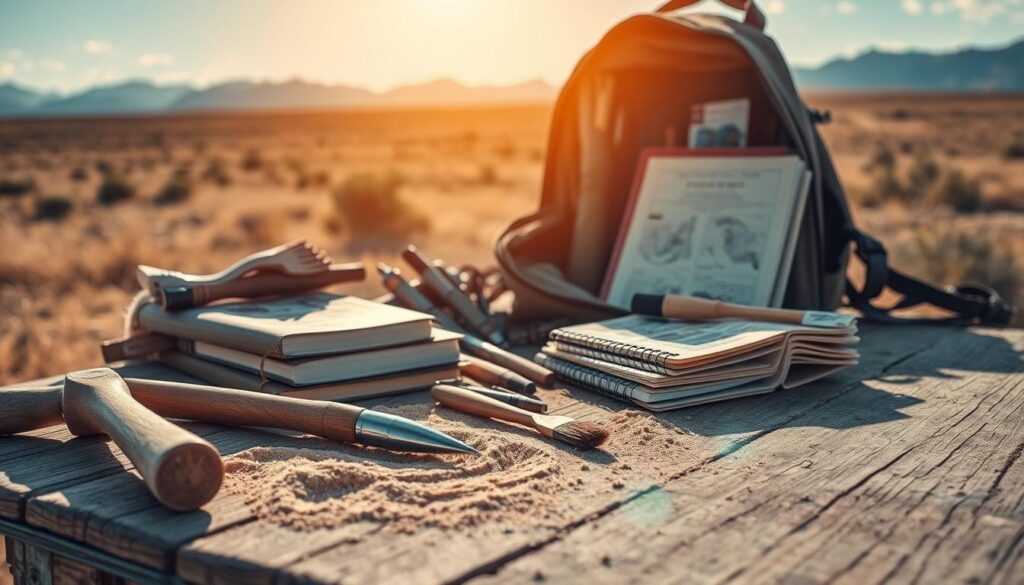
Knowing about field equipment, tool evolution, and budgeting helps paleontologists get ready for fieldwork.
Excavation and Extraction Tools
Excavating and extracting fossils needs precision and the right tools. Paleontologists use many tools to carefully find and get fossils from the earth.
Geological Hammers and Picks
Geological hammers and picks are key tools in paleontology. They help break away rock and soil to show fossils.
Types and Uses of Rock Hammers
Rock hammers vary, each for different jobs. The geologist’s hammer is good for breaking rocks. The club hammer is for heavier tasks needing more force.
Specialized Picks for Different Terrains
Picks are key for digging, with different terrains needing special picks. A pointed pick works well on rocky areas. A flat pick is better for softer soils.
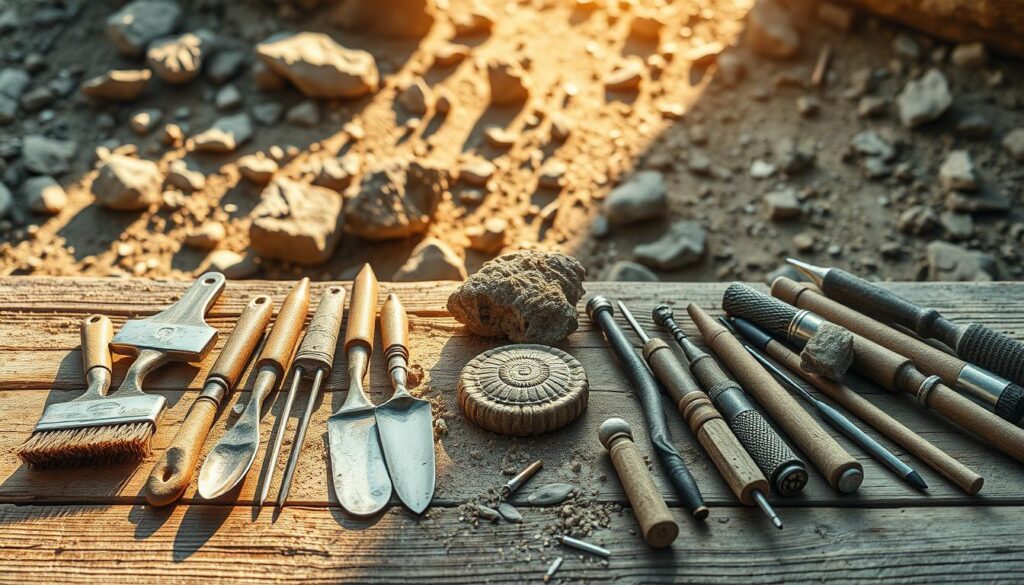
Chisels, Awls, and Dental Tools
For detailed work, paleontologists use chisels, awls, and dental tools. These tools help remove rock and soil around a fossil carefully, to avoid damage.
Brushes and Cleaning Equipment
After exposing a fossil, brushes and cleaning tools are used to gently clean it. Soft-bristled brushes are great for this job.
Specialized Extraction Equipment
Special tools are needed for fragile or big fossils. This includes plaster jacketing supplies to safely carry fossils.
| Tool | Description | Use |
|---|---|---|
| Geological Hammer | A hammer used for breaking rocks | Breaking away rock to expose fossils |
| Chisels | Tools used for precise removal of rock | Carefully extracting fossils from surrounding rock |
| Soft-bristled Brushes | Brushes used for gently cleaning fossils | Removing dirt and debris from exposed fossils |
With these tools, paleontologists can find and get fossils well. This helps us learn about the ancient world.
Documentation and Measurement Tools
Paleontologists use many tools for documenting and measuring during digs. These tools help record important details about fossils. This info is key for more research and study.
Field Notebooks and Documentation Methods
Field notebooks are very important for paleontologists. They write down all about the digging, like sketches and fossil descriptions. Good and detailed notes are key for any paleo project.
Photography Equipment for Fossil Documentation
Photography is big in documenting fossils. Good cameras and lenses help capture clear images from all sides. These pictures are great for research, sharing, and teaching.
Measurement Tools and Techniques
Measuring tools help record fossil sizes and where they are. Tools like calipers and tape measures give exact data. Methods like triangulation help figure out where fossils are in the site.
GPS and Mapping Tools
GPS and mapping tools are key for finding where fossils are and mapping the site. This info is vital for understanding the fossils’ setting and for planning digs. Today’s GPS makes it easy to record exact locations.
Preservation and Transportation Equipment
Keeping fossils safe is key in paleontology. The right tools help protect them from harm during digging, moving, and storing.
Field Preservation Materials
Consolidants and adhesives are vital at the dig site. They make fragile fossils stronger and fix broken parts. This keeps the fossil whole.
To wrap fossils safely, we use things like toilet paper or tissue paper. For very delicate ones, special wrapping methods are used to keep them safe.
Consolidants and Adhesives
Choosing the right consolidant or adhesive is important. Paraloid B-72 and Acryloid are often used. They help keep the fossil stable without harming it.
Protective Wrapping Materials
Materials like bubble wrap or foam padding also protect fossils. They help prevent damage by cushioning the fossil.
Plaster Jacketing Supplies and Techniques
Plaster jacketing is great for big or fragile fossils. It wraps the fossil in layers of plaster-soaked bandages for safety.
Applying the plaster carefully is important. It must be strong enough to hold the fossil during transport.
Transportation Solutions for Fossil Specimens
When fossils are ready to move, they need careful packaging. This might mean using custom-made boxes or special containers to keep them safe.
With the right tools for preservation and transport, fossils can be safely studied in the future.
Modern Technology in Paleontology Fieldwork
Modern technology has changed paleontology a lot. It makes fieldwork better and more accurate. Now, paleontologists use digital tools for documenting, excavating, and researching.
Digital Documentation Tools
Digital tools like mobile apps and digital notebooks help a lot. They make recording field data easier and more accurate. This cuts down on mistakes from old paper methods. For more on what a paleontologist’s kit includes, check out http://nhmu.utah.edu/articles/inside-paleontologists-field-kit.
3D Scanning and Photogrammetry
3D scanning and photogrammetry are key in paleontology. They help make detailed digital models of fossils and their environments. These methods help with precise analysis and give important data for study.
Drones and Remote Sensing Equipment
Drones with cameras and sensors are used a lot in paleontology. They help with site surveys and monitoring. They’re a safe and efficient way to get data from hard-to-reach places, making fieldwork better.
[link-whisper-related-posts]Conclusion
Having the right tools for paleontology is very important. The field is always changing. It uses new technology to find, dig up, and save fossils.
Tools for paleontology have changed a lot. Now, we use digital tools, 3D scanning, and photogrammetry. These help make the work more accurate and faster.
As the field grows, so does the need for new tech. Mixing old ways with new helps us learn more about the past. It gives us new views of our planet’s history.
The future of paleontology is bright. It will keep using new tools to study fossils. This way, scientists can keep learning and sharing our fossil history with others.
FAQ
What are the most essential paleontology tools used in the field?
Key tools for paleontologists include geological hammers, chisels, and awls. They also use dental tools, brushes, and cleaning equipment. These tools help in digging up and getting fossils out.
How do paleontologists prepare for fieldwork?
Before heading out, paleontologists study the site and gather their gear. They pack field notebooks, cameras, and GPS devices. They also plan how to keep fossils safe and how to move them.
What are some modern technologies being used in paleontology fieldwork?
New tech in paleontology includes digital tools for documenting, 3D scanning, and drones. These tools make finding and recording fossils more accurate and quicker.
What is plaster jacketing, and how is it used in paleontology?
Plaster jacketing wraps fragile fossils in plaster for safe transport. It keeps the fossil stable and secure during moving.
How do paleontologists document and measure fossils in the field?
They use field notebooks, cameras, and tools to measure fossils. They also use GPS devices. This gives them detailed records of the fossils and where they were found.
What are some specialized extraction equipment used in paleontology?
For hard-to-get fossils, paleontologists use rock saws, drill rigs, and pneumatic tools. These help in getting fossils out of tough rock or complex formations.
How can I build a field kit on a limited budget?
To make a field kit on a tight budget, focus on the basics like hammers, chisels, and brushes. Add specialized tools as you can. Look for cheaper options and second-hand gear.
What are some common challenges faced by paleontologists in the field?
Paleontologists deal with tough weather, hard terrain, and fragile fossils. They need skills, stamina, and focus to do their job well.
What is the role of GPS and mapping tools in paleontology?
GPS and mapping tools are key for finding and recording fossil sites. They help track movements and create detailed maps. This helps understand the fossils and their surroundings.

Subscribe to Our Newsletter