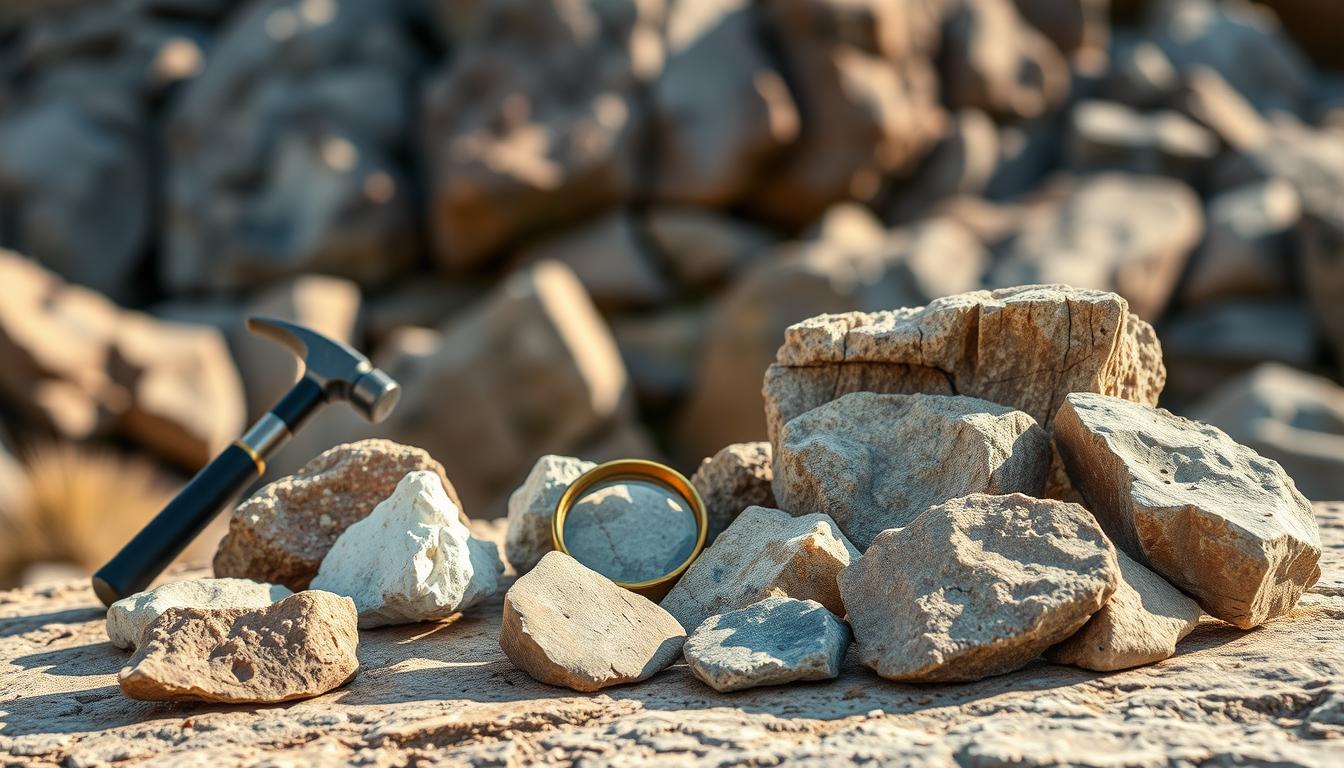
Rock identification is a fun hobby that needs a good grasp of geology. Experts say knowing how to spot minerals is key in geology. This skill is vital for anyone wanting to dive into the world of rocks and minerals.
Many beginners find it hard to spot rocks right because of common mistakes. These errors can make them doubt their skills. Knowing these mistakes helps improve their rock identification skills.
Key Takeaways
- Understanding geology is key for rock identification.
- Common mistakes can lead to wrong identifications.
- Getting better takes practice and patience.
- A beginner’s guide can help through the process.
- Getting it right is important to enjoy the hobby.
Understanding the Fundamentals of Rock Identification
To identify rocks well, you need to know the basics. Rock identification is about understanding rock types and their features. It’s a skill that starts with knowing the main rock types and their properties.
The Three Main Rock Types and Their Characteristics
Rocks are mainly three types: igneous, sedimentary, and metamorphic. Igneous rocks come from magma or lava cooling down. Sedimentary rocks are made from compressed sediments. Metamorphic rocks change from existing rocks under heat and pressure.
Essential Properties for Proper Identification
Key properties help identify rocks. Texture shows the size and arrangement of minerals. Structure is the rock’s overall look. Mineral composition is also key, as different minerals have unique features.
Learning these basics helps beginners get better at identifying rocks. It also deepens their appreciation for the geological world.
Relying Solely on Color for Identification
Many beginners use color to identify rocks. But, color can be tricky. It can change due to impurities or weathering.
Why Color Is an Unreliable Indicator
Color isn’t always a good guide. This is because of changes in chemical makeup and impurities. For example, iron oxide can make minerals look red, yellow, or brown.
Better Visual Indicators to Consider
Geologists look at more than just color. They check luster, streak, and crystal form. Luster is how light reflects off the mineral. Streak is the mineral’s color when powdered. Crystal form is the shape of the mineral.
- Luster: Metallic or non-metallic
- Streak: Color when powdered
- Crystal Form: External shape of the crystal
Looking at these features helps people identify rocks and minerals better.
Confusing Minerals and Rocks
Many people mix up minerals and rocks, using the terms the same way. But they are different. Knowing the difference is key to identifying them right.
Defining the Difference Between Minerals and Rocks
Minerals are naturally occurring, inorganic substances with a specific chemical makeup and crystal structure. Rocks, by contrast, are made of one or more minerals. They can be igneous, sedimentary, or metamorphic. The main difference is in their makeup and how they form.
Common Examples of Mineral-Rock Confusion
For instance, people often confuse quartz (a mineral) with granite (a rock that has quartz in it). They also mix up mica (a mineral) with a rock. It’s important to know these differences for correct identification and classification.
Mistakes Beginners Make When Identifying Rocks
Rock identification is a fun hobby that needs careful attention and knowledge of geology. Beginners often make big mistakes that can lead to wrong guesses. Knowing these common errors helps improve your skills.
Overlooking Texture and Structure
Texture and structure are key in identifying rocks. Not paying attention to these can lead to wrong guesses. For example, texture can tell if a rock is igneous, sedimentary, or metamorphic.
Ignoring Formation Context
The place where a rock is found tells a lot about it. Knowing the formation environment helps narrow down what it could be.
Failing to Use Multiple Identification Methods
Using just one way to identify rocks can be wrong. Mixing visual checks, simple tests, and references makes your guesses more accurate and sure.

Improper Testing Techniques
Rock identification needs precise testing methods to avoid mistakes. Testing rocks is key in geology. Using the right techniques is vital for accurate identification.
Streak Test Errors and Corrections
The streak test is a simple yet effective method for identifying minerals. But, errors can happen if the test is not done right. Common mistakes include using a dirty streak plate or not applying enough pressure.
To fix these errors, make sure the streak plate is clean. Also, apply enough pressure to get a clear streak.
Hardness Test Misconceptions
The hardness test is another important tool in rock identification. A common mistake is thinking it’s only for minerals with a high hardness level. But, it can be used for minerals of all hardness levels.
Understanding the Mohs hardness scale is key to using this test well.
Acid Test Safety and Interpretation Mistakes
The acid test is used to find rocks with calcium carbonate. Safety is key when doing this test, as the acid can be dangerous. Mistakes in interpreting the results can also happen.
A positive reaction means calcium carbonate is present. A negative reaction means it’s not there.
Misidentifying Common Rock Types
Many people get rocks mixed up because they don’t know their differences. This part will talk about the hard parts of telling apart igneous, sedimentary, and metamorphic rocks.
Igneous Rock Identification Challenges
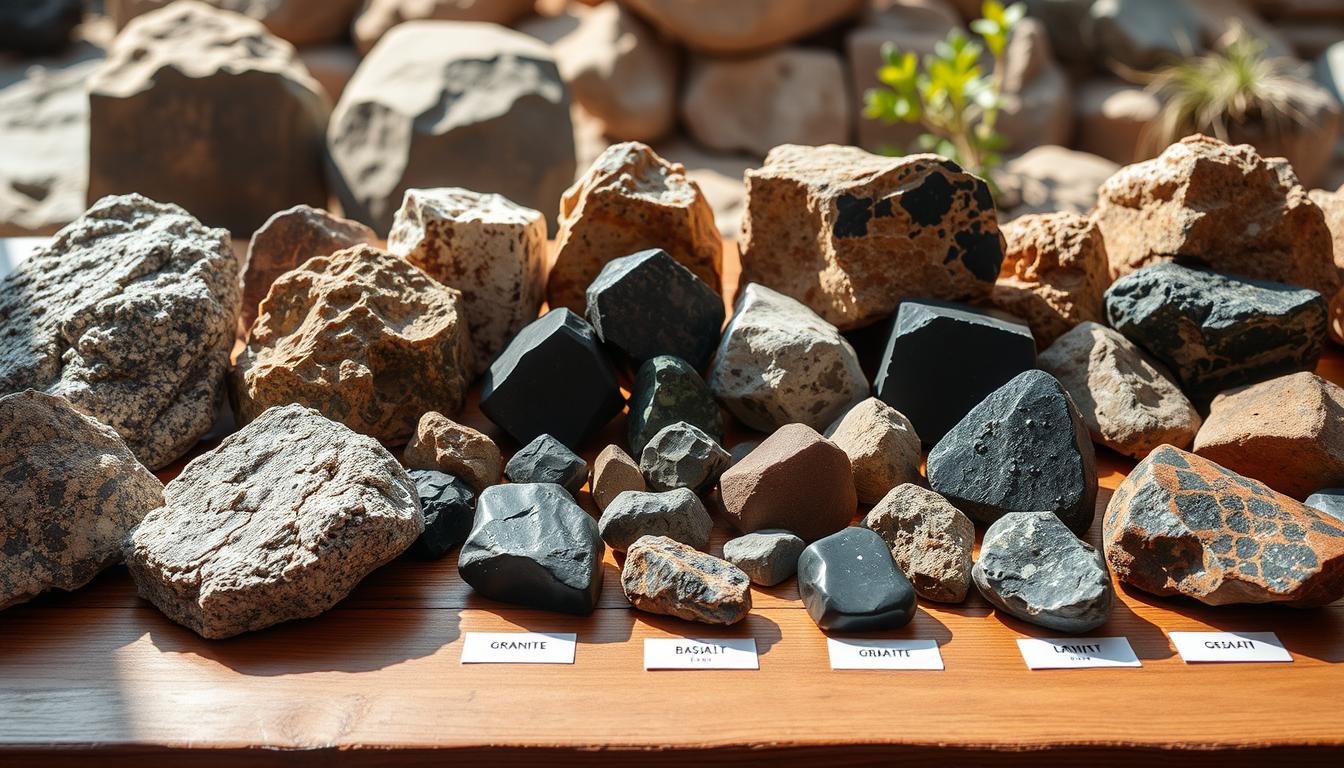
Igneous rocks cool down from magma or lava. They can look very different. Look for texture, mineral makeup, and if they have air bubbles. For example, granite looks speckled and coarse, while basalt is dark and fine-grained.
- Texture: coarse-grained, fine-grained, or glassy
- Mineral composition: presence of quartz, feldspar, or mica
- Vesicles: presence or absence of gas bubbles
Sedimentary Rock Common Confusion Points
Sedimentary rocks are made from compressed sediments. They can look alike, making them hard to tell apart. Look for bedding planes, fossils, and how they’re stuck together. For example, sandstone is often mistaken for conglomerate because of its uniform grains.

Metamorphic Rock Identification Pitfalls
Metamorphic rocks change under high pressure and heat. They can be tricky to spot because of their complex looks and minerals. Look for layered patterns, mineral makeup, and special minerals. For example, slate is smooth and fine-grained, while gneiss is banded and coarse.
- Foliation: presence or absence of layered structure
- Mineral composition: presence of quartz, feldspar, or mica
- Metamorphic minerals: presence of minerals like garnet or staurolite
Overlooking Valuable Resources and Tools
Identifying rocks needs the right tools and resources. Many beginners miss out on the wealth of info available. This can really help them get better at identifying rocks.
Essential Field Guides and References
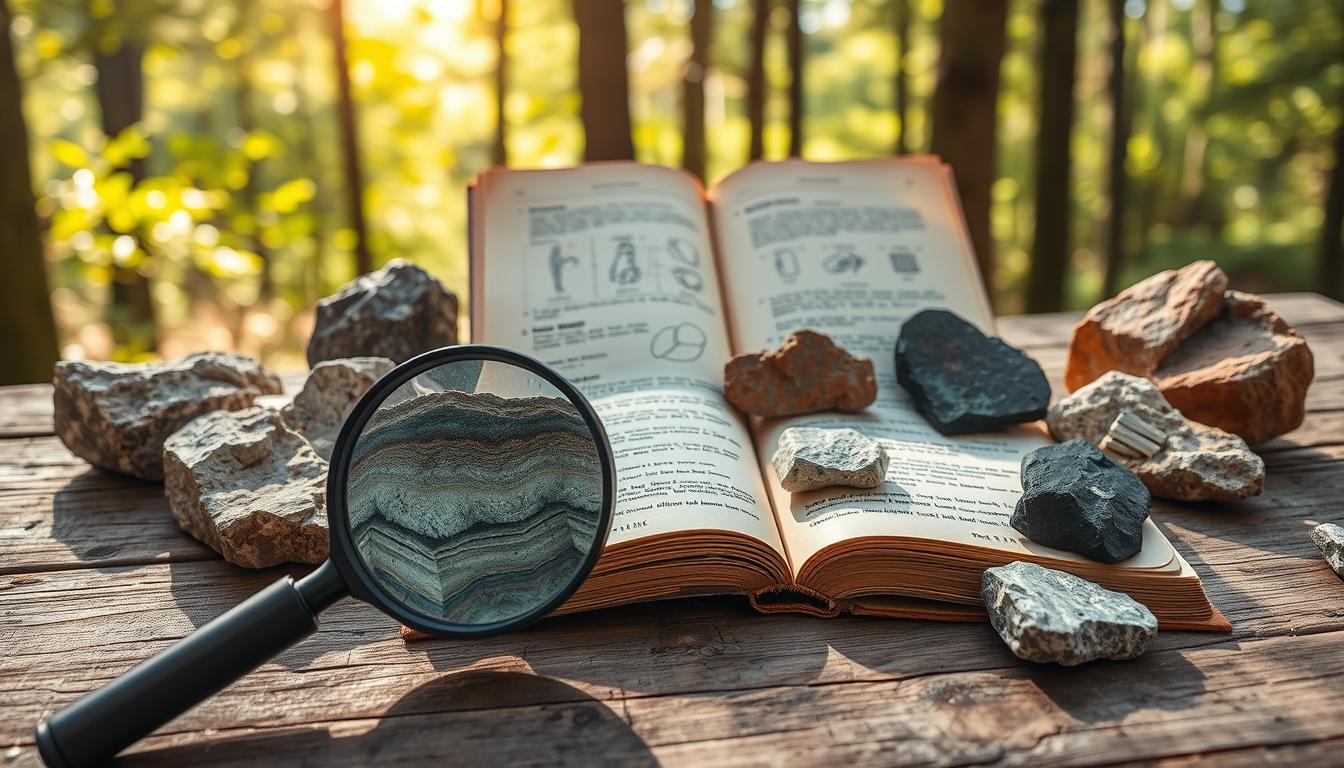
Field guides are key for rock identification. They have detailed descriptions and pictures of different rocks. This helps beginners learn about various rock types. Look for field guides from geological surveys and scientific groups.
Digital Apps and Online Resources
Today, many apps and online platforms help with rock identification. They give quick info and help users learn about rocks. For example, there are apps that identify rocks from photos and online databases with lots of rock info.
The Value of Joining Rock and Mineral Clubs
Joining a rock and mineral club is very helpful. These clubs have experienced collectors who share their knowledge. They help beginners get better at identifying rocks. Members go on field trips and workshops to learn more.
Building Confidence in Your Rock Identification Skills
Learning to identify rocks takes time and effort. Knowing the basics of rock types helps you avoid mistakes. Look at more than just color. Consider texture and structure too.
Using different ways to identify rocks is key. Knowing the difference between minerals and rocks is important. As you get better, you’ll feel more sure about your rock identifications.
Keep practicing and you’ll get better at spotting details. Useful tools like field guides and online resources can help a lot. They make learning more fun and effective.
FAQ
What are the most common mistakes beginners make when identifying rocks?
Beginners often rely too much on color. They confuse minerals with rocks. They also overlook texture and structure. And they don’t use many identification methods.
Why is color an unreliable indicator for rock identification?
Color can change due to impurities and weathering. It’s not always the same. Look at luster, streak, and crystal form instead.
What is the difference between a mineral and a rock?
A mineral is a solid with a certain chemical makeup. A rock is made of one or more minerals. Knowing this helps you identify rocks right.
How can I avoid misidentifying common rock types?
Look at texture, structure, and mineral makeup. Know the challenges of each rock type. This helps you tell igneous, sedimentary, and metamorphic rocks apart.
What are some essential resources for improving rock identification skills?
Use field guides, apps, and online resources. Join clubs for rock and minerals. This gives you lots of information and hands-on practice.
How can I properly conduct simple tests like the streak test, hardness test, and acid test?
Follow the right steps for each test. Use a porcelain streak plate and compare hardness. Handle acid carefully for safe and accurate results.
What are some common pitfalls when identifying igneous, sedimentary, and metamorphic rocks?
Know the challenges of each rock type. Distinguish between intrusive and extrusive igneous rocks. Recognize sedimentary rock textures. Identify metamorphic rock mineral compositions.
How can I improve my rock identification skills with practice and patience?
Practice rock identification often. Use visual observation, simple tests, and reference materials. Be patient and you’ll get better at identifying rocks.

Subscribe to Our Newsletter