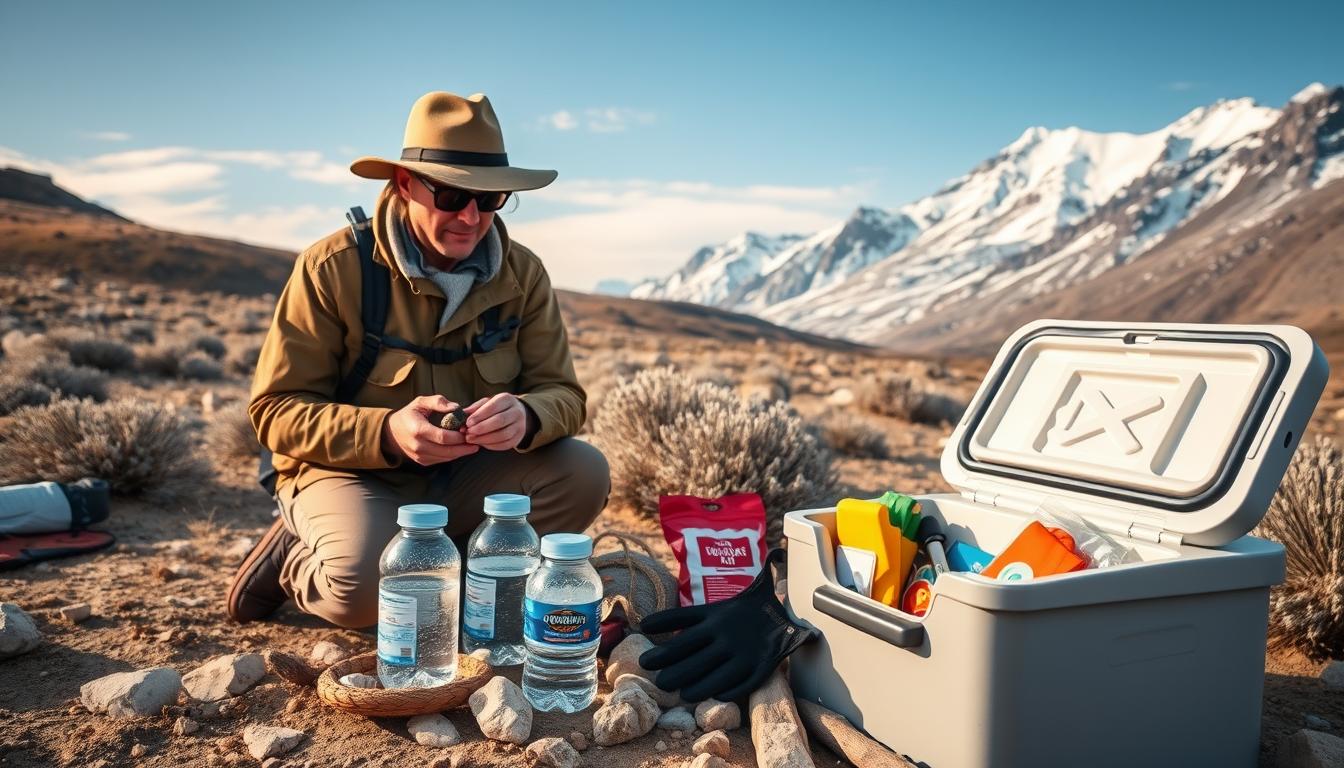
Understanding rock hardness is key in geology. It helps us know what minerals are and their traits. The Mohs hardness scale ranks minerals from 1 (softest) to 10 (hardest).
You can test rock hardness at home with simple methods and items. Use a fingernail, copper penny, and steel nail to figure out a rock’s hardness. For a precise test, check out the Mohs hardness test sequence.
Key Takeaways
- Rock hardness is measured using the Mohs hardness scale.
- Simple DIY methods can be used to test rock hardness at home.
- Everyday objects like fingernails and steel nails can be used for testing.
- The Mohs hardness scale ranks minerals from 1 to 10.
- Testing rock hardness helps in identifying minerals and their characteristics.
What Is Rock Hardness and Why It Matters
Rock hardness is key for identifying and enjoying mineral specimens. It tells us about a rock’s makeup and structure.
The Scientific Definition of Mineral Hardness
Mineral hardness shows how well a mineral can resist scratches and wear. The Mohs hardness scale rates minerals from 1 (softest) to 10 (hardest). Friedrich Mohs created it in 1812, and it’s used a lot today.
Practical Importance for Collectors and Hobbyists
For those who collect rocks, knowing hardness is vital. It helps sort and understand mineral types. It also shows how durable and useful a rock might be.
Relationship Between Hardness and Rock Identification
Hardness is a big clue in identifying rocks. Knowing a rock’s hardness can help guess what it is. This, along with color, streak, and cleavage, makes identification more precise.
Comparison of Common Minerals by Hardness
| Mineral | Hardness on Mohs Scale | Common Uses |
|---|---|---|
| Talc | 1 | Cosmetics, Paper |
| Quartz | 7 | Electronics, Optics |
| Diamond | 10 | Jewelry, Cutting Tools |
The Mohs Hardness Scale Explained
The Mohs hardness scale is a key tool in geology. It shows how well minerals resist scratches. Friedrich Mohs made it in 1812. It ranks minerals from 1 (softest) to 10 (hardest).
History and Development by Friedrich Mohs
Friedrich Mohs, a German scientist, made the scale. He wanted a simple way to tell minerals apart by their hardness. The Mohs hardness scale is now a main tool in mineralogy.
The 10 Reference Minerals on the Scale
The Mohs scale uses 10 minerals to show different hardness levels.
Soft Minerals (1-3)
- Talc (1)
- Gypsum (2)
- Calcite (3)
Medium Hardness Minerals (4-6)
- Fluorite (4)
- Apatite (5)
- Orthoclase (6)
Hard Minerals (7-10)
- Quartz (7)
- Topaz (8)
- Corundum (9)
- Diamond (10)
Relative vs. Absolute Hardness
The Mohs scale shows relative hardness, not absolute hardness. It ranks minerals by how they scratch or are scratched by others. It doesn’t measure their absolute resistance to scratches.
Essential Tools for Testing Rock Hardness at Home
You don’t need a lab to test rock hardness. Simple household items can do the job. Testing rock hardness at home is easy with the right tools.
Common Household Items as Testing Tools
Many household items can test rock hardness. These include:
- Fingernail: A simple scratch test can show if a rock is softer than 2.5 on the Mohs scale.
- Copper Penny: A copper penny can scratch rocks up to 3.
- Glass: Glass is about 5.5 in hardness, good for testing harder rocks.
- Steel Knife: A steel knife blade is about 5.5 in hardness, useful for testing similar or lesser rocks.
Fingernail, Copper Penny, Glass, Steel Knife
These items are easy to find and quick to use. For example, if a rock is scratched by a fingernail, it’s soft. If not scratched by a steel knife, it’s hard.
Specialized Testing Kits
For more precise testing, get a specialized rock hardness testing kit. These kits have minerals or tools of known hardness for accurate comparisons.
Creating Your Own Hardness Testing Kit
For a DIY kit, use common materials. Gather items like a fingernail, copper penny, glass, and steel knife. Add other useful materials. This kit lets you test rock hardness at home.
Using household items or a specialized kit, you can test rock hardness easily. You don’t need to spend a lot.
How to Test Rock Hardness at Home: Basic Methods
Learning to measure rock hardness is key for identifying rocks. You need little equipment. It’s a basic skill for those who love geology.
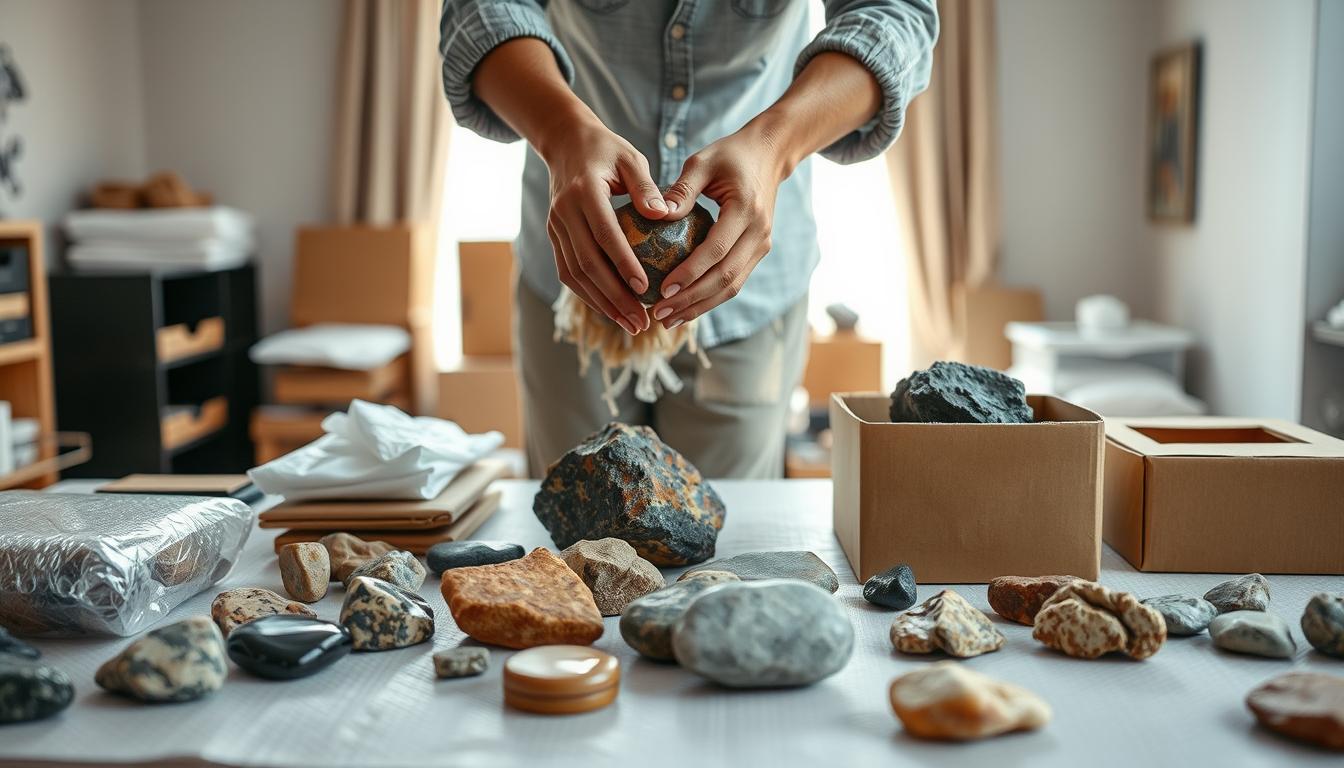
Preparing Your Rock Specimen
First, clean the rock with water and a soft brush. This removes dirt. Be gentle with fragile rocks.
If the rock has many minerals, pick the area to test.
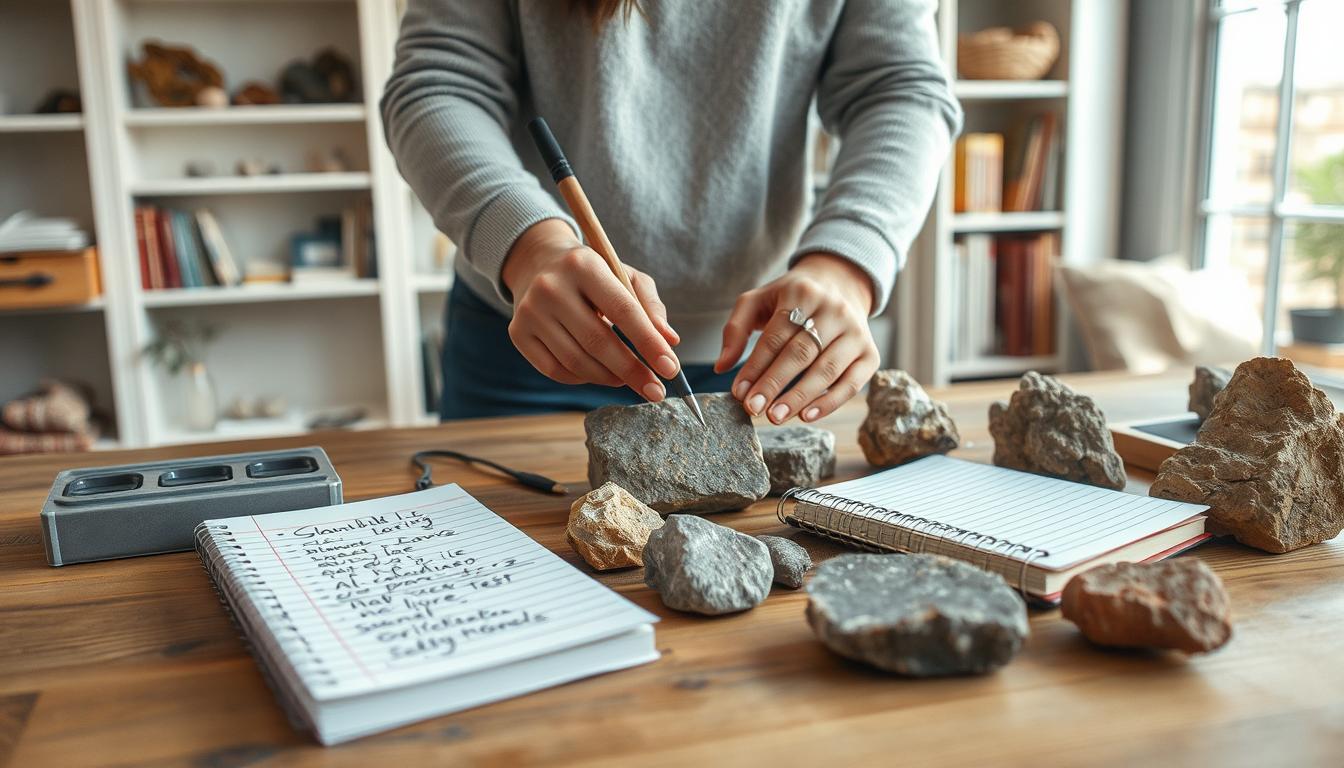
The Scratch Test Method
The scratch test is common for rock hardness. Scratch the rock with something known to be harder or softer. For example, use a steel file on a rock you think is quartz.
Key steps for the scratch test:
- Choose a testing material that is slightly harder or softer than your suspected rock hardness.
- Gently scratch the rock surface with the testing material.
- Observe the result: if the rock is scratched, it’s softer than the testing material.
The Streak Test for Mineral Identification
The streak test helps identify minerals, not hardness. It shows the color of powder when scratched on a porcelain plate. Each mineral has a unique streak.
| Mineral | Hardness | Streak Color |
|---|---|---|
| Quartz | 7 | White |
| Feldspar | 6 | White |
| Pyrite | 6-6.5 | Greenish-black |
Visual Inspection Techniques
Start with a visual check. Look at the rock’s color, shine, cleavage, and texture. These clues help narrow down what it might be.

Use these methods together. Prepare your specimen, do scratch tests, streak tests, and visual checks. This way, you can test rock hardness at home and improve your rock identification skills.
Advanced Hardness Testing Techniques
Advanced hardness testing techniques can make rock identification more accurate. They help collectors and hobbyists learn more about rocks and minerals. Basic methods like the scratch test are good, but these advanced methods show more.
Specific Gravity Testing
Specific gravity testing is great for figuring out minerals by their density. You weigh the mineral in air and then in water. Then, you find the ratio of these weights to get its specific gravity.
- Accurate measurement: You need a precise scale and a container of water.
- Comparative analysis: You can compare it with known values of minerals.
Acid Reaction Tests
Acid reaction tests can spot minerals with calcium carbonate (CaCO3), like calcite and limestone. You just add a drop of dilute hydrochloric acid (HCl) to the mineral.
Key observations:
- Bubbling or fizzing means it has CaCO3.
- No reaction might mean it’s a different mineral.
Magnetism and Electrical Conductivity
Testing for magnetism and electrical conductivity gives more clues about a mineral.
- Magnetism: Some minerals, like magnetite, are naturally magnetic.
- Electrical Conductivity: Some minerals conduct electricity. You can test this with a simple tester.
Using a Hand Lens or Microscope
Looking at a mineral with a hand lens or microscope shows its details. You can see crystal shapes, cleavage planes, and inclusions. This helps identify the mineral.
By using these advanced techniques, rock lovers can better understand their mineral specimens. They can identify and learn about the composition of their rocks.
Step-by-Step Guide to Performing a Scratch Test
The scratch test is a basic way to check rock and mineral hardness. It uses the Mohs Hardness Scale, from 1 (softest) to 10 (hardest). By following a simple guide, you can find out your rock’s hardness.
Cleaning and Preparing Your Rock Sample
Make sure your rock is clean and dry before the test. Dirt or moisture can mess up the results. Just brush off any dirt and let it dry if it’s wet.
Selecting Appropriate Test Materials
You’ll need materials with known hardness levels for the test. Household items like a copper penny (hardness around 3) or a steel file (hardness around 6.5) work well. Glass (hardness around 5.5) is also good. For better results, use a Mohs hardness testing kit. You can learn more about it from ThoughtCo.
Proper Scratching Technique
Hold the rock firmly and try to scratch it with the test material. Use moderate pressure and scratch the rock, not the material. If the material scratches the rock, it’s softer. If the rock scratches the material, it’s harder.

Interpreting and Recording Results
Write down which materials scratched the rock and which didn’t. This helps you figure out the rock’s hardness range. For example, if a steel file scratches but a copper penny doesn’t, the rock is between 3 and 6.5.
Common Mistakes to Avoid
- Using dirty or wet samples
- Applying too much pressure, which can damage the rock or test material
- Not recording results accurately
- Testing composite or weathered rocks, which can give inconsistent results
Avoid these mistakes and follow the right technique for a precise DIY scratch test.
Common Rock Types and Their Typical Hardness Levels
Testing rock hardness is key for amateur geologists. Knowing the hardness of different rocks helps in identifying them.
Igneous Rocks
Igneous rocks, like granite and basalt, vary in hardness. Granite is quite hard, with a Mohs hardness of 6-7. Basalt is softer, ranging from 5-6.
Sedimentary Rocks
Sedimentary rocks, such as limestone and sandstone, are generally softer. Limestone is soft, with a Mohs hardness of 3. Sandstone’s hardness can be 6-7, depending on how it’s formed.
Metamorphic Rocks
Metamorphic rocks, like marble and quartzite, have varying hardness. Marble, made from limestone, is soft, with a Mohs hardness of 3. Quartzite is harder, often scoring 7.
Regional Variations in Rock Hardness
It’s important to remember that rock hardness can vary by region. This is due to differences in minerals and geological history. For example, rocks from areas with lots of tectonic activity may be harder or softer than those from stable areas.
Identifying Gemstones Using Hardness Tests
Knowing the hardness of gemstones is key for collectors and fans. Hardness tests are a basic tool in gemology. They help tell different gemstones apart.
Common Gemstones and Their Hardness Values
Gemstones have different hardness levels. Some are very soft, like talc. Others, like diamonds, are very hard. For example, quartz is a 7 on the Mohs scale. Topaz is a bit harder, at 8.
Distinguishing Real from Fake Gemstones
Hardness tests can also spot fake gemstones. Many fakes are made of glass or softer stuff. They can be scratched easily, showing they’re not real.
Limitations of Hardness Testing for Gem Identification
But, hardness testing has its limits. Some gemstones have the same hardness. This makes it hard to tell them apart just by hardness.
Complementary Tests for Gemstone Identification
To get around these limits, gemologists use other tests. They do specific gravity, refractive index tests, and look under a microscope. These tests give a clearer picture of what the gemstone is.
By mixing hardness tests with other methods, collectors can better identify their gems. This helps them build a more knowledgeable collection.
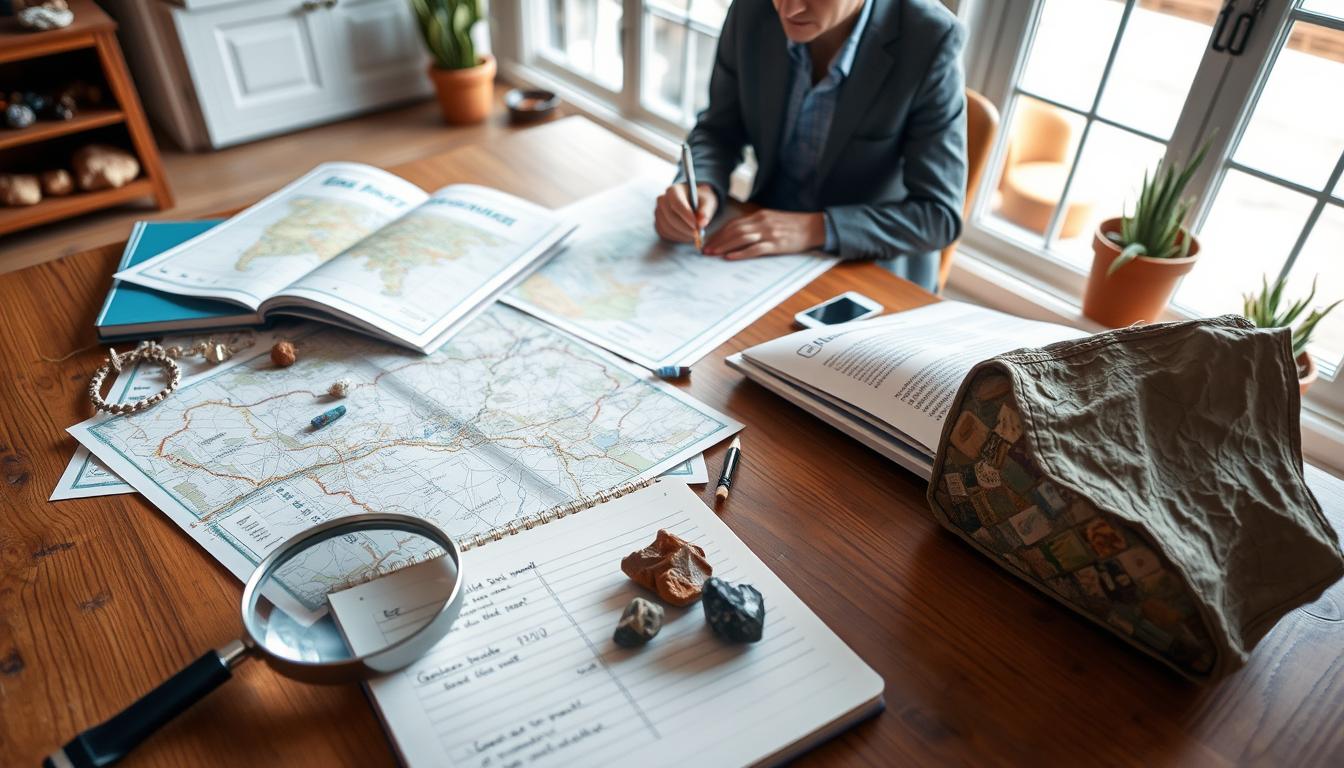
Documenting and Recording Your Rock Hardness Tests
To get the most out of your DIY rock hardness test, proper documentation is key. Accurate records help you track your findings, identify patterns, and make informed decisions about your rock collection.
Creating a Testing Journal
Maintaining a testing journal is an effective way to document your rock hardness tests. Include details such as the rock’s description, the test method used, and the results. This will help you keep track of your progress and provide valuable insights.
- Record the date and time of each test
- Note the rock’s appearance and any distinguishing features
- Document the testing method and materials used
- Record the results and any observations
Photography Tips for Rock Documentation
Photography is a key part of rock documentation. Take clear, well-lit photos of your specimens from multiple angles. Consider using a macro lens or microscope to capture detailed images.
Digital Apps for Rock Collection Management
Use digital apps designed for rock collection management to streamline your documentation. These apps can help you catalog your specimens, record test results, and organize your collection.
Key features to look for in a rock collection management app:
- Specimen cataloging
- Test result recording
- Photo storage and organization
Building a Reference Collection
Developing a reference collection can enhance your rock identification skills. By comparing your test specimens to known samples, you can improve your understanding of different rock types and their characteristics.
Troubleshooting and Safety Considerations
To get the most out of your rock hardness testing, it’s key to know common issues and safety tips. Testing rock hardness at home can sometimes give mixed results or be risky if not done right.
Handling Inconsistent Test Results
Inconsistent results can happen for many reasons. This includes the rock’s condition or the tools used. Make sure the rock and tools are clean and dry to get better results.
Testing Composite or Weathered Rocks
Composite or weathered rocks can be tricky to test. They might have different hardness levels on their surface. It’s important to do many tests to find the average hardness.
Safety Precautions During Testing
Always put safety first when testing rock hardness. Wear the right protective gear and handle tools carefully.
Eye and Hand Protection
Protective eyewear and gloves are key when doing scratch tests or handling dangerous stuff.
Chemical Safety
When using chemicals, make sure you’re in a well-ventilated area. Always follow the maker’s instructions.
Proper Disposal of Test Materials
Get rid of any testing materials, like chemicals, the right way. Follow local rules and guidelines.
| Safety Measure | Description | Importance Level |
|---|---|---|
| Eye Protection | Wear protective eyewear during tests | High |
| Hand Protection | Use gloves when handling hazardous materials | High |
| Chemical Handling | Follow manufacturer’s instructions for chemicals | High |
| Proper Disposal | Dispose of test materials according to local guidelines | Medium |
Conclusion
Testing rock hardness at home is easy with simple tools and methods. By learning How to Test Rock Hardness at Home, you improve your rock identification skills. You’ll also appreciate geology more.
The scratch test and visual inspection are great for identifying rocks and minerals. These rock hardness testing methods help you know your specimens’ hardness. This way, you learn more about the geological world.
Keep practicing and being patient as you explore rock identification at home. With time, you’ll get better at identifying rocks and minerals. You’ll also be able to share your knowledge with others.
Follow the tips in this article to master rock hardness testing. You’ll unlock the secrets of the geological world.
FAQ
What is the Mohs hardness scale, and how is it used to measure rock hardness?
The Mohs hardness scale shows how scratch-resistant minerals are. It ranks them from 1 (softest) to 10 (hardest). This helps identify minerals and their hardness.
What are some common household items that can be used to test rock hardness?
You can use a copper penny, a steel file, a glass plate, and a fingernail. These items help you test a rock’s hardness through a scratch test.
How do I perform a scratch test on a rock to determine its hardness?
First, clean the rock. Then, pick a testing material like a copper penny or steel file. Gently scratch the rock with it. If it scratches, the rock is softer.
What is the difference between relative and absolute hardness?
Relative hardness compares a mineral to others on the Mohs scale. Absolute hardness is a precise measure, often done with special equipment.
Can I use a hand lens or microscope to test rock hardness?
A hand lens or microscope can show the rock’s surface and minerals. But, they’re not for direct hardness tests. They help see scratch test results, though.
How do I document and record my rock hardness tests?
Keep a testing journal for your notes. Take photos of your rocks. You can also use digital apps to manage your collection.
What safety precautions should I take when testing rock hardness?
Always wear eye protection and gloves. Be careful with chemicals like acids. Follow proper disposal for testing materials.
Can hardness testing be used to identify gemstones?
Yes, hardness testing can help identify gemstones. But, it should be used with other methods like visual inspection and specific gravity testing for accurate identification.

Subscribe to Our Newsletter