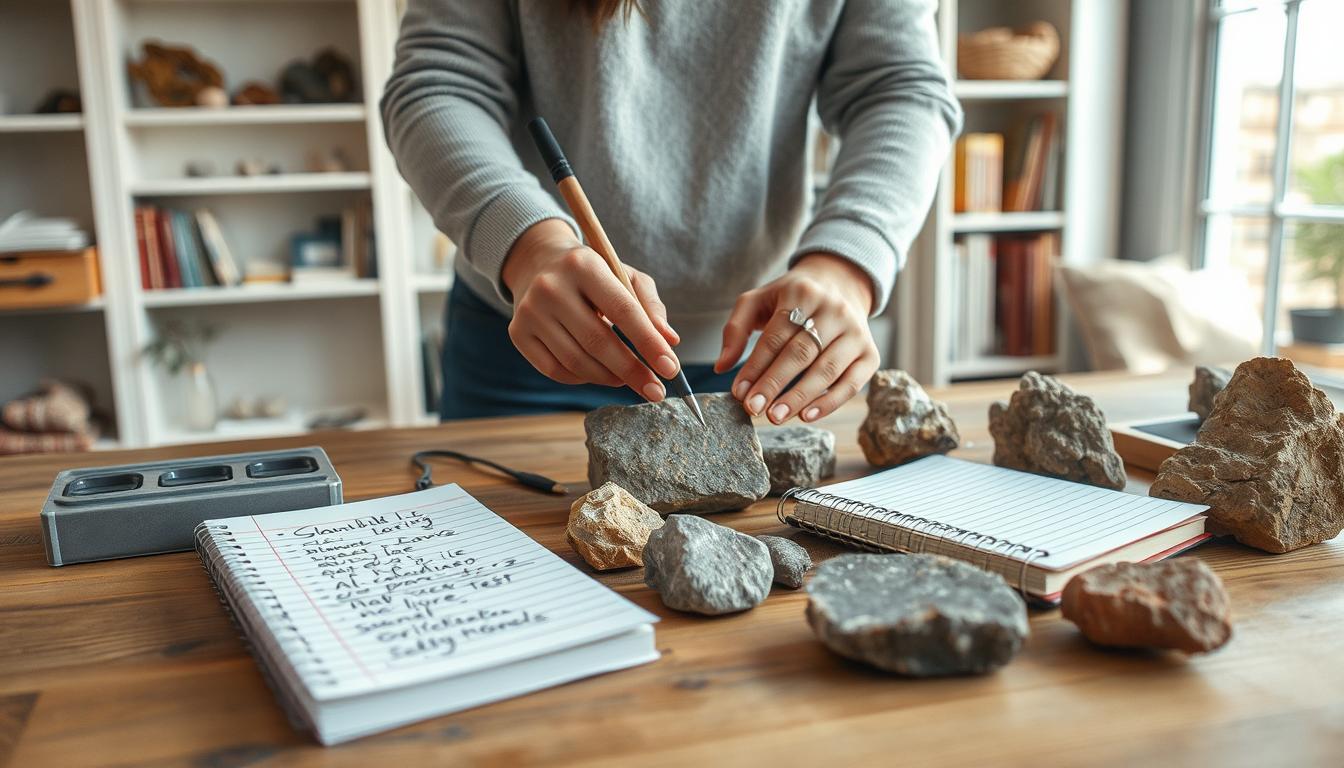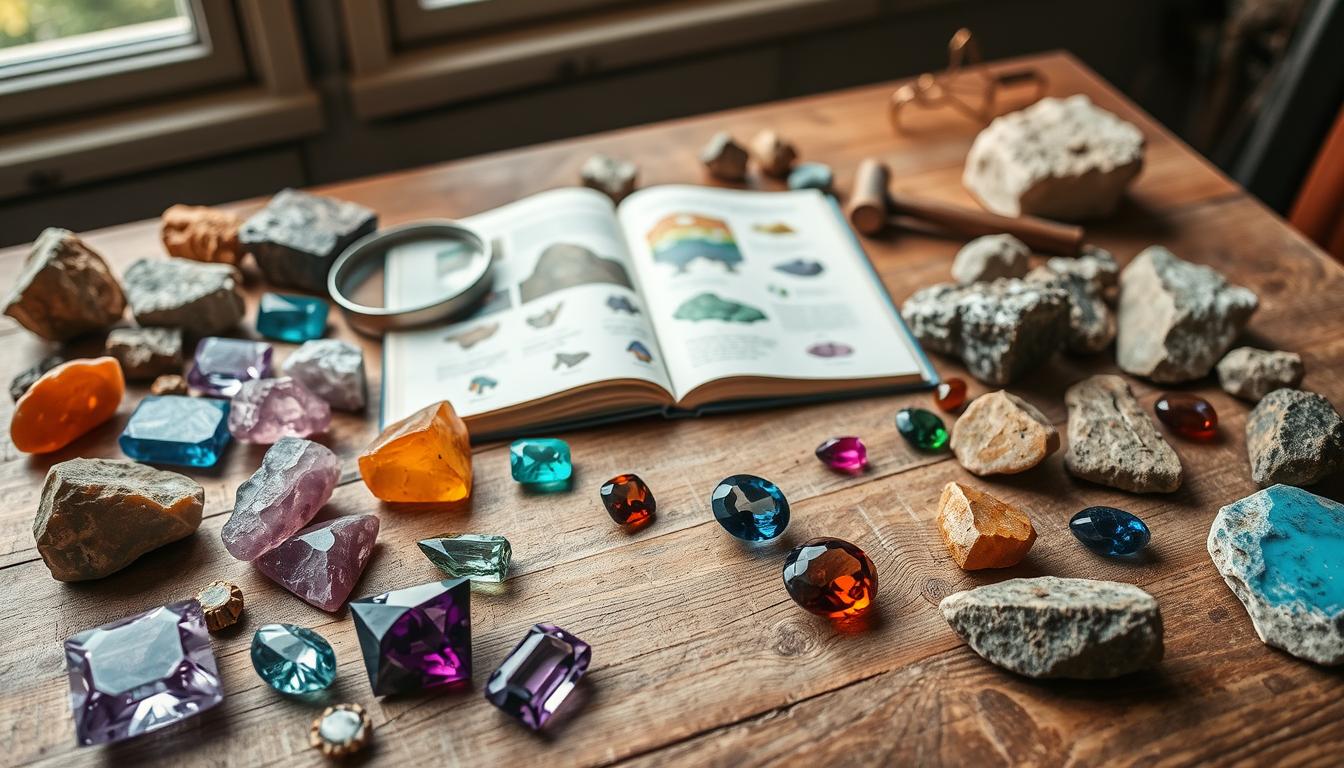
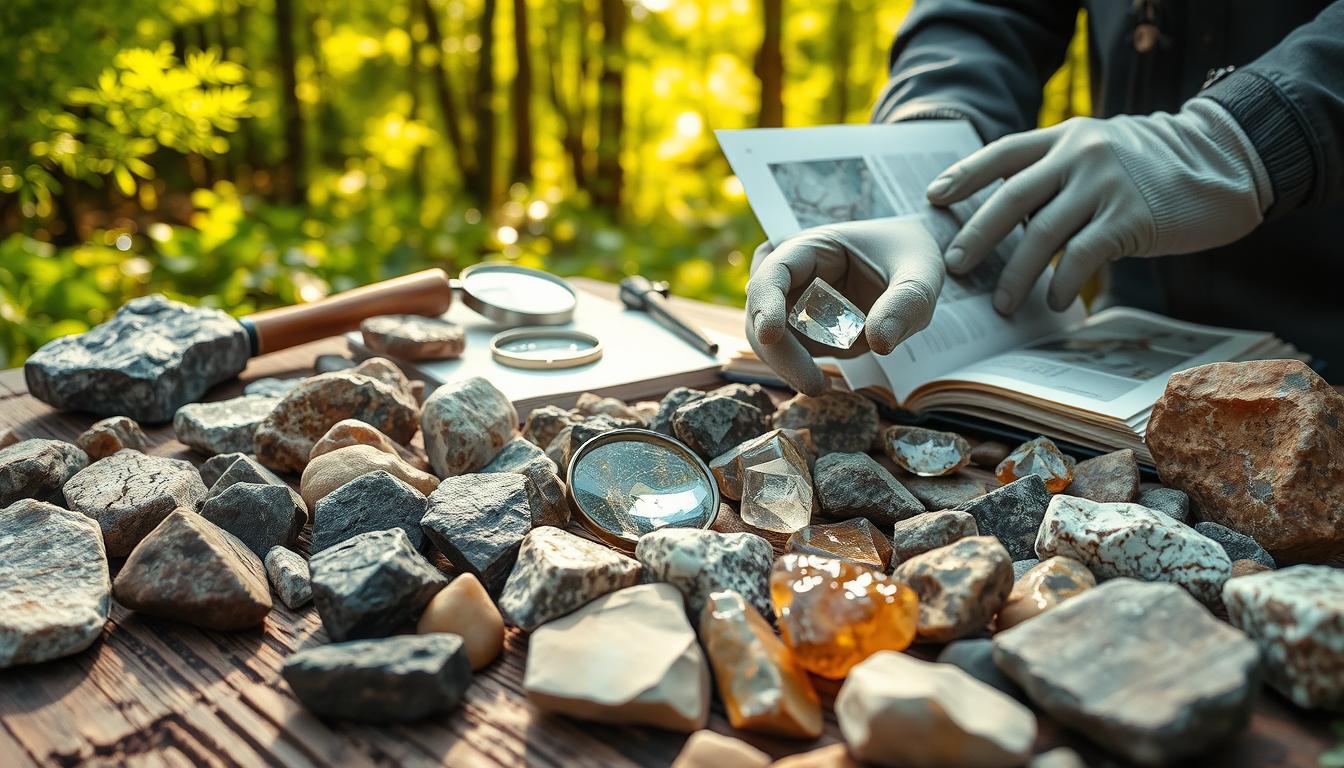
To figure out if a rock is worth something, you need to look at it carefully. Check its appearance, texture, weight, and where it came from. This helps guess what it’s made of and where it’s from. Many special rocks fall into four groups: gold, gemstones, fossils, and meteorites. Each group has signs that make them stand out.
A shiny rock might be gold or pyrite. A heavy, magnetic rock could be a meteorite. To learn more about finding valuable rocks, check out guides on rock identification and collecting.
Key Takeaways
- Examine a rock’s appearance, texture, weight, and geological context.
- Use simple field tests to infer composition and origin.
- Identify diagnostic features that distinguish valuable rocks from ordinary stones.
- Consider the four main categories of valuable rocks: gold, gemstones, fossils, and meteorites.
- Seek professional identification for unusual or valuable specimens.
Understanding the Basics of Rock Value
Figuring out a rock’s value is more than just looking at it. You need to think about several important things.
What Makes a Rock Valuable?
A rock’s worth comes from how it looks and what it tells us. Aesthetic appeal is about how pretty the rock is. This can be because of its color, pattern, or look.
Aesthetic Appeal
Rocks with bright colors or cool patterns are often worth a lot. This is because they are beautiful. Rocks with rare minerals or fossils are also very sought after.
Scientific Significance
The scientific value of a rock depends on its rarity, history, or what it teaches us about Earth. Rocks that show us about the Earth’s past or have important minerals are very valuable.
Common Misconceptions About Rock Value
There are many wrong ideas about what makes a rock valuable. Knowing these can help spot valuable rocks.
Size Doesn’t Always Matter
Even though bigger rocks might be more valuable, size isn’t everything. Small rocks with rare minerals or special features can be just as valuable.
Not All Shiny Rocks Are Valuable
Many think shiny rocks are always worth something. But, a rock’s value comes from its beauty, what it teaches us, and how rare it is. A rock’s shine is just one part of its value.
| Characteristics | Factors to Consider | Examples |
|---|---|---|
| Aesthetic Appeal | Color, Pattern, Overall Appearance | Rocks with vibrant colors or unique patterns |
| Scientific Significance | Rarity, Historical Importance, Geological Insights | Rocks containing rare minerals or fossils |
By knowing these things and avoiding wrong ideas, you can better judge a rock’s value. Whether you collect them or study them, knowing what makes a rock valuable takes practice and knowledge.
Types of Rocks Worth Collecting
The world of rock collecting is full of different types of rocks. People collect rocks that look good and are rare or important for science.
Igneous Rocks
Igneous rocks come from volcanic activity. They have valuable specimens.
Obsidian and Volcanic Glass
Obsidian is a volcanic glass that shines and has sharp edges.
Granite and Pegmatite
Granite is a coarse-grained rock. Pegmatite has big crystals. Both are loved by collectors.
Sedimentary Rocks
Sedimentary rocks are made from sediments. They can have fossils and unique shapes.
Fossils and Fossil-Bearing Rocks
Rocks with fossils are valuable for science and history.
Concretions and Geodes
Concretions are made from minerals. Geodes are hollow rocks with crystals. Both are favorites among collectors.
Metamorphic Rocks
Metamorphic rocks change under high pressure and heat. They include valuable types.
Marble and Quartzite
Marble has beautiful veining. Quartzite is mostly quartz. Both are loved for their looks.
Schist and Gneiss
Schist has layers. Gneiss has bands. Both are highly valued by collectors.
| Rock Type | Notable Subtypes | Characteristics |
|---|---|---|
| Igneous | Obsidian, Granite | Formed from volcanic activity, often contains valuable minerals |
| Sedimentary | Fossils, Concretions | Contains fossils or unique mineral formations |
| Metamorphic | Marble, Quartzite | Transformed under high pressure, known for beauty and durability |
Key Physical Characteristics to Examine
When checking a rock’s worth, look at its key physical traits. These traits tell us about the rock’s makeup and value. We need to check several things.
Color and Luster
The rock’s color and shine are first clues. Color matters a lot, but we must tell real colors from fake ones.
Natural vs. Enhanced Colors
Some rocks have colors changed by treatment or dye. Knowing if the color is real or not is key to its value and truth.
Metallic vs. Non-metallic Luster
Luster shows how light hits the rock’s surface. A shiny look means metal minerals. A dull look means other minerals.
Texture and Pattern
The rock’s texture and pattern tell us about its past. We look at the rock’s surface to learn this.
Crystalline Structures
Rocks with crystals show certain minerals. The size and quality of these crystals affect the rock’s worth.
Banding and Inclusions
Banding and inclusions are special signs. They tell us about how the rock was made.
Weight and Density
A rock’s weight and density are key. Density helps identify the minerals inside.
Hardness and Scratch Resistance
Knowing a rock’s hardness is important. The Mohs Scale helps us figure this out.
Using the Mohs Scale
The Mohs Scale goes from 1 (softest) to 10 (hardest). By testing a rock against known minerals, we find its hardness.
Valuable Rock Specimens in the United States
The United States has many valuable rocks from different places. The Southwest is known for turquoise. Arkansas is famous for its quartz crystals. Each area has its own special rocks for collectors.
Western Region Treasures
The West is known for its valuable rocks. Turquoise from Arizona and Nevada is loved for its bright blue-green color.
Turquoise from Arizona and Nevada
Arizona and Nevada have been key places for turquoise for a long time. This rock is often used in jewelry and is very popular among collectors.
Eastern Region Finds
The East also has many valuable rocks. Herkimer diamonds from New York are known for their clear beauty.
Herkimer Diamonds from New York
Herkimer diamonds, found in New York, are special quartz crystals. They are loved for their shine and clearness.
North Carolina Emeralds
North Carolina is famous for its emeralds. These are found in the state’s western areas. They are a big find for collectors.
Midwest and Southern Specialties
The Midwest and South have their own special rocks. Lake Superior agates are loved for their beautiful patterns.
Lake Superior Agates
Lake Superior agates, found in the Lake Superior area, are known for their bright colors and detailed patterns.
Arkansas Quartz Crystals
Arkansas is known for its high-quality quartz crystals. These crystals are often very clear and of great quality.
Tools and Equipment for Rock Assessment
To figure out a rock’s value, you need to know a lot and have the right tools. Rock collectors use different equipment to learn about their rocks’ features and value.
Basic Tools Every Collector Should Have
Every rock collector needs basic tools to start checking their finds. These tools help spot important rock features.
Magnifying Loupe and Microscope
A magnifying loupe or microscope is key for looking closely at the rock. They show details like inclusions, texture, and structure. This helps find valuable features.
Streak Plate and Hardness Testing Kit
A streak plate shows the rock’s streak, or powder color. A hardness testing kit checks how scratch-resistant the rock is. These tests tell a lot about the rock’s makeup.
Advanced Testing Equipment
For deeper analysis, collectors use advanced tools. These give precise info on the rock’s properties.
UV Light for Fluorescence
A UV light checks for fluorescence, a sign of certain minerals. This test can spot specific rocks or minerals.
Specific Gravity Testing
Specific gravity testing measures the rock’s density against water. It sheds light on the rock’s makeup and type.
Field Testing vs. Laboratory Analysis
Field testing is quick and lets you check rocks right away. But, laboratory analysis gives more detailed and accurate results. It depends on how detailed you need it and your resources.
How to Tell if a Rock Is Worth Keeping: A Step-by-Step Guide
To figure out if a rock is worth keeping, you need to look at it closely. You should check its appearance, test its physical properties, and sometimes do chemical tests. This way, you can tell if your rock is special or not.
Initial Visual Assessment
The first thing to do is to look at the rock carefully. Check its surface for any special features. These can tell you if the rock is valuable.
Surface Examination
Look at the rock’s surface for unique colors, patterns, or inclusions. These can show if the rock is rare or special.
Identifying Value Indicators
Search for signs that show the rock is rare or important. Look for unusual minerals or formations. These can be clues to its value.
Physical Testing Methods
After looking at the rock, it’s time to test it. This helps you learn more about its properties.
Hardness Tests
One test is the hardness test. It uses the Mohs Scale to see how scratch-resistant the rock is. This tells you about its minerals.
Streak and Luster Tests
Streak and luster tests also help. The streak test scratches the rock to see the powder color. The luster test checks how shiny the rock is. Both tests reveal mineral properties.
| Test | Description | What it Indicates |
|---|---|---|
| Hardness Test | Scratching the rock with materials of known hardness | Mineral composition and scratch resistance |
| Streak Test | Scratching the rock on a porcelain plate | Color of the powder produced |
| Luster Test | Observing the rock’s reflectivity | Rock’s mineral properties and surface characteristics |
Chemical Testing Basics
Chemical tests can give you more details. They involve simple tests to learn about the rock’s makeup.
Acid Tests
The acid test is one example. It uses a weak acid to see if the rock reacts. This is good for finding calcite or other minerals.
Magnetism Tests
Another test is the magnetism test. It checks if the rock is attracted to magnets. This shows if the rock has iron minerals.

When to Consult an Expert
If you’re not sure about your rock, it’s time to ask an expert. A geologist or a professional can give you more information. They can help you understand your rock’s value.
Rarity and Uniqueness Factors
Knowing what makes a rock rare and unique is key for collectors. These factors greatly affect a rock’s value and appeal.
Geological Significance
A rock’s rarity and uniqueness often come from its geological significance. This includes its age and how it was formed.
Age and Formation Conditions
Rocks that are old or formed in unique ways are very valuable. Their age tells us about Earth’s past, making them special for collectors.
Unusual Mineral Combinations
Rocks with rare mineral mixes are also highly sought after. These mixes reveal a lot about the Earth’s processes and are prized by collectors.
Historical or Cultural Value
Rocks with historical or cultural importance are also rare and unique.
Native American Artifacts
Stones used in Native American artifacts hold great cultural value. They are valuable not just for their material but also for their history and culture.
Mining History Connections
Rocks from famous mining sites are also highly valued. Their connection to mining history makes them unique and desirable.
Location and Origin Importance
The place where a rock comes from also adds to its rarity and uniqueness.
Locality Specimens
Rocks from famous places are highly sought after. Their rarity makes them more valuable.
Mines That Have Closed
Specimens from closed mines are also valuable. Their rarity and historical significance make them special.
Key Factors Influencing Rarity and Uniqueness:
| Factor | Description | Impact on Value |
|---|---|---|
| Geological Significance | Age, formation conditions, unusual mineral combinations | High |
| Historical or Cultural Value | Native American artifacts, mining history connections | High |
| Location and Origin | Locality specimens, mines that have closed | High |
Ethical Considerations in Rock Collecting
Ethical rock collecting is key to enjoying this hobby. It means being kind to the environment and local people. Rock lovers must think about how they affect nature and communities.
Legal Collection Sites vs. Protected Areas
Knowing the difference between legal sites and protected areas is important. Public lands have rules for collecting minerals.
Understanding Public Land Regulations
Collectors need to learn about local laws. They should know which places are okay for collecting and which are not.
Permits and Permissions
Often, you need permits or permissions to collect rocks. Getting these is important for collecting the right way.
Sustainable Collection Practices
Practicing sustainability is vital for the hobby’s future. It means only taking what you need and not harming the site.
Taking Only What You Need
Collectors should only take what’s truly needed. This reduces harm to the environment.
Preserving Sites for Future Collectors
Leaving sites untouched helps preserve them for others. This means not damaging plants or natural features.
Cultural Sensitivity
Cultural sensitivity is also key in rock collecting. It’s about respecting sacred sites and recognizing indigenous rights.
Respecting Sacred Sites
Some places are sacred to indigenous peoples or hold cultural value. Collectors should avoid these or approach with great respect.
Indigenous Rights to Mineral Resources
It’s important to recognize indigenous rights to their lands and resources. This includes knowing any local rules or restrictions.

By following these ethical practices, rock collectors can enjoy their hobby responsibly. This helps keep the hobby sustainable for the future.
Market Value Assessment and Selling Options
The value of rock specimens can change due to many factors, like current trends. It’s key for collectors to know these changes when buying or selling.
Current Trends in Rock Collecting
What’s popular in rock collecting affects their value. Popular specimens and investment-grade minerals are in high demand.
Popular Specimens in Today’s Market
Collectors love quartz crystals, amethyst geodes, and agate slices. They’re very sought after.
Investment-Grade Minerals
Minerals like benitoite and red diamonds are rare and valuable. They’re seen as good investments.
Price Determination Factors
The price of a rock specimen depends on its condition, how it’s prepared, certified, and its history.
| Factor | Description | Impact on Price |
|---|---|---|
| Condition | The state of preservation of the specimen. | High condition specimens command higher prices. |
| Certification | Official documentation verifying the specimen’s authenticity. | Certified specimens are more valuable. |
| Provenance | The specimen’s history of ownership or origin. | Specimens with documented provenance can increase their value. |
Where to Sell Valuable Specimens
There are many ways to sell valuable specimens. You can use specialty dealers, rock shows, or online marketplaces.
Specialty Dealers and Rock Shows
Specialty dealers know a lot about rocks. Rock shows are great for meeting buyers.
Online Marketplaces for Collectors
Online platforms reach more people. This makes it easier to sell your specimens.
[link-whisper-related-posts]Conclusion
Figuring out if a rock is worth keeping is complex. It involves looking closely, doing tests, and knowing its value. This includes its rarity and what it tells us about the Earth.
When collecting rocks, we must think about being kind to the Earth and respecting other cultures. This way, we can enjoy our finds without harming the planet or others.
This article gives tips on how to decide what to do with your rocks. You might choose to keep them, sell them, or give them to science museums. Each choice helps us learn more about the beauty and importance of rocks.
FAQ
What are the main categories of valuable rocks?
Valuable rocks fall into four main groups. These are gold, gemstones, fossils, and meteorites. Each group has special features that set them apart from regular stones.
How do I determine if a rock is valuable?
To check if a rock is valuable, look at its appearance, texture, and weight. Also, consider where it came from. Use simple tests to guess its makeup and origin.
What factors influence a rock’s value?
A rock’s value depends on its beauty and scientific interest. Its rarity or historical importance also play a big role.
Are larger rocks always more valuable?
No, size doesn’t always mean value. Some big rocks aren’t worth much. But, small rocks can be very valuable because of their rarity or special features.
How can I identify the type of rock I have?
To figure out a rock’s type, look at its color, shine, texture, and pattern. Use tools like a magnifying loupe, streak plate, and hardness tester.
What are some common types of rocks worth collecting?
There are three main types of rocks worth collecting. These are igneous, sedimentary, and metamorphic rocks. Each type has its own unique features and value.
How do I assess the market value of a rock specimen?
To find a rock’s market value, know the current trends in collecting. Also, consider the specimen’s condition, preparation, and any certifications or history it has.
Where can I sell valuable rock specimens?
You can sell valuable rocks through specialty dealers, at rock shows, or online. Look for marketplaces that cater to collectors.
What are some ethical considerations in rock collecting?
When collecting rocks, it’s important to know the difference between legal and protected areas. Practice sustainable collection and be respectful of cultural sites.
How can I ensure I’m collecting rocks sustainably?
To collect rocks sustainably, only take what you need. Preserve sites for future collectors. Also, respect sacred sites and the rights of indigenous peoples to minerals.
When should I consult an expert about a rock’s value?
If you’re not sure about a rock’s identity or value, or if it might be rare or historically important, seek an expert’s opinion.

Subscribe to Our Newsletter