For many, a rock collection is more than a hobby. It’s a way to connect with nature and keep geological wonders safe. It’s important to store and display them right to keep them looking good.
Good rock collection storage solutions protect them from harm. A neat display makes them stand out and adds beauty to any room.
Key Takeaways
- Understand the importance of proper storage for rock collections.
- Explore various methods for organizing rock collections.
- Discover creative ways to display rock specimens.
- Learn about the materials needed for effective storage and display.
- Consider the aesthetic and protective aspects of rock collection display.
Understanding Your Rock Collection
Knowing how to store your rock collection is key. It helps keep the rocks safe and makes them look great.
Types of Rocks and Their Specific Storage Needs
Each rock type needs its own care. Some rocks are fragile and need extra attention.
Igneous, Sedimentary, and Metamorphic Rocks
Igneous rocks come from magma or lava. They might need special storage because of their texture. Sedimentary rocks are made of sediments and can break easily. Metamorphic rocks change under high pressure and temperature. They might need special care too.
| Rock Type | Characteristics | Storage Needs |
|---|---|---|
| Igneous | Formed from magma or lava | Protect from extreme temperatures |
| Sedimentary | Created through sediment accumulation | Handle with care to avoid breakage |
| Metamorphic | Transformed under high pressure and temperature | Preserve in a stable environment |
Minerals and Crystals
Minerals and crystals need special care too. They are often part of rock collections.
Assessing the Size and Scope of Your Collection
Knowing how many rocks you have is important. Count them and note their sizes for storage and display.
Determining Your Display Goals
What you want to show with your rocks matters. Do you want to teach, decorate, or just enjoy them? Your goals help decide how to store and display your rocks.
Essential Supplies for Rock Collection Storage
Storing your rock collection right is key. The right stuff not only keeps your rocks safe but also makes them look great. You’ll need storage containers, labeling tools, and ways to keep them preserved.
Storage Containers and Materials
Choosing the right containers is important. You have many options to pick from:
Acid-Free Boxes and Trays
Acid-free boxes and trays are a smart choice. They stop damage from acid that can harm some rocks or minerals.
Cotton, Foam, and Padding Options
Along with acid-free containers, cotton, foam, and padding help protect your rocks. They prevent scratches and breakage.
Labeling and Identification Tools
Labeling your rocks is a must. You can use labels, tags, or make a catalog to keep track of your collection. This helps you remember where each rock came from and what it is.
| Labeling Method | Description | Advantages |
|---|---|---|
| Labels | Adhesive labels for direct attachment to rocks or containers. | Easy to apply, durable. |
| Tags | Small tags that can be tied to rocks or containers. | Flexible, can be used with various rock sizes. |
| Cataloging System | A digital or paper-based system for detailed record-keeping. | Comprehensive, allows for easy searching and updating. |
Preservation Materials
To keep your rocks safe for a long time, use materials that fight off moisture, dust, and light. Glass or acrylic cases and special storage materials are good choices.
With the right supplies, your rock collection will stay beautiful and safe for years.
Basic Storage Solutions for Rock Collections
Storing your rock collection can be easy with a few basic steps. The right way to store them keeps them safe and easy to find. This makes them fun to look at and learn about.
Drawer Systems and Cabinets
Drawer systems and cabinets are great for rock storage. They keep your rocks clean and dust-free. Using vintage workshop drawers or antique wooden craft organizers adds a special touch.
Plastic Compartment Boxes
Plastic compartment boxes are handy for storing small rocks. They come in many sizes and can be stacked to save space.
Archival Storage Methods
Archival storage is key for keeping rocks safe over time. Use materials that won’t harm them. This is very important for rare or delicate rocks.
Preventing Damage During Storage
Wrap each rock in something soft to prevent scratches. Keep the storage area clean and dry to avoid moisture damage.
Organizing by Classification
Organize your rocks by type, origin, or size. This makes them easier to find and study. Labels and catalogs help keep things organized.
With these basic steps, your rock collection will stay safe and fun for years.
How to Store and Display Your Rock Collection Effectively
Storing and displaying your rock collection well means knowing what your rocks need. You must think about their type, size, and where they come from. Also, consider the environment they will be in.
Organizing by Type, Size, or Origin
You can organize your rocks in different ways. Categorizing by type helps group similar rocks together. This makes it easier to see and enjoy their unique features.
- Categorize rocks by their geological type.
- Group rocks by their size, from smallest to largest.
- Organize rocks based on their origin, such as by region or geological formation.
Proper Handling Techniques
Handling rocks carefully is key to avoid damage. Always handle them gently. Try not to touch their surfaces too much, as oils from your skin can harm them over time. For more info on rock activities for kids, check out https://www.greatwolf.com/blog/rock-activities-kids/.
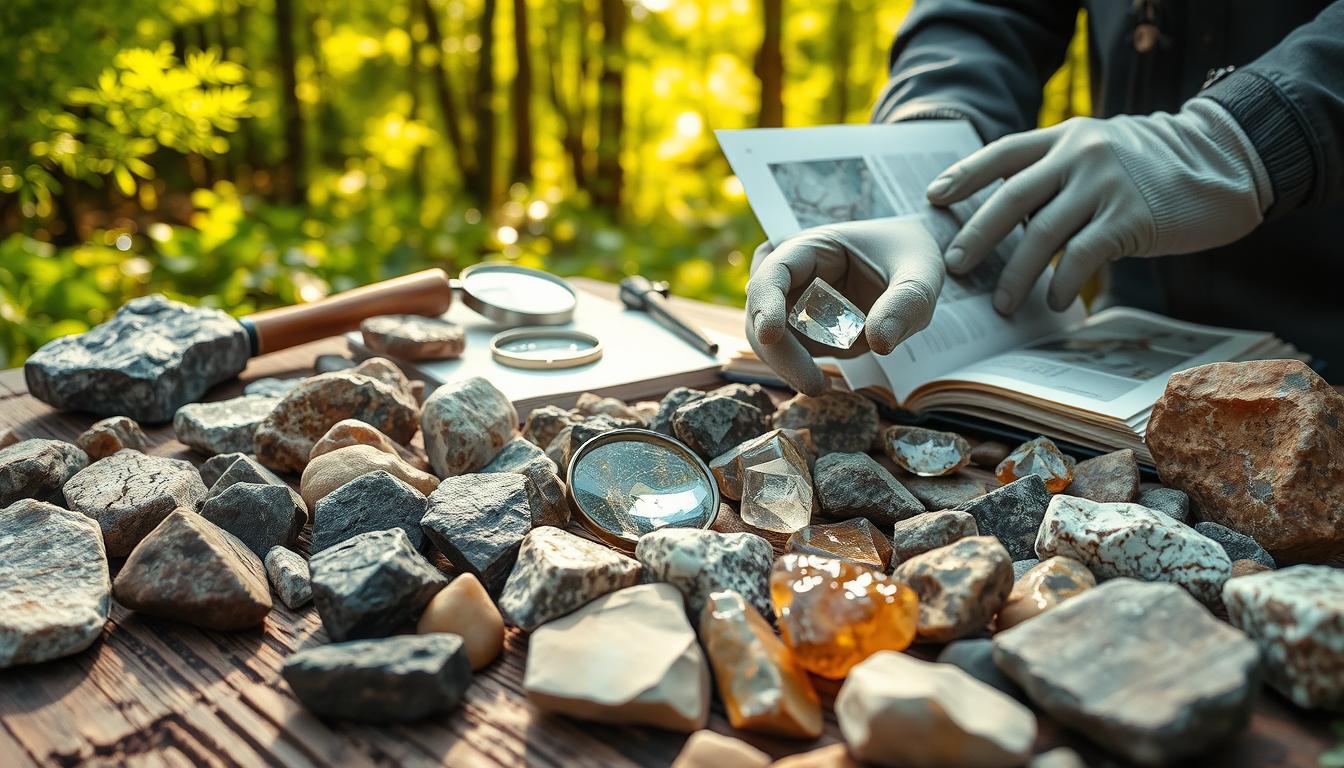
- Use gloves when handling rocks to prevent oil from your skin from coming into contact with the rock surface.
- Support larger rocks from underneath to prevent breakage.
- Avoid dropping rocks or subjecting them to sudden impacts.
Climate and Environmental Considerations
Climate and environment are important for keeping your rocks in good shape. Two key things to think about are controlling humidity and managing light exposure.
Humidity Control
Keeping the right humidity level is vital to prevent damage. Some rocks, with minerals that react to moisture, can change or deteriorate if humidity is wrong.
- Use a dehumidifier in humid environments to maintain a stable humidity level.
- Store sensitive rocks in airtight containers to protect them from moisture.
Light Exposure Management
Light can also affect your rocks, mainly those with sensitive minerals or colors. Direct sunlight can cause fading or color change over time.
- Display rocks away from direct sunlight to prevent fading.
- Use UV-filtering glass or acrylic in display cases to reduce the impact of light.
By thinking about these factors and using the right storage and display methods, you can keep and show off your rock collection well.
Display Cases and Cabinets
Choosing the right display case or cabinet is key to showing off your rock collection. A good display not only looks great but also keeps your rocks safe from dust and damage.
Glass Display Cases
Glass display cases are a top pick for rock collections. They are clear and protect your rocks well. You can find them in wall-mounted and free-standing styles.
Wall-Mounted vs. Free-Standing Options
Wall-mounted cases save space, while free-standing ones are more flexible. Think about your room’s layout and how big your collection is when choosing.
Curio Cabinets
Curio cabinets are great for rock collections too. They have many shelves and spots to keep your rocks looking good. Some even have glass doors or drawers for extra protection.
Museum-Quality Display Options
For a top-notch display, go for museum-quality cases. They are made with the best materials and keep your rocks safe and visible. Look for:
- High-quality glass or acrylic materials
- Secure closure systems
- Adjustable shelving or compartments
Choosing the right display case or cabinet makes your rock collection look amazing. It also adds beauty to your home or office.
Creative DIY Rock Display Ideas
Turn your rock collection into a stunning display with DIY projects. These projects make your rocks stand out and add a personal touch to your home.
Floating Shelves and Wall Displays
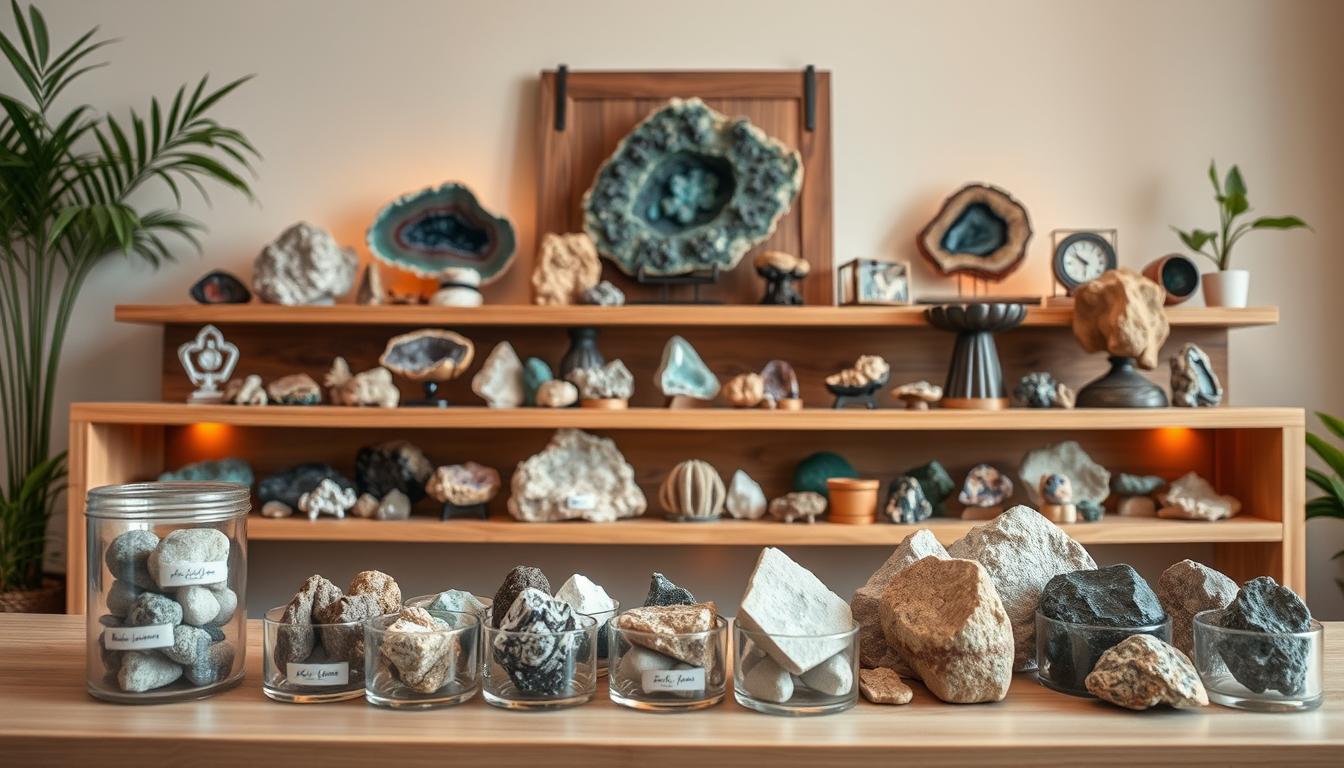
Floating shelves are sleek and modern for showing off your rocks. You can arrange them in a pattern or group them for drama. Try using reclaimed wood or glass for texture and interest.
- Use a level to ensure your shelves are perfectly horizontal.
- Choose shelves with a sturdy bracket system to support the weight of your rocks.
- Consider adding a LED light strip underneath the shelves for ambient lighting.
Repurposed Furniture for Rock Displays
Old furniture can be turned into cool rock displays. For example, an old ladder can become a vertical display. Or, an antique cabinet can store and show off your collection.
For more ideas on using old furniture, check out this DIY project.
Illuminated Display Projects
Illuminated displays make your rock collection pop. You can use different lighting to highlight your rocks’ unique features.
LED Lighting Techniques
LED lights are energy-saving and come in many colors. They can create a backlight or focus on certain rocks.
- Use a color temperature that complements the natural colors of your rocks.
- Experiment with different lighting angles to create interesting shadows.
Solar-Powered Display Bases
Solar-powered bases are green and great for lighting up your rocks. They’re perfect for shelves or tables.
- Choose a base that is sturdy and won’t topple over.
- Consider the charging time and battery life of the solar-powered base.

Showcasing Rocks in Different Spaces
With a little creativity, you can make your rock collection a stunning display. Choose a display method that fits the space and shows off your rocks’ unique features.
Living Room and Entryway Displays
Displaying rocks in your living room or entryway adds natural beauty. Use a decorative bowl or vase as a centerpiece on a coffee table or console table. A glass display case is great for showing off special specimens.
Office and Study Arrangements
In an office or study, your rock collection can spark interesting conversations. Use a wooden or acrylic display stand on a desk or shelf. It makes your workspace calm and inspiring.
Outdoor Rock Gardens and Displays
Outdoor spaces are perfect for showing off your rock collection. Create a rock garden with your specimens and plants. Or, use a stone or metal display frame for a structured look.
Weather-Resistant Display Options
When showing rocks outside, pick materials that can handle the weather. Look for weather-resistant displays made from stainless steel, aluminum, or durable plastics. This keeps your display looking good for a long time.
By showing your rock collection in different places, you can enjoy them and make your home or office look better.
Highlighting Special Specimens
To truly showcase your rock collection, it’s key to highlight the most unique and fascinating specimens. This makes the display more engaging for viewers.
Individual Stands and Mounts
Using individual stands and mounts is a great way to display special specimens. These supports fit the rock’s size and shape, holding it securely and making it stand out.
- Choose stands that match the rock’s color and texture.
- Think about the height and angle of the display for better visibility.
Spotlight Techniques
Spotlighting is a strong way to highlight special specimens. It focuses light on the rock, showing off its unique features and creating a dramatic look.
Key considerations for spotlighting include:
- Picking the right lighting to bring out the rock’s natural colors.
- Adjusting the light’s intensity and direction to avoid glare.
Rotating Display Strategies
Rotating displays add surprise and keep things fresh. Using a rotating tray, as mentioned in some display techniques, can change the rock arrangement.
Seasonal Display Rotations
Rotating your display seasonally keeps it interesting. You can highlight rocks that match the current season’s colors or textures.
Creating Focal Points
Creating focal points in your display guides the viewer’s eye to the most interesting specimens. You can group similar rocks or arrange them in a visually appealing way.

By using these strategies, you can make a dynamic and engaging display. It will showcase your rock collection’s unique specimens well.
Cataloging and Documenting Your Collection
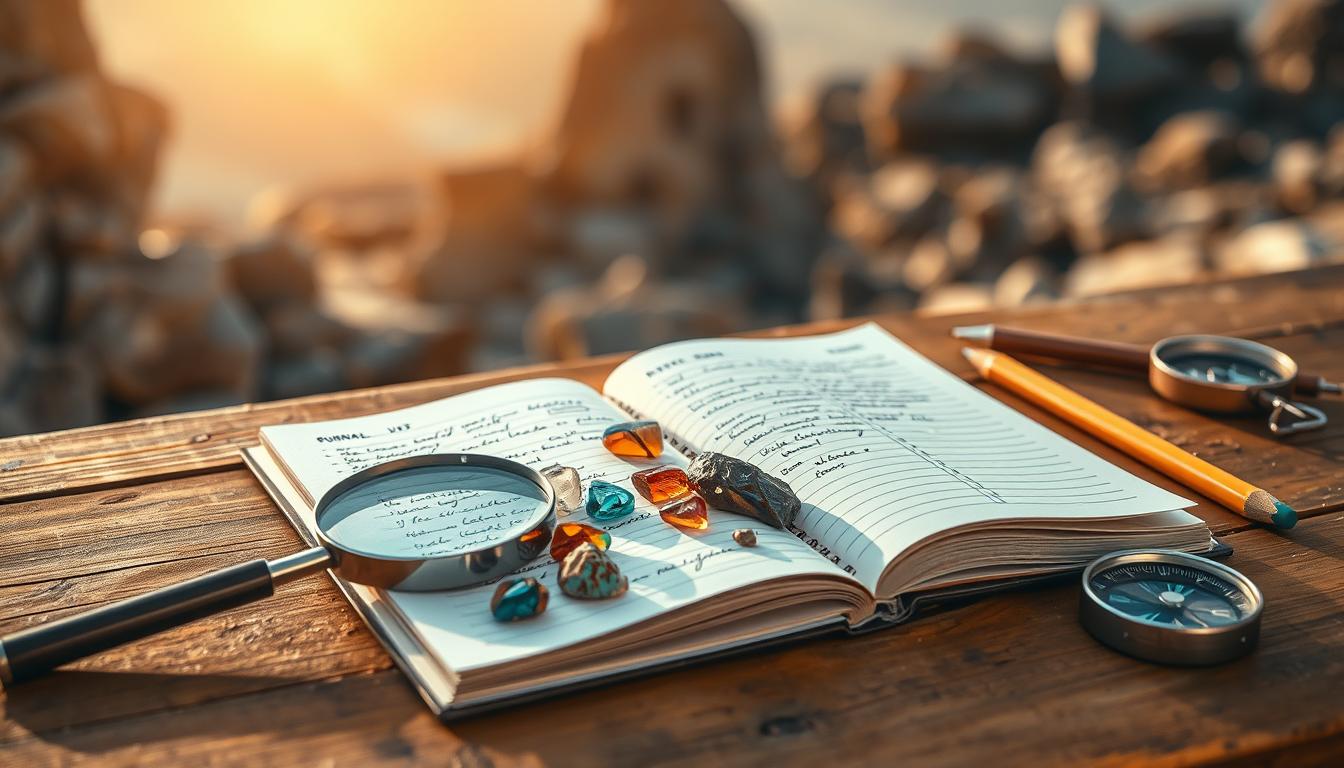
Keeping your rock collection well-documented is great for fun and learning. It helps you track your rocks and understand them better.
Digital Inventory Systems
Using a digital system to catalog your rocks is smart. There are many apps and software that let you make a digital database. You can add details like type, origin, and size.
Creating Informative Labels
Labels are key to documenting your rocks. Accurate labeling makes it easy to know what each rock is.
Information to Include on Labels
Labels should have the rock’s name, where it’s from, and other important details.
Label Materials and Attachment Methods
Use a Sharpie for labels on containers or rocks. Make sure the label lasts in your storage area.
Photography Tips for Rock Documentation
Photography is a great way to document your rocks. Use good lighting and a clean background. A macro lens or extension tubes can show off the details.
[link-whisper-related-posts]Conclusion
Storing and displaying your rock collection right is key. It keeps your rocks safe and looks great. Using the best storage and display ideas helps a lot.
We talked about many ways to store your rocks. This includes drawer systems, plastic boxes, and special storage for keeping them safe. We also shared cool DIY ideas for showing off your rocks. These include using floating shelves, old furniture, and lights to make them shine.
Using these tips, you can make a beautiful display of your rocks. It doesn’t matter if you’ve had rocks for a long time or just started. Good storage and display will let you enjoy your rocks for many years. It brings the outdoors into your space.
FAQ
What is the best way to store rocks to prevent damage?
Store rocks in a cool, dry place. Keep them away from sunlight. Use containers or cases made for rock storage.
How do I organize my rock collection?
Organize rocks by type, size, or where they come from. Use labels to identify each rock.
What are some creative ways to display my rock collection?
Display rocks on floating shelves or repurposed furniture. Try illuminated displays for a unique look.
How can I protect my rock collection from environmental factors?
Use storage methods that keep rocks safe. Control humidity and light. Avoid extreme temperatures.
What are the benefits of using glass display cases for my rock collection?
Glass cases protect and show off your rocks. They keep rocks dust-free and secure.
How can I document my rock collection?
Make a digital inventory and take photos of each rock. Use labels to identify them.
What are some tips for handling rocks to prevent damage?
Handle rocks gently and avoid touching fragile areas. Use gloves to prevent skin oils from damaging rocks.
Can I display my rock collection outdoors?
Yes, but choose weather-resistant rocks. Use outdoor rock gardens or weather-resistant cases.

Subscribe to Our Newsletter