Starting a rockhounding adventure is exciting, even for solo beginners. The United States has many places with geological treasures. Nevada is a top spot for rockhounding, with lots of minerals and fossils.
If you’re new to rockhounding, learning the basics is key. Visiting places like the rockhounding spots in Nevada is helpful. You can find everything from trilobite fossils to turquoise mines in Nevada.
Key Takeaways
- Research local rockhounding sites and regulations
- Understand the geology of the area you’re visiting
- Invest in basic rockhounding tools
- Join a rockhounding community for support and guidance
- Respect the environment and other collectors
Understanding the Basics of Rockhounding
For beginners, learning the basics of rockhounding is key. It’s about collecting and studying rocks and minerals. It mixes outdoor fun with scientific learning.
What is Rockhounding?
Rockhounding is collecting rocks, minerals, and fossils. It’s a hobby that ranges from casual to serious study. Rockhounds search in places like streams, mountains, and fields for interesting rocks.
Benefits of Solo Rockhounding
Rockhounding alone has its perks. Some benefits include:
- Personal Challenge: Solo rockhounding lets you test yourself and see how far you’ve come.
- Flexibility: You can go whenever you want, without needing to plan with others.
- Introspection: Being alone can be calming. It helps you think deeply and connect with nature.
Essential Equipment for Rockhounding
Starting your rockhounding journey means knowing the basic gear. As a beginner, it’s key to understand what tools and safety gear you need.
Basic Tools
The right tools are vital for a great rockhounding experience. Two essential tools are:
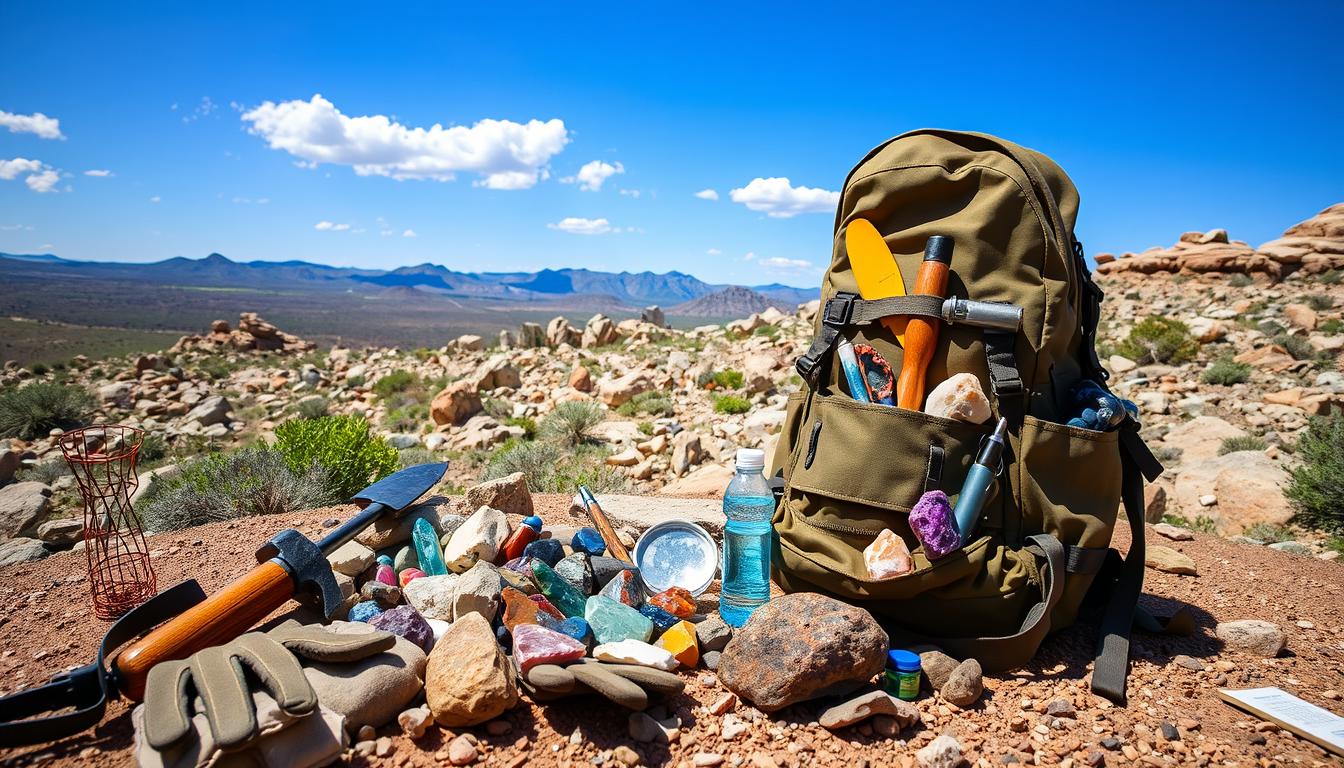
- Rock Hammer: A rock hammer helps break rocks and get specimens. It’s a must-have for every rockhound.
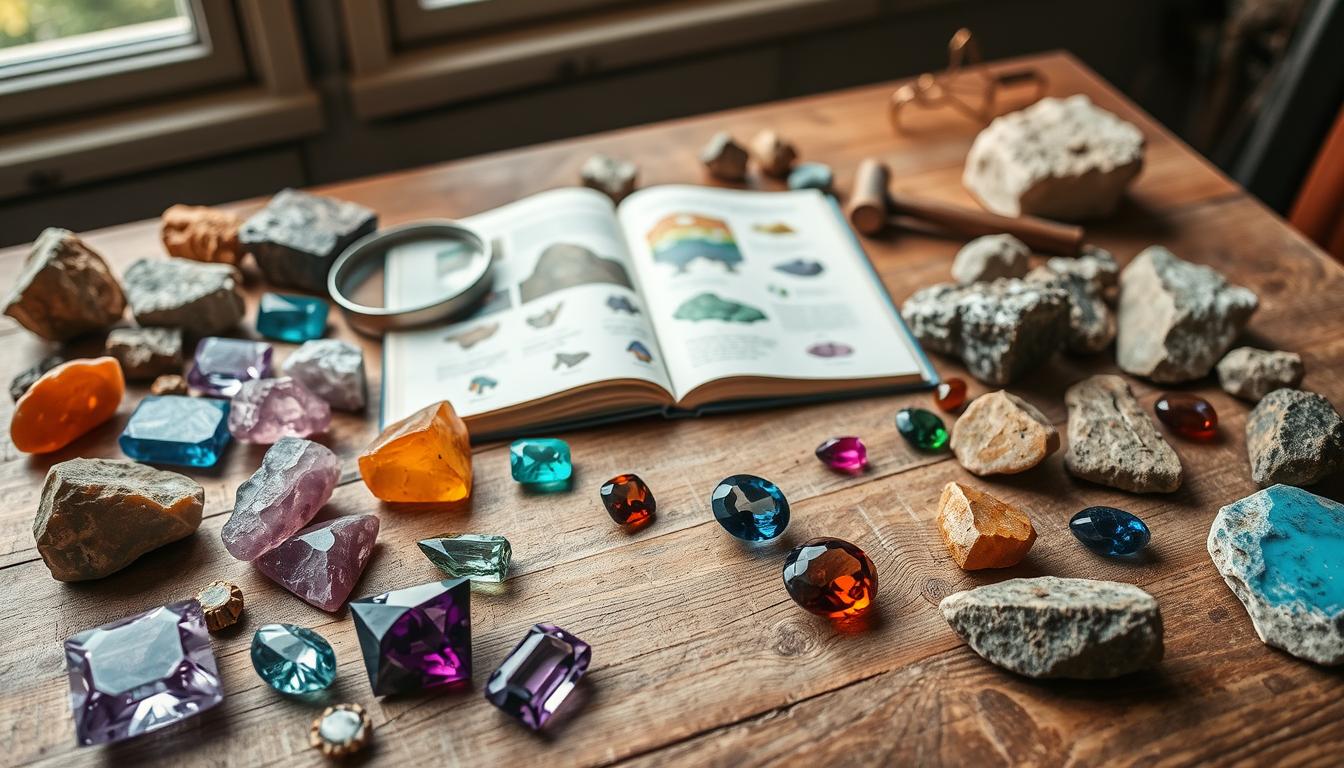
- Hand Lens: A hand lens is like a magnifying glass. It’s great for looking at rock and mineral details. It’s very helpful for identifying them.

Protective Gear
Always put safety first when rockhounding. The right safety gear keeps you safe and injury-free.
- Safety Glasses: Safety glasses protect your eyes from flying debris when breaking rocks or using tools.
- Gloves: Gloves give you grip and protect your hands when handling rocks or using equipment.
Getting these basic tools and safety gear will make your rockhounding better. It prepares you for the fun adventures ahead.
How to Start Rockhounding as a Solo Beginner
Starting rockhounding alone needs preparation and curiosity. It’s not just about collecting rocks. It’s about exploring nature, learning about geology, and enjoying the outdoors.
Setting Realistic Expectations
Before you start, set realistic expectations. Finding big specimens takes time and patience. Learn about the rocks and minerals in your area first. This helps you know what you find and where to look.
Starting with Local Resources
Using local resources is key. Visit geological surveys, museums, or rockhounding clubs for info. They offer insights into the best places and techniques for rockhounding in your area. Also, check online forums and guides for your region.
With preparation, local knowledge, and a desire to learn, you can have a great rockhounding experience. Start with small goals and grow as you get more experience and confidence.
Finding Rockhounding Locations Near You
To start rockhounding, you need to find good places. Public lands are great for this. They often have lots of rocks to find.
Public Lands and Permissions
Public lands are managed by the government. They are full of treasures for rockhounds. But, you must know the rules and get the right permissions.
BLM Lands
The Bureau of Land Management (BLM) has lots of land in the U.S. Many places are open for rockhounding. But, always check the local rules. You can do things like:
- Surface collecting
- Camping
- Hiking
For more info on starting, visit this resource.
National Forests
National Forests are also great for rockhounding. The U.S. Forest Service manages them. They have special spots for rockhounding. Remember to:
- Check for any local restrictions or permits required
- Be mindful of private property within or adjacent to National Forests
- Follow all environmental regulations

Knowing the rules for public lands makes rockhounding fun and rewarding.
Basic Rockhounding Techniques and Identification
Rockhounding starts with learning the basics. This includes how to collect rocks and identify them. As a beginner, knowing these basics will make your adventures better.
Surface Collecting Methods
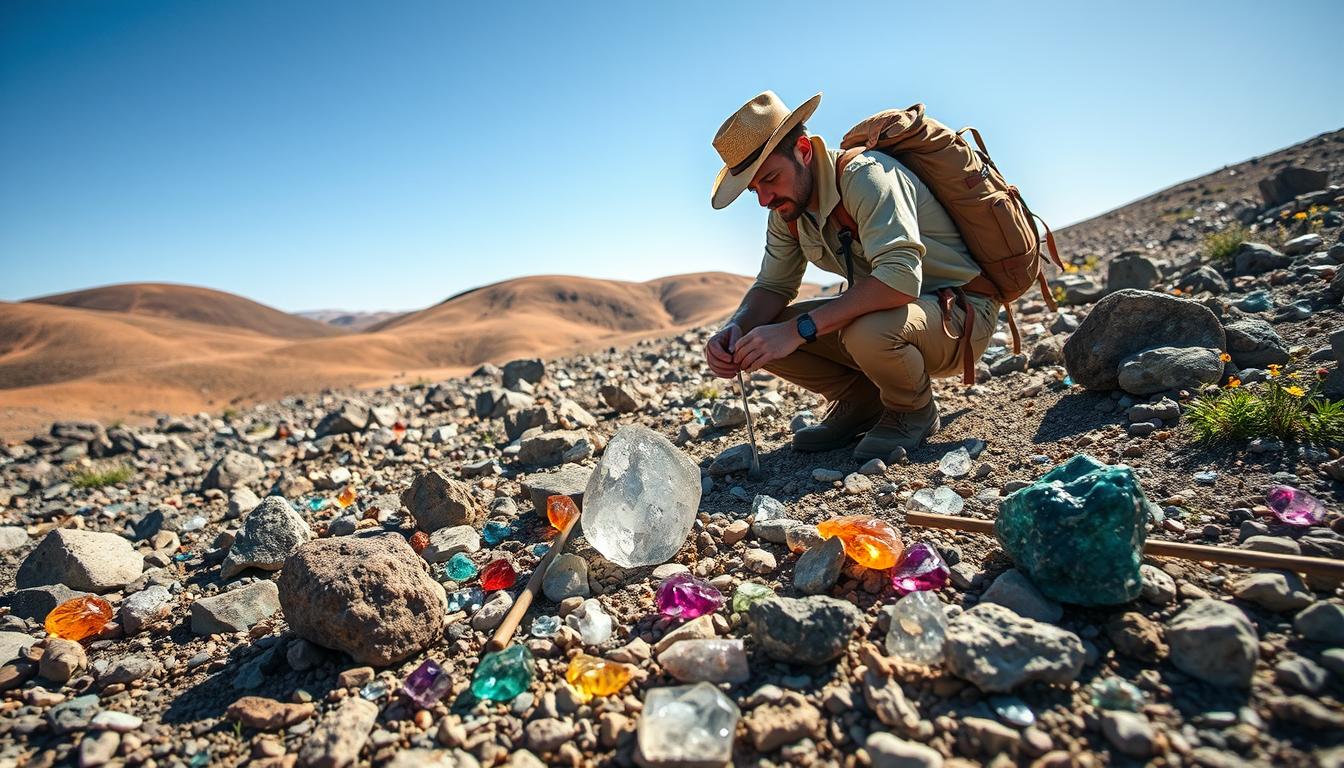
Surface collecting is a common way to find rocks and minerals. It means looking for them on the earth’s surface. To do well, find areas like streams and hillsides where rocks are exposed. Knowing the area’s geology helps a lot.
Basic Rock and Mineral Identification
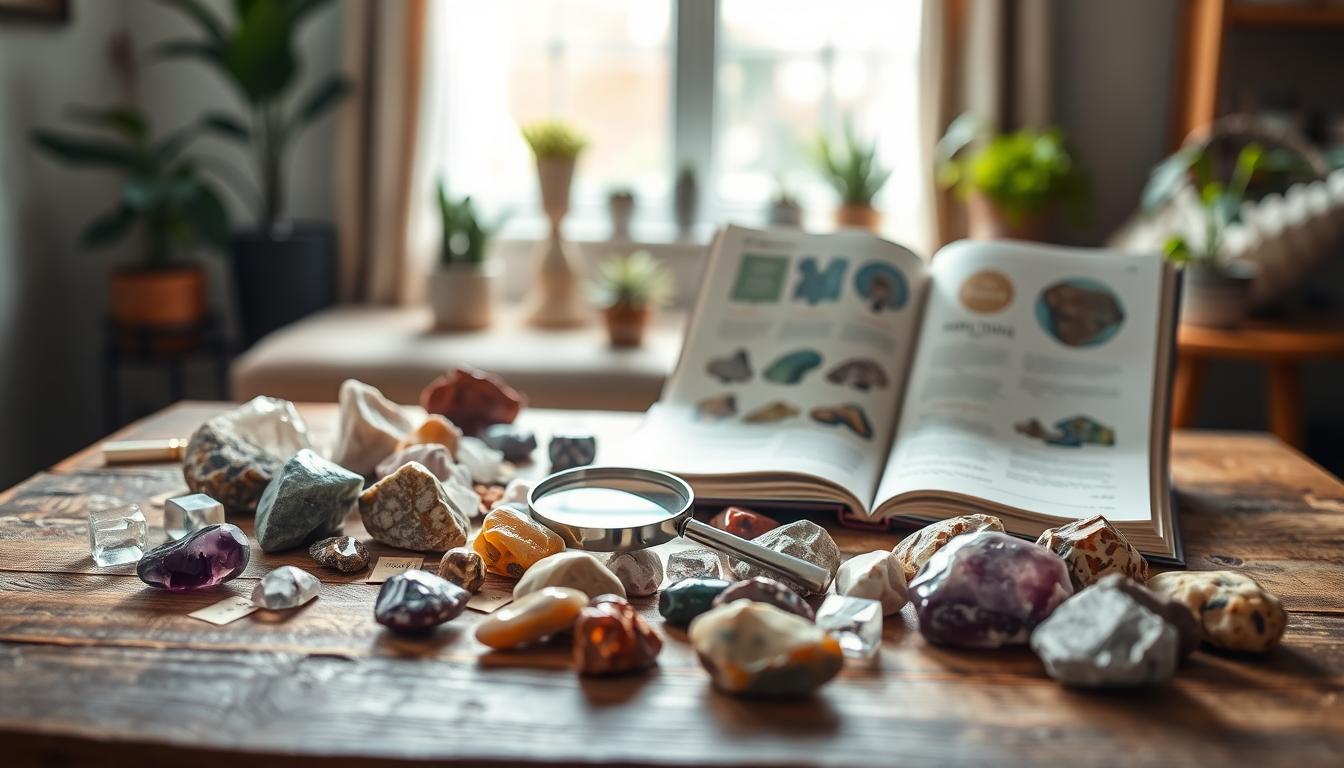
Knowing how to identify rocks and minerals is key. It’s about understanding their physical traits. Two simple ways are the hardness test and the streak test.
Hardness Test
The hardness test shows how hard a rock or mineral is. It uses the Mohs scale, from 1 (softest) to 10 (hardest). By comparing your specimen to the scale, you can guess what it is.
| Mohs Hardness | Mineral |
|---|---|
| 1 | Talc |
| 2 | Gypsum |
| 3 | Calcite |
Streak Test
The streak test scratches a mineral on a plate to see the powder color. It’s great for metallic minerals, as the powder color can be different from the mineral’s look.
- Do the streak test in a bright area to see the color right.
- Use a porcelain streak plate for a consistent test.
Using these basic methods will help you identify rocks and minerals better. This will make your rockhounding adventures more fun.
Safety Considerations for Solo Rockhounds
Rockhounding alone can be exciting. But, safety is key for a good time. Solo rockhounding needs careful planning to avoid risks.
Solo Safety Protocols
Know your area and watch for dangers. This means paying attention to the land, weather, and animals. Always tell someone where you’re going and when you’ll be back.
Emergency Preparedness
Being ready for emergencies is important. Carry a first-aid kit and a way to call for help. A personal locator beacon (PLB) or satellite phone is good for remote areas. For more safety tips, visit https://rockhound.in/rockhounding-safety-tools-for-all-rockhounds/.
Understanding Rockhounding Laws
Know the laws about rockhounding in your area. This includes if you can collect rocks on public lands. Always respect private property rights.
Private Property Rights
Get permission before going on private land for rockhounding. Trespassing can cause legal trouble and harm the community. Always follow rules to protect the land and its resources.
[link-whisper-related-posts]Conclusion
Rockhounding is a fun hobby that mixes adventure, science, and the excitement of finding something new. It’s rewarding to learn the basics, get the right tools, and practice your skills. Always remember to care for the environment and follow local rules.
For more tips and to start your rockhounding journey, check out Rock Hobby Hub. It has lots of guides and resources. Rockhounding is a great way to enjoy nature and learn about our planet.
Starting your rockhounding adventure takes patience and persistence. Finding great rocks might take time, but the journey is worth it. So, get ready, stay informed, and enjoy your rockhounding adventures!
FAQ
What are the essential tools for a beginner rockhound?
Beginners need a geologist’s hammer, hand lens, and rock chisels. A good rock hammer from Estwing or Crystalite is key.
How do I identify the rocks and minerals I’ve collected?
Use visual checks, streak tests, and field guides or online resources like Mindat. Joining a rockhounding club or attending gem and mineral shows helps too.
What are some good locations for rockhounding as a solo beginner?
Try public lands like national forests and BLM areas. Look online for spots, join forums, or contact clubs for tips.
What safety precautions should I take when rockhounding alone?
Always tell someone where you’re going. Carry a first aid kit and watch your surroundings. Follow local rules and respect private property.
How do I ensure I’m rockhounding legally and responsibly?
Know local laws, get permits if needed, and respect private and protected areas. Leave sites as you found them and don’t litter.
Can I start rockhounding with little to no experience?
Yes! Start by learning the basics and getting the right gear. Use local resources to begin. As you get more experience, explore new places.

Subscribe to Our Newsletter