
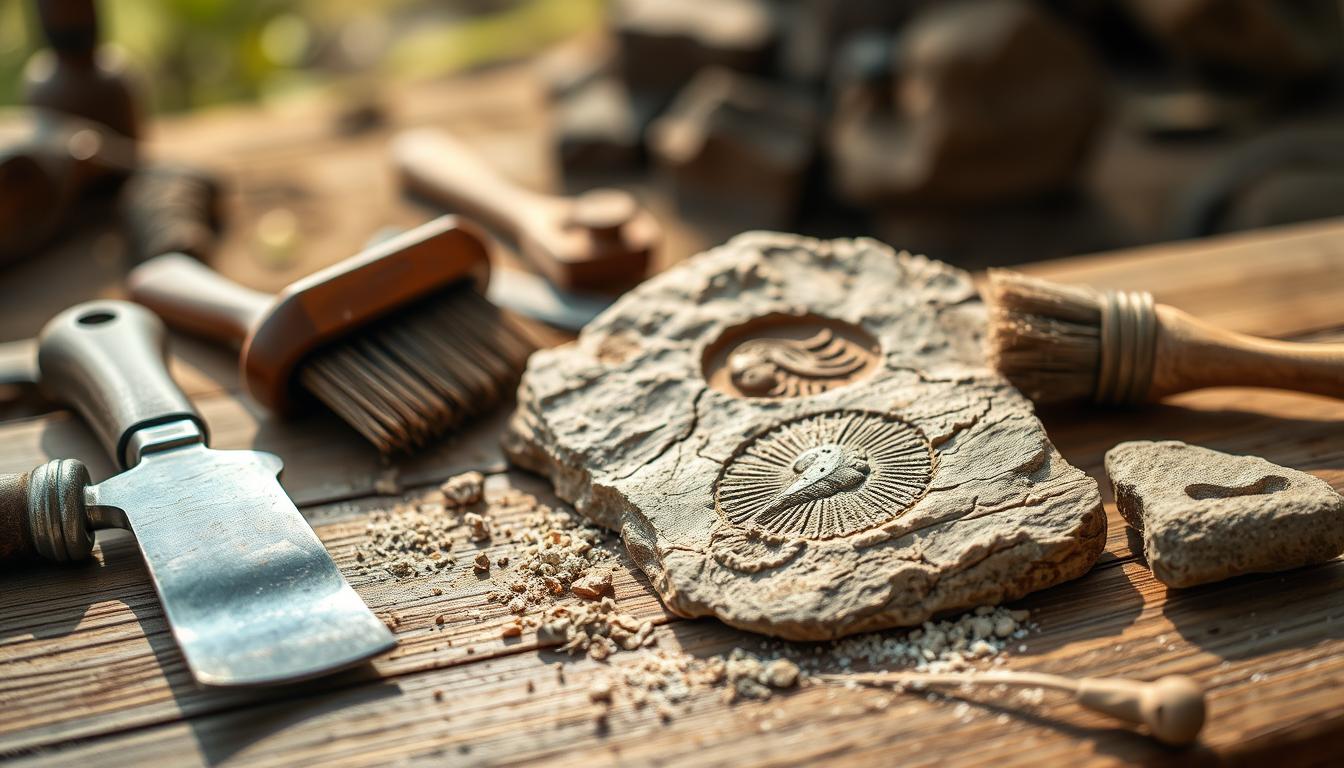
Removing fossils from rock is a careful process. It needs good planning and the right tools. Fossil extraction tools are key. They help collectors and scientists get fossils without harming them.
It’s not just about getting fossils out. You also need to know how to prepare them. Fossil preparation techniques keep the fossils safe. They make sure the fossils are ready for study or display.
Key Takeaways
- Understanding the importance of safely removing fossils from rock.
- Overview of the techniques and tools used in fossil extraction.
- The role of fossil preparation techniques in preserving fossils.
- Best practices for fossil extraction and preparation.
- The significance of using the right fossil extraction tools.
Understanding Fossils and Their Rock Matrices
It’s key to know what fossils are made of and the rock they’re in. Fossils can be in different rocks, like limestone and shale.
Types of Fossils You Might Encounter
Fossils can be different, each with its own look. There are trace fossils and body fossils.
Trace Fossils vs. Body Fossils
Trace fossils are marks left by old creatures. Body fossils are parts of those creatures. Knowing the fossil type helps pick the best way to get it out.
Determining Fossil Fragility
Fossils can be fragile, depending on what they’re made of and the rock around them. Figuring out how fragile they are is important for extracting them safely.
Common Rock Types That Contain Fossils
Fossils often live in sedimentary rocks. These rocks are made from layers of minerals and organic stuff.
Sedimentary Rock Characteristics
Sedimentary rocks can be hard or soft, affecting how fossils are taken out. Limestone and shale are examples of these rocks with fossils.
Matrix Hardness Assessment
Knowing how hard the rock is is key. It helps choose the right tools and methods for getting fossils out.
Essential Tools for Fossil Extraction
Having the right tools is key for safely getting fossils out of rock. The tools needed depend on the fossil type, rock, and your skill level.
Basic Hand Tools for Beginners
For newbies, start with basic hand tools. They are versatile and useful for many tasks.
Hammers, Chisels, and Picks
A geologist’s hammer, chisels, and picks are basic for breaking rock and finding fossils. Choose tools that feel balanced in your hand and are right for the rock you’re working with.
Brushes and Cleaning Implements
Soft-bristled brushes are key for cleaning fossils without damage. Having different brush sizes is very helpful.
Advanced Equipment for Serious Collectors
For serious collectors, advanced tools make extracting fossils more efficient and precise.
Air Scribes and Pneumatic Tools
Air scribes and pneumatic tools help remove rock around fossils carefully. They are great for delicate work and reduce fossil damage risk. For more info, visit https://www.zoicpalaeotech.co.uk/pages/all-about-air-abrasives?srsltid=AfmBOooOy9JaK-ThnGIrCX_FOfK7FU2yJ8UOwv6z2_KgAk-J5Q3JbBfP.
Microscopes and Magnification Aids
Microscopes or magnification lenses help you see fossils better. This is vital for small or delicate fossils.
Safety Equipment You Shouldn’t Skip
Always prioritize safety when working with fossils and tools.
Eye and Respiratory Protection
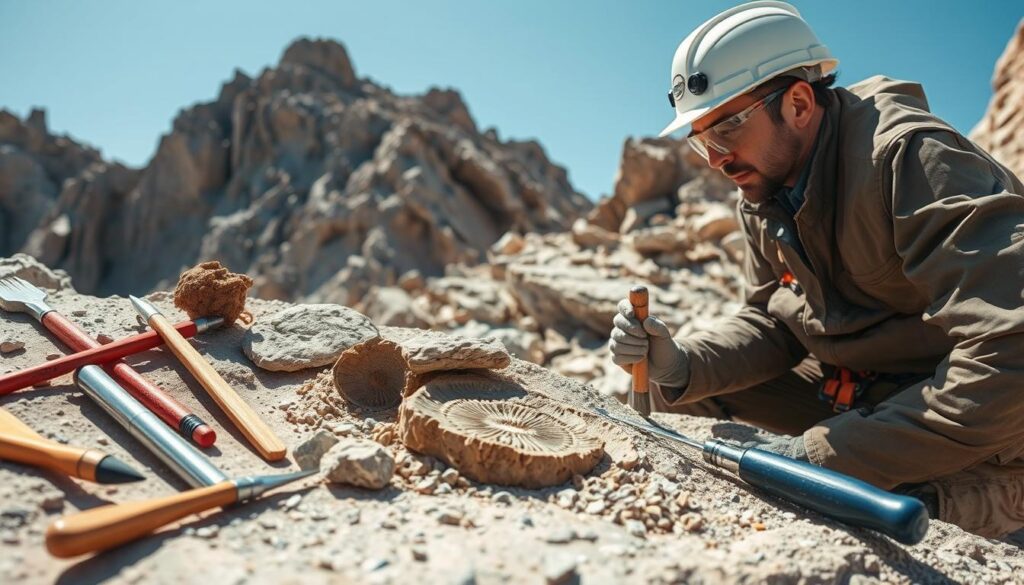
Safety glasses or goggles protect your eyes from debris. A dust mask or respirator keeps you from inhaling harmful dust. Always wear protective eyewear and consider respiratory protection with power tools or in dusty places.
Gloves and Protective Clothing
Gloves protect your hands, and long sleeves and pants keep your skin safe. Choose durable, task-appropriate clothing.
Preparing for Fossil Extraction
Getting fossils out needs more than tools. It takes careful planning. This ensures the fossil is safely taken out and kept for study later.
Assessing Your Fossil Specimen
First, look at your fossil carefully. Check the fossil and the rock around it. This helps figure out the best way to get it out.
Identifying Fractures and Weak Points
Find any cracks or weak spots in the rock or fossil. This helps plan how to get it out without breaking it.
Determining Extraction Approach
After looking at it, decide how to get it out. You might use tools, chemicals, or both.
Creating a Safe Workspace
A safe place to work is key. Make sure it’s well-lit and stable.
Lighting and Surface Requirements
Good light helps you see. A solid surface keeps you safe. Make sure your area is set up right.
Organizing Your Tools
Keep your tools tidy and close. This makes work faster and safer.
Documenting Your Find Before Extraction
Write down what you found before you start. Take pictures and notes to show how it looked first.
| Preparation Step | Description | Importance |
|---|---|---|
| Assessing the Specimen | Examine the fossil and surrounding rock. | High |
| Creating a Safe Workspace | Ensure good lighting and a stable surface. | High |
| Documenting the Find | Take photographs and notes. | Medium |
How to Safely Remove Fossils From Rock: Step-by-Step
Removing fossils from rock is a careful process. It needs the right tools and a step-by-step plan. Different fossils and rocks need different methods.
Mechanical Preparation Methods
Mechanical preparation uses tools to get fossils out of rock. It’s good for fossils in hard rock.
The Pin and Awl Technique
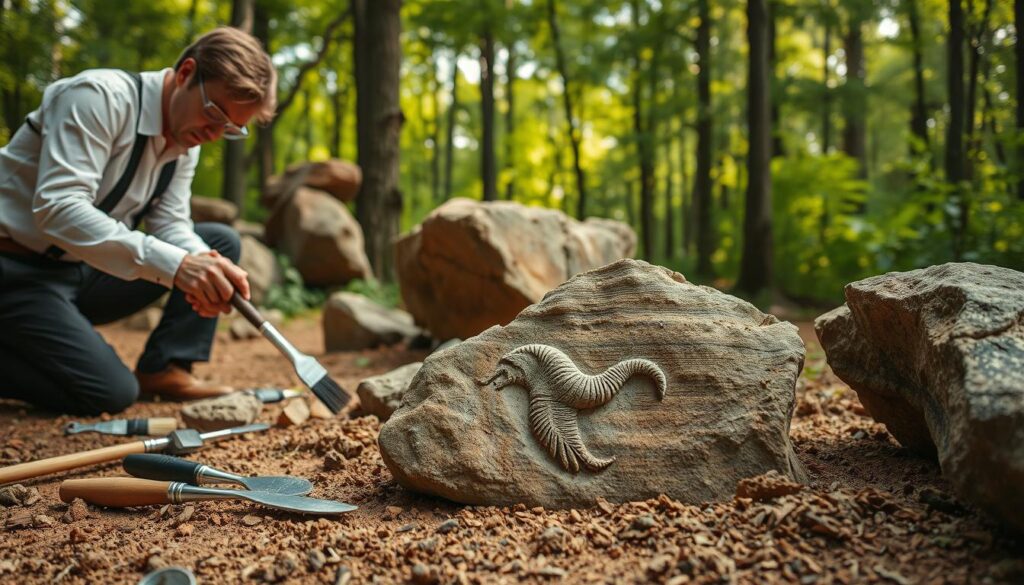
The pin and awl technique is very precise. It gently removes rock around the fossil. You must be very careful not to hurt the fossil.
Vibration Tool Methods
Vibration tools help loosen rock around fossils. They are great for dense rock.
Splitting and Trimming Approaches
Splitting and trimming use chisels and hammers. They help separate fossils from rock. You need to know the rock’s structure well.
Chemical Preparation Techniques
Chemical methods use chemicals to break down rock. This makes fossil extraction easier.
Acid Preparation Safety
When using acids, safety is key. It protects the fossil and the person doing the work.
Solvent-Based Methods
Solvents dissolve certain rocks. This helps get fossils out carefully.
Neutralization Procedures
After using chemicals, you must neutralize them. This prevents damage to the fossil over time.
| Technique | Application | Safety Considerations |
|---|---|---|
| Mechanical | Hard rock matrices | Risk of physical damage |
| Chemical | Specific rock types | Chemical exposure risk |
| Air Abrasion | Delicate specimens | Dust inhalation risk |
Air Abrasion and Micro-Tools for Delicate Specimens
Air abrasion and micro-tools are for delicate fossils. They help remove rock without damaging the fossil.
Powder Selection and Use
Choosing the right powder for air abrasion is important. It must be fine to avoid damage but effective in removing rock.
Precision Control Techniques
When using air abrasion and micro-tools, precision is key. It ensures the fossil is not harmed during extraction.
Cleaning and Preserving Your Extracted Fossils
Keeping your fossils clean and preserved is very important. Cleaning your fossils correctly helps them last for a long time.
### Proper Cleaning Procedures
Choosing the right cleaning method depends on the fossil’s type and condition.
Most fossils can be cleaned with water. But, for delicate ones, ultrasonic cleaning is better.
#### Water-Based Cleaning Methods
Water is great for removing dirt from fossils.
Use a soft-bristled brush to gently scrub off dirt.
#### Ultrasonic Cleaning for Small Specimens
Ultrasonic cleaning is good for small or detailed fossils.
This method uses sound waves to clean the fossil’s surface.
### Stabilization and Hardening Techniques
After cleaning, you might need to make your fossils stronger.
Consolidants and adhesives help keep the fossil together and prevent it from breaking.
#### Consolidants and Adhesives
These are used to fix and strengthen fossils.
Make sure to pick the right consolidant or adhesive for your fossil. Always follow the instructions.
#### Drying and Curing Processes
After applying a consolidant or adhesive, let it dry and cure completely.
This can take a few hours or days, depending on the product.
### Long-Term Storage Solutions
Storing your fossils properly is key to keeping them safe for a long time.
Humidity and temperature control are important when storing fossils.
#### Humidity and Temperature Control
Keep your fossils in a cool, dry place.
Avoid places with high humidity or extreme temperatures.
#### Archival Materials for Fossil Storage
Use materials like acid-free paper and boxes to store your fossils.
These materials are made to last for centuries. They help keep your fossils safe for the future.
Common Mistakes to Avoid During Fossil Extraction
When you’re extracting fossils, it’s key to avoid mistakes that can harm them. Good fossil collecting practices mean handling and preparing with care. This keeps the fossil intact.
Damage Risks and Prevention
One big risk is damaging the fossil or its rock. To avoid this, use the right tools and methods for each fossil. For example, air abrasion tools work well for delicate ones. But, tougher fossils might need stronger methods.
Before you start, check the fossil’s condition and its rock. Look at how it’s embedded and plan the best way to get it out. Health and safety advice for fossil collectors can help prepare you.
When to Stop and Seek Professional Help
Knowing when to stop and get help is important. If the fossil is rare or fragile, experts are needed. They have the right tools and know-how.
Recognizing Significant Specimens
Some fossils need more than basic methods. They might need special care or advanced techniques. Spotting these early can prevent damage and save time.
Finding Expert Assistance
If you’re not sure about a fossil, get expert advice. Talk to paleontologists or use professional fossil labs. They can guide you.
Legal and Ethical Considerations for Fossil Collectors
It’s key for fossil lovers to know the laws and ethics of collecting. They must deal with a mix of rules that change based on where they are and the situation.
Understanding Laws and Regulations
Fossil hunting is ruled by many laws, mainly about where you find them. Knowing these laws helps you stay out of trouble.
Public vs. Private Land Regulations
Collecting on public land is strict, with some places closed to collectors. For example, the Paleontological Resources Preservation Act controls federal lands in the U.S.
Permits and Permissions
Collectors need permits and permissions, even on public or protected lands. This shows they’re collecting responsibly and legally.
| Land Type | Regulations | Permits Required |
|---|---|---|
| Public Land | Strict regulations, some areas off-limits | Yes, through federal or state agencies |
| Private Land | Varies by state and landowner rules | Permission from landowner |
| Protected Areas | Highly restricted, often prohibited | Special permits, if allowed at all |
Ethical Practices for Amateur Paleontologists
Being ethical in fossil hunting means more than just following the law. It’s about keeping fossils valuable for science and showing respect for them.
Scientific Value Preservation
Collectors should treat fossils carefully to keep them valuable for science. This means cleaning, stabilizing, and storing them right to keep them in good shape.
Reporting Significant Finds
Big fossil finds should be told to the right people or science groups. This helps keep the fossils safe and adds to our scientific knowledge.
[link-whisper-related-posts]Conclusion
The art of safe fossil extraction is complex. It needs knowledge, patience, and the right tools. By learning safe fossil extraction procedures and fossil preparation techniques, fans can uncover ancient secrets. This helps us understand Earth’s past.
From finding a fossil to preserving it, there are key steps. Each step is important for keeping the fossil safe. This includes checking the fossil and using the right methods to keep it intact.
Using safe fossil extraction procedures makes collecting better. It also helps science learn more about fossils. It shows how important it is to handle these old treasures with care.
If you’re starting this hobby, keep learning and follow the best ways. This way, your finds will be rewarding for you and help science too.
## FAQ
### Q: What are the most common types of fossils found in rock?
A: Common fossils include ammonites, trilobites, dinosaur bones, and leaf impressions. They are found in sedimentary rocks like limestone, sandstone, and shale.
### Q: What tools do I need to extract fossils from rock?
A: You’ll need chisels, hammers, brushes, and magnifying glasses. For harder jobs, air abrasion tools and micro-jacks might be needed.
### Q: How do I assess the condition of a fossil specimen before extraction?
A: Look for damage or wear on the fossil. Check for cracks or breaks that could make it fragile.
### Q: What are some common mistakes to avoid during fossil extraction?
A: Don’t use too much force or forget to document your work. Always wear safety gear and use the right tools.
### Q: How do I clean and preserve extracted fossils?
A: Gently brush off debris with soft brushes. Use gentle cleaners and air dry to keep the fossil stable.
### Q: What are the legal and ethical considerations for fossil collectors?
A: Know the laws about collecting fossils in your area. Get permits and follow rules to respect the environment and property rights.
### Q: When should I seek professional help for fossil extraction?
A: Ask for help if you’re not sure about the right tools or if the fossil is fragile. Experts can guide you.
### Q: How do I store extracted fossils for long-term preservation?
A: Keep fossils in a cool, dry place away from sunlight. Use acid-free materials and avoid extreme temperatures or humidity.

Subscribe to Our Newsletter