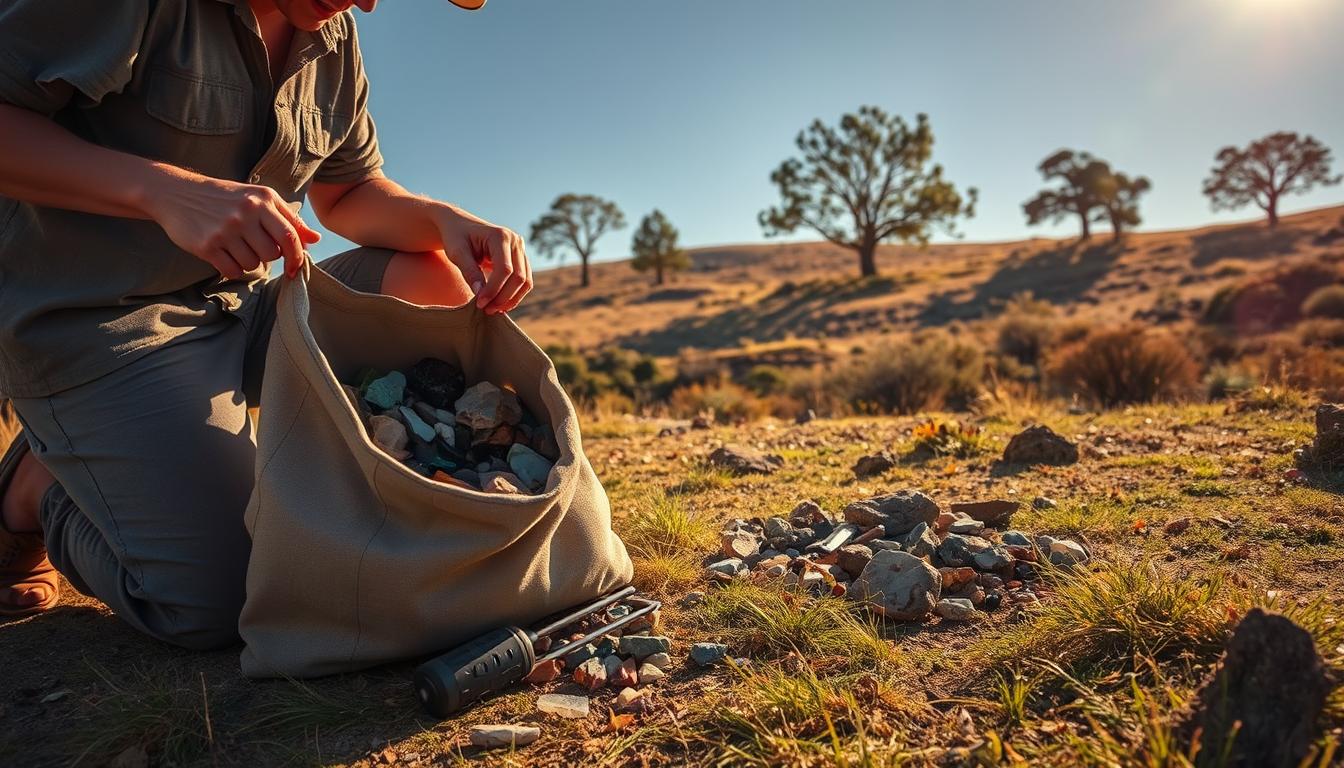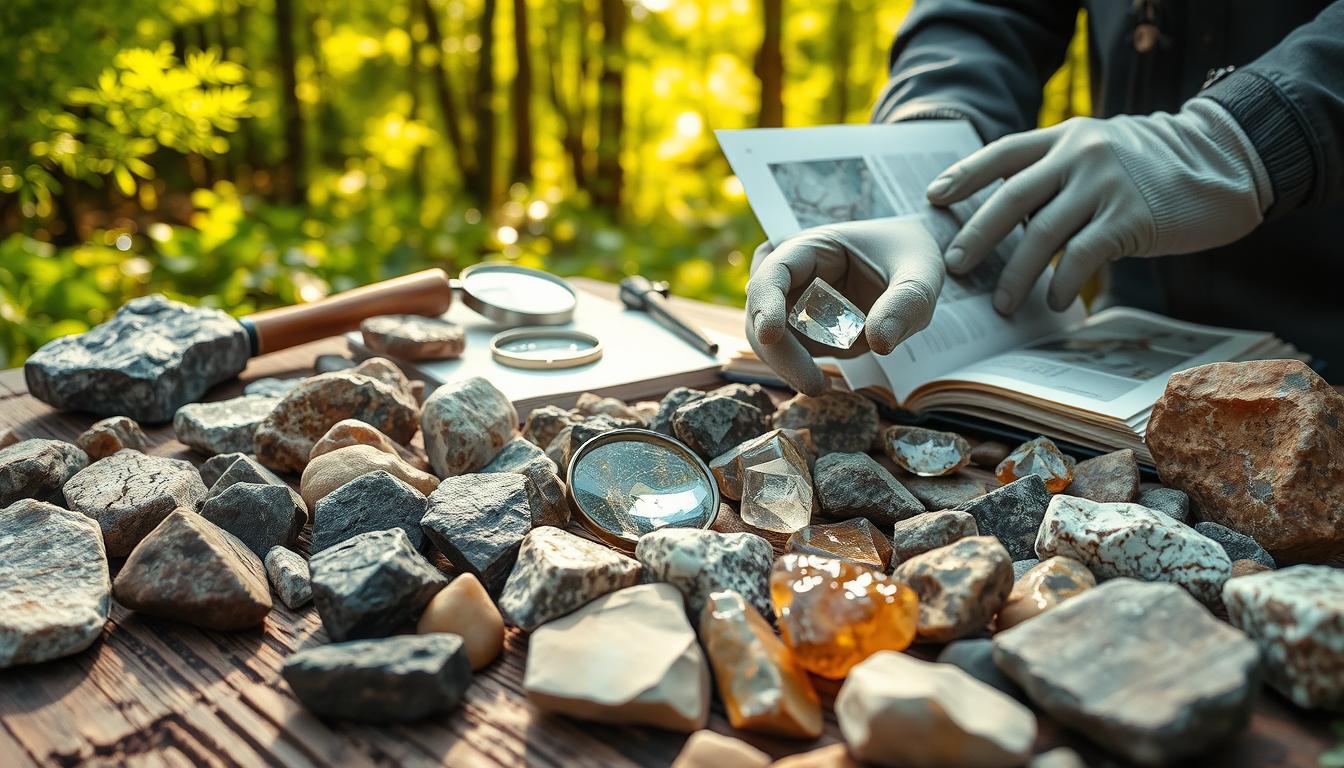
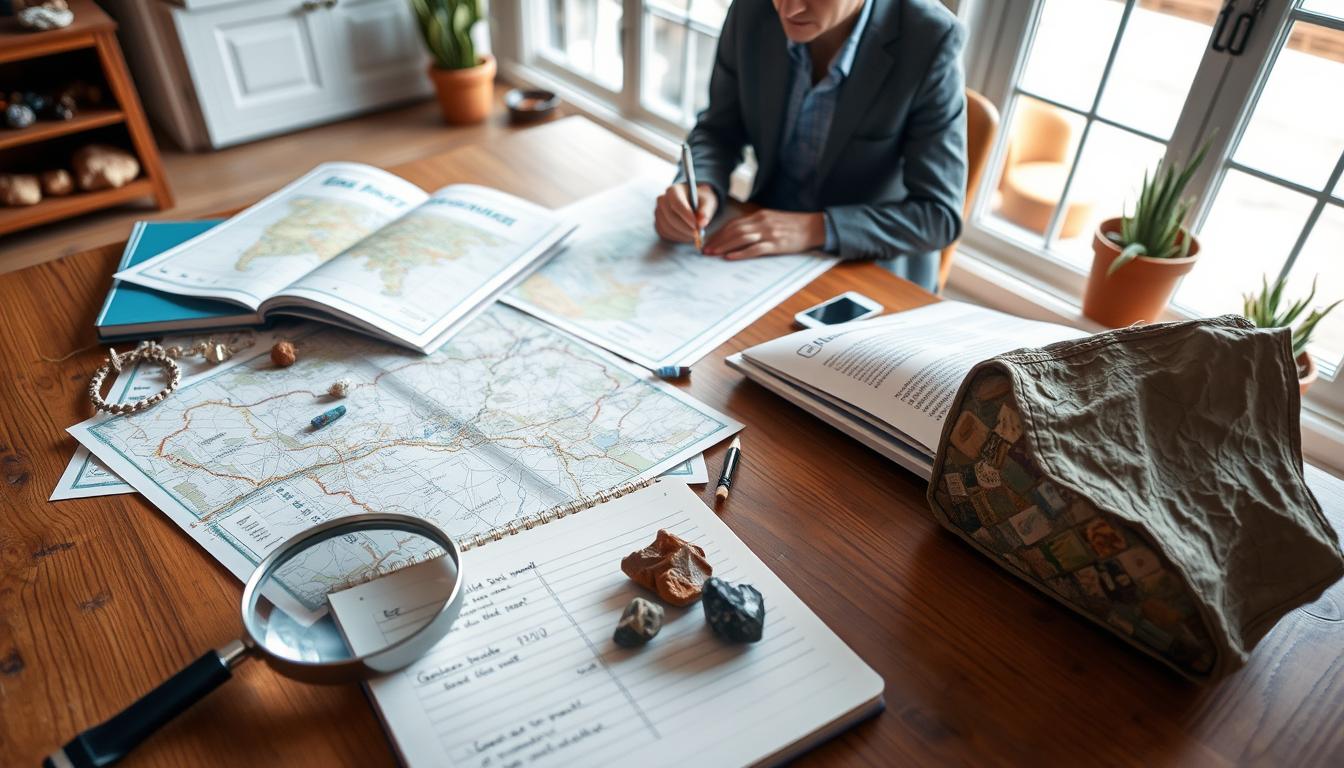
Rockhounding is a fun hobby where you collect rocks from nature. But, you need to do some research and planning to have a good time. Knowing the area’s geology, finding good spots, and checking the laws are key steps.
Before you go on your rockhounding trip, do your homework. Look online to find great spots and learn about local rules. Talking to local rockhounding clubs can also give you good tips and advice.
Key Takeaways
- Research online to find the best rockhounding spots and avoid restricted areas.
- Consult local rockhounding clubs for insights and expert advice.
- Familiarize yourself with local rockhounding regulations to ensure responsible collecting.
- Respect ethical and legal guidelines, including obtaining permission on private property.
- Use proximity to water as a research cue, as rivers, streams, and beaches are prime locations.
Understanding Rockhounding: The Foundation of Your Research
To research rockhounding locations well, you need to know the basics. Rockhounding is a hobby that includes collecting rocks, minerals, and fossils. Knowing the basics helps you find the right places and get ready for your trip.
What Defines Rockhounding as a Hobby
Rockhounding is about collecting rocks, minerals, and fossils in nature. It draws people who love the outdoors and geology. Rockhounds look for many things, like agates, crystals, gemstones, and fossils.
Common Types of Specimens Sought by Rockhounds
Rockhounds look for certain types of specimens. Some common ones are:
- Agates and jaspers
- Crystals and gemstones
- Fossils of various kinds
- Minerals such as quartz, calcite, and pyrite
Knowing what you’re looking for helps a lot in your research and collection.
Why Location Research is Critical for Success
Finding the right places is key for a good rockhounding trip. The location affects what you can find, the laws, and what you need to prepare. Good location research means knowing about the geology, laws, and dangers. This way, you can find great specimens safely and have fun.
The Benefits of Pre-Trip Research for Rockhounding Success
Pre-trip research is key for a great rockhounding adventure. Spending time researching before you go can really improve your experience.
Researching well has many benefits for a rockhounding trip. Some important ones are:
Maximizing Your Chances of Finding Quality Specimens
Looking up the best spots and what you might find can boost your chances. Study geological maps and local mineral deposits. Also, know what rocks are common in the area.
Avoiding Wasted Time and Resources
Without research, you might visit the wrong places or forget permits. Researching first helps you save time and money.
Here’s how to avoid wasting time:
- Check if the location is easy to get to.
- Learn about local rules and permits.
- Find the best times to go, based on weather and more.
Ensuring Legal and Safe Collection Practices
Research also means knowing the legal and safe sides of rockhounding. Know what you can collect, public vs. private land rules, and watch out for dangers like wildlife or unstable ground.
By finding better specimens, saving time, and following the law, rockhounds can have a better trip.
How to Research Rockhounding Locations Before a Trip: A Systematic Approach
Before you go on a rockhounding trip, it’s key to plan well. You need to research where you’ll go. This makes your trip successful and fun.
Creating a Research Plan and Timeline
Start with a plan and a timeline. Know what you want to find and where you’ll look. Make a timeline that lets you do your homework and get ready.
Balancing Digital and Traditional Research Methods
Use both online and old-school ways to research. Look up online and talk to experts. Websites and forums are great for info.
Organizing Your Findings Effectively
Keep your research organized. Use spreadsheets or apps to store your notes. Sort your findings by how easy they are to get to and if they’re legal.
With a good plan, you’ll have a great rockhounding trip. You’ll find more and have fun doing it.
Online Resources for Identifying Prime Rockhounding Locations
The internet has changed how rockhounds find new places. It offers many online tools. Now, it’s easier to find great spots, learn about rules, and meet other rockhounds.
Specialized Rockhounding Websites and Forums
Websites and forums for rockhounding are very helpful. They give lots of info on where to go, what to do, and tips from experts. You can also find forums where people share their adventures and discoveries.
Social Media Groups and Digital Communities
Social media groups and online communities are key for rockhounds. They use Facebook and Reddit to share news, tips, and plans for trips. It’s a great way to connect and learn from others.
Digital Maps and Location Databases
Digital maps and databases are important for finding rockhounding spots. They show where minerals are found and where to look. This helps rockhounds find places with interesting rocks.
Mobile Apps Designed for Rockhounding
There are apps made just for rockhounding. They help track locations, identify minerals, and share finds. These apps make it easy to record and share discoveries.
Using these online tools, rockhounds can find the best places to collect. The internet offers a lot of help, from websites to apps. It makes rockhounding more fun and rewarding.
Utilizing Geological Surveys and Maps
To plan a successful rockhounding trip, it’s key to use geological surveys and maps. These tools give important info on rock types, mineral spots, and old mines. They make rockhounding trips better.
Understanding USGS Resources and How to Access Them
The United States Geological Survey (USGS) has lots of info. You can find it on their website. There, you’ll find maps and reports for different places.
Reading Geological Maps for Mineral Deposits
Geological maps help find mineral spots. By knowing the symbols and colors, you can find good places to look for rocks.
State-Specific Geological Resources
States also have their own geological info. These resources give more details about local rocks and minerals.
Historical Mining Maps and Their Value
Old mining maps are great for rockhounds. They show where minerals were found before. These maps can lead you to good spots.
| Resource Type | Description | Usefulness for Rockhounding |
|---|---|---|
| USGS Maps | Detailed geological maps | High |
| State Geological Surveys | State-specific geological information | High |
| Historical Mining Maps | Locations of past mining activities | Medium to High |
Using these maps and surveys can really help rockhounds. It makes finding good rocks more likely. And it makes the trip more fun.
Connecting with Local Rockhounding Communities
Rockhounding fans can learn a lot from local groups. These communities share tips and insights. They help you find the best places to collect rocks.
Finding and Joining Mineral Clubs in Your Target Area
Joining mineral clubs is a smart move. These clubs have experienced rockhounds. They go on group trips and share local geology tips.
Attending Gem and Mineral Shows for Location Tips
Gem and mineral shows are great for seeing amazing rocks. They’re also good for meeting other rockhounds and dealers. You can learn a lot from the lectures and workshops.
Building Relationships with Experienced Local Rockhounds
Getting to know local rockhounds is key. They know the best places and techniques. These friends can make your rockhounding trip better.
Local Rock Shops as Information Sources
Local rock shops are full of info. The people who work there know a lot about local rocks. They can give you tips on where to find them.
| Resource | Description | Benefits |
|---|---|---|
| Mineral Clubs | Local clubs that organize outings and share knowledge | Access to group outings, local geology insights |
| Gem and Mineral Shows | Events featuring specimens, dealers, and lectures | Networking opportunities, educational content |
| Local Rockhounds | Experienced collectors with local knowledge | Insider tips on best collecting locations and techniques |
| Local Rock Shops | Businesses selling rockhounding supplies and specimens | Information on local geology, collecting tips |

Understanding Legal Considerations and Land Access
Rockhounding fans must deal with many legal rules and land access to have a good time.
Public vs. Private Land: Research Differences
Knowing the difference between public and private land is key. Public lands usually let you rockhound, but there are rules. Private lands need the owner’s okay. It’s important to know this to avoid trouble.
Permit Requirements for Different Locations
Many places need permits for rockhounding, like in protected spots. Checking the permit needs for your spot is a must. You might need to talk to local officials or look at official sites.
Understanding Claim Systems and Restricted Areas
Some places have claim systems for mining and other activities. Finding out about restricted areas is key to not get in trouble. Learning about claim rules helps rockhounds.
Researching Seasonal Restrictions and Closures
Seasonal rules and closures can change rockhounding plans. Weather, wildlife, and more can cause these. Knowing about these is important for a good trip.
By following these legal tips, rockhounds can have a fun and safe time. They also show respect for the law and nature.
Researching Specific Minerals and Their Locations
To be good at rockhounding, you need to know about the minerals you want and where they are. Knowing what minerals you’re looking for and where they are found can really help you succeed.
Identifying Region-Specific Mineral Opportunities
Each area is known for certain minerals. For example, places with volcanic history often have obsidian and agate. Knowing a region’s geological history can tell you what minerals you might find.
Understanding Geological Formations and Associated Minerals
Some minerals go with certain rocks. Quartz crystals are in pegmatites, and garnets are in metamorphic rocks. Knowing this can help you guess where to find minerals.

Researching the History of Successful Finds in an Area
Looking into past finds in an area can give you clues. Old records and local stories are full of useful info for rockhounds.
Tools for Identifying Mineral Potentials in New Areas
There are tools to help find mineral spots, like geological maps and apps. These tools can show you where to go.
| Tool | Description | Usefulness for Rockhounds |
|---|---|---|
| Geological Maps | Detailed maps showing geological formations and mineral deposits. | High |
| Mineral Databases | Online databases listing minerals found in specific regions. | High |
| Rockhounding Apps | Mobile apps that provide information on rockhounding locations and tips. | Medium |
By using these research tips, rockhounds can find more minerals. Whether you’re new or experienced, doing your homework is essential for a great rockhounding trip.
Safety Research for Rockhounding Destinations
For a safe rockhounding trip, you need to research the terrain and hazards. This step helps you prepare for challenges and enjoy your hobby safely.
Evaluating Terrain and Physical Challenges
Knowing the terrain is key for a safe trip. Look at the site’s physical demands, like hiking and elevation changes. Make sure you can handle the terrain to avoid getting tired or hurt.
Researching Local Hazards (Wildlife, Plants, Weather)
Local dangers can affect your safety. Look into wildlife, plants, and weather risks. For example, carry a snake bite kit in snake areas.
Accessibility and Cell Service Considerations
Check if the site is easy to get to and if you can get cell service. Cell service can be a lifesaver in emergencies. Also, think about what you’ll need to bring and how to get there.
Emergency Resources and Nearest Medical Facilities
Find out about local medical help and emergency services. Rockhounds should research local emergency services before they go.
Good safety research makes rockhounding safer and more fun.
[link-whisper-related-posts]Conclusion: Turning Research into Rockhounding Success
Good research is essential for a great rockhounding trip. Knowing the geology and where to find rocks is important. Also, knowing the laws and staying safe is key.
For more fun, try new places and use online resources. Specialized websites can help a lot.
Follow the tips in this article for a great rockhounding trip. Always do your homework, know the local laws, and stay safe. This way, you’ll have a wonderful time.
FAQ
What are the best online resources for finding rockhounding locations?
For finding great rockhounding spots, check out specialized websites, forums, and social media groups. Digital maps and mobile apps are also helpful. These tools offer lots of info on where to go, local rules, and tips from experts.
How can I research the geology of a rockhounding location?
To learn about a spot’s geology, use geological surveys and maps from the USGS. Knowing how to read these maps and finding state-specific resources can really help your rockhounding adventure.
What are the legal considerations I need to be aware of when rockhounding?
It’s key to know the law when rockhounding. Understand the difference between public and private land, what permits you need, and any rules about collecting. Knowing these laws helps you follow the rules.
How can I stay safe while rockhounding?
To stay safe, check the terrain and how hard it is to get around. Look up local dangers like wildlife and weather. Also, know where to find help if you need it.
What are some effective ways to research specific minerals and their locations?
To find specific minerals, look for areas known for them. Learn about the geology where they’re found. Also, find out about successful finds in the past. The right tools can help you find new places to search.
How can I connect with local rockhounding communities?
Joining mineral clubs and going to gem and mineral shows are good ways to meet people. Talking to experienced rockhounds can give you tips and info. Local rock shops are also great places to learn and get advice.
What are the benefits of pre-trip research for rockhounding?
Doing research before you go can really pay off. It helps you find the best spots, saves time, and makes sure you’re following the law. With good research, your trip will be more fun and productive.
How can I plan a successful rockhounding trip?
To plan a great trip, make a research plan and use both online and offline methods. Organize your research well. This way, you’ll know the best places to go and be ready for a successful adventure.

Subscribe to Our Newsletter