When you’re moving rocks, whether by travel or shipping, it’s key to pack them right. If you don’t, they might break or get lost. This can cost a lot and cause trouble.
Proper packing techniques are vital to keep rocks safe. You need the right stuff and follow some easy steps. This makes sure rocks get to their new home without a hitch.
Knowing how to pack rocks well helps you avoid big problems. It’s all about using the right methods and following the best advice.
Key Takeaways
- Proper packing prevents damage during shipping.
- Using the right materials is key for safe transport.
- Following simple steps ensures rocks arrive safely.
- Secure packing techniques are essential for both travel and shipping.
- Understanding best practices can help avoid problems.
Understanding Different Types of Rocks and Their Packing Needs
Different rocks need special care when packing. This is true for rock collectors, geology fans, or anyone who travels with rocks. Knowing your rock’s type is key to packing it right.
Fragile Specimens: Crystals, Fossils, and Minerals
Crystals, fossils, and some minerals are very delicate. They can break easily. Wrap each one in soft paper or cloth to protect it.
For extra safety, use specialized wrapping materials for fragile items.
Sturdy Specimens: Igneous and Metamorphic Rocks
Igneous and metamorphic rocks are stronger. But, they also need careful packing. Use a strong box with bubble wrap or packing peanuts for them.
For tips on traveling with rocks, check out Rock Seeker’s guide.
Size and Weight Considerations
The size and weight of a rock matter a lot. Big and heavy rocks need strong packaging to stay safe.
Small Specimens Under 1 Pound
Small rocks under 1 pound can be wrapped in soft paper or cloth. Then, put them in a padded envelope or small box. This is enough protection and keeps costs down.
Medium Specimens (1-5 Pounds)
Rocks between 1 and 5 pounds need more protection. Use a sturdy box with bubble wrap or foam inserts. This keeps them safe.
Large Specimens (Over 5 Pounds)
Large and heavy rocks need the strongest packaging. Use a big, strong box with lots of cushioning. For the heaviest, consider wooden crates for safe transport.
Essential Supplies for Packing Rocks
Getting your rocks to their destination safely starts with the right packing supplies. The type of rock, its size, weight, and how fragile it is will tell you what you need for secure rock packaging.
Choosing the right wrapping materials is key for packing rocks for shipment. You want to protect the rock from damage during shipping.
Protective Wrapping Materials
Bubble Wrap and Foam Options
Bubble wrap is a top pick for wrapping rocks because it cushions them well. For very fragile rocks, like crystals or fossils, add foam inserts or wrap in foam first, then bubble wrap.
Tissue Paper and Cotton for Delicate Specimens
For very delicate rocks, like crystals or fossils, use tissue paper or cotton. Wrap the rock gently in tissue paper or use cotton to absorb shocks during shipping.
Container Selection
Cardboard Boxes vs. Plastic Containers
Choosing between cardboard boxes and plastic containers depends on the rock’s size, weight, and type. Cardboard boxes work for smaller, lighter rocks. Plastic containers are better for heavier or more fragile ones.
| Container Type | Advantages | Disadvantages |
|---|---|---|
| Cardboard Boxes | Lightweight, cost-effective | Less durable, susceptible to moisture |
| Plastic Containers | Durable, waterproof | Heavier, more expensive |
Specialized Rock Shipping Containers
For rare or very valuable rocks, use specialized shipping containers. These containers have custom-cut foam inserts to keep the rock safe.
Labeling and Documentation Tools
Good labeling and documentation are key for rock shipping methods. Make sure to include clear labels with what’s inside, how to handle it, and any warnings.
- Use permanent markers to label the containers clearly.
- Include documentation like inventory lists and certificates of authenticity if needed.
- Think about adding insurance and tracking info for valuable shipments.
By picking the right supplies and packing correctly, you can ship your rocks safely and securely. This uses effective secure rock packaging methods.
How to Pack Rocks for Travel and Shipping: Step-by-Step Guide
Packing rocks for travel or shipping needs care to avoid damage. Whether you’re a collector or a traveler, the right steps keep your rocks safe.
Cleaning and Preparing Rocks Before Packing
First, clean your rocks gently to remove dirt. Use a soft brush and mild soap. Then, dry them well.
Individual Wrapping Techniques
Wrap each rock by itself to protect it. Use bubble wrap or paper for extra cushioning.
The Double-Wrap Method
The double-wrap method adds extra protection. Wrap the rock in bubble wrap, then in a cloth or paper bag.
Compartmentalization for Multiple Specimens
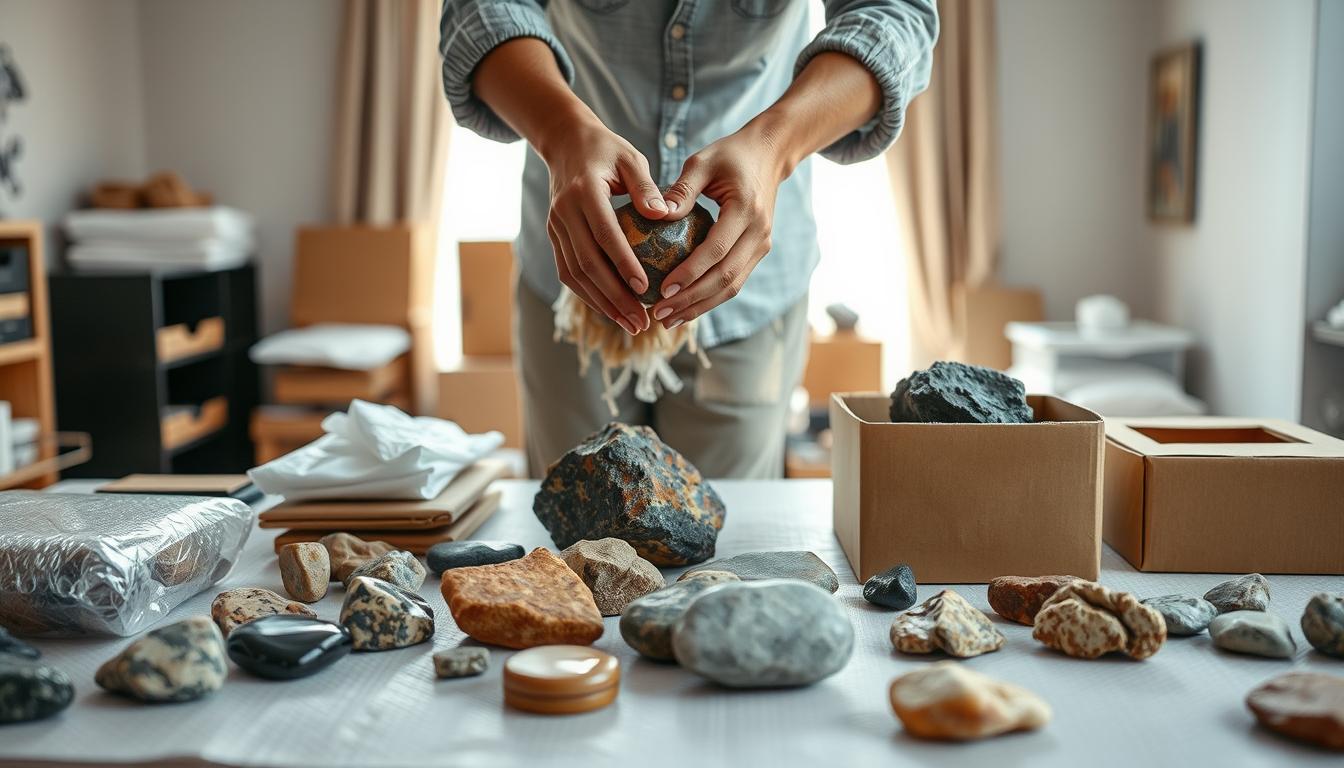
For many rocks, use a container with separate spots. This keeps each rock safe from others.

Box Filling and Cushioning Strategies
Fill the box with packing peanuts or crumpled paper. This keeps the rocks from moving. Make sure they fit snugly.
Sealing and Reinforcing the Package
Seal the box well with packing tape. Add extra protection like foam inserts for fragile rocks.
For more tips on shipping rocks, check out our forum discussion on rock shipping issues.
Special Considerations for Different Shipping Methods
Different shipping methods need special care to keep your rocks safe. Whether you ship them in the US or abroad, or carry them yourself, knowing the needs of each method is key.
Domestic Shipping Options and Costs
In the US, you can choose from USPS, FedEx, and UPS for shipping rocks. Each has its own rules, costs, and perks.
USPS, FedEx, and UPS Comparison
Here’s a look at the three main carriers:
- USPS: Great for small packages and can ship to PO boxes, often at a lower cost.
- FedEx: Fast delivery and detailed tracking are their strong points.
- UPS: Offers a range of services, including ground, air, and freight.
For tips on packing sensitive items, check out this guide on packing keepsakes or urns. It shares useful tips on how to pack safely.
Freight Shipping for Large Collections
For big collections or heavy rocks, freight shipping is best. It’s for items too big or heavy for regular parcel services.

International Shipping Requirements
Shipping rocks abroad adds extra steps, like filling out customs forms and dealing with duties. Each country has its own rules, so make sure to check them all.
Hand-Carrying Rocks During Air Travel
Traveling with rocks? You’ll need to know the airline’s rules for carry-on and checked luggage.
Carry-on vs. Checked Luggage Strategies
Choosing between carry-on and checked luggage depends on a few things:
- Carry-on: Keeps your rocks with you, lowering the risk of loss or damage. But, be ready for security checks.
- Checked Luggage: Better for big or heavy items. Make sure they’re well-packed to handle travel.
Knowing the ins and outs of shipping methods helps keep your rocks safe and sound.
Legal and Safety Regulations for Rock Transport
When you move rocks, you must follow many rules. These rules depend on how you transport the rocks, what kind they are, and where you’re going.
TSA and Airline Regulations
For flying, knowing TSA rules is key. Most rocks can go in carry-on or checked bags. But, some rocks or minerals might need extra checks or have limits.
To pack rocks for flying, remember to:
- Wrap each rock well to avoid damage and harm
- Tell all about your rocks and minerals at security
- Be ready for extra checks on some rocks
Postal Service Weight and Content Restrictions
The postal service has its own rules for shipping rocks and minerals. These rules cover weight, how to pack, and what kinds of rocks you can send.
To send rocks by mail:
- Make sure your package is sealed and has the right labels
- Follow the rules on weight and size
- Tell the truth about what’s in your package and its value
International Customs and Declaration Requirements
Protected Specimens and Restrictions
When sending rocks across borders, knowing the customs laws is important. Some rocks are protected by law and can’t be shipped.
Important things to remember are:
- Find out if your rocks are legal to ship
- Get the right permits and papers
- Follow the rules for customs forms
Required Documentation
For international shipping, you need the right papers. This includes things like commercial invoices and export permits.
To make customs go smoothly:
- Fill out all needed forms correctly
- Put in full details and values of your rocks
- Attach any needed permits or certificates
By following these rules, you can safely and legally move rocks and minerals. This is true whether you’re sending them within your country or abroad.
Troubleshooting Common Rock Shipping Problems
Shipping rocks can be tricky. You might face damage or misdelivery. Knowing how to fix these problems is key.
Preventing and Addressing Damage During Transit
Damage is a big worry when shipping rocks. Use the right protective wrapping materials and cushioning strategies. Wrap each rock well and add lots of padding to the box.
For tips on getting your rocks ready for travel, check out our guide on traveling with rock collections.
Weight Distribution and Balance Issues
It’s important to spread the weight evenly in the box. This stops the rocks from moving around. Use dividers or separate areas in the box to keep everything stable.
| Issue | Solution |
|---|---|
| Damage During Transit | Use protective wrapping materials and cushioning |
| Weight Distribution Issues | Balance the load and secure specimens |
| Insurance Claims | Document specimens and file claims promptly |
Filing Insurance Claims for Damaged Specimens
If your rocks get damaged, you’ll need good photos and details. Take pictures before and after shipping. Describe the damage well. This makes filing a claim easier.
Tracking and Delivery Confirmation Options
Use tracking services and delivery confirmation options for peace of mind. Many carriers offer these. They let you track your shipment and confirm delivery.
[link-whisper-related-posts]Conclusion
Packing rocks right is key to keep them safe while traveling or shipping. Using the right methods and materials helps avoid damage. This way, your rocks will arrive without a hitch.
Knowing how to pack rocks depends on their type and how fragile they are. Whether it’s delicate crystals or strong igneous rocks, the right packing is important. This ensures your rocks get to their new home safely.
Before packing, clean and prepare your rocks. Wrap each one carefully and fill the box with soft stuff. Adding extra support and using the right shipping materials helps a lot.
By following these tips, your rocks will reach their destination in one piece. This is true whether you’re sending them across town or across the world. The basics of safe packing stay the same.
In short, packing rocks needs careful attention and the right steps. By using the advice from this article, you’ll get better at packing and shipping rocks. You’ll be an expert in no time.
What are the best materials to use for wrapping rocks during shipping?
Use bubble wrap, foam inserts, and paper fill to wrap rocks. This helps prevent damage during shipping.
How do I determine the correct shipping container for my rocks?
Pick a sturdy container that fits your rocks well. It should handle the weight of the rocks. Use boxes made for shipping fragile items.
What are the TSA regulations for carrying rocks on a plane?
The TSA lets you carry rocks on a plane if they’re wrapped right. Tell your airline about it to check their rules.
How can I prevent damage to my rocks during shipping?
Wrap each rock by itself. Use lots of packaging. Make sure rocks don’t touch each other or the container.
What are the international customs requirements for shipping rocks?
Ship rocks internationally by following the destination country’s customs rules. You might need permits, to declare what’s inside, and pay duties.
Can I ship rocks via the postal service, and what are the restrictions?
Yes, you can ship rocks via the postal service. But, there are weight and content limits. Check with your local post office for details.
How do I file an insurance claim for damaged rocks during shipping?
To file a claim, show the damage, gather shipping receipts, and contact your carrier or insurance. Start the claims process then.
What are the best practices for tracking and confirming delivery of shipped rocks?
Use a trackable shipping method. Keep track of the tracking number. Ask for a signature when it arrives to ensure safe delivery.
How do I properly label and document my rock shipments?
Label the package clearly with what’s inside, your address, and any special handling needs. Include a packing list and any needed permits.

Subscribe to Our Newsletter