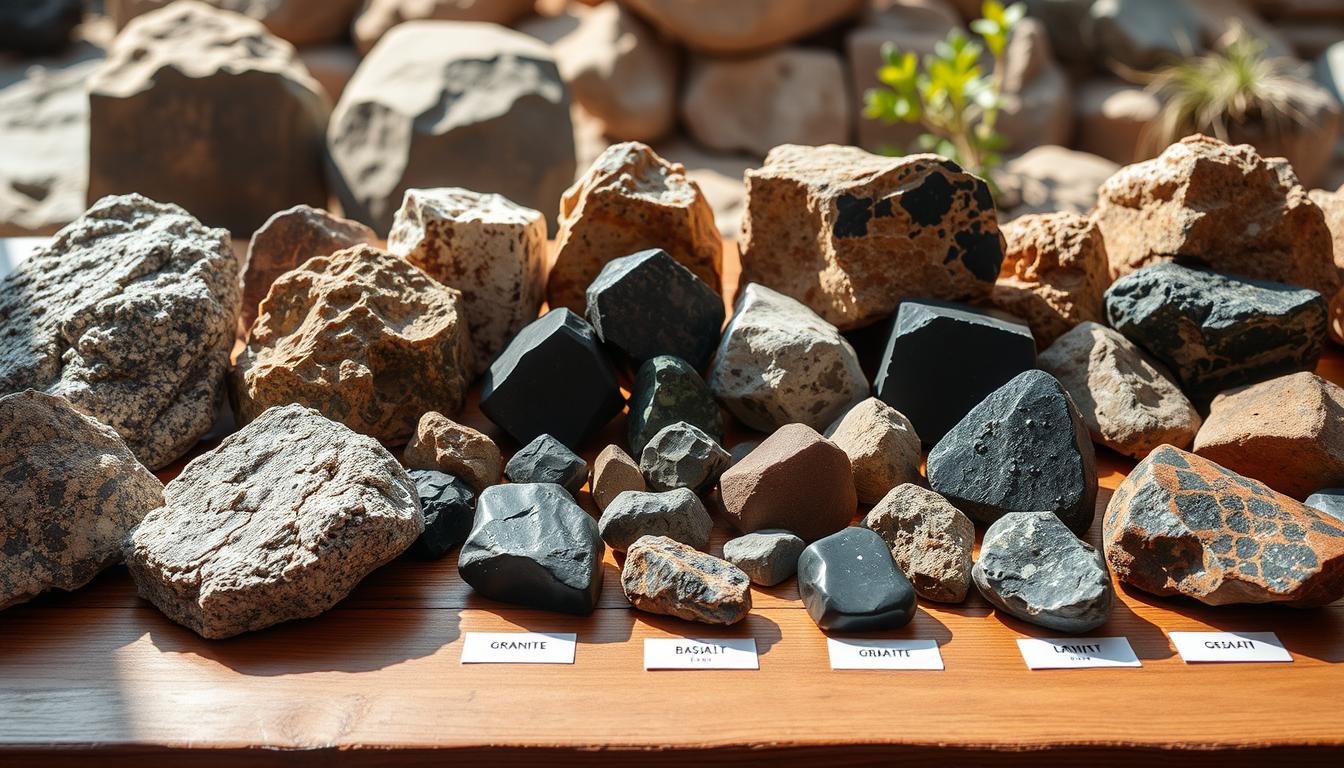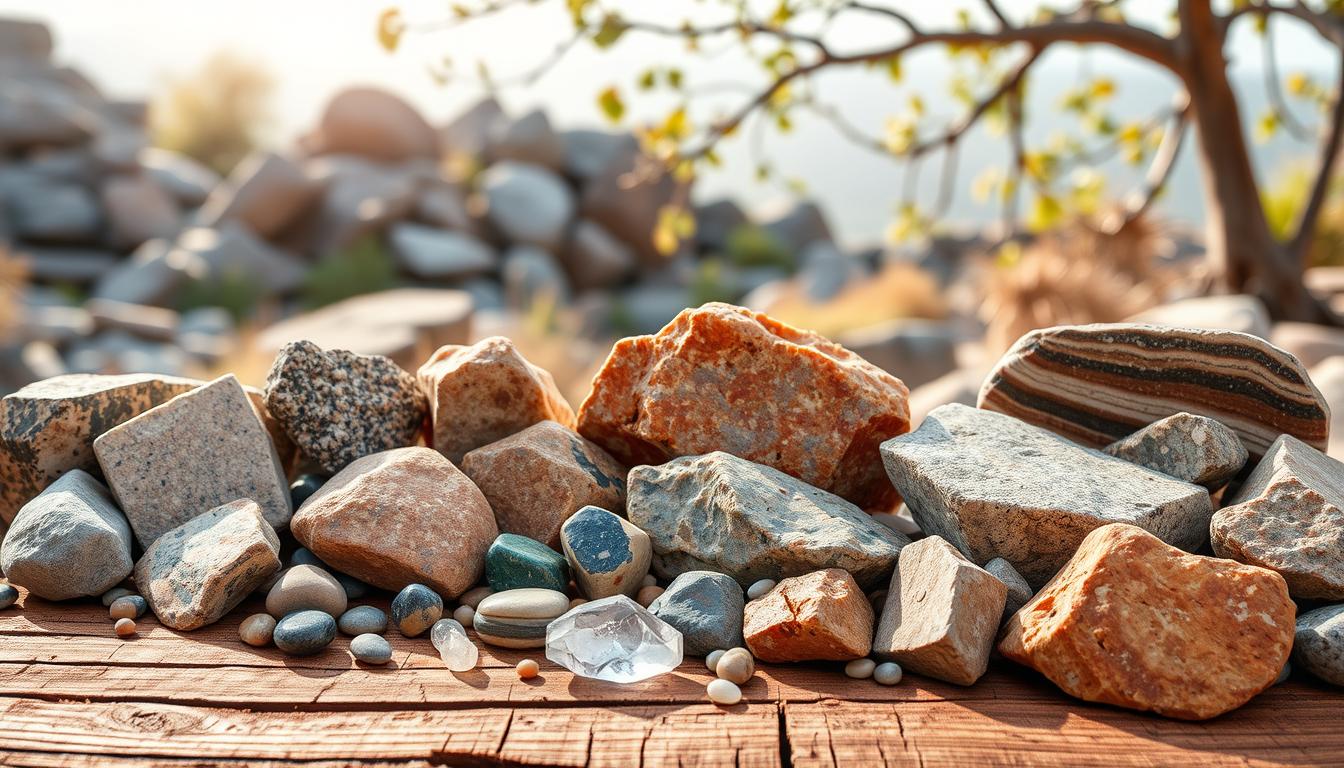
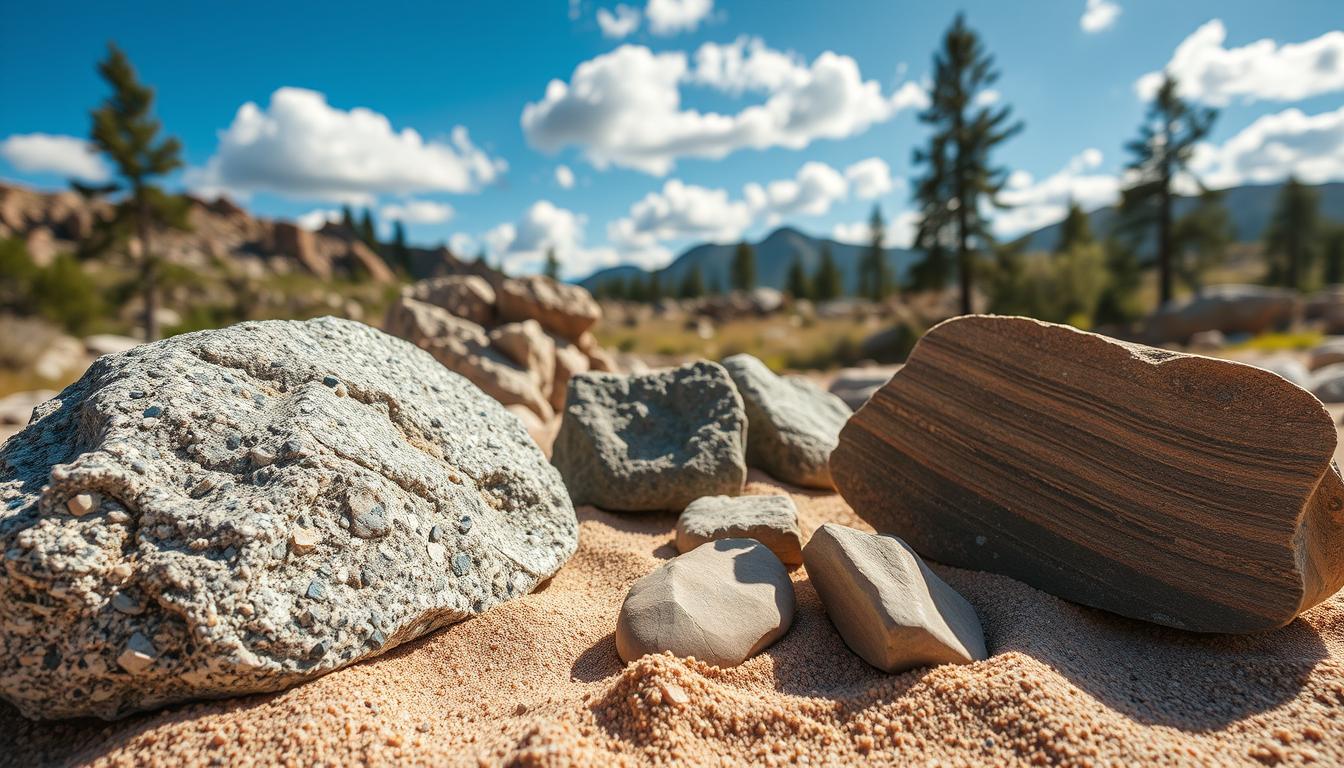
For those new to rockhounding, finding out what rocks are can be tough. But, knowing how to identify rocks is key for a fun hobby.
Experts say the first thing to do is figure out if rocks are igneous, sedimentary, or metamorphic. This basic knowledge helps you start exploring and finding more.
As a beginner, knowing the different types of rocks makes rockhounding better. It lets you understand the history and importance of your finds.
Key Takeaways
- Understand the three main categories of rocks: igneous, sedimentary, and metamorphic.
- Observe the rock’s appearance to determine its type.
- Learn about the geological processes that form different rocks.
- Enhance your rockhounding experience with basic rock identification skills.
- Explore the geological history and significance of your rock finds.
Getting Started with Rock Identification
Starting with rock identification means learning about key properties and tools in geology. First, you need to know the basics of rocks and what tools you’ll use to identify them.
Essential Tools for the Beginner Rockhound
Beginners should get a geologist’s hammer, hand lens, and streak plate. These tools help you examine rocks and find their properties. For more info, check out a detailed rock identification guide.
Basic Properties Used in Rock Identification
There are several basic properties to identify rocks, like color, luster, streak, hardness, and specific gravity. Knowing these is key for correct identification.
Color, Luster, and Streak
The color of a rock can hint at its type, but it’s not always right. Luster shows how light reflects off the rock’s surface. Streak is the rock’s powder color. These clues help identify rocks.
Hardness shows how well a rock resists scratches, using the Mohs scale. Specific gravity is the rock’s density compared to water. Knowing these helps narrow down a rock’s identity.
How to Identify Common Rock Types Found While Rockhounding
Rockhounds need to know how to identify rocks. It’s all about understanding the three main rock types. Knowing this helps make rockhounding more fun.
The Three Major Rock Classifications
Rocks are divided into three main groups: igneous, sedimentary, and metamorphic. Igneous rocks come from cooled magma or lava. Sedimentary rocks are made from compressed sediments. Metamorphic rocks change from heat and pressure.
Knowing these groups is key to identifying common rock types.
For more info on rock types, check out Science.gov. It has lots of data on minerals and rocks.
Simple Field Tests for Initial Identification
There are simple tests to start identifying rocks. These include the acid test, streak test, and magnetism tests.
Acid Test for Carbonates
The acid test uses hydrochloric acid on the rock. If it fizzes, it has carbonates. This is good for finding limestone and dolostone.
Streak Test and Magnetism
The streak test scratches the rock on a plate. It shows the rock’s mineral color. Magnetism tests if the rock has iron or nickel. Some rocks stick to magnets.
Using these tests and knowing the rock types helps rockhounds a lot. These rock collecting tips make rockhounding better.
Identifying Igneous Rocks in the Field
Identifying igneous rocks means looking at their texture, composition, and other features. These rocks form when magma or lava cools and solidifies. Knowing how to identify them helps us understand Earth’s history.
Intrusive Igneous Rocks
Intrusive rocks like granite, diorite, and gabbro form deep in the Earth. They cool slowly, creating large crystals. This makes their texture coarse.
- Granite is light in color with big quartz and feldspar crystals.
- Diorite has dark and light minerals and is found where the Earth’s crust moves a lot.
- Gabbro is dark with a coarse texture, made of calcium-rich minerals and pyroxene.
Extrusive Igneous Rocks
Extrusive rocks like basalt, obsidian, and pumice form when lava cools on the surface. They cool fast, making their texture fine.
- Basalt is dark with a fine texture, found where volcanoes have been active.
- Obsidian is a glassy rock that forms when lava cools quickly, with little crystal growth.
- Pumice is light and porous, made from fast-cooled lava in eruptions.
Key Characteristics of Igneous Rocks
Understanding texture and composition helps identify igneous rocks. Texture is about mineral grain size and arrangement. Composition is about the minerals present.
Where to Find Igneous Rocks in the United States
Igneous rocks are found in many places in the U.S., where volcanoes have been active. Some key spots include:
- The Sierra Nevada in California, famous for its granite.
- The Columbia River Basalt Group in Washington, Oregon, and Idaho.
- Places like Hawaii and Yellowstone National Park, known for volcanoes.

Recognizing Sedimentary and Metamorphic Rocks
Sedimentary and metamorphic rocks are key in geology. They have special features and ways of forming. Knowing about these rocks is important for geologists and rock fans.
Common Sedimentary Rocks
Sedimentary rocks come from gathering and sticking together sediments. They fall into two main groups: clastic and chemical.
Clastic Types: Sandstone, Shale, Conglomerate
Clastic rocks are made from sticking together small pieces of rock. Here are some examples:
- Sandstone: Made of sand-sized grains, often quartz or feldspar.
- Shale: Formed from compacted clay particles.
- Conglomerate: A rock with big grains of gravel and pebbles.
Chemical Types: Limestone, Dolostone, Halite
Chemical rocks form through chemical reactions. Here are some examples:
- Limestone: Mainly calcium carbonate, from shell fragments.
- Dolostone: A rock with the mineral dolomite.
- Halite: Also known as rock salt, from evaporated water.
Identifying Metamorphic Rocks
Metamorphic rocks change from old rocks under heat, pressure, and chemicals. They are divided into foliated and non-foliated types.
Foliated Rocks: Slate, Schist, Gneiss
Foliated rocks have layers or bands. Here are some examples:
- Slate: A rock that can be split into thin sheets.
- Schist: A rock with a clear layering.
- Gneiss: A rock with a banded look.
Non-foliated Rocks: Marble, Quartzite
Non-foliated rocks don’t have layers. Here are some examples:
- Marble: A rock made from changing limestone or dolostone.
- Quartzite: A rock mostly of quartz, from sandstone.
Prime Locations for Finding These Rocks in America
The U.S. has many places where you can find these rocks. Some of the best spots include:
| Rock Type | Location |
|---|---|
| Sandstone, Shale | Appalachian Mountains |
| Limestone | Carlsbad, New Mexico |
| Marble | Vermont, Massachusetts |
| Quartzite | South Dakota (Black Hills) |

Becoming a Skilled Rock Identifier
Rockhounding is a fun hobby that needs practice and patience. As you explore rocks, you’ll get better at identifying them. Start with the basics and learn more over time.
Beginner tips include doing simple field tests first. Then, move on to harder identification methods.
With practice, you’ll know how to spot different rocks. You’ll learn about igneous, sedimentary, and metamorphic rocks. You’ll understand how they form.
Follow these tips and keep practicing. Soon, you’ll be great at identifying rocks. You’ll enjoy all the benefits of this hobby.
## FAQ
### Q: What are the basic properties used in rock identification?
A: To identify rocks, we look at color, luster, streak, hardness, and specific gravity. These help us figure out what kind of rock it is.
### Q: How do I distinguish between igneous, sedimentary, and metamorphic rocks?
A: Igneous rocks come from magma or lava cooling down. Sedimentary rocks are made from compressed sediments. Metamorphic rocks change from existing rocks under heat and pressure. Tests like the acid test and streak test can tell us which type it is.
### Q: What is the acid test, and how is it used?
A: The acid test uses hydrochloric acid on the rock. If it fizzes, it means the rock has calcium carbonate, like limestone.
### Q: How can I identify igneous rocks in the field?
A: Look at the texture and composition of igneous rocks. Intrusive rocks, like granite, are coarse-grained. Extrusive rocks, like basalt, are fine-grained.
### Q: Where can I find sedimentary and metamorphic rocks in America?
A: Sedimentary rocks are in places with lots of sediment, like riverbeds. Metamorphic rocks are in areas with tectonic activity, like mountains. Good places to find them are the Grand Canyon, Yellowstone, and the Appalachian Mountains.
### Q: What are some common mistakes to avoid when identifying rocks?
A: Don’t rely on just one thing. Use many tests and think about where the rock is from. This helps avoid mistakes.
### Q: How can I improve my rock identification skills?
A: Practice a lot and use many tests. Talk to experts and learn about the area’s geology. This will help you get better at identifying rocks.

Subscribe to Our Newsletter