For many rock lovers, roadcuts are a treasure trove. They offer a peek into the geological past of an area. Experienced rockhounds say these spots are as good as dry riverbeds for finding valuable stones. But, beginners might find it hard to spot good roadcuts, learn how to dig, and stay safe.
Exploring roadcuts and construction areas can be very rewarding. You might find many different rocks and minerals. To find interesting specimens, knowing the challenges and taking safety steps is key. For more tips on rockhounding at roadcuts, check out rockhounding resources.
Key Takeaways
- Roadcuts are prime locations for rock hunting, showing the area’s geological history.
- Safety precautions are vital when rock hunting at roadcuts and construction areas.
- Planning your route can make your rock hunting better.
- Knowing local rules about rock collecting is important.
- Using the right safety gear helps keep you safe and uninterrupted.
Understanding the Geological Opportunities in Road Cuts and Construction Sites
Road cuts and construction sites show us the Earth’s history. They are perfect for finding rocks and learning about geology.
Why Road Cuts and Construction Areas Are Ideal for Rock Hunting
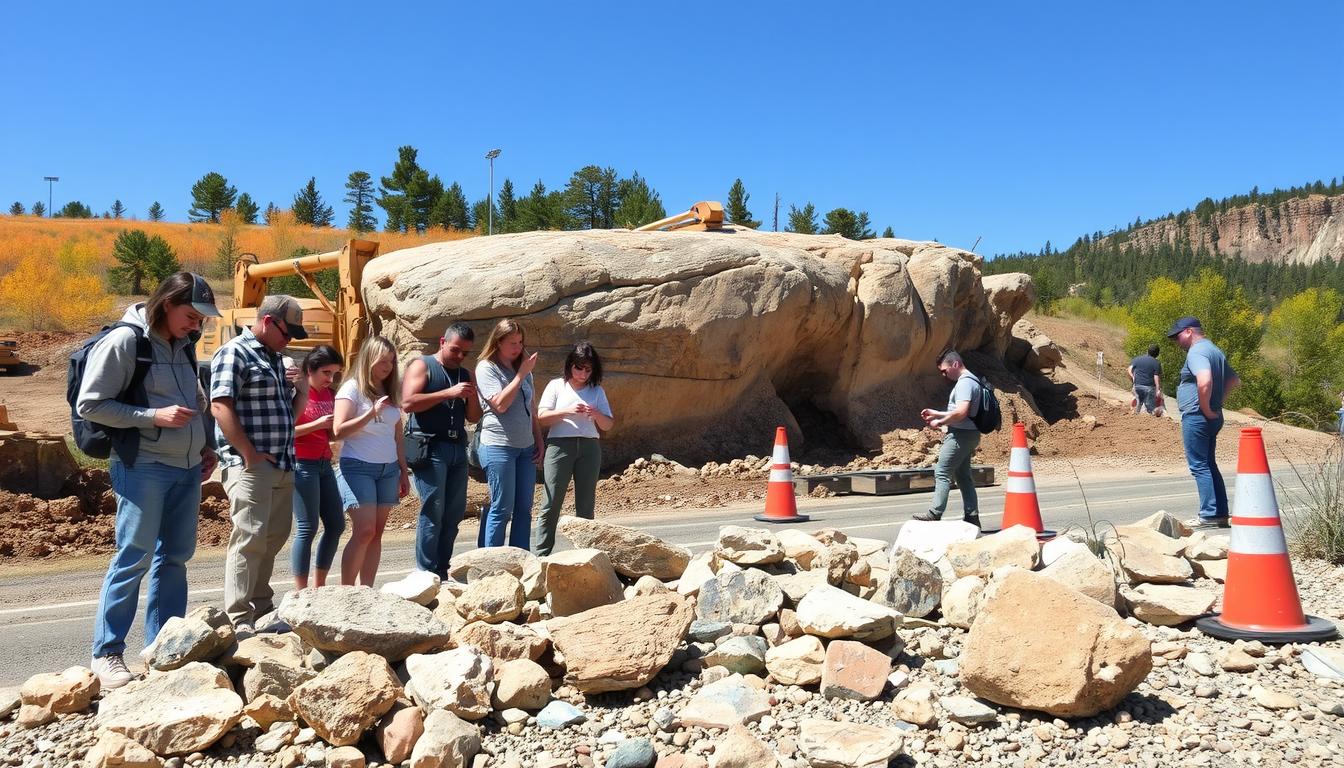
Road cuts show stone that was blasted away to make roads. This lets rock hunters see many types of rocks. Construction sites also have great finds, as digging uncovers new rocks.
Types of Rocks Commonly Found in These Areas
Road cuts and construction sites have many kinds of rocks. You can find sedimentary, metamorphic, and igneous rocks.
Sedimentary Rocks in Road Cuts
Sedimentary rocks are common in road cuts. They were once underwater. You might find sandstone, shale, and limestone with fossils.
Metamorphic and Igneous Specimens in Construction Sites
Construction sites show metamorphic and igneous rocks. These are changed by heat and pressure or volcanic activity. Look for granite, basalt, and marble.
Mineral Deposits and Crystals
Both places can have mineral deposits and crystals. You might find quartz, calcite, and pyrite. These form through geological processes.
Knowing what rocks and minerals are in these places helps rock hunters. It makes them appreciate the wonders found by humans.
Essential Tools and Equipment for Rock Hunting
To find and collect rocks, you need the right tools. The right gear makes rock hunting better, safer, and more efficient.
Basic Tools Every Rock Hunter Should Carry
Rock hunting needs many basic tools. Every enthusiast should have these.
Hammers, Chisels, and Extraction Tools
A rock hammer is key for breaking rocks and getting specimens out. Chisels help for precise rock removal. For tough jobs, you might need pry bars or rock saws.
Storage and Transportation Equipment
Good storage and transport gear is important. Use buckets, backpacks, or rock bags to carry your finds safely. These keep your rocks from getting damaged.
Documentation and Identification Resources
It’s important to document and identify your rocks. Field guides, notebooks, and cameras are great for this. They help you know what you’ve found and keep a record.
Safety Equipment and Protective Gear
Safety is always first when rock hunting. The right safety gear prevents injuries and keeps you safe.
Wear safety goggles and gloves to avoid rock fragments and sharp edges. Also, wear sturdy clothes and shoes to protect against the environment.
First Aid and Emergency Supplies
Always carry a first aid kit. It should have items for minor injuries. Also, have a way to communicate, like a cell phone or two-way radio, in case of emergencies.
For more on rock hunting tools and techniques, visitrockhounding tools for safe, productive mineral.
| Tool | Description |
|---|---|
| Rock Hammer | Used for breaking up rocks and extracting specimens |
| Chisels | Essential for precise extraction of rocks |
| Buckets/Backpacks | Used for carrying and storing collected rocks |
| Field Guides | Help in identifying rock specimens |
| Safety Goggles | Protect against flying rock fragments |
| Gloves | Protect hands from sharp edges and rough surfaces |
With the right tools and safety gear, rock hunting is safe and fun. Whether you’re new or experienced, the right equipment is key.
How to Find Rocks in Road Cuts and Construction Areas Safely
To find rocks safely in road cuts and construction areas, follow some key steps. First, check the site’s safety before you start collecting rocks. This helps prevent accidents and injuries.
Assessing Site Safety Before Collecting
Evaluating Stability of Rock Faces
Look for signs of unstable rock faces like cracks or loose rocks. Keep a safe distance from these areas to avoid falling debris.
Watching for Traffic and Construction Equipment
Be careful in areas with lots of construction or traffic. Watch out for moving vehicles and equipment. Stay alert to avoid surprises.
Weather Considerations and Seasonal Factors
Weather can affect rock hunting safety. Don’t go out in heavy rain, strong winds, or bad weather. It can be dangerous.
Legal Considerations and Permissions
Public vs. Private Land Access
Know if the land is public or private. Get permission to collect rocks on private land. Be aware of public land rules.
Obtaining Necessary Permits
Find out if you need permits to collect rocks. Following local laws is important to avoid trouble.
Best Practices for Safe Rock Hunting
Wear safety gear like gloves, safety glasses, and sturdy shoes. Be aware of your surroundings. It’s smart to have a friend with you in remote or dangerous places.

Identifying Promising Locations for Rock Collection
Finding rocks in road cuts and construction areas is key. Spotting the right spots is important. Look for geological features in road cuts.
Recognizing Geological Features in Road Cuts
Road cuts show rock formations below. Look for layer patterns and color changes. These signs point to different rocks or minerals.
Layer Patterns and Color Variations
Layer patterns tell of the area’s past. For example, limestone and shale layers show changes in the environment. Color changes hint at minerals or fossils.
Exposed Veins and Intrusions
Veins and intrusions hint at minerals. They’re interesting for rock collectors. They might hold unique minerals or rocks.
Signs of Fossil Deposits
Fossils can be found in road cuts, mainly in sedimentary rocks. Look for fossils or fossil pieces. This means you might find collecting sites.
Finding Active and Accessible Construction Sites
Construction sites are also good for finding rocks. Look online for construction sites. Check company websites or local permits databases. Local newspapers and online ads also help find projects.
Using Maps and Online Resources to Locate Potentail Sites
Maps and online tools help find rock sites. Geological survey maps show an area’s geology. This helps find collecting spots.
Geological Survey Maps
Find geological survey maps online or from government agencies. They detail an area’s geology. They show rock formations, mineral deposits, and more.
Rock Collecting Forums and Clubs
Join forums and clubs for rock collecting. They connect you with other collectors. You learn about new sites and collecting tips.

Use these tips to find great rock collecting spots. Whether you’re new or experienced, there’s always something new to find.
Techniques for Extracting and Preserving Your Finds
Road cuts and construction areas are great for finding different rocks. To get the most out of these spots, learning how to take and keep your finds is key.
Proper Methods for Removing Rocks from Walls and Piles
When taking rocks from road cuts or construction sites, be careful. Use tools like rock hammers and gloves to avoid damage. Always wear safety gear to stay safe.
Cleaning and Preserving Your Specimens
After you’ve got your rocks, clean and preserve them. Use soft methods to remove dirt. For delicate rocks, a soft brush or mild cleaner works best.
Documenting and Cataloging Your Collection
It’s important to keep track of your finds. Here’s how:
Recording Location Data
Write down where each rock came from. Use GPS if you can.
Photographing Specimens
Take clear photos of each rock from different sides.
Creating a Labeling System
Make a way to label each rock. Include its type, where it’s from, and when you found it.
For more on rock excavation, check outhttps://rockzoneamericas.com/posts/what-is-rock-excavation-a-comprehensive-guide.
By using these methods, you can improve your rock hunting. You’ll also build a valuable collection of rocks.
[link-whisper-related-posts]Conclusion: Building Your Rock Collection Through Urban Exploration
Urban areas are great for finding rocks, like in road cuts and construction sites. You can learn about the geology and use the right tools to grow your collection.
Basalt and sandstone are common rocks found in many places. Basalt is easy to work with. For more info, check out studies on PMC.
To find rocks, use Google Maps to find spots near you. With the right tools and knowledge, you can find many different rocks. This will make your collection better and help you learn more about geology.
So, go out and explore. You might find amazing rocks right in your own backyard.
FAQ
What are the best tools to bring when rock hunting in road cuts and construction areas?
Bring basic tools like hammers and chisels. Also, don’t forget extraction tools. Safety gear is key, including gloves, safety glasses, and a hard hat.
How can I identify promising locations for rock collection?
Look for geological features in road cuts. Find active construction sites. Use maps and online resources to find sites.
What safety precautions should I take when rock hunting in road cuts and construction areas?
Always check site safety first. Know the legal rules and get needed permissions. Wear protective gear and stay alert.
How do I properly extract rocks from walls and piles?
Use a hammer and chisel to remove rocks carefully. Be careful not to harm the rock or other specimens.
How should I clean and preserve my rock specimens?
Gently clean with water and a soft brush. Apply a coating or store in a dry place to preserve.
What are some common types of rocks found in road cuts and construction areas?
You’ll find sedimentary, metamorphic, and igneous rocks. Also, look for mineral deposits and crystals.
How can I document and catalog my rock collection?
Record each specimen’s location, type, and features. Use a cataloging system or software to organize your collection.
Are there any legal considerations I should be aware of when rock hunting?
Yes, know local laws and regulations. Get any needed permissions or permits before collecting.

Subscribe to Our Newsletter