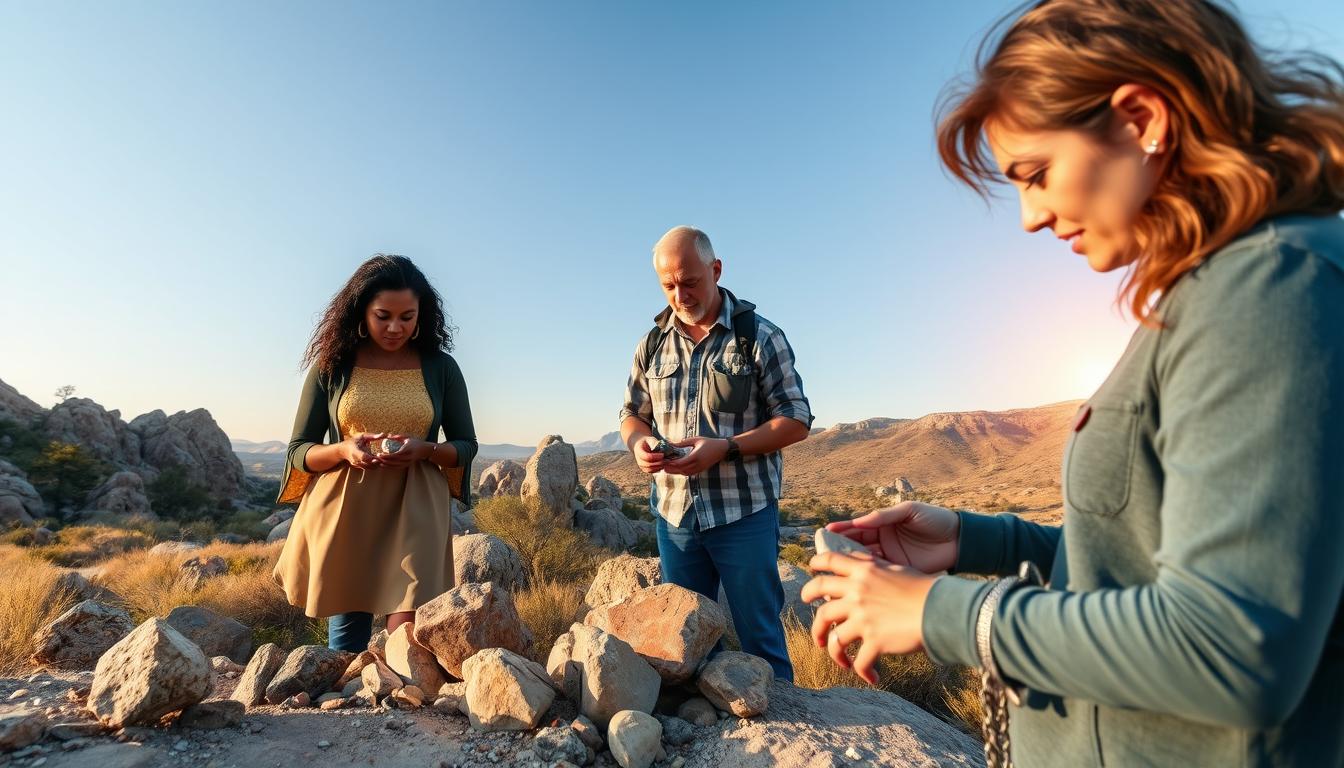
Heavy rainstorms change the landscape, making it perfect for rock hunting. The rain washes away dirt, revealing new rocks. The Crater of Diamonds State Park says rain is key to finding hidden gems.
Knowing how rain affects the ground is vital for rock hunting. Rain clears dirt, making rocks easier to see. This guide will help you find rocks after heavy rainstorms.
###
Key Takeaways
- Heavy rainstorms can uncover new rocks and make them accessible.
- Rainfall can significantly alter the landscape, making it ideal for rock hunting.
- Understanding ground conditions is key for successful rock hunting.
- Rain can wash away dirt and debris, revealing new rocks.
- Crater of Diamonds State Park is a great location for rock hunting.
- Being prepared and knowledgeable is key to a successful rock hunting adventure.
Why Rainstorms Create Perfect Rock Hunting Conditions
Rainstorms change the landscape, making it great for rock hunting. The heavy rain moves soil and sediment. This helps rock collectors find new treasures.
The Science Behind Exposed Rocks After Rain
When rain hits, the ground gets very wet. This causes erosion and moves soil and sediment. This makes rocks that were hidden before easier to find.
The science is simple. Water and soil interact in a way that exposes rocks. Rain can also cause landslides, revealing new areas for rock hunting.
Erosion and Uncovering of Hidden Specimens
Erosion is key in showing hidden rocks. Water flows over the ground, taking away soil. This exposes the rocks underneath.
Now, rocks that were hidden are available for collectors. This includes common and valuable rocks like gemstones.
Types of Rocks More Likely to Appear After Storms
Some rocks are more likely to appear after rain. These are rocks that water can’t easily move, like granite or quartz. Also, rocks in soil or sediment can become visible.
- Agates and jaspers, often found in volcanic areas, can be uncovered.
- Gemstones like diamonds, rubies, and sapphires may be revealed in areas known for their gemstone deposits.
- Petrified wood and other fossils can become exposed in regions with significant sedimentary deposits.
Knowing this can help rock hunters find interesting specimens after a rainstorm.
Essential Equipment for Post-Rainstorm Rock Hunting
Rock hunting after a rainstorm needs special tools and safety gear. The wet and slippery conditions can be tough and dangerous. So, it’s important to be ready with the right equipment.
Basic Tools Every Rock Hunter Needs
Having the right tools makes rock hunting better. Some key tools are:
- A sturdy long-handled shovel or trowel for digging and excavating.
- A geologist’s hammer or rock hammer for breaking rocks and finding hidden specimens.
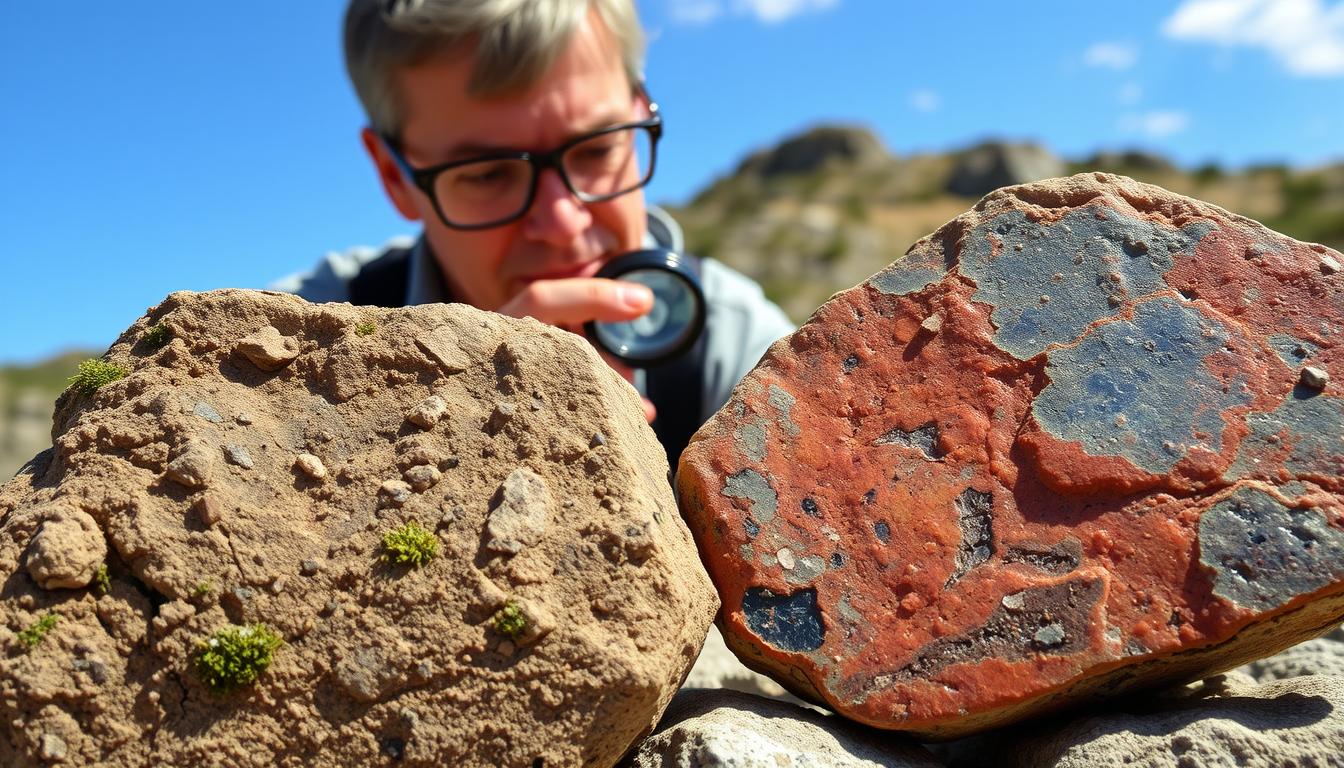
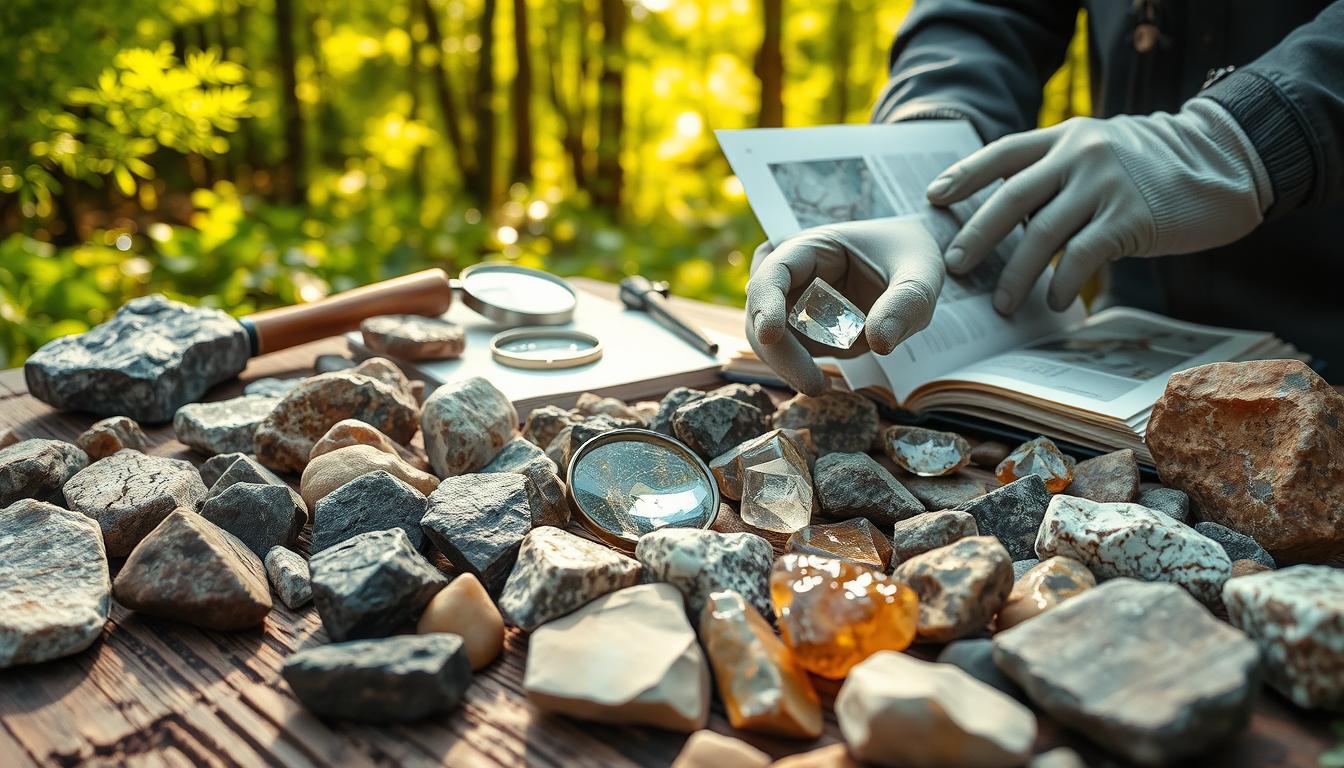
- A hand lens or magnifying glass for a closer look at finds.
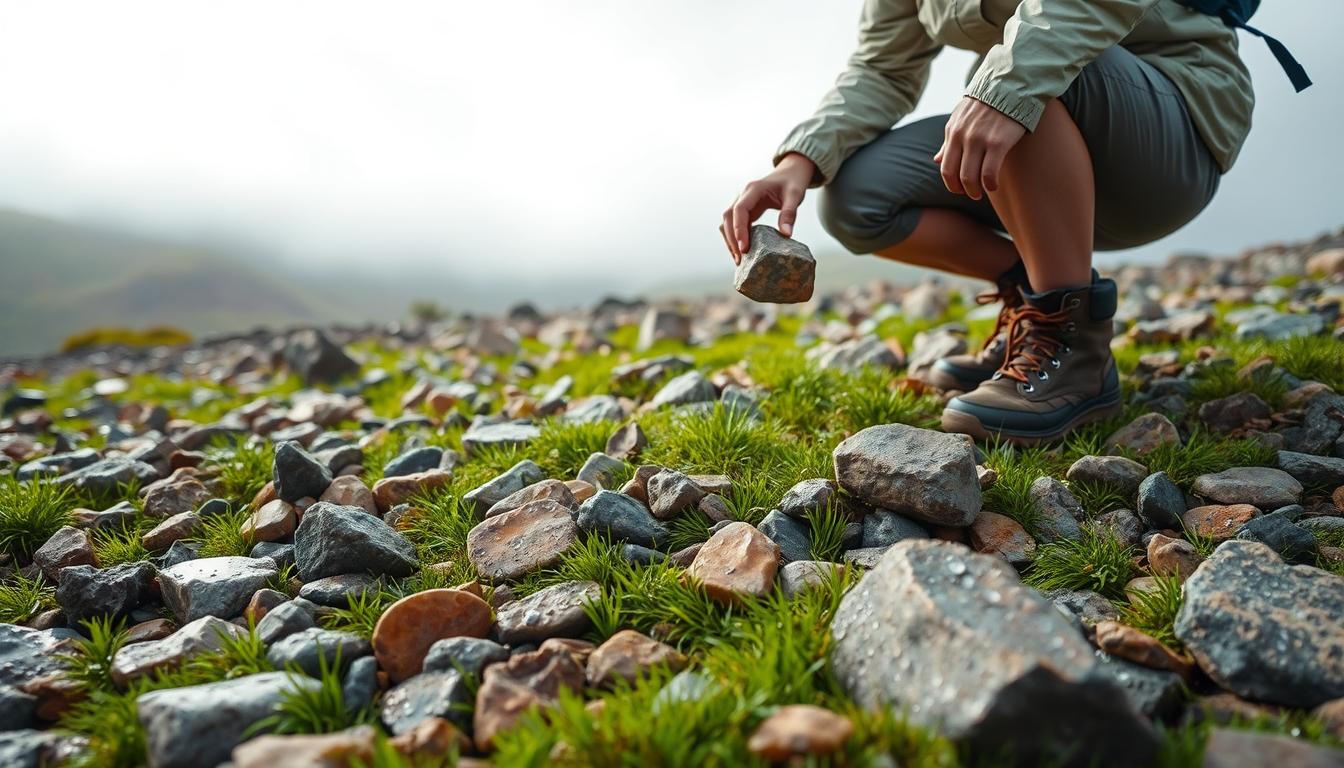
At Crater of Diamonds State Park, wear rubber boots with good tread on wet days. A long shovel, hiking staff, or walking stick helps with balance.
Safety Gear for Wet and Slippery Conditions
Safety is key when rock hunting after a rainstorm. The wet and slippery terrain is dangerous. So, wear the right safety gear. Some good choices are:
- Rubber boots with good tread for traction on muddy and slippery surfaces.
- Waterproof clothing to stay dry and comfortable.
- Gloves to improve grip on tools and protect your hands.
For more info on rock hunting and other rock hunters’ experiences, watch this video on rockhounds.
Storage and Transportation Solutions
After finding interesting rocks, you need the right way to store and transport them. Some good options are:
- Rock bags or containers with individual compartments for storing and organizing.
- Padding materials like newspaper or cloth to protect fragile specimens during transport.
- Backpacks or buckets with secure closures to carry your gear and specimens.
With the right equipment, you can have a safe and successful rock hunting experience after a rainstorm. Whether you’re experienced or new, being prepared with the essential gear will enhance your adventure.
Top Locations for Finding Rocks After Heavy Rainstorms
After a heavy rainstorm, many places become great for rock hunting. Creek beds, hillsides, and beaches are top spots to find rocks.
Creek Beds and Riverbanks
Creek beds and riverbanks are perfect for rock hunting after rain. The water rushes, uncovering new rocks. Look for areas with shallow water and gravel bars, as these are likely to have newly exposed rocks.

Hillsides and Eroded Slopes
Hillsides and eroded slopes are also good places to search for rocks. Rain causes landslides and erosion, revealing new rocks. Be cautious when searching these areas, as they can be unstable.
Road Cuts and Construction Sites
Road cuts and construction sites are also good spots. Excavation and grading expose new rocks. Check out our guide to finding rocks and rockhounding for more info.
Beaches and Shorelines After Storms
Beaches and shorelines are also affected by heavy rainstorms. Search the beach after the storm has passed, as waves can bring new rocks to the surface.
| Location | Features to Look For |
|---|---|
| Creek Beds and Riverbanks | Shallow water, gravel bars |
| Hillsides and Eroded Slopes | Landslides, erosion |
| Road Cuts and Construction Sites | Excavation, grading |
| Beaches and Shorelines | Newly uncovered rocks, changed shoreline |
How to Find Rocks After Heavy Rainstorms: Step-by-Step Guide
Heavy rainstorms can be great for finding new rocks. They change the landscape and uncover hidden rocks.
Timing Your Hunt: When to Go After the Rain
Timing is key for rock hunting after rain. At Crater of Diamonds State Park, the best time is two to three days after rain. This lets the dirt dry, making rocks easier to see.

Scanning Techniques for Spotting Interesting Specimens
Start by surveying the area for rocks or minerals. Look for changes in the terrain. Use a systematic approach, scanning the ground, where water has flowed or accumulated.
Key scanning techniques include:
- Visual inspection for unusual colors or textures
- Using the sun’s glare to spot reflections from wet rocks
- Searching in areas where erosion has occurred
Proper Extraction and Collection Methods
When you find a rock, extract it carefully to avoid damage. Use tools like rock hammers, chisels, and gloves for safety.
When collecting rocks, remember to:
- Record the location of the find
- Handle the rocks with care to avoid damage
- Store them properly in labeled containers
Documenting Your Finds and Locations
Documenting your finds is important. It helps track your discoveries and provides useful information for future hunts.
Record details such as:
- The location of the find (using GPS coordinates if possible)
- A description of the rock or mineral
- The date and time of the discovery
By following these steps, you can improve your rock hunting and build a valuable collection.
Legal and Ethical Considerations for Rock Collecting
Rock collecting after rainstorms comes with legal and ethical rules. It’s important to know the laws about public and private land. This helps avoid legal trouble.
Public vs. Private Land Regulations
Rules for rock collecting change between public and private lands. On public lands, like those run by the Bureau of Land Management (BLM), collecting rocks is usually okay for personal use. But, you must know the specific rules of the area.
Some places might need a permit for certain rocks or minerals. On private lands, you need the owner’s permission to collect rocks. It’s not just about the law; it shows respect for the landowner.
For more info, check out this guide on grasslands best practices.
National Park and Protected Area Rules
National parks and protected areas have their own rules for rock collecting. Often, collecting rocks or minerals is not allowed to keep the environment safe. For example, in national parks, taking rocks, minerals, or other natural items is usually not allowed.
It’s key to talk to park rangers or check the park’s website before collecting rocks. This way, you know the rules.
Responsible Collection Practices
Being responsible is key for rock collecting. This means only taking what you need, avoiding sensitive areas, and not harming the environment. Good rock collectors also share their finds and knowledge with others.
This helps build a community that loves both the hobby and protecting nature.
[link-whisper-related-posts]Conclusion
Finding rocks after heavy rainstorms can be very rewarding. It reveals hidden gems and new places to hunt for rocks. By knowing the science behind exposed rocks and being ready with the right tools, rock hunters can make the most of rainstorm conditions.
Places like creek beds, riverbanks, and hillsides are great for rock hunting after rain. Using the right ways to scan and extract rocks can help find interesting ones. It’s also important to know the laws and act responsibly, like knowing the difference between public and private land.
To find unique rocks, timing is key. Going out right after the rain stops is usually the best time. With the right knowledge and strategies, rock hunters can have amazing adventures and find new and exciting rocks.
FAQ
What is the best time to go rock hunting after a heavy rainstorm?
The best time is a few days after the storm. The ground is wet, and rocks are easy to find.
What are the most common types of rocks that can be found after a heavy rainstorm?
You can find agates, jaspers, quartz, and more. These rocks don’t erode easily.
What safety gear should I wear when rock hunting after a rainstorm?
Wear waterproof boots, gloves, and eye protection. They keep you safe from wet and slippery spots.
Where are the best places to find rocks after a heavy rainstorm?
Look in creek beds, riverbanks, hillsides, and beaches. Storms wash away dirt, revealing new rocks.
How can I identify the rocks I’ve found?
Use a rock guide or ask a geologist. They can tell you what rock it is and its features.
Are there any regulations I should be aware of when rock hunting on public land?
Yes, there are rules. Follow them to avoid disturbing the environment and respect private property.
Can I collect rocks in national parks or protected areas?
Usually, no. It’s often banned or restricted. Always check with park rangers first.
How can I transport and store the rocks I’ve collected?
Use containers, bags, or rock collecting gear. This keeps your rocks safe and organized.
What are some responsible rock collecting practices I should follow?
Respect the environment and others. Follow local rules and guidelines to be a good collector.

Subscribe to Our Newsletter