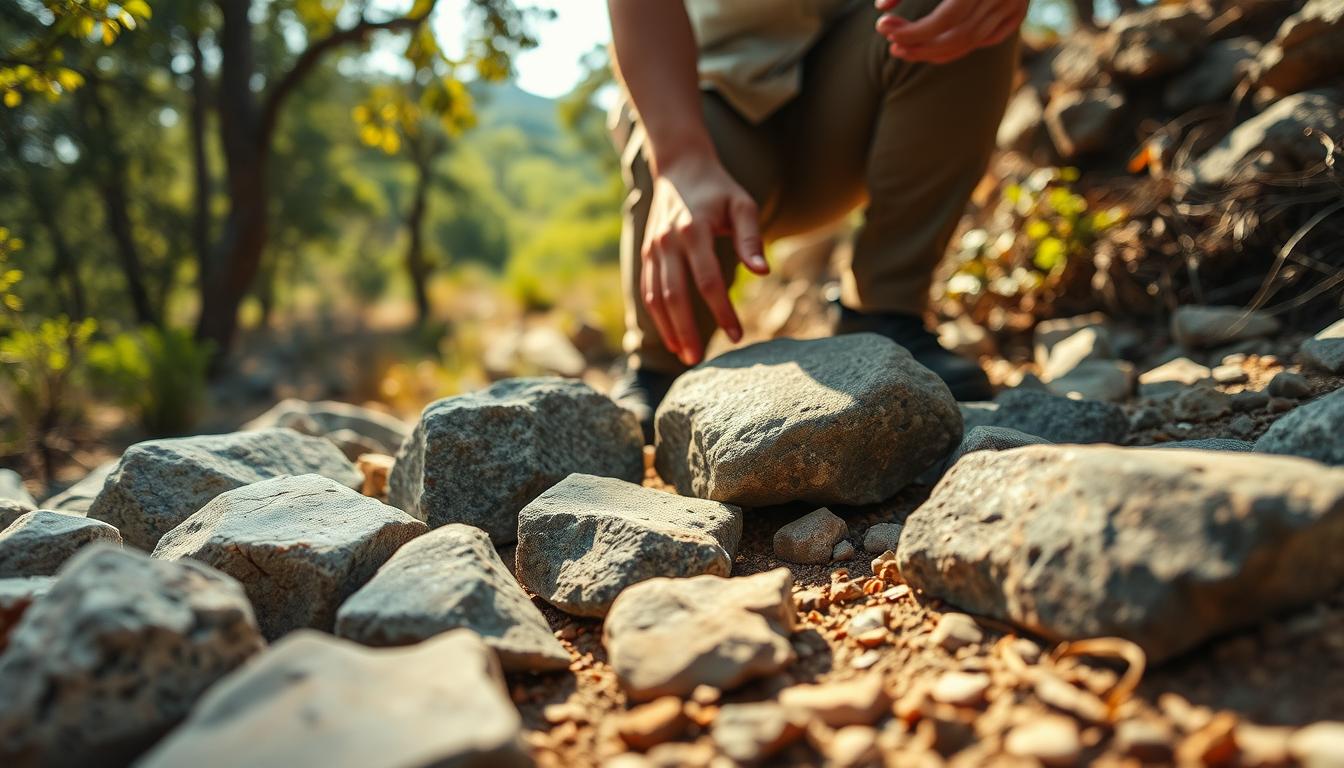
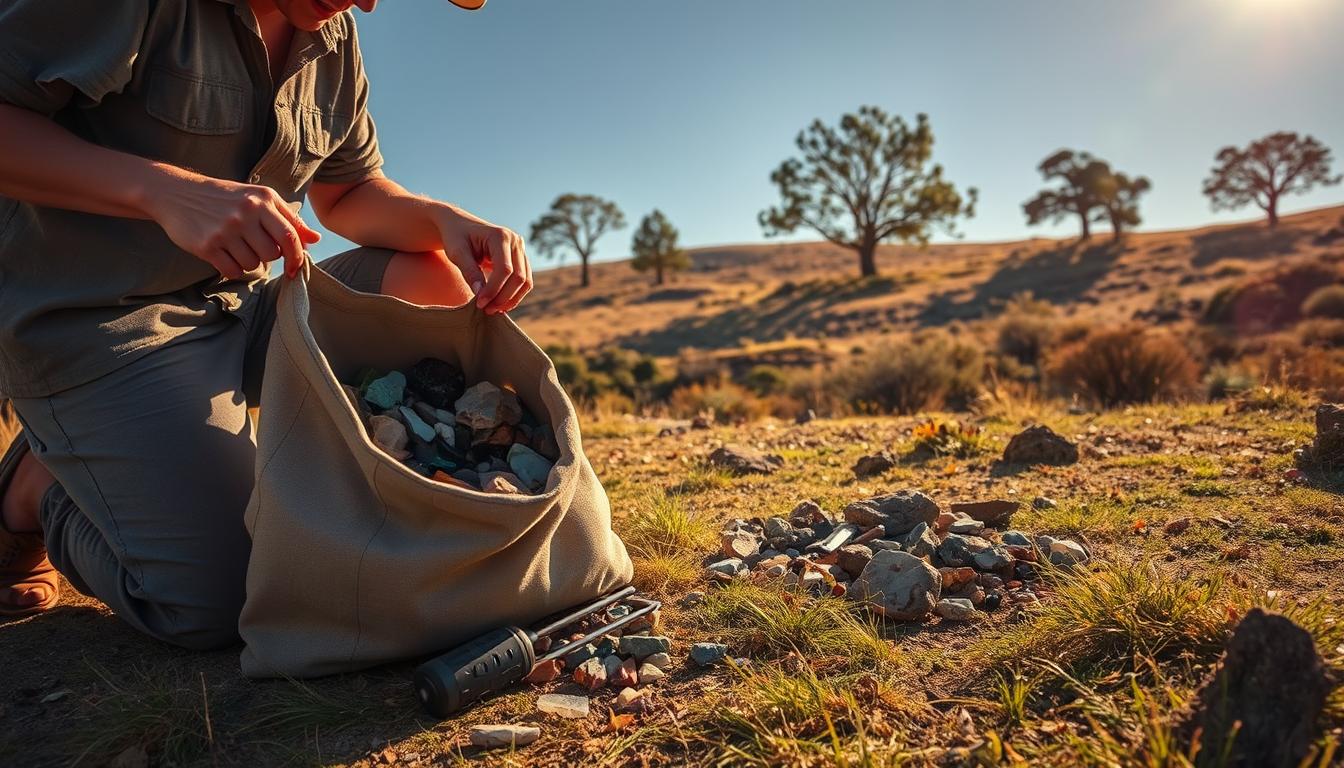
Rockhounding is a fun hobby that needs responsible practices. It helps keep the environment clean and the specimens beautiful. Proper rockhounding cleanup is key to protect both the specimens and nature.
Using tools like toothbrushes and wire brushes is good for cleaning finds. Eco-friendly rockhounding practices make specimens look better. They also show rockhounding environmental responsibility.
Key Takeaways
- Proper cleaning maintains the beauty of rockhounding finds.
- Eco-friendly practices promote environmental responsibility.
- Mechanical cleaning methods are effective for specimen care.
- Responsible rockhounding practices preserve the ecosystem.
- Cleaning methods vary depending on the specimen type.
The Importance of Proper Cleanup in Rockhounding
Cleaning up properly in rockhounding is very important. It affects the environment and how people see the community. Keeping ecosystems balanced is key.
Environmental Impact of Improper Practices
Bad cleanup can harm the environment a lot. It can cause soil erosion, pollute water, and destroy habitats. Leaving trash or messing with the land can hurt animals for a long time.
Legal Considerations and Regulations
Rockhounding has laws and rules, including cleaning up. Breaking these can lead to fines, penalties, and even closing sites.
Knowing and following these rules is important. It helps rockhounds stay out of trouble and keep access to good spots.
Building a Positive Reputation for the Rockhounding Community
Cleaning up right helps the rockhounding community look good. Showing respect for nature and following best practices wins friends. This includes landowners, conservationists, and the public.
- Promotes sustainable rockhounding practices
- Enhances community relations
- Supports conservation efforts
By focusing on proper rockhounding debris disposal and rockhounding waste management, we can keep rockhounding sites beautiful and intact.
Understanding the “Leave No Trace” Philosophy for Rockhounds
The “Leave No Trace” principles guide rockhounding to protect the environment. They have seven core principles. These help reduce the impact of collecting specimens.
The Seven Principles Applied to Rockhounding
Rockhounds can follow the “Leave No Trace” by planning and staying on trails. They should avoid sensitive areas. Proper disposal of waste and controlling campfires are key. These steps help reduce their impact.
Balancing Collection with Conservation
Rockhounding means collecting specimens, but it’s important to conserve too. Don’t collect too much and leave the site as you found it. Responsible rockhounding practices let future generations enjoy nature too.
Respecting Public and Private Land
Rockhounds must follow rules and get permits for public and private lands. This respect keeps good relations with landowners and the community. It also ensures access to rockhounding sites.
By following the “Leave No Trace” philosophy, rockhounds help the environment. They support rockhounding environmental responsibility and clean up practices.
Essential Cleanup Equipment Every Rockhound Should Carry
When you go rockhounding, it’s important to have the right cleanup tools. Good cleanup means leaving the site as you found it. It also means not harming the environment.
Basic Cleanup Tools
Basic tools are key for any rockhounding trip. They help clean up the site.
Shovels, Rakes, and Tampers
Shovels, rakes, and tampers are important. They help dig, move earth, and flatten the ground. They cover up holes or trenches dug during rockhounding.
Brushes and Brooms
Brushes and brooms are great for sweeping dirt and debris. They help make the area look natural again.
Eco-Friendly Disposal Bags and Containers
Using eco-friendly disposal bags and containers is key for waste management. They keep the environment clean and stop pollution.
Documentation Tools
Keeping records is important in rockhounding. Camera, notebooks, and pens are needed. They help record findings, note locations, and document site conditions before and after cleanup.
Pre-Dig Planning: Setting Up for Easy Cleanup
Planning your rockhounding site before digging is very important. It makes your experience better and helps the environment. You need to take a few key steps to prepare well.
Creating a Designated Digging Area
First, create a designated digging area. This keeps the mess in one place, making cleanup easier. Think about the terrain and how it might affect the environment when choosing your spot.
Organizing Your Tools and Materials
It’s important to have your tools and materials organized. Use containers or bags to keep everything neat. This saves time and helps you avoid leaving trash behind.
Documenting the Site Before You Begin
Before you start digging, document the site. Take photos and notes to show what it looked like before.
Photography Best Practices
Take photos from different angles and include important features. These pictures will help you restore the site later.
Note-Taking for Site Restoration
Also, write down details about the site. Note the vegetation, soil type, and anything else that matters. These notes will help you restore the site to its original state.
By planning well before you dig, rockhounds can protect the environment. They also make cleanup easier.
How to Clean Up After Rockhounding the Right Way
After a day of rockhounding, it’s key to clean up well. This helps keep the site beautiful and follows local rules. It also shows respect for others who use the land.
Step-by-Step Cleanup Process
Start by gathering all your tools and gear. Look around carefully for any trash or waste left from your activities.
- Collect all your tools and materials.
- Remove any inorganic waste, such as plastics or metals.
- Restore the site to its original condition as much as possible.
Handling Different Types of Debris
Dealing with different types of trash needs different steps. Knowing how to handle organic and inorganic waste is important.
Organic Material
Organic stuff like branches or leaves can stay or go in a compost bin. But, always check local rules first.
Inorganic Waste
Trash like plastics, metals, and other non-biodegradable items must go in bins or be recycled at home.
Final Site Inspection Checklist
Do a final check before leaving to make sure everything is okay.
| Checklist Item | Status |
|---|---|
| All tools and equipment collected | |
| Inorganic waste disposed of | |
| Site restored to original condition |
By following these steps and knowing how to handle different trash, you can clean up right. This helps with proper rockhounding debris disposal and rockhounding waste management.
Proper Disposal of Different Types of Rockhounding Waste
It’s important to dispose of rockhounding waste properly. This keeps our environment safe and makes the hobby sustainable. Rockhounding creates waste like rock pieces, dust, and broken tools. We need to handle these wastes right.
Categorizing Your Waste
The first thing to do is sort the waste. Separate the rock pieces and dust from broken tools and dangerous stuff.
Disposal Methods for Various Materials
Each waste type needs its own way to be thrown away. Rock pieces and dust can go back to where they came from or be buried in a special spot.
Rock Fragments and Mineral Dust
Rock pieces and dust can be reused or thrown away in a green way. For tips on getting rid of rock tumbling grit slurry, check this resource.
Tools and Equipment Waste
Broken tools and equipment should be thrown away based on local rules for metal and plastic. Many places have recycling spots for these items.
Handling Potentially Hazardous Materials
Rockhounding might involve dangerous materials like asbestos or radioactive rocks.
Asbestos-Containing Minerals
Asbestos needs special care and disposal. Always follow local rules for dealing with hazardous materials.
Radioactive Specimens
Radioactive rocks are very dangerous. They must be disposed of safely, following nuclear safety rules.

Refilling and Restoring Dig Sites
Refilling and restoring dig sites is key to keeping nature balanced. Rockhounding done right helps keep the environment safe for the future.
Techniques for Proper Hole Refilling
Filling holes properly is the first step in fixing a dig site. You need to put back the original soil and rocks. Then, press it down to stop it from sinking or washing away.
- Save the topsoil separately to replace it last, preserving its nutrient-rich properties.
- Use the original material to refill the hole, avoiding foreign substances.
- Compact the filled soil to prevent future erosion.
Restoring the Natural Appearance of the Area
After filling, making the area look natural is important. This means spreading out any leftover rocks or debris. Then, smooth out the ground.
Preventing Future Erosion and Damage
To stop erosion, you need to make the soil stable. Here’s how:
| Method | Description | Benefits |
|---|---|---|
| Seeding Native Plants | Planting native vegetation to stabilize soil | Prevents erosion, restores ecosystem |
| Replacing Topsoil | Replacing the original topsoil | Restores nutrient-rich layer, supports plant growth |
| Compaction | Compacting the refilled soil | Reduces settling, prevents erosion |
When and How to Use Native Plants for Restoration
Native plants are best for fixing things because they fit the local weather and soil. They help keep the soil in place and bring back the natural look.
Key considerations: Pick plants that are native to your area. Stay away from plants that might take over. Make sure you plant them right.
Managing Water Usage and Preventing Erosion
Managing water is key in rockhounding. Rockhounds must watch their water use. This helps prevent erosion and keeps water sources safe.
Responsible Water Use During Rockhounding
Rockhounds should use water wisely. This means using less and avoiding waste. They should clean specimens and dig sites with care.
Preventing Runoff and Erosion
Stopping runoff and erosion is vital. Rockhounds can use terracing and mats to help. These methods keep sites safe.
Protecting Nearby Water Sources
Keeping water sources clean is important. Rockhounds must not harm water quality. Their actions should not pollute nearby water.
Seasonal Considerations for Water Management
Seasons change water needs. In rainy times, rockhounds must prepare for more runoff. In dry times, they should save water.
| Season | Water Management Strategy | Benefits |
|---|---|---|
| Rainy | Implement erosion control measures | Prevents soil loss and maintains site integrity |
| Dry | Conserve water, use dry screening methods | Reduces water waste, preserves resources |
By using these strategies, rockhounds can lessen their impact. They help keep sites safe for others in the future.
Special Considerations for Different Rockhounding Environments
Rockhounding takes you to many places, each with its own challenges. It’s important to be eco-friendly to protect the environment.
Beach and Coastal Areas
Beach and coastal areas are special because they change a lot and are delicate. When you’re rockhounding here, watch the tides and currents.
Tide and Current Awareness
Knowing the tides and currents helps you stay safe. It also keeps the shoreline safe from harm.
Protecting Marine Ecosystems
Be careful of marine life and their homes. Stay away from places where sea creatures nest or are protected. For more tips, check out ethical collecting.
Desert Environments
Deserts are very fragile and need our care to stay natural.
Preserving Fragile Desert Crusts
Desert crusts are full of life and can get hurt easily. Stay on the paths to avoid damaging them.
Minimizing Impact in Arid Regions
Save water and don’t litter. This helps keep these dry places clean.
Forest and Mountain Regions
Forests and mountains are tough to explore. They have steep places and plants with deep roots.
Working Around Root Systems
Be gentle with roots when digging. Hurting them can harm the plants and make the soil unstable.
Preventing Landslides and Soil Destabilization
Don’t take rocks or soil that could cause landslides. Know the land and plan your collecting carefully.

| Environment | Key Considerations | Best Practices |
|---|---|---|
| Beach and Coastal | Tide awareness, marine ecosystems | Stay informed about tides, avoid sensitive habitats |
| Desert | Fragile crusts, water conservation | Stay on paths, conserve water |
| Forest and Mountain | Root systems, soil stability | Avoid damaging roots, prevent landslides |
Teaching Others: Promoting Responsible Rockhounding Practices
It’s important to teach others how to rockhound responsibly. This helps keep our hobby alive for the future. By sharing what we know, we can all help the environment.
Leading by Example
Leading by example is a great way to teach others. When we clean up and respect the land, we show others how it’s done. This sets a good example for everyone.
Educating Fellow Rockhounds
Teaching others is key to responsible rockhounding. We can do this through workshops, online forums, and local clubs. These places are perfect for sharing knowledge and experiences.
| Method | Description | Impact |
|---|---|---|
| Workshops | Hands-on training on cleanup techniques | High |
| Online Forums | Sharing best practices and experiences | Medium |
| Local Clubs | Organized cleanup events and meetings | High |
Dealing with Others’ Abandoned Debris and Damage
The rockhounding community faces a big challenge. They deal with trash and damage left by others. This happens when they explore new places.
When to Report Environmental Damage
If you see big environmental damage or hazardous waste, report it. You should tell the proper authorities. This helps fix the damage and stops future problems.
For tips on cleaning up, check out rock and mineral cleaning resources.
Participating in Cleanup Events
Joining local cleanup events is a good way to help. These events clean up the environment. They also teach people why we need to protect nature.
Proper Authorities to Contact
It’s important to know who to call for environmental damage. This could be park rangers, environmental agencies, or police. Keep their numbers ready to report violations fast.
Documenting Violations Effectively
When documenting damage, be detailed. Take clear photos, write down where it is, and describe the damage. This info is key for authorities to investigate.
[link-whisper-related-posts]Conclusion: Preserving Our Rockhounding Heritage for Future Generations
As we wrap up our look at responsible rockhounding, it’s clear we must protect our hobby’s future. By caring for the environment and using eco-friendly methods, we help keep rockhounding alive for others. This way, future rockhounds can find their own treasures.
We’ve talked about cleaning up, fixing dig sites, and using water wisely. These steps help us not harm the environment. They also help keep rockhounding alive for many years.
As rockhounds, we can show others how to care for the earth. By working together and sharing what we know, we leave a lasting legacy. This legacy will inspire future rockhounds to explore and enjoy the earth’s wonders.
FAQ
What is the importance of cleaning up after rockhounding activities?
Cleaning up after rockhounding is key. It keeps the environment safe and follows the rules. It also makes the rockhounding community look good.
It means leaving the site as you found it. You should throw away trash right and not harm the ecosystem.
How can I apply the "Leave No Trace" philosophy to my rockhounding activities?
To follow “Leave No Trace,” rockhounds should plan ahead. Stay on trails and throw away trash properly. Also, try to not leave big marks from campfires.
This way, you can collect rocks without hurting the environment. It shows respect for public and private lands.
What are the essential cleanup equipment and tools that every rockhound should carry?
Every rockhound needs basic tools like shovels and gloves. They also need bags and containers for trash. Don’t forget cameras and notebooks to track finds and note site details.
How can I ensure proper disposal of different types of rockhounding waste?
Sort waste into organic, inorganic, and hazardous types. Dispose of each type as local rules say. Make sure to handle and dispose of hazardous waste safely.
What steps should I take to refill and restore dig sites?
To refill sites, start by filling holes back up. Make the area look natural again. Use native plants to help the environment recover.
How can I manage water usage and prevent erosion during rockhounding?
Use water wisely and stop runoff. Protect water sources. Think about the season to avoid harming the environment.
Are there special considerations for rockhounding in different environments?
Yes, each place like beaches, deserts, and forests needs its own plan. Know the rules and challenges of each area to rockhound responsibly.
How can I promote responsible rockhounding practices among fellow enthusiasts?
Show others how to do it right by leading by example. Teach them and share guidelines. Work with local groups to spread the word.
This builds a community that cares about the environment.
What should I do if I encounter others’ abandoned debris or environmental damage?
If you see trash or damage, tell the right people. Join cleanups if you can. Take photos to show the problem.
This helps fix the issue and keeps everyone accountable.
Why is it important to document rockhounding sites and activities?
Recording your adventures helps track finds and site conditions. It also helps restore sites. Sharing this info helps the whole rockhounding community.

Subscribe to Our Newsletter