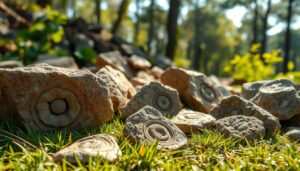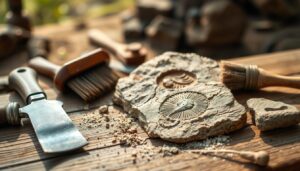
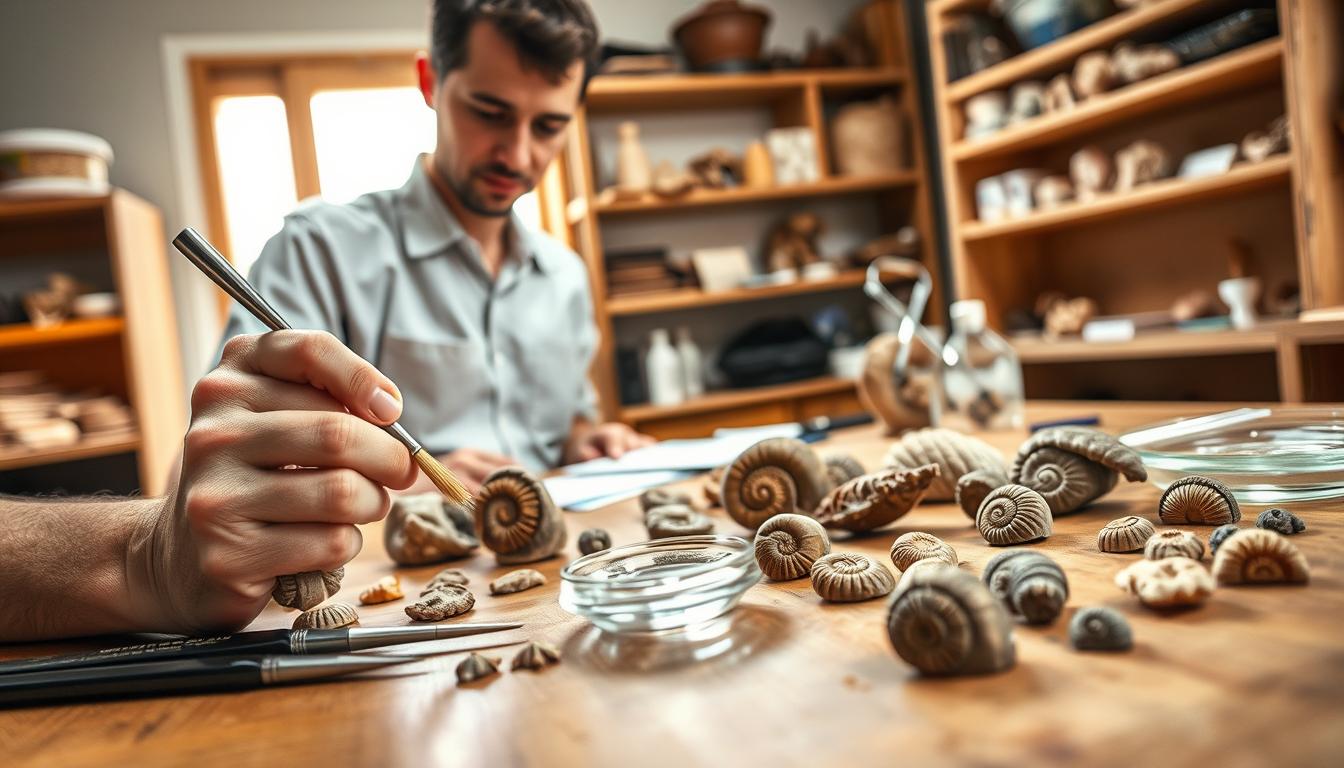
Keeping small fossils in good shape is key. It doesn’t matter if you’re new or experienced. Knowing how to clean them right is very important.
Preparing fossils involves different steps. You might use hand tools or pneumatic tools, depending on the fossil and its surroundings.
By using a detailed fossil cleaning guide, your small fossils will stay perfect for a long time. Good fossil care means paying close attention and using the right methods.
Key Takeaways
- Understand the importance of proper fossil preservation.
- Learn various cleaning techniques for small fossils.
- Discover the role of mechanical preparation in fossil preparation.
- Follow a step-by-step fossil cleaning guide.
- Apply effective fossil care techniques.
Understanding the Fragility of Small Fossils
It’s very important to check how well small fossils are preserved. Before we clean or save them, we need to know how fragile they are. This helps us decide the best way to handle them.
Small fossils are very delicate. Some might break or crack easily. The state of a fossil can change because of its material, age, and any past damage.
Key Factors in Assessing Fossil Condition:
- The type of rock or material the fossil is embedded in
- Visible cracks or breaks on the fossil’s surface
- Signs of previous restoration or repair
- The overall stability and integrity of the fossil
It’s very important to handle fossils carefully to avoid more damage. This means being gentle when we touch them and choosing the right cleaning methods.
To check a small fossil’s condition, look at it under good light. You might need to use a magnifier to see any weak spots or damage. This helps us pick the best cleaning and saving methods.
Knowing how fragile small fossils are and checking their condition carefully helps us take good care of them. This way, we can keep them safe for people to see and learn from in the future.
Essential Tools and Materials for Fossil Cleaning
Cleaning small fossils needs special tools and materials. You’ll need everything from basic hand tools to advanced pneumatic devices. This helps keep these delicate specimens clean and safe.
Fossil cleaning tools are key. You’ll need soft-bristled brushes, dental picks, and pneumatic tools. Pick tools that won’t damage the fossil or get stuck in the sediment.
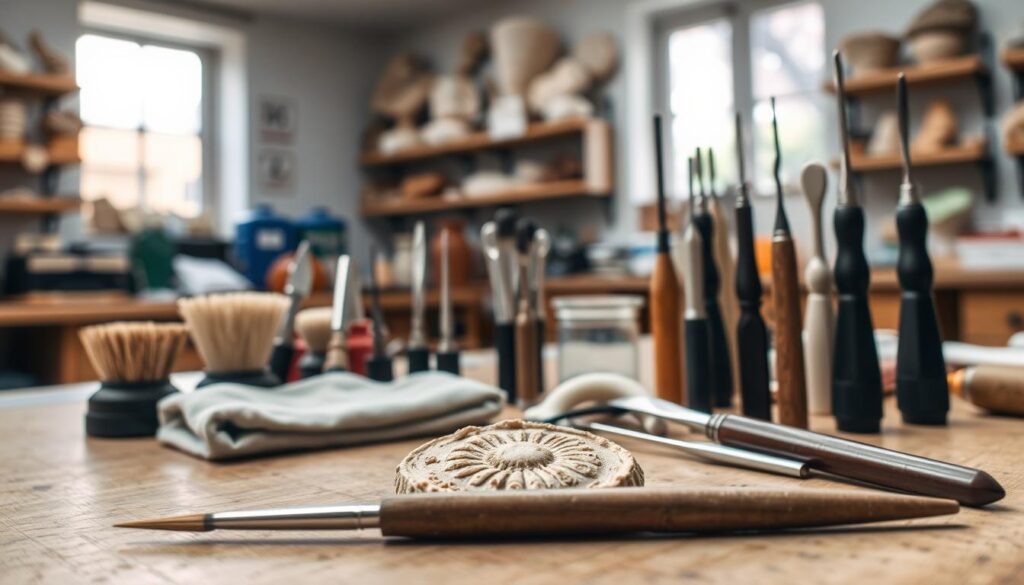
Safety equipment is also very important. Gloves and goggles protect you from chemicals and sharp things. Keeping yourself safe is the top priority when cleaning fossils.
For more info on fossil cleaning tools and techniques, check out Zoic PalaeoTech’s resource page.
Preparing Your Workspace for Fossil Cleaning
A clean and organized workspace is key for cleaning fossils well. You need a clean area, organized tools, and good lighting.
Organizing your tools and materials is very important. Keep your tools like brushes and magnifying glasses close. Use containers to keep them tidy and safe.
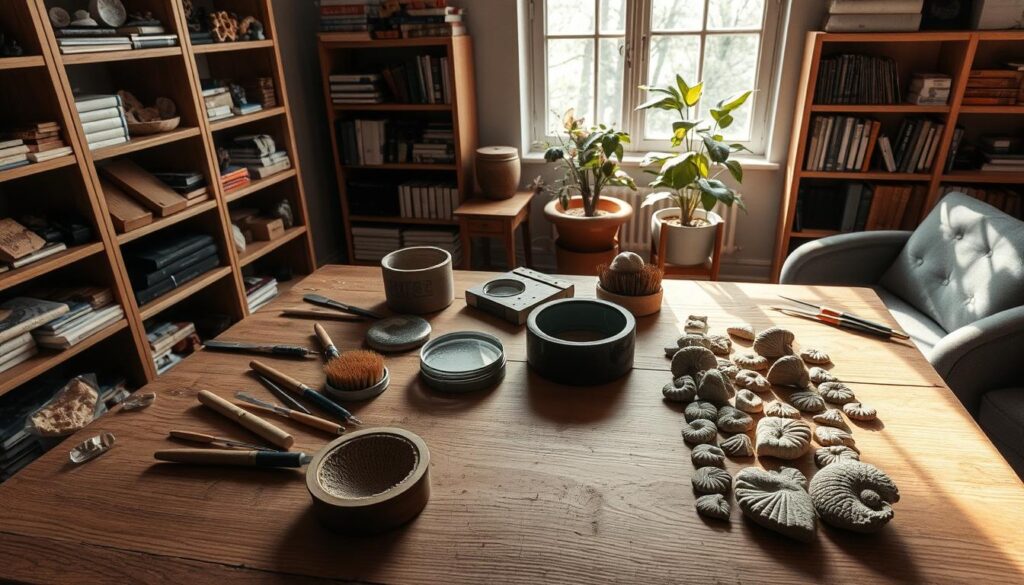
A clean and stable work environment is also important. Make sure your area is clear and your surface is steady. Good lighting helps a lot; use a bright lamp.
By following these tips, you can make a great space for cleaning fossils. This makes the job easier and safer.
Step-by-Step Methods for Cleaning Small Fossils
Cleaning small fossils is an art. You need to pick the right method to show off their details without harming them. Different fossils need different cleaning methods. Knowing these methods is key to keeping fossils safe.
There are a few ways to clean small fossils. You can use dry brushing, wet cleaning, or chemical cleaning. Each method works best for certain fossils and the rock they’re in.
Dry brushing is a gentle way to clean fossils in soft rock. It uses a soft brush to remove dirt without scratching the fossil.
- Use a soft-bristled brush to avoid scratching the fossil.
- Gently sweep away loose particles.
- This method is great for fossils with fine details.
Wet Cleaning Method
Wet cleaning uses water or a mild solution to get rid of tough dirt and rock. But, you have to be careful not to damage the fossil.
- Mix a mild detergent with water, or use a special cleaning solution.
- Dampen a soft cloth or brush with the solution.
- Gently apply the solution to the fossil, avoiding harsh scrubbing.
- Rinse with clean water and dry well.
Chemical Cleaning Method
Chemical cleaning uses special chemicals to break down the rock around the fossil. This method needs careful handling and safety steps.
- Choose a chemical that’s right for the rock and fossil.
- Follow safety rules, including wearing protective gear.
- For more info on tools for cleaning fossils, visit Zoic PalaeoTech.
Each cleaning method has its own role in fossil care. By choosing the right technique, you can keep fossils safe and show off their beauty.
Advanced Preservation Techniques for Long-Term Fossil Care
Keeping small fossils safe for a long time needs careful steps. We use special methods to make them last. One key step is using consolidants to make the fossils stronger.
Adhesives are also key in keeping fossils safe. They help fix broken parts and stick fragments back together. It’s important to pick adhesives that won’t harm the fossil.
Choosing the right storage materials and keeping the right conditions is also important. The place where fossils are stored should have a steady temperature and humidity. This helps keep the fossils from getting damaged or worn out.
- Use acid-free materials for storage to prevent chemical damage.
- Keep fossils away from direct sunlight to avoid fading or discoloration.
- Store fossils in a cool, dry place to prevent moisture damage.
For more info on tools for fossil preparation, visit Zoic Palaeo.
Proper Storage and Display of Small Fossil Collections
Keeping your small fossil collection safe is key. Choosing the right storage materials is very important. It helps prevent damage to your fossils.
For storing small fossils, pick materials that are stable and won’t react with them. Use acid-free tissue paper, archival boxes, and soft padding. These help protect your fossils. For showing them off, use display cases or shadow boxes. They keep your fossils dust-free and safe from sunlight.
It’s also important to label and catalog your fossils. You can find help at fossil preservation and storage websites. They offer tips on how to label and catalog your fossils right.
To stay organized, make a catalog. Include the fossil’s name, where it’s from, and any notes about its condition or history.
[link-whisper-related-posts]Conclusion
Proper care and preservation of fossils are key. They help keep these ancient wonders intact for study and enjoyment. By following the tips in this article, your small fossils will stay in great shape for years.
Fossil care is more than just cleaning. It’s about keeping these treasures safe for future generations. This way, they can continue to amaze and teach us.
Using the right fossil preservation techniques is important. It needs careful attention, the right tools, and a long-term commitment. Whether you’re new or experienced, knowing how to clean fossils gently is essential.
By following these steps, you help preserve fossils. You also help us all learn more about our natural world. This is a big deal for our planet’s history.
As we keep finding and learning from fossils, we must take care of them. We owe it to these precious artifacts to treat them with respect and care. This way, we can keep exploring and learning from these ancient treasures.
## FAQ
### Q: What is the first step in cleaning small fossils?
A: First, check the fossil’s condition. Look for cracks, breaks, or damage. This helps decide how to clean it.
### Q: What kind of tools are needed for cleaning small fossils?
A: You’ll need basic tools like soft-bristled brushes. Also, specialized pneumatic tools are helpful. Don’t forget safety gear for yourself.
### Q: How should I prepare my workspace for fossil cleaning?
A: Set up your tools and materials neatly. Make sure your workspace is clean and stable. Good lighting is key for cleaning.
### Q: What are the different methods for cleaning small fossils?
A: You can use dry brushing, wet cleaning, or chemical cleaning. Each method has its own benefits and drawbacks. Choose based on the fossil’s condition and type.
### Q: How can I preserve small fossils long-term?
A: Use consolidants and adhesives to stabilize the fossils. Also, store them in the right materials and conditions. This keeps them safe for a long time.
### Q: What are the best practices for storing and displaying small fossil collections?
A: Store fossils in acid-free tissue and boxes. Use glass cases for display. Label and catalog them to keep them safe.
### Q: Why is it important to label and catalog my fossils?
A: Labeling and cataloging fossils helps track their origin, type, and condition. It ensures their value and significance are kept for the future.
### Q: Can I use household cleaning products to clean my fossils?
A: No, household cleaners can harm or destroy fossils. Use gentle, specialized cleaning methods and materials made for fossil care.

Subscribe to Our Newsletter