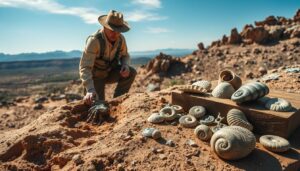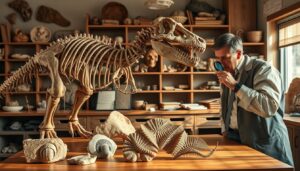
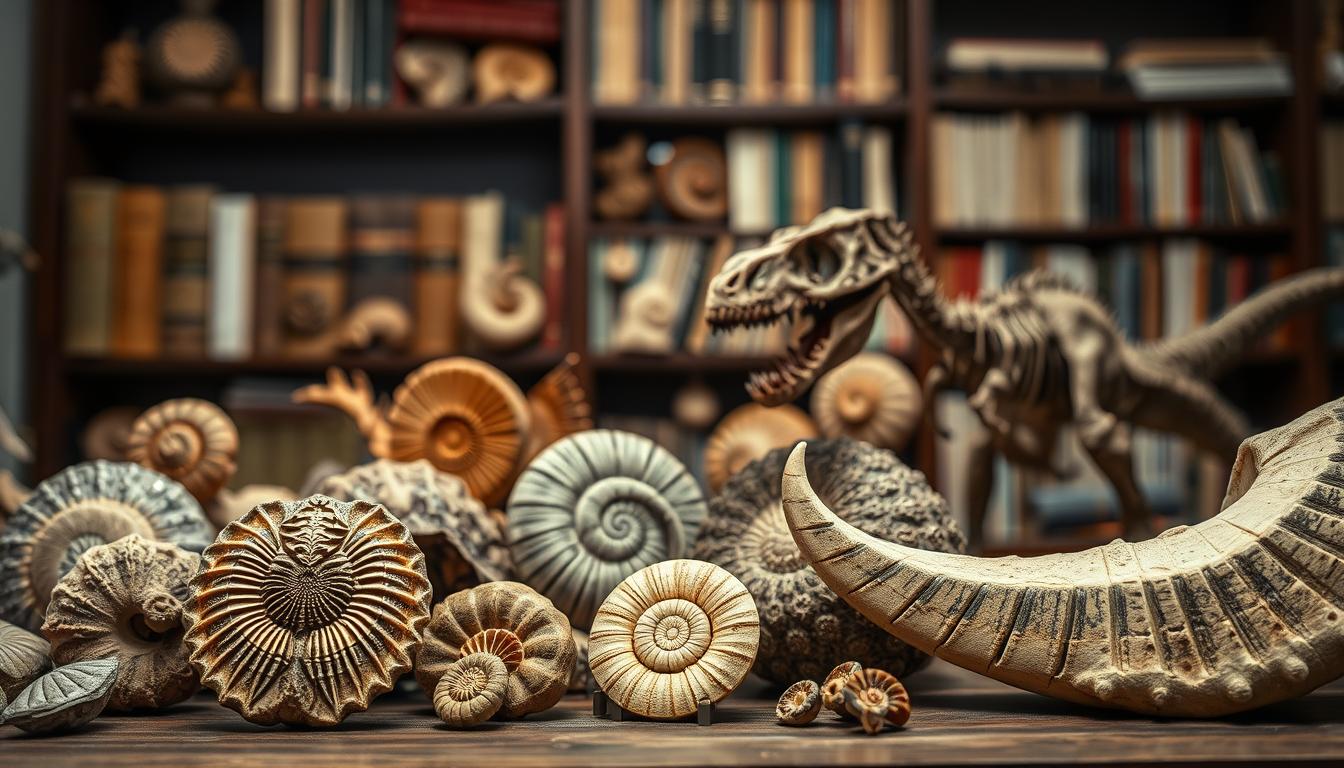
The study of fossil classification is key to understanding Earth’s history. Fossils let scientists see into the past. They help us learn how different species and ecosystems evolved over time.
Fossils are diverse, including body fossils, ichnofossils, and molecular fossils. These are remains or impressions of past plants, animals, and organisms. They are found in rock or other materials, giving us clues about life on Earth.
Key Takeaways
- Fossils are evidence of previously living organisms preserved as geologic objects.
- Fossil classification helps scientists understand the evolution of different species.
- Body fossils, ichnofossils, and molecular fossils are different types of fossils.
- Fossils provide insights into the history of life on Earth.
- The study of fossils is essential for reconstructing ancient ecosystems.
The Science of Paleontology and Fossil Study
Paleontology is the study of fossils. It shows us life’s history on Earth over millions of years. This field helps us understand life’s past throughfossil records.
What Defines a Fossil
A fossil is what’s left of an old creature. It can befossilized bones, leaves, or tracks. Fossils form when minerals replace the original material.
This process helps scientists study ancient life’s shape and structure.
The Historical Development of Paleontology
Fossil study has been around for a long time. But, it really took off withpaleontological research methods. Radiometric dating helped figure out fossil ages.
This made us understand Earth’s history and life’s evolution better.
Radiometric dating is key for knowing rock and fossil ages. For more on this, check theAlberta Paleontological Society’s bulletin.
Paleontologists look atfossil records to learn about Earth’s past. They see how species evolved. Studying fossils is vital for understanding our planet’s history.
Fossil Types Studied in Paleontology
Paleontologists look at many fossils to learn about Earth’s past life. These fossils show us the history of life, from simple to complex forms.
Body Fossils
Body fossils are parts of old organisms, like bones and shells. They can be permineralized fossils, made when minerals fill in the cells of an organism.
Permineralized Fossils
Permineralized fossils keep a lot of detail. They help us see what ancient life looked like, including dinosaur fossils.
Molds and Casts
Molds and casts are types of body fossils. A mold is a space left when something decomposes. A cast is when sediment or minerals fill this space, making a copy of the organism.
Carbonized Remains
Carbonized remains happen when something is pressed and turns into a carbon film. This is common in plant fossils and tells us about old plants.
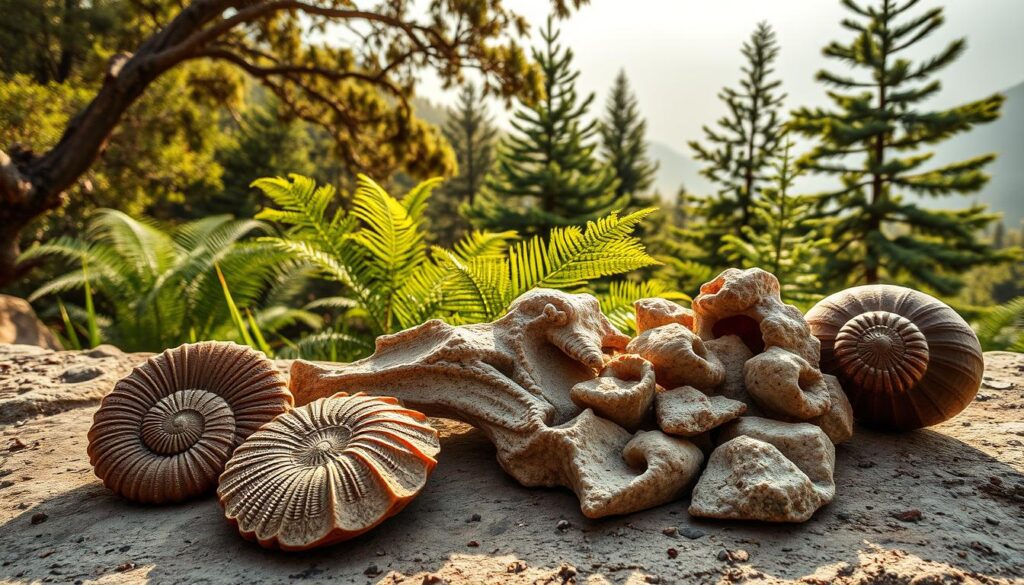
Trace Fossils
Trace fossils show how organisms interacted with their world. They include footprints and feeding marks. These fossils help us understand prehistoric fauna and their environments.
Tracks and Trackways
Tracks and trackways tell us about ancient animals’ movements. They show how they moved and what they ate.
Burrows and Borings
Burrows and borings show where organisms dug or bored. They tell us about their roles in ancient ecosystems.
Coprolites and Gastroliths
Coprolites and gastroliths are about what ancient animals ate. They help us know their biology and how they lived.
Dinosaur Fossils and Prehistoric Fauna
Dinosaur fossils have amazed both the public and scientists. They give us a peek into the lives of ancient creatures. Studying these fossils has led to big discoveries that change how we see Earth’s past.
Iconic Dinosaur Fossil Discoveries
Fossils found in places like Dinosaur National Monument have been key. Notable discoveries include fossils of Velociraptor and Tyrannosaurus Rex. These have shown us how these dinosaurs lived, ate, and moved.
Vertebrate vs. Invertebrate Fossils
Fossils are divided into two main groups: vertebrates and invertebrates. Vertebrates, like dinosaurs, tell us about animals with backbones. Invertebrates, like ancient insects and mollusks, show us the variety of life without backbones.
Plant Fossils and Ancient Flora
Plant fossils are also important for understanding the past. Fossils of plants like ferns and conifers help scientists picture ancient environments. 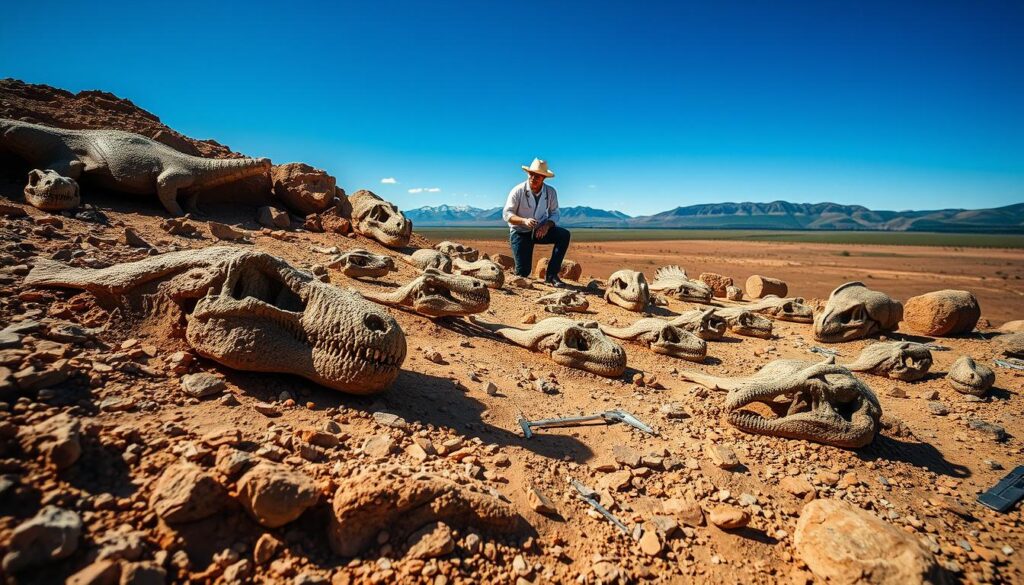
Fossil Identification and Classification Techniques (250-350 words)
## Fossil Identification and Classification Techniques
Fossil identification and classification are key to understanding Earth’s history. They help scientists group fossils by their traits. This shows how ancient life forms are related.
### Taxonomic Classification Systems
Taxonomic systems sort fossils into groups like kingdom, phylum, and species. These categories help scientists identify and classify fossils by their looks.
| Taxonomic Rank | Description |
| — | — |
| Kingdom | Highest rank, e.g., Animalia |
| Phylum | Level below kingdom, e.g., Chordata |
| Class | Level below phylum, e.g., Mammalia |
| Order | Level below class, e.g., Carnivora |
| Family | Level below order, e.g., Felidae |
| Genus | Level below family, e.g., Panthera |
| Species | Most specific rank, e.g., Panthera leo |
### Temporal and Stratigraphic Dating
Temporal and stratigraphic dating find out when fossils were alive. They use relative and absolute dating. Relative dating compares fossils in the same layer. Absolute dating uses isotopes to find the exact age.
### Morphological Analysis Methods
Morphological analysis looks at fossil shapes and structures. It helps scientists identify and classify fossils by their looks, like bone shapes.
By using these methods, scientists learn about ancient life and Earth’s history. For more on fossil analysis, visitAcademia.edu.
Fossil Preservation and Taphonomy
Fossil preservation is a complex process. It turns organic remains into fossils. Studying it helps us understand Earth’s history.
Processes of Fossilization
Fossilization happens in different ways. Permineralization fills sediment with mineral-rich water. This preserves the organism’s details. Replacement turns the original material into minerals, making a fossil replica. Impression fossils are made when sediment molds around the organism, creating a negative impression.
Fossilization needs special conditions. Fossil preservation depends on oxygen levels, sediment rates, and scavengers. For example, low oxygen slows decay, preserving delicate structures.
Factors Affecting Preservation Quality
Many things affect fossil preservation quality. The organism’s environment, oxygen levels, and sediment rates matter. Exceptional sites like Lagerstätten offer deep insights into ancient life. These sites have detailed fossils, even soft tissue.
Exceptional Preservation Sites
Exceptional sites are rare. They give us a peek into the past. Sites like Lagerstätten, amber, tar pits, and ice preservation are unique.
Lagerstätten Deposits
Lagerstätten deposits are special. They show us ancient life in detail. The Burgess Shale and Solnhofen Limestone are key examples.
Amber Preservation
Amber traps organisms in resin, which hardens. This preserves delicate structures. It gives us a unique look at ancient biology.
Tar Pits and Ice Preservation
Tar pits and ice can also preserve fossils well. Tar pits, like La Brea, trap organisms. Ice, like in Siberia, preserves woolly mammoths with great detail.
Understanding fossil preservation is key to knowing Earth’s history. By studying special sites and factors, we learn about ancient life.
[link-whisper-related-posts]Conclusion: How Fossils Illuminate Earth’s History
The study of fossils is key to knowing Earth’s history and life’s evolution. Scientists use fossils to learn about past environments and species changes. They also study extinction events.
Methods like taxonomic classification and stratigraphic dating help decode fossils. These methods are essential for understanding the past.
By studying fossils, researchers uncover Earth’s history and life’s secrets. Fossil records hold a lot of information. This helps scientists understand the past better.
FAQ
What is a fossil?
A fossil is the remains or impression of a plant, animal, or other organism from the past. It is preserved in rock or other materials.
What is the significance of fossils in understanding ancient life forms?
Fossils let us see into the past. They help scientists learn about the evolution of species and ecosystems over time.
What are the different types of fossils studied in paleontology?
In paleontology, we study different types of fossils. These include body fossils, like dinosaur bones, and trace fossils, like footprints and burrows.
How are fossils identified and classified?
To identify and classify fossils, scientists use various methods. These include taxonomic systems, dating methods, and studying their shape and structure.
What is the importance of fossil preservation in understanding prehistoric fauna?
Preserving fossils is key to understanding ancient life. It lets scientists study the anatomy and biology of long-lost organisms.
What are some exceptional preservation sites that have contributed significantly to our understanding of ancient life?
Places like the Burgess Shale and the Solnhofen Limestone are famous for their well-preserved fossils. They give us detailed insights into ancient life.
How do fossils contribute to our understanding of evolution and extinction events?
Fossils show us the history of life on Earth. They help scientists study how species evolve and how extinction events affect ecosystems.
What is the role of paleontological research methods in advancing our knowledge of the past?
Methods like radiometric dating and studying shapes are vital. They help us learn about the past and the history of life on Earth.

Subscribe to Our Newsletter