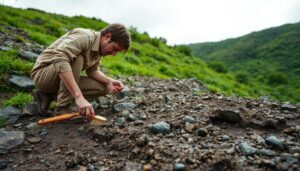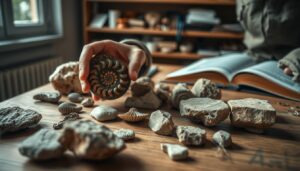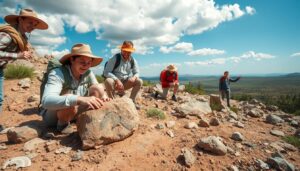
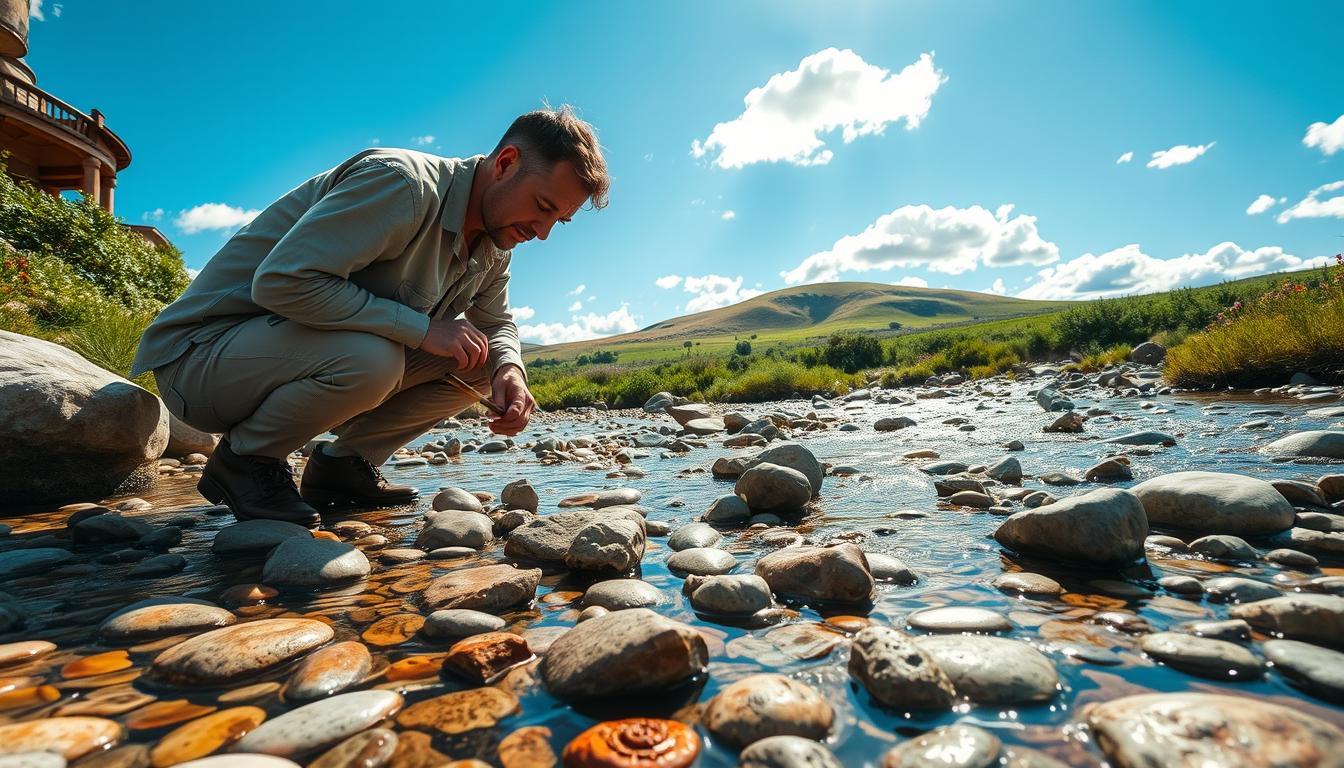
Finding ancient fossils in creek beds and riverbanks is thrilling. It mixes adventure with science. Fossil hunting here can reveal many historical finds, like old shells and dinosaur bones. The Ottawa River and Rock Glen Conservation Area are famous for their fossil-rich environments.
For those wanting to explore more places, the US has many sites for fossil hunting. Knowing the area’s geological history can make hunting fossils even better.
Key Takeaways
- Identify places good for fossil hunting, like creek beds and riverbanks.
- Know the rules about collecting fossils in your area.
- Learn how to spot fossils to make your hunt better.
- Check out famous fossil hunting spots, like the Ottawa River.
- Understand the geological history of where you’re hunting.
The Fascinating World of Paleontological Discoveries
Paleontological discoveries take us back in time. They show us how life evolved on Earth. These finds can be made in creek beds and riverbanks, where erosion uncovers fossils.
Why Ancient Life Forms Get Preserved in Waterways
Waterways like creek beds and riverbanks are great for fossil preservation. Sediments carried by water can quickly bury organic matter, protecting it from decay. As more sediment piles up, pressure and conditions can create fossils, keeping ancient life forms safe for us to find.
Common Types of Fossils Found in Creek Beds
Creek beds have many fossils, including those of ancient sea creatures. For example, Stromatolites and orthocones can be found in some places. These fossils help us understand the Earth’s ancient environments and life.
Other common fossils include brachiopods, crinoids, and trilobites. Each one gives us a glimpse into Earth’s history. Finding these fossils in creek beds shows the area’s long geological history, shaped by tectonic activity and erosion.
Getting Started: Fossil Hunting in Creek Beds and Riverbanks
Fossil hunting in creek beds and riverbanks is fun. It mixes adventure with learning about Earth’s past. Knowing the basics is key for a good time.
Understanding Geological Time Periods
Knowing about geological time periods is important. They tell you how old and what kind of fossils you might find. Most creek and riverbank fossils are from the Paleozoic and Mesozoic eras, up to 500 million years old. Learning about these eras can make your hunt better.
| Era | Period | Approximate Age (Million Years) | Common Fossils |
|---|---|---|---|
| Paleozoic | Ordovician, Silurian | 450-500 | Trilobites, Brachiopods |
| Mesozoic | Triassic, Jurassic | 200-250 | Ammonites, Crinoid stems |
Best Seasons and Weather Conditions for Fossil Hunting
The best times to hunt fossils are spring and fall. The weather is nice, and the water is low. This lets you see more places to search. After rain, creek beds and riverbanks get new fossils, making them great for hunting. For more info, check out fossil hunting sites.
Tips for Beginners: What to Look For
For beginners, knowing what to look for is important. Look for brachiopods, crinoid stems, and trilobites. Search in areas with exposed rock and gravel. Always follow local rules on collecting fossils to hunt responsibly.
By learning about time periods, knowing the best times to hunt, and what to search for, you can enjoy fossil hunting more in creek beds and riverbanks.
Essential Equipment and Safety Considerations
Going on a fossil hunt needs the right tools and safety steps. It’s a fun hobby but can be risky. You’ll explore the outdoors, facing different dangers.
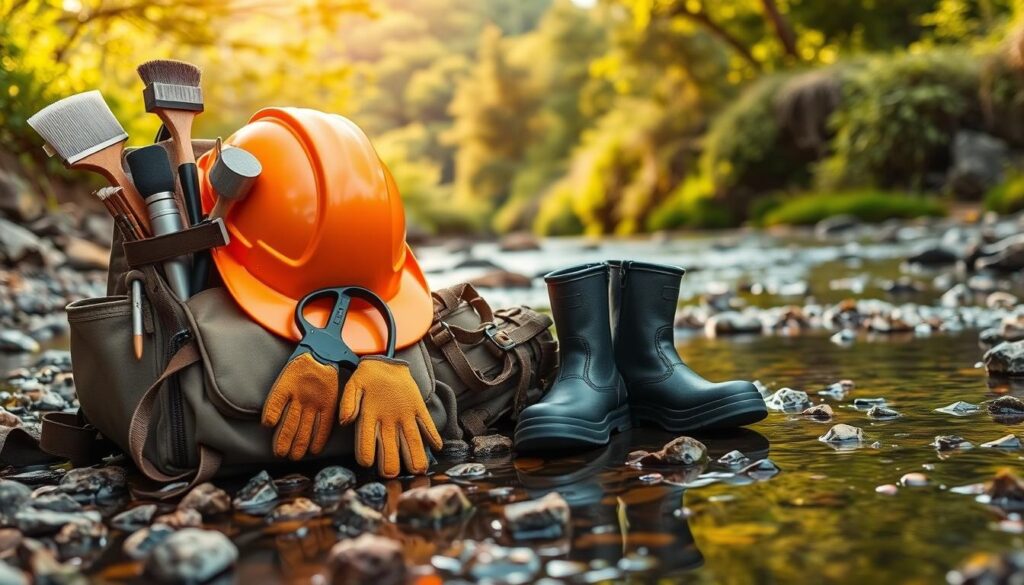
Must-Have Tools for Fossil Collection
Choosing the right tools is key for finding fossils. You’ll need:
- Rock Hammers: For breaking rocks and getting fossils out.
- Hand Lenses: To see fossils up close.
- Chisels and Brushes: For gently finding fossils.
| Tool | Purpose | Importance Level |
|---|---|---|
| Rock Hammer | Breaking rocks | High |
| Hand Lens | Examining specimens | High |
| Chisels | Extracting fossils | Medium |
Protective Gear and Safety Precautions
Always put safety first. Wear:
- Gloves: To protect your hands from sharp things.
- Safety Glasses: Keep your eyes safe from flying debris.
- Sturdy Boots: For support and safety on rough ground.
Packing Essentials for a Day of Fossil Hunting
Bring the right stuff to make your hunt better. Don’t forget:
- Water and Snacks: Stay hydrated and full of energy.
- First Aid Kit: For small injuries.
- Map and Compass: To find your way.
With the right gear and safety steps, fossil hunting is safer and more fun.
Prime Locations and Legal Considerations
The United States has many great places for finding fossils. Each spot has its own special features. From the Ottawa River to the Rock Glen Conservation Area, they all show us what life was like long ago.
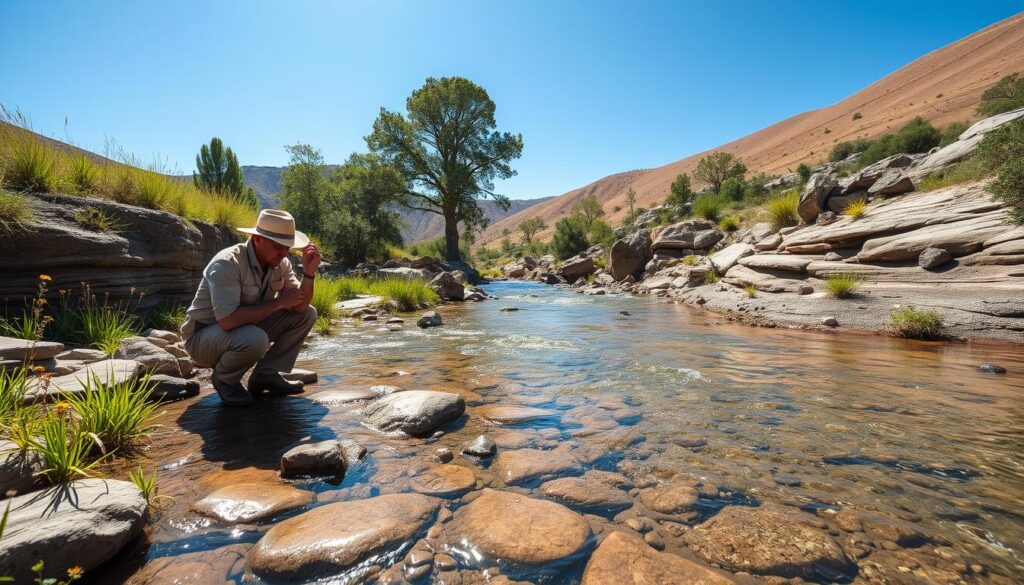
Top Fossil-Rich Creek Beds Across the United States
Many famous creek beds are spread out across the country. The Eastern Seaboard is known for its fossils. The Midwest and Southern waterways also have lots to discover.
Regulations and Permits for Fossil Hunting
Before you start looking for fossils, you need to know the rules. Each place has its own rules for collecting fossils.
Eastern Seaboard Hotspots
The Eastern Seaboard has lots of fossil sites. Places in New Jersey and Maryland have fossils from the Cretaceous and Miocene periods. But, you must follow the rules and get the right permits.
Midwest and Southern Waterways
The Midwest and Southern U.S. also have great places for fossil hunting. The Rock Glen Conservation Area in Ontario is one such place. But, always check the local rules as they can change.
Knowing and following these rules is key. It makes sure you have a good time hunting for fossils. It also helps keep these important finds safe for others in the future.
[link-whisper-related-posts]Conclusion: Preserving the Past While Enjoying the Hunt
Fossil hunting in creek beds and riverbanks is fun and rewarding. It lets people find ancient relics and helps keep history alive. By learning about the earth’s changes, we can hunt fossils while caring for our planet.
To start fossil hunting, you need to know about different time periods and what tools to use. You also have to stay safe. The U.S. has many places where you can find fossils, but you must follow the rules and get the right permits.
When we hunt fossils responsibly, we help keep history safe for others to see. This means not just collecting fossils but also sharing what we find. It helps us all learn more about our world’s past.
FAQ
What are the best tools for fossil hunting?
For fossil hunting, you’ll need a geologist’s hammer, a hand lens, chisels, and a brush. A rock hammer with a flat end is great for breaking rocks and soil.
Where are the best locations for fossil hunting in the United States?
The best places for fossil hunting are across the United States. Look at the Eastern Seaboard and Midwest. Creek beds and riverbanks are good spots, filled with fossils from ancient sea life.
How do I identify fossils found in creek beds?
To spot fossils, look for odd shapes or patterns in rocks. Use a hand lens to get a closer look. Compare it to pictures or descriptions in fossil guides. Talking to fossil experts can also help.
What safety precautions should I take when fossil hunting?
Always wear protective gear like gloves, safety glasses, and sturdy boots. Be careful of dangers like fast water, steep banks, and loose rocks.
Do I need a permit to go fossil hunting?
Permits for fossil hunting vary by place. Check with local authorities to see if you need one. Some places have rules or restrictions on collecting fossils, so it’s good to know before you go.
What are the best seasons and weather conditions for fossil hunting?
The best times for fossil hunting depend on where you are. Look for low water and dry weather to find new fossils. Stay away from hunting during heavy rain or floods, as it’s dangerous.
How can I ensure I’m fossil hunting responsibly?
To hunt fossils responsibly, respect private land and protected areas. Follow local rules and care for the environment. Only take fossils that are already exposed or falling out of the rock, and don’t harm the area around them.

Subscribe to Our Newsletter