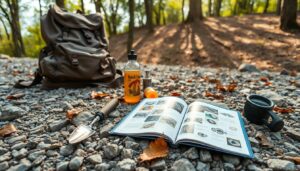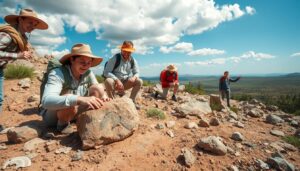
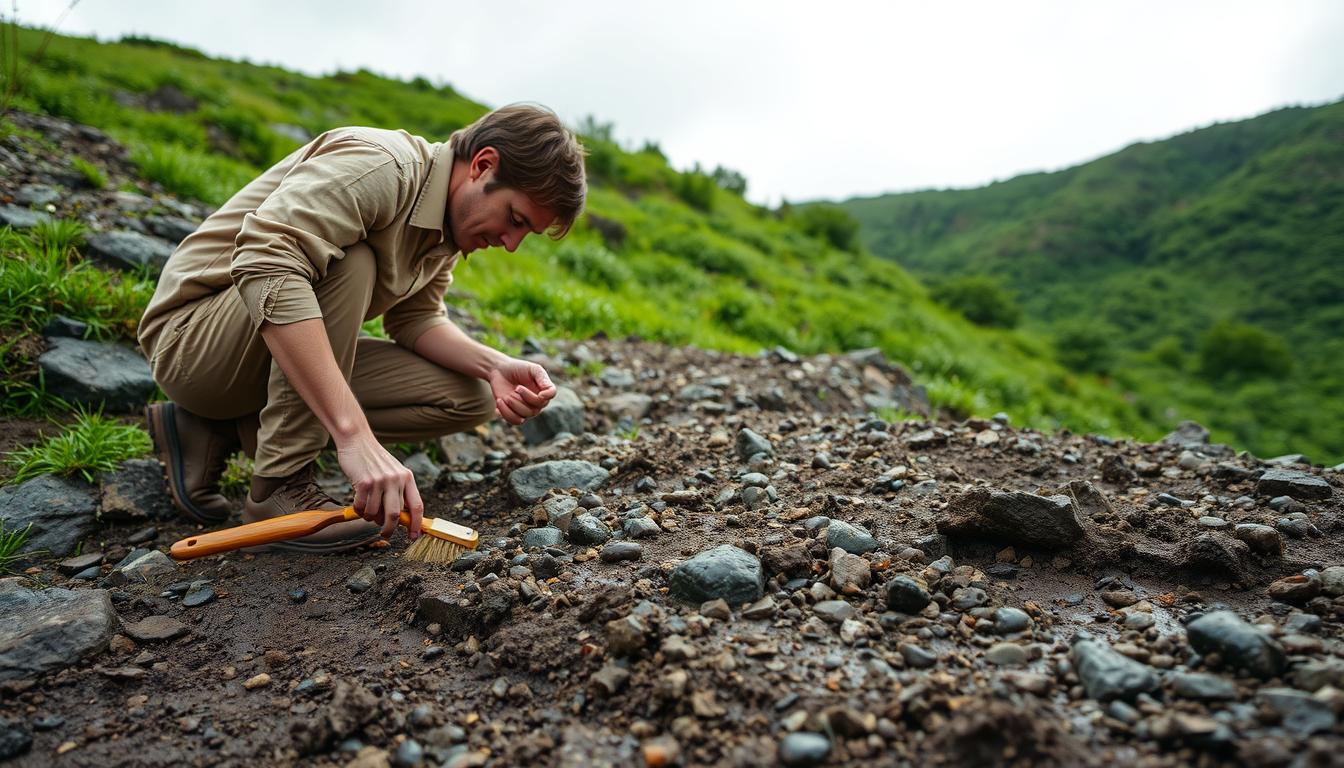
Fossil hunting is a fun activity where you search for ancient life’s remains. Rain can make fossil hunting better by changing the landscape and showing hidden fossils.
Rain erodes soil, making fossils easier to find. This is key for those wanting to find fossils. It brings new fossils to the surface.
Knowing how rain affects fossil hunting can help you find more fossils. By knowing when and where to look, you can have better adventures.
Key Takeaways
- Rainfall enhances fossil hunting by eroding sediment and exposing new material.
- The best time to go fossil hunting is often after significant rainfall.
- Understanding the science behind fossil exposure can improve hunting success.
- Fossil hunting tips often include searching in areas with recent erosion.
- Weather conditions play a big role in fossil hunting success.
The Science Behind Fossil Exposure
Rainfall changes the landscape in many ways. It leads to geological changes that can expose fossils. This is the science behind fossil exposure after rain.
How Rainfall Reveals Hidden Treasures
Rain erodes the ground, washing away sediment. This reveals layers where fossils may be buried. It’s a key process for fossil hunters.
Erosion is key in exposing fossils. Rainwater flows over the ground, taking soil and rock away. This can uncover fossils that were hidden.
Erosion Processes and Fossil Visibility
Erosion, like runoff and landslides, helps make fossils visible. These processes remove sediment layers. This exposes rock formations where fossils are found.
The “Fresh Wash” Phenomenon
The “fresh wash” happens when rain washes away dirt. This reveals clean surfaces and can expose new fossils. It’s great for fossil hunters as it makes the terrain clearer.
| Erosion Process | Effect on Fossil Visibility |
|---|---|
| Runoff | Washes away surface sediment, potentially exposing fossils. |
| Landslides | Can reveal new rock formations and underlying fossils. |
| Stream Flow | Carries away debris, cleaning and exposing fossil surfaces. |
Understanding these processes is key for successful fossil hunting after rain. By knowing how rain affects the landscape, hunters can find hidden fossils.
Fossil Hunting After Rain: Why It Works
Fossil hunting gets better after rain. Rain changes the terrain in ways that help find fossils.
Enhanced Surface Visibility and Contrast
Rain washes away dirt, making things clearer. Enhancing visibility and contrast helps spot fossils easier. It also shows off the texture and color of fossils against the rock or soil.
Softened Sediment for Easier Extraction
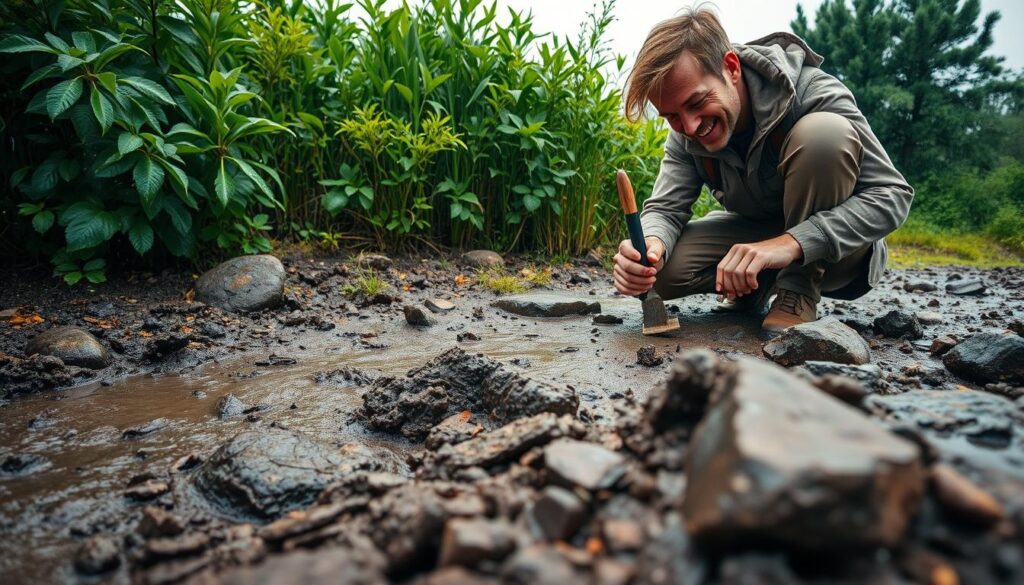
Rain makes sediment soft, making it easier to dig. Softened sediment reduces the risk of damaging fossils when digging. This is good for delicate fossils that can break easily.
| Condition | Fossil Extraction Difficulty | Risk of Damage |
|---|---|---|
| Dry Sediment | High | High |
| Softened Sediment | Low | Low |
Newly Exposed Specimens from Water Action
Rain can uncover new fossils that were hidden. NASA’s Earth Observatory says water can expose fossils. This means more fossils to find.
Knowing these points helps fossil hunters find more after rain. The right conditions make finding fossils easier.
Prime Locations for Post-Rain Fossil Discoveries
After rain, new spots open up for fossil hunters. Rain changes the landscape, making some areas better for finding fossils.
Coastal Cliffs and Beach Exposures
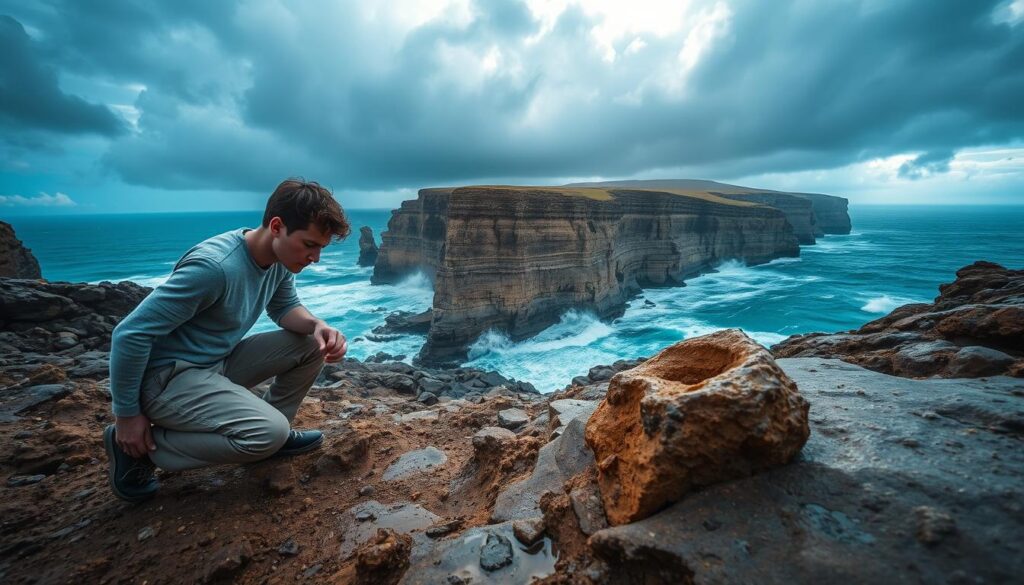
Coastal cliffs and beaches are great for finding fossils after rain. Waves and tides erode the land, revealing fossils. Beachcombing after a storm or rain can be very rewarding, as hidden treasures are brought to the surface.
Stream Beds and River Embankments
Stream beds and river embankments are also good for fossil hunting after rain. The water flow erodes sediment, showing fossils that were hidden. Exploring areas like Hell Creek is fruitful because of their rich history.
Road Cuts and Construction Sites
Road cuts and construction sites expose new formations, perfect for fossil hunting. Rain erodes these areas, making fossils visible. Always get the right permits before searching these spots.
Famous U.S. Fossil Sites Best Visited After Rain
Some famous fossil sites in the U.S. include:
| Location | Fossil Type | Best Time to Visit |
|---|---|---|
| Hell Creek, Montana | Dinosaur fossils | After spring rains |
| Big Bend National Park, Texas | Fossilized plants and animals | Following summer storms |
| Calvert Cliffs, Maryland | Miocene epoch fossils | After autumn rains |
Visiting these sites after rain boosts your chances of finding fossils. Make sure you have the right permissions and follow local rules.
Practical Strategies for Successful Wet-Weather Hunting
For successful wet-weather fossil hunting, you need knowledge, the right gear, and the best timing. Knowing these can make your fossil hunting better.
Optimal Timing: How Soon After Rainfall to Search
The best time to look for fossils after rain is 24 to 48 hours later. This lets new fossils show up without getting too hard or washed away.
Essential Tools and Equipment for Wet Conditions
For wet weather, you need the right tools. This includes waterproof stuff, strong boots, and tools for carefully taking fossils out of the dirt. A fossil hunting guide can tell you more about what you need.
| Tool/Equipment | Description |
|---|---|
| Waterproof Gear | Keeps your stuff dry |
| Sturdy Boots | Helps you stay stable and safe on wet ground |
| Extraction Tools | Helps you take fossils out of the dirt gently |
Identification Techniques for Rain-Washed Specimens
Finding fossils washed by rain needs a sharp eye. Look for fossils with clear shapes that haven’t been worn down by water.
Safety Precautions for Post-Rain Expeditions
Always think about safety when you go out after rain. Watch out for slippery spots, fast water, and landslides. Tell someone where you’re going and make sure you have the right safety gear.
[link-whisper-related-posts]Conclusion: Maximizing Your Rainy Day Fossil Adventures
Fossil hunting after rain can be very rewarding. It lets you find hidden treasures and learn about important fossils. Knowing how fossils are exposed and being ready can help you find more.
After rain, the ground is easier to see and the dirt is softer. This makes it a great time to look for fossils. Places like coastal cliffs, stream beds, and road cuts are good to check. Using the right tools and timing can help you find more fossils.
When you go fossil hunting on a rainy day, be ready and stay safe. The right attitude and knowledge can help you find new fossils. Whether you’re experienced or new, finding a fossil is exciting. It makes rainy day fossil hunting a special adventure.
FAQ
Why is fossil hunting more effective after rain?
Rain makes sediment wash away, showing new fossils. It also softens the sediment, making fossils easier to find.
What are the best locations for fossil hunting after rain?
Look for coastal cliffs, stream beds, and road cuts after rain. These places erode, revealing fossils.
How soon after rainfall should I go fossil hunting?
Go fossil hunting a few days after the rain stops. This lets sediment wash away, showing new fossils.
What tools and equipment do I need for fossil hunting in wet conditions?
You’ll need a rock hammer, chisels, gloves, and a brush. Wear waterproof clothes and sturdy boots too.
How do I identify fossils that have been washed by rain?
Look for fossils that are exposed or partially exposed. Check for texture, pattern, and shape. Use a field guide or ask an expert.
What safety precautions should I take during post-rain fossil hunting expeditions?
Watch for slippery surfaces and fast-moving water. Wear sturdy boots and bring safety gear. Tell someone your plans and when you’ll return.
Can I go fossil hunting after a storm?
Yes, after a storm is a great time to hunt fossils. But be careful and follow safety rules.
What is the “fresh wash” phenomenon, and how does it relate to fossil hunting?
The “fresh wash” phenomenon is when rain washes away sediment, revealing fossils. It’s key for fossil hunting, as it makes hidden fossils visible.

Subscribe to Our Newsletter