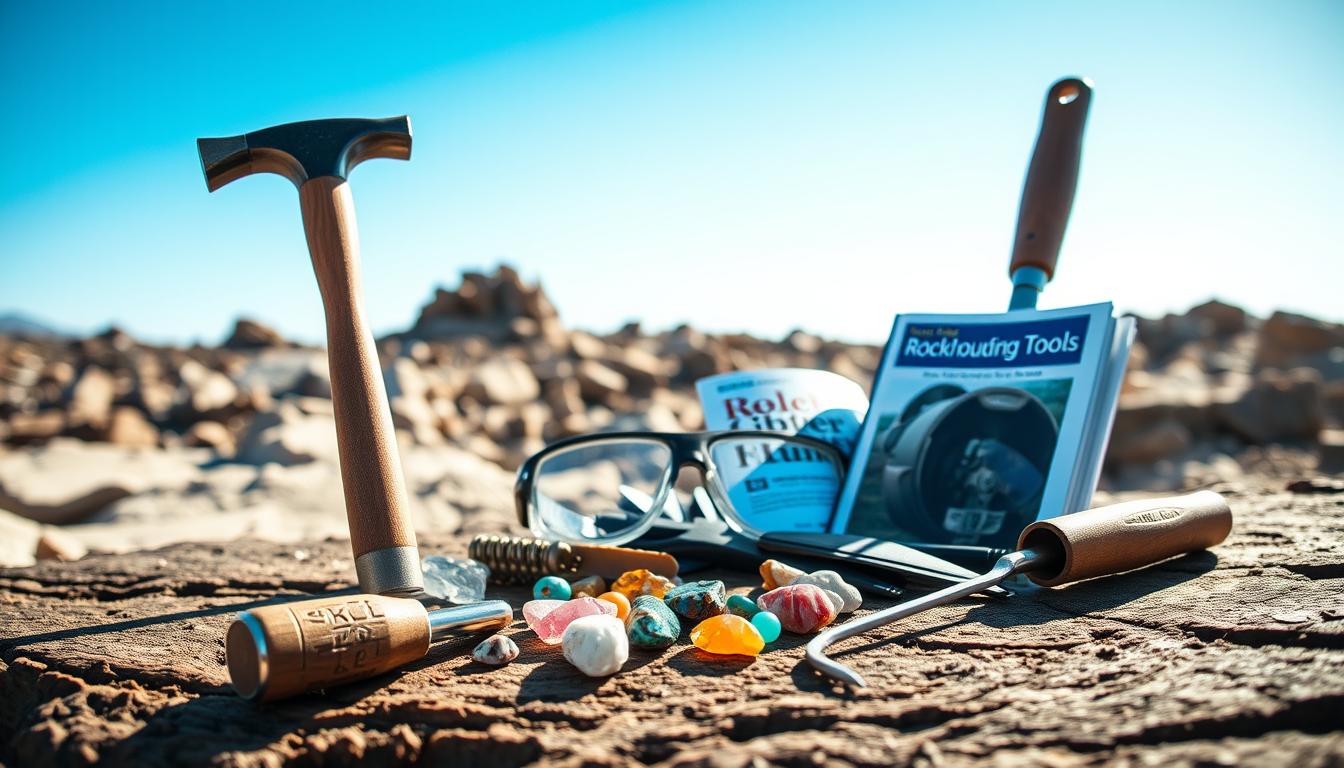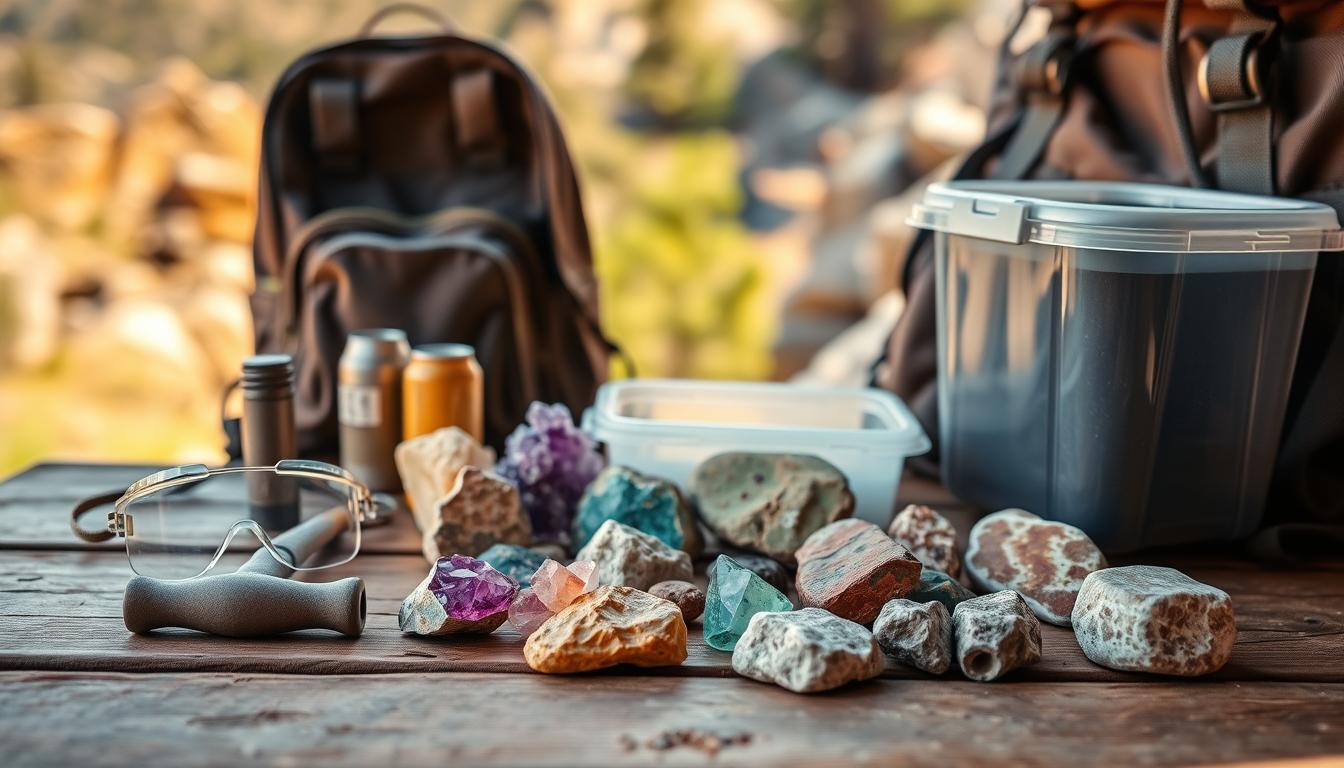
Rockhounding is a fun hobby that lets you explore nature. You get to find hidden gemstones, minerals, and fossils. To have a great time, you need the right rockhounding essentials.
The right tools can really help you find treasures. If you love rockhounding, you need the best gear. It helps you explore and discover the world around you.
Key Takeaways
- Essential tools for a successful rockhounding experience
- The importance of having the right equipment
- Must-have gear for aspiring rockhounds
- Tips for uncovering mineral treasures
- Best practices for rockhounding enthusiasts
Why the Right Tools Are Essential for Successful Rockhounding
Rockhounding needs the right tools for safe and effective collecting. The right gear can greatly improve your finds and experience.
The Challenges of Rock and Mineral Collection
Rockhounding can be tough, like breaking rocks to find minerals. You need quality equipment like hammers, chisels, and pry bars. Safety glasses and gloves also keep you safe.
How Quality Equipment Improves Finds and Safety
Good tools make rockhounding better by improving finds and safety. A geological hammer helps break rocks right. Safety glasses protect your eyes from flying debris. Learn more about top rockhounding gear for a safe and fun experience.
Field Tools That Make Rockhounding Easier: The Basic Kit
The right tools make rockhounding better. They help you find and collect rocks safely.
Geological Hammers and Rock Picks: Types and Uses
A geological hammer is key for rockhounding. It breaks rocks and gets specimens out. There are hammers with pointed tips for detailed work and flat heads for bigger jobs.
A rock pick helps with a hammer. It gives more power and control when getting specimens.
Chisels, Pry Bars, and Crack Hammers
Chisels are great for making controlled breaks in rocks. Pry bars gently pry rocks apart. Crack hammers give precise blows to chisels or rocks.
Essential Safety Equipment: Gloves, Goggles, and Helmets
Safety gear is vital for rockhounding. Gloves protect hands, goggles keep eyes safe, and helmets guard your head. These items are key for a safe experience.
| Tool | Purpose | Importance Level |
|---|---|---|
| Geological Hammer | Breaking rocks and extracting specimens | High |
| Chisels | Creating controlled breaks in rocks | High |
| Goggles | Protecting eyes from flying debris | High |
| Gloves | Protecting hands from cuts and abrasions | Medium |
| Pry Bars | Gently prying rocks apart | Medium |
With these essential rockhounding supplies, you’ll have a safe and fun time. Whether you’re new or experienced, the right tools are key to success.
Digging and Extraction Equipment for Various Terrains
Rockhounding needs different tools for each terrain. This makes the hobby fun and successful. You’ll need the right gear for rocky streams, dry deserts, or gravel quarries.
Shovels, Trowels, and Folding Spades
A strong shovel is key for any rockhound. It lets you dig into soil or gravel. Folding spades are great because they’re easy to carry and versatile.
Trowels are perfect for digging in small spaces. For more info on essential tools, check out Gearing Up: Must-Have Tools for the Aspiring.
Screens, Sieves, and Classifiers for Material Sorting
Sorting through material is a big part of rockhounding. Screens and sieves help separate big rocks from smaller stuff. Classifiers sort by size and type. These tools are key for processing your finds.

Specialized Tools for Different Environments
Each place needs its own tools. In the desert, a strong trowel or small shovel works well. Near streams or rivers, a classifier or gold pan is a must.
Quarries need heavy-duty stuff like a rock saw or pry bar. This equipment is vital for the job.
| Terrain | Recommended Tools |
|---|---|
| Desert | Trowel, small shovel |
| Stream/River | Classifier, gold pan |
| Quarry | Rock saw, pry bar |
Collection and Transportation Tools
The right tools for collecting and moving rocks are key for any rockhounding trip. Rockhounds must make sure their finds are safe on the way back to labs or storage.
Field Bags, Buckets, and Specimen Containers
Field bags, buckets, and containers are must-haves for storing and moving rock finds. Durable, water-resistant containers help keep specimens safe. It’s good to have different sizes for various types and sizes of rocks.
Wrapping Materials and Specimen Protection
To keep rocks safe during transport, rockhounds use wrapping materials. Bubble wrap, paper, and cloth are used to protect fragile rocks. Having tape and padding materials helps keep rocks in place.

Backpacks and Carrying Systems for Long Excursions
For long trips, a good backpack or carrying system is essential. These should spread out the weight well. This lets rockhounds carry their gear and rocks for a long time without getting tired.
| Tool | Purpose | Key Features |
|---|---|---|
| Field Bags | Storing specimens | Durable, water-resistant |
| Specimen Containers | Protecting specimens | Variety of sizes, secure lids |
| Backpacks | Carrying equipment | Comfortable, weight-distributing |
Identification and Analysis Equipment in the Field
When you go rockhounding, the right tools are key. They make sure you can identify and analyze your finds well. You’ll need hand lenses, loupes, portable microscopes, mineral testing kits, and field guides.
Hand Lenses, Loupes, and Portable Microscopes
Hand lenses, loupes, and portable microscopes are must-haves. Ahand lens lets you see details up close. Loupes give you even more zoom. Portable microscopes offer the most zoom and light for seeing tiny details.
A hand lens shows you a rock’s texture. A loupe lets you see mineral crystals better. Portable microscopes show tiny details that help you identify minerals.
Mineral Testing Kits: Streak Plates, Hardness Testers
Mineral testing kits are also important. They havestreak plates andhardness testers. The streak test shows a mineral’s color when powdered. Hardness testers tell you how hard a mineral is.
Using a streak plate is easy. Just scratch the mineral on it to see the color. Hardness testing compares the mineral to known ones on the Mohs scale.
Field Guides, Apps, and Digital Resources
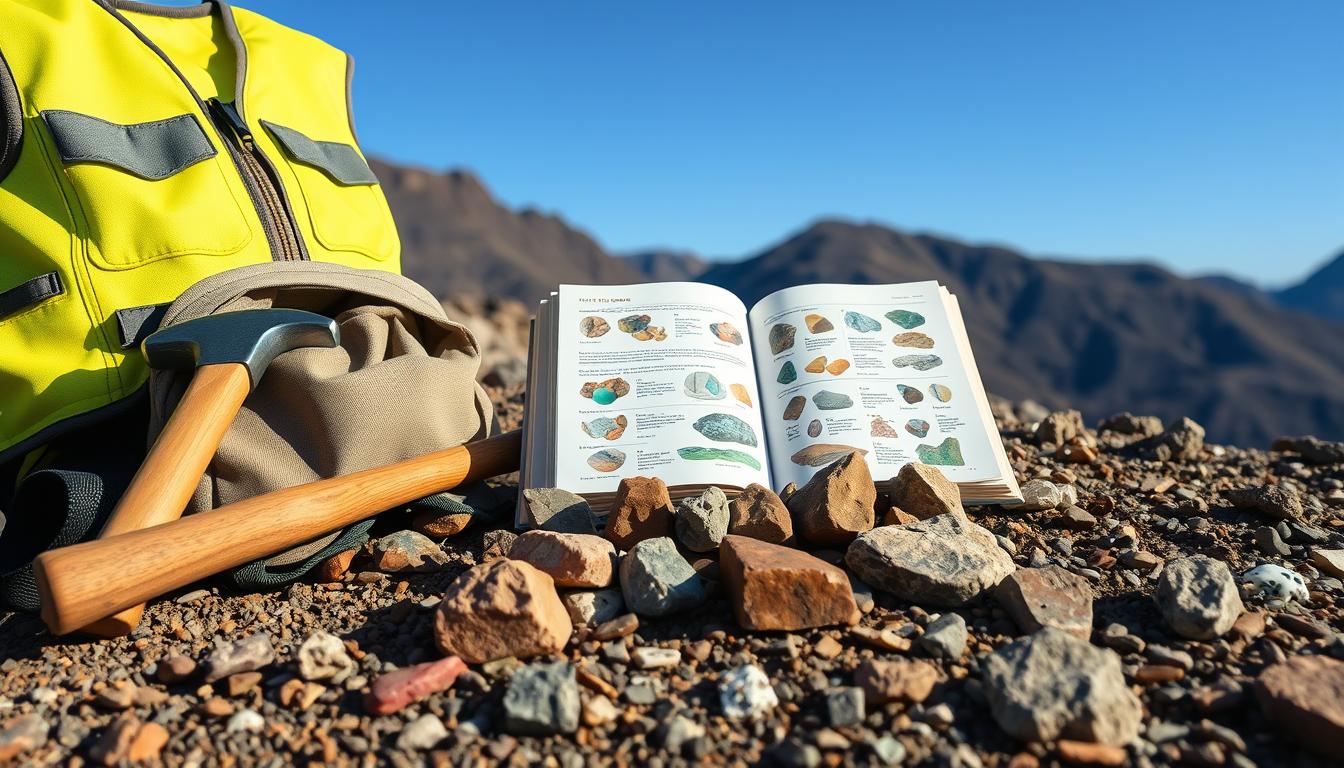
Field guides, apps, and online resources are also helpful. Field guides have pictures and descriptions of minerals. Apps and online forums let you share and get help with your finds.
A field guide can help you identify rocks and minerals. Apps offer quick identification tools. Online forums are great for discussing finds with others.
To improve your rockhounding, check out our article on thebest rockhounding tools for beginners.
[link-whisper-related-posts]Conclusion: Building Your Personalized Rockhounding Toolkit
Field tools are key for a great rockhounding trip. The right gear makes finding rocks easier and more fun. You’ll need a geological hammer, hand lens, and safety gear in your kit.
Knowing the value of Field Tools That Make Rockhounding Easier helps you build your own kit. This makes your finds better and keeps you safe on trips.
Getting the right rockhounding essentials is important for all rockhounds. With the right tools, every trip becomes an exciting adventure.
## FAQ
### Q: What are the essential tools for rockhounding?
A: You’ll need a geological hammer, rock pick, chisels, and pry bars. Don’t forget safety gear like gloves and goggles.
### Q: Why is safety equipment necessary for rockhounding?
A: Safety glasses and gloves keep you safe. They protect you from flying rocks and sharp edges.
### Q: What type of equipment is used for digging and extraction?
A: Use shovels, trowels, and folding spades for digging. Screens, sieves, and classifiers help sort materials.
### Q: How do I transport my rockhounding finds?
A: Carry your finds in field bags, buckets, and specimen containers. Backpacks and carrying systems help with long trips.
### Q: What tools are used for identifying and analyzing specimens?
A: Hand lenses, loupes, and portable microscopes help see details. Mineral testing kits and field guides help identify what you find.
### Q: Can I use regular gardening tools for rockhounding?
A: Some gardening tools might work, but rockhounding tools are made for breaking rocks and getting minerals.
### Q: What are some specialized tools for different environments?
A: For digging in loose soil, use shovels. Rock picks are good for breaking rocks in quarries. Classifiers are great for sorting in streams.
### Q: How do I choose the right geological hammer?
A: Pick a hammer that’s durable and has a comfy grip. Make sure it’s right for the rocks you’re working with.

Subscribe to Our Newsletter