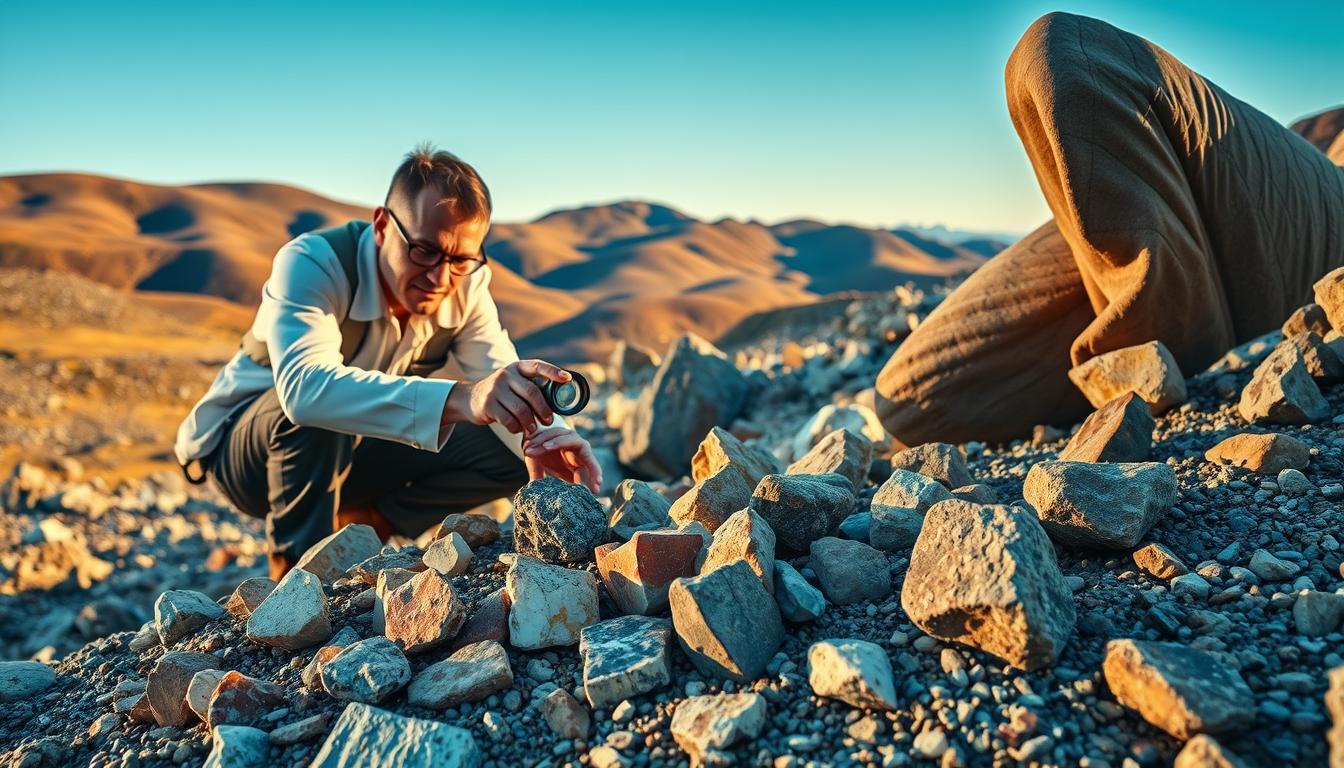
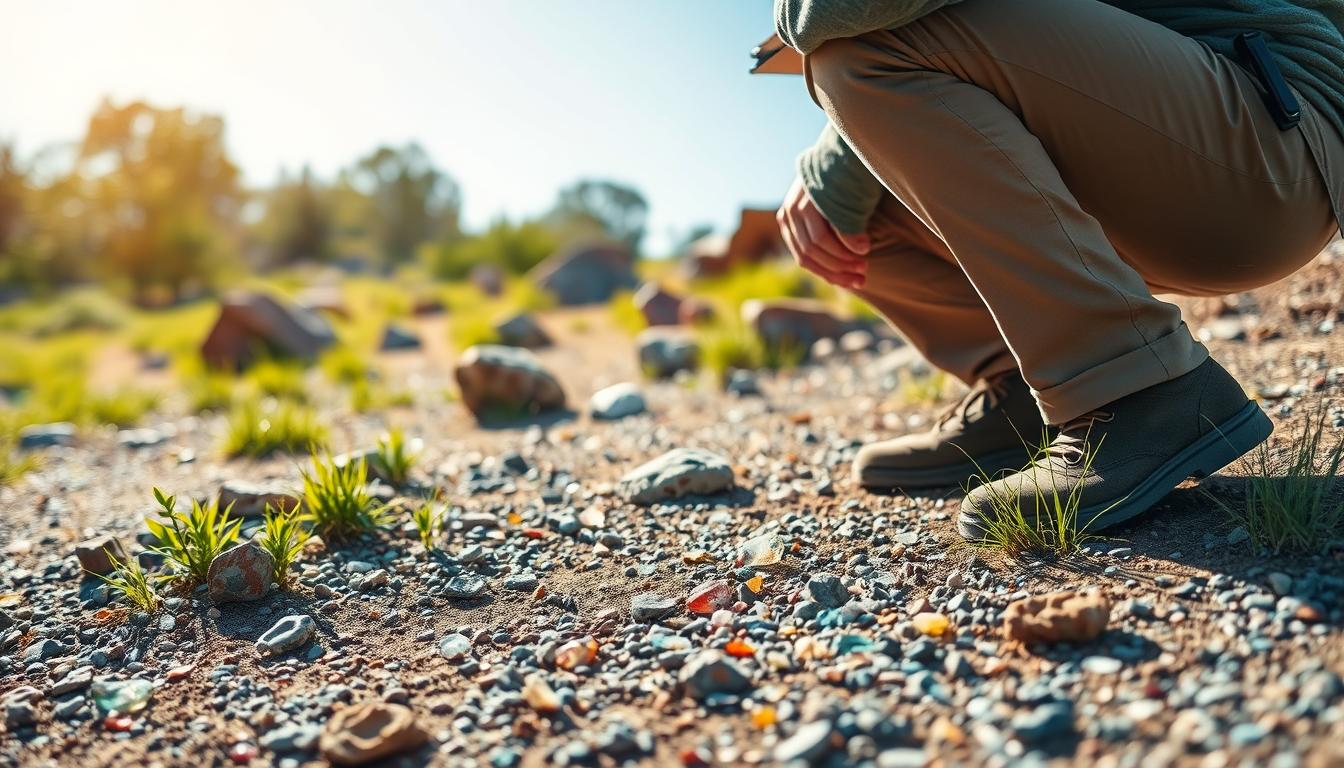
Rockhounding is a fun hobby where you search for rocks, minerals, and fossils. To find success, you need to know where to search.
Many people know that obvious places can have great finds. But, there are also overlooked spots full of geological treasures.
Don’t forget to check roadside cuts, construction sites, and urban areas. These places are often missed by rockhounds.
Key Takeaways
- Explore roadside cuts for exposed geological formations
- Visit construction sites for newly exposed rocks and minerals
- Search urban areas for hidden geological treasures
- Keep an eye out for water features, such as rivers and streams
- Be aware of local geology and rock formations
The Overlooked Rockhounding Spots: Roadside Cuts and Construction Sites
Many rockhounds stick to the same old spots. But roadside cuts and construction sites are full of new rocks and minerals. These places are often ignored, but they can be full of interesting geological finds.
Fresh Road Cuts and Their Geological Value
Fresh road cuts are great for rockhounds. They show new geological formations that were hidden before. These cuts can reveal layers of rock that have been hidden for centuries.
The exposure of these formations can lead to the discovery of rare minerals and rocks that are hard to find elsewhere.
| Geological Formation | Potential Finds | Significance |
|---|---|---|
| Igneous Rocks | Rare minerals, gemstones | Provides insights into volcanic activity |
| Sedimentary Layers | Fossils, limestone, sandstone | Reveals historical geological events |
| Metamorphic Rocks | Marble, slate, quartzite | Indicates tectonic activity and pressure |
Navigating Legal Access to Construction Areas
Construction sites can be great for rockhounds, but you need to know the law. Many sites are on private land, and you must get permission to collect. You also need to follow local rules and get the right permits.
Knowing the law helps rockhounds find valuable specimens. It also makes sure they respect property rights and follow the rules.
Water Features: Beyond the Obvious Streams and Rivers
Exploring water features for rockhounding means looking beyond streams and rivers. These places are great for finding rocks and minerals. But, other water bodies can also hold geological treasures.
Seasonal Dry Creek Beds and Their Hidden Treasures
Seasonal dry creek beds are often missed but are full of surprises. In dry times, they show gravel, pebbles, and sometimes gemstones. The dry areas let us see layers of sediment and rock that are usually hidden.
Rockhounds can search these spots for agates, jaspers, and other minerals. Water has washed these minerals down, making them easier to find.
Reservoir Shorelines During Low Water Periods
Reservoir shorelines are exciting for rockhounding, mainly when the water is low. As the water goes down, new areas are shown. These can be full of rocks and minerals.
Shorelines are great for finding fossils, agates, and other geological treasures. These items have been washed from the landscape and left along the shore.
Spring Seeps and Their Mineral Deposits
Spring seeps are where water comes up from underground, carrying minerals. These areas can have unique mineral deposits like travertine and calcite. Rockhounds can find specimens concentrated by the water here.
The minerals around spring seeps give clues about the local geology. They also offer chances to collect rare minerals.
Common Places People Forget to Check When Rockhounding in Urban Settings
Many people don’t think of urban areas for rockhounding. But, they can be full of rocks and minerals. City parks, public landscaping, and old industrial sites are full of treasures. For more info, check out this guide.

City Parks and Public Landscaping Areas
City parks and landscaping spots are often missed. But, they can have many rocks and minerals. Look for stones or natural features like streams.
Abandoned Industrial Sites and Their Geological Significance
Old industrial sites are full of interesting rocks and minerals. They might have leftovers from old mining or quarrying. These places can be very valuable for rockhounds.
Urban Drainage Systems After Heavy Rains
After heavy rains, urban drainage systems get new stuff. Storm drains and culverts can bring up cool rocks and minerals. It’s a great time to explore these areas.
Overlooked Natural Features with Rockhounding Rockhounding
Rockhounds know the secret to finding great rocks is to look beyond the usual spots. These hidden places can hold many valuable stones. By knowing where to look, rockhounds can find rare and beautiful rocks.
Tree Root Systems and Uprooted Trees
Tree roots and uprooted trees are full of surprises for rockhounds. As trees grow, their roots can pull up rocks and minerals. Uprooted trees open up new areas to explore. By looking at the soil and rocks around the roots, rockhounds can find hidden treasures.
Animal Burrows and Their Excavated Materials
Animal burrows are also great places to find rocks. Animals digging burrows can bring up soil and rocks, sometimes minerals too. By checking the areas around burrows, rockhounds can find new specimens.
Weathered Cliff Faces and Talus Slopes
Weathered cliffs and talus slopes are perfect for rockhounding. Cliff faces eroded by nature reveal new rocks. Talus slopes, made from debris, are rich in specimens. Exploring these spots can lead to finding many different rocks and minerals.
Some key areas to check include:
- Tree root systems and uprooted trees
- Animal burrows and their excavated materials
- Weathered cliff faces and talus slopes
By looking at these natural features, rockhounds can find more valuable and beautiful stones.
Seasonal and Weather-Related Opportunities for Rockhounds
Rockhounding is not just about where you search. It’s also about when. Seasonal and weather events are key. Knowing these can boost your chances of finding valuable rocks.

Post-Storm Treasure Hunting Strategies
After a storm, treasure hunting can be rewarding. Storms uncover new material by eroding surfaces. Focus on beaches, riverbanks, and creeks, where interesting rocks and minerals are found.
Winter Freeze-Thaw Cycles and Exposed Specimens
Winter offers unique opportunities for rockhounds. The freeze-thaw cycle exposes new specimens. Look for areas with big temperature changes, like rocky outcrops and talus slopes.
Timing Your Visits to Quarries and Mining Operations
Quarries and mines are great for rockhounds, but access is limited. Visit when operations are open to see new material. Also, ask about blasting times to find new formations.
| Season/Weather Event | Rockhounding Opportunity | Best Locations |
|---|---|---|
| Post-Storm | Newly exposed material | Beaches, riverbanks, creeks |
| Winter Freeze-Thaw | Exposed specimens | Rocky outcrops, talus slopes |
| Quarry/Mining Operations | Newly excavated material | Quarries, mines |
Conclusion: Expanding Your Rockhounding Horizons
Rockhounding fans can find more treasures by checking places people often miss. Places like roadside cuts, construction sites, and cities can hold valuable rocks and minerals.
Knowing the value of these spots and using good rockhounding tips helps find rare finds. Look at new places like road cuts, dry creek beds, or city drains. Each spot might hold a hidden treasure.
Rockhounding is getting more popular, so exploring new areas is key. By using the tips from this article, rockhounds can make their hobby more fun and exciting. They’ll always be ready for the next big find.
## FAQ
### Q: What are some overlooked places to check when rockhounding?
A: Look for roadside cuts, construction sites, and dry creek beds. Also, check reservoir shorelines, spring seeps, city parks, and public landscaping. Don’t forget abandoned industrial sites, urban drainage systems, and tree root systems. Animal burrows, weathered cliff faces, and talus slopes are also good spots.
### Q: Why are roadside cuts and construction sites good places to find rocks and minerals?
A: Road cuts expose new formations. Construction sites offer access to areas once hard to reach. This increases your chance of finding valuable rocks and minerals.
### Q: How can I ensure I’m allowed to collect rocks and minerals in these areas?
A: Get permission for private property. Follow local rules for rockhounding in these spots.
### Q: What are some tips for rockhounding in urban settings?
A: Search city parks, landscaping areas, and industrial sites. Urban drainage systems are also good after rains.
### Q: How can I use natural features to my advantage when rockhounding?
A: Explore tree roots, animal burrows, and weathered cliffs. Talus slopes can also reveal new finds or hidden areas.
### Q: Are there any seasonal opportunities for rockhounding?
A: Yes, post-storms and winter can expose new specimens. Visit quarries and mines during new material times.
### Q: What should I be aware of when rockhounding in areas with water features?
A: Watch for dry creek beds, reservoirs, and spring seeps. These areas are rich in rocks and minerals.
### Q: How can I expand my rockhounding horizons?
A: Explore new places and seasonal spots. This increases your chance of finding valuable rocks and minerals.

Subscribe to Our Newsletter