Paleontology is the study of ancient life. Many think dinosaurs and humans lived together. They also believe all dinosaurs were either scaly or feathered. But these ideas are not true.
Paleontology helps us learn about Earth’s history. Scientists use fossils and other evidence to understand ancient life. It’s important to know the facts to truly understand the past.
Key Takeaways
- Dinosaurs and humans did not coexist.
- Not all dinosaurs were scaly or feathered.
- Fossil records provide valuable information about ancient life.
- Paleontology helps us understand the history of life on Earth.
- Misconceptions about paleontology are common but can be debunked with science.
The Science Behind Paleontology: Reality vs. Popular Media
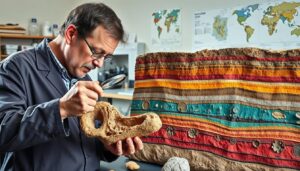
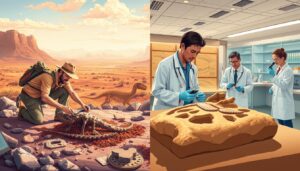
Paleontology is more than just dinosaurs. It’s about all ancient life and their fossils. It helps us learn about Earth’s history through fossils.
What Paleontologists Actually Study
Paleontologists look at many fossils. They study tiny creatures and big dinosaurs. This helps them understand old ecosystems and how life evolved.
Beyond Just Dinosaurs: The Full Scope of Paleontology
Paleontology covers many areas. It includes:
- Vertebrate paleontology: animals with backbones
- Invertebrate paleontology: animals without backbones
- Micropaleontology: tiny fossils
- Paleobotany: ancient plants
The Various Specializations Within the Field
Paleontologists can focus on different things. They might:
- Use fossils to date rocks
- Study ancient ecosystems
- Learn about old climates from fossils
The Difference Between Paleontology and Archaeology
Paleontology and archaeology both study the past. But they look at different things. Paleontology is about fossils and ancient life. Archaeology is about human stuff and cultures.
Modern Paleontological Methods and Technologies
Today, paleontology uses cool tech like digital models and DNA tests. These help them study fossils better.
Digital Reconstruction and Imaging Techniques
Digital models let paleontologists make detailed 3D pictures of fossils. This helps them study the fossils more accurately.
DNA Analysis in Paleontology
DNA tests can show how ancient and modern life are related. But, DNA breaks down over time, so it’s not always easy to get good results.
Common Misconceptions About Paleontology and Dinosaurs
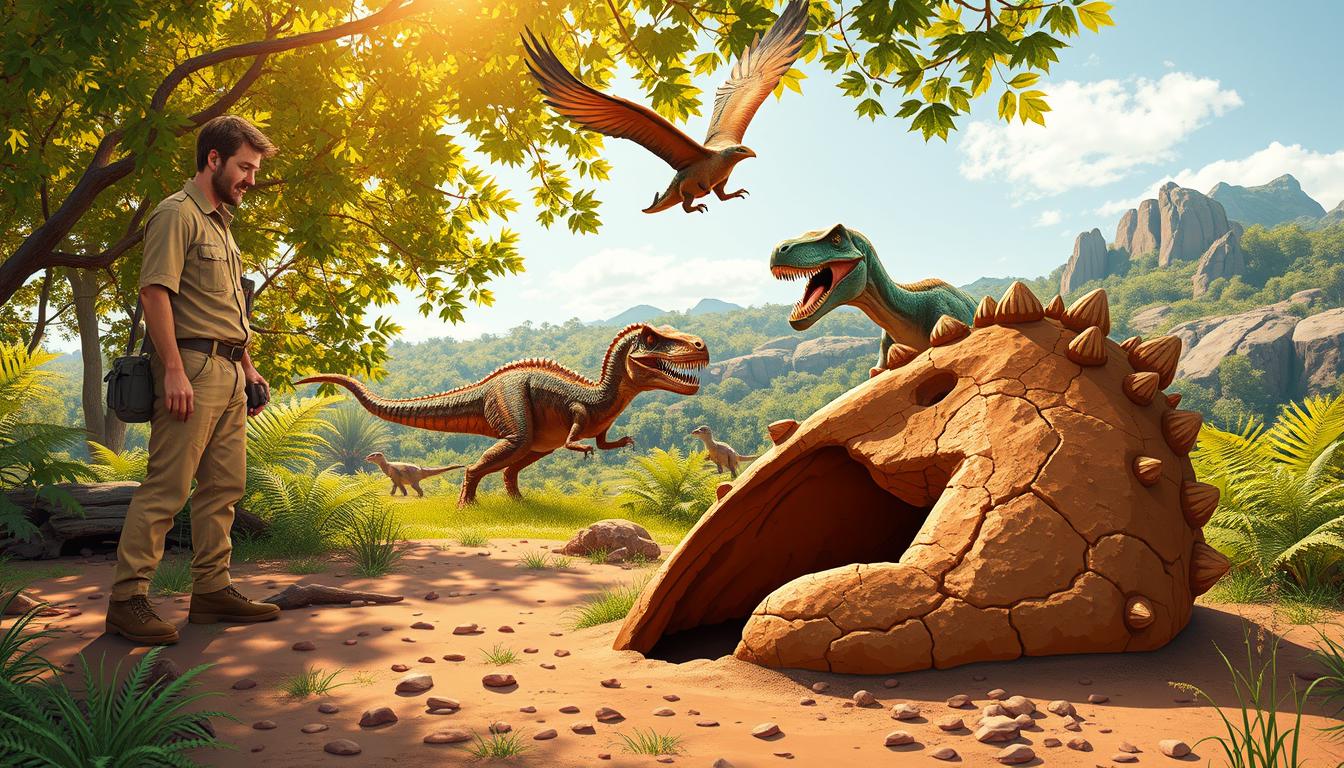
Many people think dinosaurs and humans lived together. This idea comes from movies and myths. But, it’s not true.
Dinosaurs and Humans Never Coexisted
People often believe humans and dinosaurs were alive at the same time. But, non-avian dinosaurs lived during the Mesozoic Era, which ended 65 million years ago. The first humans, Homo sapiens, showed up about 300,000 years ago.
The Vast Time Gap Between Humans and Non-Avian Dinosaurs
The time between dinosaurs and humans is huge. For more info, check out the University of Alberta’s page on dinosaurs.
Not All Dinosaurs Were Giant
Some dinosaurs were huge, but many were small. The idea that all dinosaurs were huge is wrong.
Examples of Small Dinosaur Species
For example, Compsognathus was as small as a chicken. These small dinosaurs show dinosaurs came in all sizes.
The Inaccurate Portrayal of Dinosaurs in Movies
Movies often show dinosaurs wrong, for drama or lack of knowledge.
Scientific Inaccuracies in Popular Dinosaur Films
Some movies show dinosaurs with wrong skin or actions. These mistakes make people think dinosaurs are not as they really were.
Dinosaurs Are Not Extinct (Birds as Modern Dinosaurs)
Many think dinosaurs are gone forever. But, birds are actually dinosaurs. This is proven by fossils and how birds and dinosaurs look alike.
The Evolutionary Connection Between Birds and Theropods
The link between birds and dinosaurs is clear. Both have hollow bones and three-toed feet.
Learning about paleontology helps us see the truth about dinosaurs. By looking at the facts, we can understand these amazing creatures better.
Fossil Formation and Discovery: Debunking the Myths
Learning about fossil formation and discovery is fascinating. Fossils are the remains or impressions of ancient life. Knowing how they form is key to understanding paleontology.
How Fossils Actually Form
Fossilization is a rare and complex process. It starts with an organism’s death and quick burial. This protects the remains from scavengers and oxygen.
Over time, minerals from the sediment replace the original material. This happens in the tiny spaces of the organism’s remains.
The Rare Conditions Required for Fossilization
Fossilization needs specific conditions. The organism must be buried quickly. The environment must also be right to preserve the remains.
For example, low oxygen levels and minimal scavenging are key. These conditions are often found in places like river deltas or swamps.
The Rarity of Complete Fossil Specimens
Complete fossil specimens are rare. The fossilization process is full of challenges. Many factors can damage or destroy fossils, like erosion and plate tectonics.
Why Most Fossil Discoveries Are Fragmentary
Most fossils are found in pieces. This is because of geological processes. For example, fossils can be broken by tectonic forces or eroded over time.

Misconceptions About Fossil Dating Methods
Fossil dating is vital in paleontology. There are several methods to determine a fossil’s age. One common myth is that there’s a single, foolproof method.
Understanding Radiometric Dating
Radiometric dating measures the decay of radioactive isotopes. This method is based on the decay rate of certain isotopes. It helps scientists calculate a fossil’s age.
Multiple Methods Used to Determine Fossil Age
Other methods like biostratigraphy and paleomagnetism are also used. By combining these methods, scientists can get a more accurate age for a fossil. For more on dinosaur myths, visit Dinosaur Park.
Key Takeaways:
- Fossilization is a rare and complex process.
- Complete fossil specimens are extremely rare.
- Multiple methods are used to date fossils, including radiometric dating.
Evolution and Extinction: Setting the Record Straight
It’s important to clear up common myths about evolution and extinction. These topics help us understand life on Earth and how species change over time.
The True Causes of Dinosaur Extinction
The dinosaurs’ end is a big topic of debate. Media often makes it seem simple, but it’s more complex.
Current Scientific Consensus on the K-Pg Extinction Event
Scientists agree that a big asteroid hit and volcanoes caused the dinosaurs’ extinction. This changed Earth’s climate, making it hard for many species to survive.
For more details, check out the K-Pg extinction event document here.
Misunderstandings About Evolutionary Processes
Many think evolution is about reaching a goal, but it’s not. It’s influenced by many things, like the environment and genes.
Evolution is Not Goal-Oriented or Linear
Evolution happens because of immediate challenges, not a goal. It’s shaped by natural selection and other factors.
The Concept of “Missing Links”
The term “missing links” suggests fossils that connect different life forms. But, it’s misleading. Evolution is more like a tree with many branches, not a straight line.
The Concept of “Living Fossils”
“Living fossils” are old species that look almost unchanged today. But, this term is misleading. It makes us think they haven’t evolved at all.
Why Terms Like “Primitive” and “Advanced” Are Misleading
Words like “primitive” and “advanced” are used to describe species. But, they’re not accurate. They suggest a linear progression, which evolution doesn’t support.
Key Points to Remember:
- Evolution is a complex, non-linear process.
- The K-Pg extinction event was caused by multiple factors.
- Terms like “primitive” and “advanced” are misleading in the context of evolution.
Conclusion
Paleontology is often filled with myths and misconceptions. We’ve looked at how to countering common misconceptions of evolution in this field. It’s key to clear up these Debunked Paleontology Beliefs for a better understanding.
Knowing the difference between Paleontology Facts and Myths is vital. Many myths surround dinosaurs, fossil formation, and evolution. By looking to credible sources, we can learn the truth about paleontology.
In conclusion, separating fact from fiction in paleontology boosts our knowledge. It also helps us appreciate the science more. By embracing facts and debunking myths, we can explore our planet’s history in a more detailed way.
FAQ
What is paleontology, and is it just about dinosaurs?
Paleontology is the study of fossils and ancient life. It’s not just about dinosaurs. It also looks at ancient plants, mammals, and tiny life forms.
How do paleontologists date fossils?
They use methods like radiometric dating and biostratigraphy. Radiometric dating tracks radioactive isotopes. Biostratigraphy links fossils to time periods.
Did dinosaurs and humans coexist?
No, dinosaurs and humans didn’t live together. Dinosaurs went extinct 65 million years ago. The first humans appeared 300,000 years ago.
Are all dinosaurs giant?
No, dinosaurs weren’t all huge. Some, like sauropods, were massive. Others, like Compsognathus, were as small as a chicken.
What is the connection between dinosaurs and birds?
Birds are actually dinosaurs. The term “dinosaur” includes both extinct and living species. Many fossils show birds evolved from theropod dinosaurs.
How do fossils form?
Fossils form through fossilization. This process replaces organic material with minerals. It creates a fossilized copy of the organism.
Why are complete fossil specimens rare?
Complete fossils are rare because fossilization needs specific conditions. Many fossils are lost or damaged over time.
What caused the extinction of dinosaurs?
Dinosaurs likely died out due to an asteroid impact and volcanic activity. These events changed the Earth’s climate dramatically.
What are “living fossils”?
“Living fossils” are organisms that look much like their ancient ancestors. But, this term is misleading. It suggests they haven’t evolved at all.
How has modern technology impacted paleontological research?
Modern tech like CT scans and 3D printing has helped a lot. It lets scientists study fossils in new ways.
What is the difference between paleontology and archaeology?
Paleontology studies fossils and ancient life. Archaeology looks at human cultures and artifacts. Both study the past but in different ways.

Subscribe to Our Newsletter