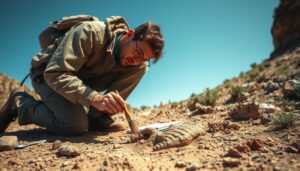
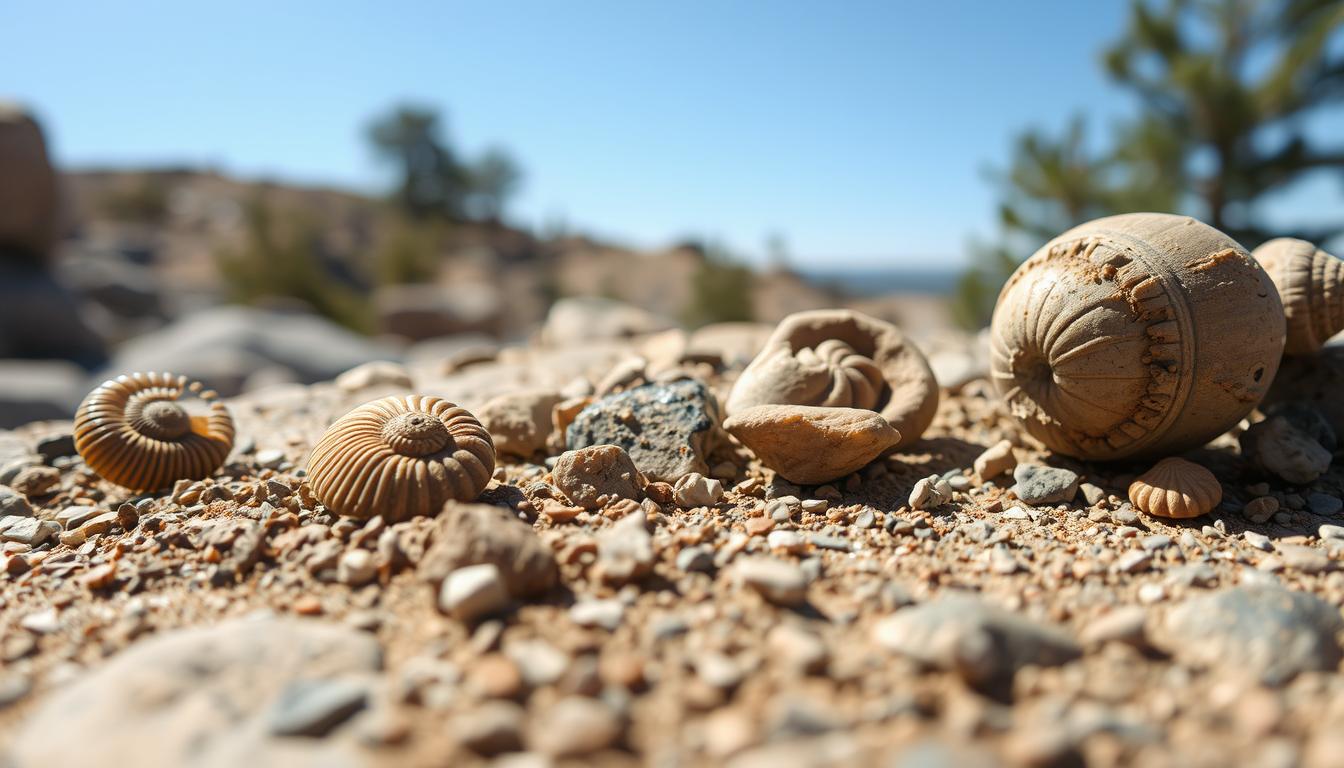
Rockhounding is a fun hobby that lets people search for fossils and rocks. It’s exciting to find a fossil and can start a lifelong passion. This hobby makes people want to learn more about nature.
When rockhounds go out, they often find ancient remains in the earth. Knowing how to identify these fossils is key. It helps collectors understand the importance of what they find.
Key Takeaways
- Rockhounding is a fun and rewarding hobby for people of all ages.
- Fossil identification is a key part of rockhounding.
- Discovering fossils can be a lifelong passion.
- Understanding the significance of fossils makes rockhounding better.
- Rockhounds can explore and learn more about nature through their finds.
The Thrill of Discovering Ancient Life
Fossil hunting is more than a hobby. It’s a way to connect with the Earth’s ancient past. For rockhounds, finding hidden history is the biggest thrill.
Why Fossil Hunting Appeals to Rockhounds
Fossil hunting mixes adventure, science, and collecting. Rockhounds love the challenge of finding fossils. They also enjoy learning about ancient life.
Understanding Fossilization Processes
Fossilization is a complex process. It replaces original material with minerals. This keeps the shape and details of ancient life, telling us about Earth’s history.
Geological Time Periods for Beginners
Knowing geological time periods is key for rockhounds. It helps them understand and date their finds. This knowledge puts their discoveries into Earth’s vast history.
Common Fossils Found While Rockhounding
Rockhounding fans often find many fossils. These fossils show us what life was like long ago. They are also interesting to collect and tell us about Earth’s past.
Marine Invertebrate Fossils
Rockhounds often find marine invertebrate fossils. These fossils tell us about the sea long ago.
Trilobites: Ancient Arthropods
Trilobites are famous fossils. They lived from the Cambrian to Permian periods. Their shapes and forms make them popular among collectors.
Ammonites and Nautiloids
Ammonites and nautiloids are common. They are spiral fossils from ancient sea animals, like squid and octopuses.
Brachiopods and Bivalves
Brachiopods and bivalves are also found. They look similar but are different. You can tell them apart with a closer look.
Plant Fossils
Plant fossils show us ancient plants. They can be leaves or even petrified wood.
Fern and Leaf Impressions
Fern and leaf impressions are delicate. They show the details of old plants. You can find them in shale and sandstone.
Petrified Wood Specimens
Petrified wood is loved by rockhounds. It shows how minerals replace wood, making a fossil.
Vertebrate Fossils
Vertebrate fossils, like fish and dinosaurs, are sought after. They help us understand how life evolved.
Fish and Marine Reptile Remains
Fish and marine reptile fossils are found in rocks. They can be very detailed.
Mammal and Dinosaur Fragments
Finding mammal and dinosaur fossils is exciting. Even small pieces can tell us a lot about these creatures.
Prime Fossil Collecting Sites Across America
The U.S. is full of amazing fossil sites. From the east to the west, each place tells a story of the past. Rockhounds can find ancient life forms in these spots.
Fossil-Rich Formations in the Eastern States
The east is famous for its fossils. The Appalachian Mountains and the Ohio River Valley have many fossils. You can find trilobites and brachiopods there. For more info, check out this guide on mineral locations.
Western Treasure Troves for Fossil Hunters
The west is full of fossils for hunters. Utah and Wyoming have dinosaur fossils and more. The Morrison Formation is a key spot for Jurassic-era fossils.
Accessible Public Sites for Beginner Rockhounds
Public sites are great for beginners. Hungry Hollow in Ontario, Canada, and Kettle Point in Ontario are good places to start. In the U.S., Dinosaur National Monument is a special spot for collectors.
| Location | Fossil Types | Accessibility |
|---|---|---|
| Appalachian Mountains | Trilobites, Brachiopods | Moderate |
| Morrison Formation, Utah | Dinosaur Fossils | Easy to Moderate |
| Dinosaur National Monument | Dinosaur Fossils, Plant Fossils | Easy |
Essential Tools and Techniques for Successful Fossil Hunting
Fossil hunting needs the right tools and techniques. Rockhounds use special equipment to find fossils. The right tools can greatly help in finding fossils.
Basic Field Equipment Every Collector Needs
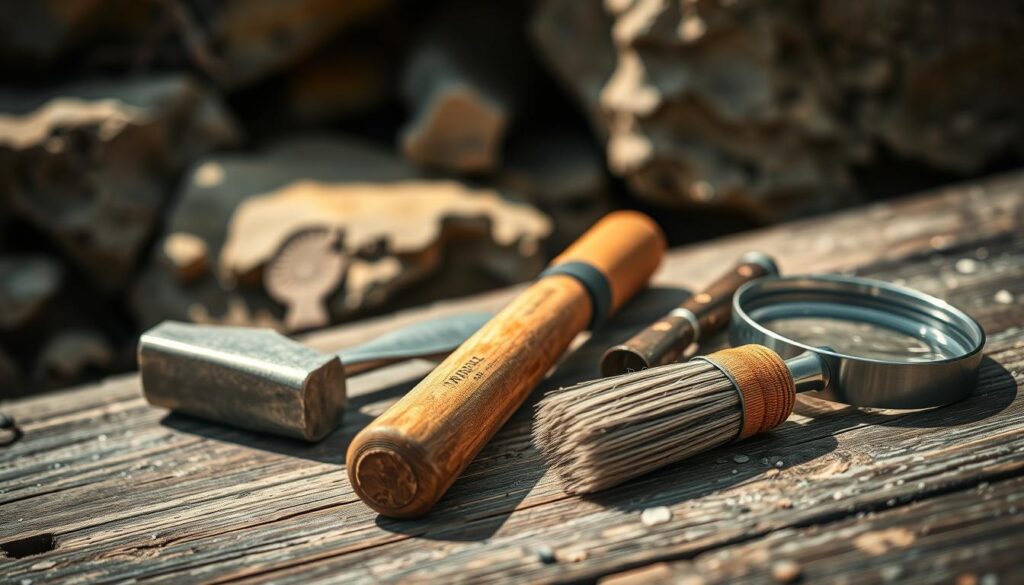
Every fossil hunter needs basic tools. These include a geologist’s hammer, hand lens, and brushes. They help in getting fossils out and checking them in the field.
Specialized Extraction Tools
For tricky fossil extractions, special tools are needed. Chisels, chiseling hammers, and rock saws are very useful. They help in carefully taking fossils out of the rock.
Safety Gear and Field Preparation
Safety is key in fossil hunting. You need gloves, safety glasses, and dust masks. Also, knowing the terrain and weather is important.
| Tool | Description | Use |
|---|---|---|
| Geologist’s Hammer | A hammer used for breaking rocks | Extracting fossils from rock |
| Hand Lens | A magnifying glass for examining small details | Inspecting fossils in the field |
| Brushes | Soft-bristled brushes for cleaning fossils | Cleaning dirt and debris from fossils |
Fossil Identification Guide for Rockhounds
## Fossil Identification Guide for Rockhounds
Finding fossils is a mix of looking closely, doing research, and knowing a lot. Rockhounds can learn a lot by knowing what makes different fossils unique.
### Key Features for Identifying Common Fossil Types
Looking at the shape, size, and feel of a fossil is key. For example, sea creature fossils often have special shell designs. For more info on fossils, check out ourglossary.
### Using Reference Materials and Digital Resources
Field guides and online sites are very helpful for finding fossils. They give detailed info and pictures of many fossils. Online forums and fossil databases are also great tools.
One big challenge is not confusing fossils with each other or with modern things. Knowing these traps can help rockhounds get their identifications right.
### When to Seek Expert Opinions
Even experienced rockhounds might need help with some fossils. If a fossil is rare or hard to identify, talking to a paleontologist or museum expert is a good idea.
By following these tips and using the right tools, rockhounds can get better at finding fossils. They can also learn about the ancient world.
Proper Extraction and Preservation Methods
It’s key to use the right ways to get fossils without harming them. This is true for both new and experienced collectors. Knowing how to carefully take out and keep fossils is very important.
Field Extraction Techniques to Prevent Damage
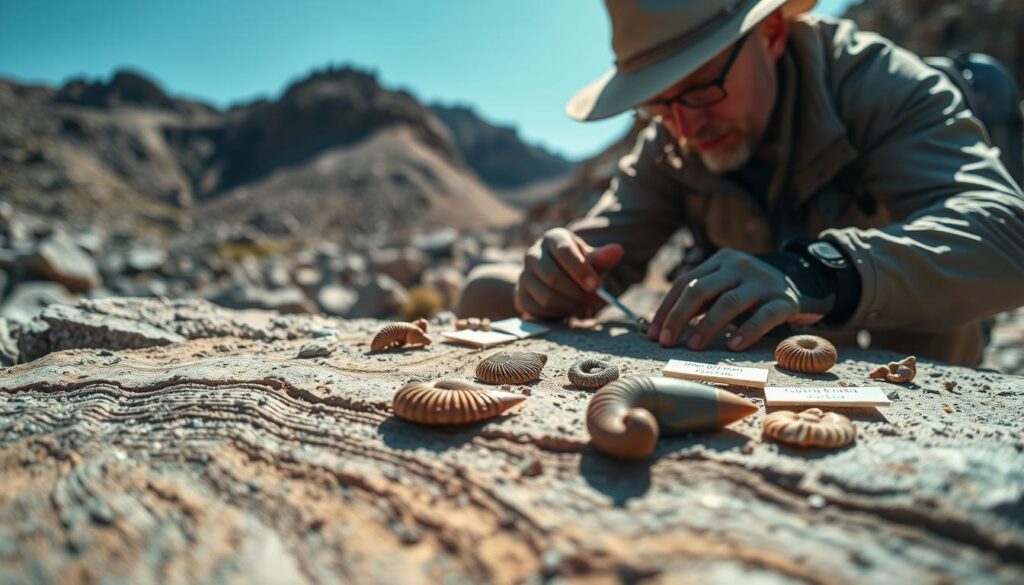
When you’re in the field, picking the right tools is important. Use chisels, brushes, and other special tools to carefully remove rock and soil. This helps avoid damaging the fossils.
Cleaning and Preparing Different Fossil Types
Each fossil type needs its own cleaning and getting-ready method. For example, fragile fossils might need special treatment before cleaning. But, stronger fossils can be cleaned with water or gentle chemicals.
| Fossil Type | Cleaning Method | Storage Recommendation |
|---|---|---|
| Delicate Fossils | Consolidant stabilization | Climate-controlled environment |
| Robust Fossils | Mild chemical cleaning | Sealed containers with padding |
Storage and Display Solutions for Your Collection
After cleaning, it’s important to store and show your fossils right. Use sealed boxes, glass cases, and places that keep a steady temperature. This helps keep your fossils safe from harm and damage.
Legal and Ethical Guidelines for Fossil Collectors
Fossil collecting has rules to follow. It’s important for rockhounds to know these to enjoy their hobby. They must follow laws to make sure collecting is safe and doesn’t harm the environment.
Understanding Public vs. Private Land Regulations
Fossil hunting can happen on public or private land. But, the rules for each place are different. On public lands, like national forests, there are specific rules to follow.
The USDA Forest Service has guidelines for collecting fossils on national forest lands.
| Land Type | Regulations | Permits Required |
|---|---|---|
| Public Lands | Varies by agency (e.g., Forest Service, BLM) | Often required for significant collections |
| Private Lands | Owner’s permission required | No permits, but permission is key |
Federal and State Protection Laws
Some fossils and areas are protected by laws. For example, vertebrate fossils on federal lands are protected by the Antiquities Act. It’s important for collectors to know these laws to avoid trouble.
Responsible Collecting Practices
Collecting fossils ethically means more than just following the law. It’s about respecting the land, other collectors, and the fossils. This includes not damaging the site and not selling fossils without proof.
By following these guidelines, fossil collectors can help keep our planet’s history safe for the future.
[link-whisper-related-posts]Conclusion: Connecting with Earth’s Ancient History
Fossil collecting lets us connect with Earth’s ancient past. It helps us understand and value our natural world. We learn about the Earth’s rich history through fossils.
Popular fossils tell us about old environments and life. They show how life on Earth has changed over time. Rockhounds who find these fossils help us learn more about our planet’s history.
Finding ancient life forms is exciting. It shows how important it is to collect fossils responsibly. This way, we make sure Earth’s history is kept safe for future generations.
FAQ
What is rockhounding, and how do I get started?
Rockhounding is a hobby where you search for fossils and rocks. You’ll need basic tools like a rock hammer, hand lens, and gloves. Start by finding local fossil-rich areas and join clubs or online groups to learn more.
What are the most common fossils found while rockhounding?
You’ll often find marine invertebrates like trilobites and brachiopods. Plant fossils, such as petrified wood and ferns, are also common. In some places, you might find dinosaur bones and teeth.
How do I identify fossils I’ve found?
Look for shape, size, and texture to identify fossils. Use field guides and online databases for help. Talking to experts or joining clubs can also be very helpful.
What are some prime fossil collecting sites in the United States?
The United States has many great fossil sites. Look for them in the Appalachian Mountains and the Badlands in Montana. National parks and monuments are also good places to start.
What are the legal and ethical guidelines for fossil collectors?
Fossil collectors must know the laws about public and private land. Always follow federal and state laws. Practice responsible collecting by documenting finds and avoiding damage.
How do I properly extract and preserve fossils?
Use special tools to extract fossils carefully. Clean and prepare them well. Store them in a dry, safe place to keep them intact.
Can I sell the fossils I find?
Selling fossils has its own rules, depending on where you are and what you find. Always check the laws before selling any fossils.
How can I learn more about fossil hunting and identification?
Learn by joining clubs, attending workshops, and using online resources. Field guides and databases are great for learning more.

Subscribe to Our Newsletter