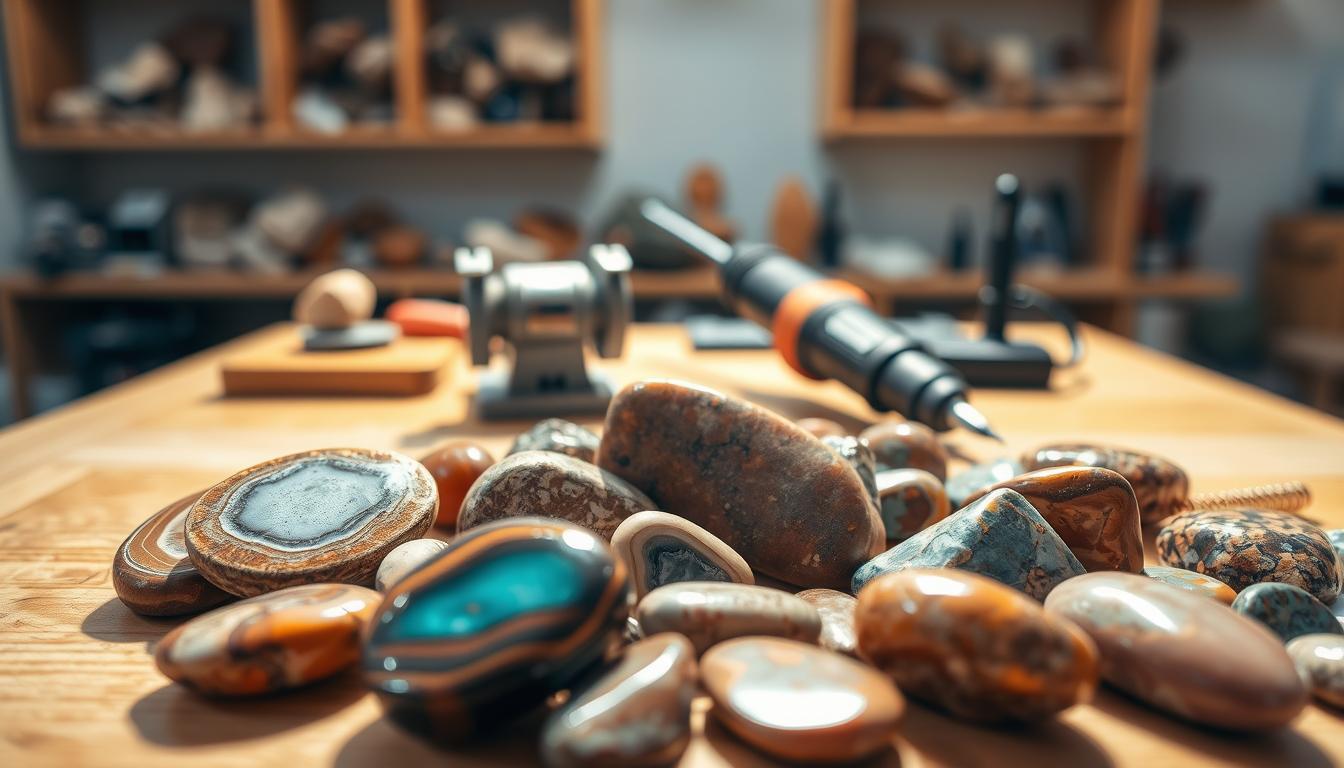
Starting your lapidary journey is both thrilling and challenging. Choosing the right rough is key. A good piece of agate or jasper can make your work much easier.
It’s important for beginners to know about different rocks. This knowledge helps predict how they’ll turn out. For more info, check out this guide on lapidary materials.
Key Takeaways
- Choose rocks with tight grain and minimal fractures for successful lapidary projects.
- Understand the characteristics of different rocks to predict their behavior during the lapidary process.
- Refer to comprehensive guides to enhance your knowledge of lapidary raw materials.
- Selecting the right rough is key for the best results in lapidary.
- Beginners should start with materials like agate, jasper, and quartz.
Getting Started with Lapidary Art
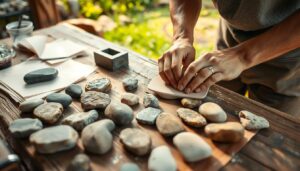
Lapidary art is a fun hobby that lets you cut, shape, and polish stones. It’s perfect for beginners who love to learn and create. Rock tumbling is a great way to start, making rough rocks into shiny stones.
What is Lapidary and Why It’s Rewarding
Lapidary is the art of working with stones, gems, and minerals. It’s a hobby that lets you make beautiful jewelry or decorations. Turning a rough stone into a polished gem is both calming and rewarding.
With lapidary, you can show off your creativity. You get to reveal the hidden beauty of stones.
Basic Skills and Techniques for Beginners
To start with lapidary, you need to learn some basics. First, learn how to safely handle and cut stones. This means using tools like diamond-coated saws and grinding wheels.
You’ll also learn to polish stones with finer abrasives. For beginner lapidary classes, remember to be patient and pay attention to details.
Safety Considerations for New Lapidaries
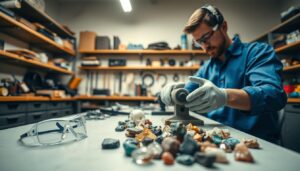
When working with lapidary tools, safety is key. Always wear safety glasses, gloves, and a dust mask. Make sure your area is well-ventilated and keep loose clothes or long hair tied back.
When using power tools, hold them firmly and stay focused. By following these safety tips, you can have a safe and fun lapidary experience.
Best Rocks for Beginner Lapidary Projects
Starting lapidary means picking the right rocks. This guide will show you the best rocks for beginners. Lapidary projects are rewarding, and the right rocks make it fun and successful.
Soft Stones: Soapstone, Alabaster, and Talc
Soft stones are great for beginners because they’re easy to work with. Soapstone is a favorite because it’s soft and easy to handle. Alabaster is also soft and beautiful. Talc is perfect for detailed carvings.
Medium-Hardness Stones: Agate, Jasper, and Jade
Agate, jasper, and jade are good for beginners who want a bit of challenge. Agate and jasper have bright colors and patterns. Jade is harder but very beautiful and durable.
Colorful Options: Malachite, Rhodonite, and Turquoise
For colorful projects, try malachite, rhodonite, or turquoise. Malachite has cool patterns, rhodonite is pink to red, and turquoise is blue-green. They’re beautiful and easy for beginners to work with.
Where to Source Quality Beginner Stones
Finding the right stones is key. You can check local rock shops, gem and mineral shows, or buy online from trusted sellers. Make sure to buy from sellers who give accurate info and have good reviews.
| Stone Type | Hardness | Characteristics |
|---|---|---|
| Soapstone | Soft | Easy to carve, smooth texture |
| Agate | Medium | Vibrant colors, banded patterns |
| Malachite | Medium | Banded patterns, green color |
Rock Tumbling for Beginners
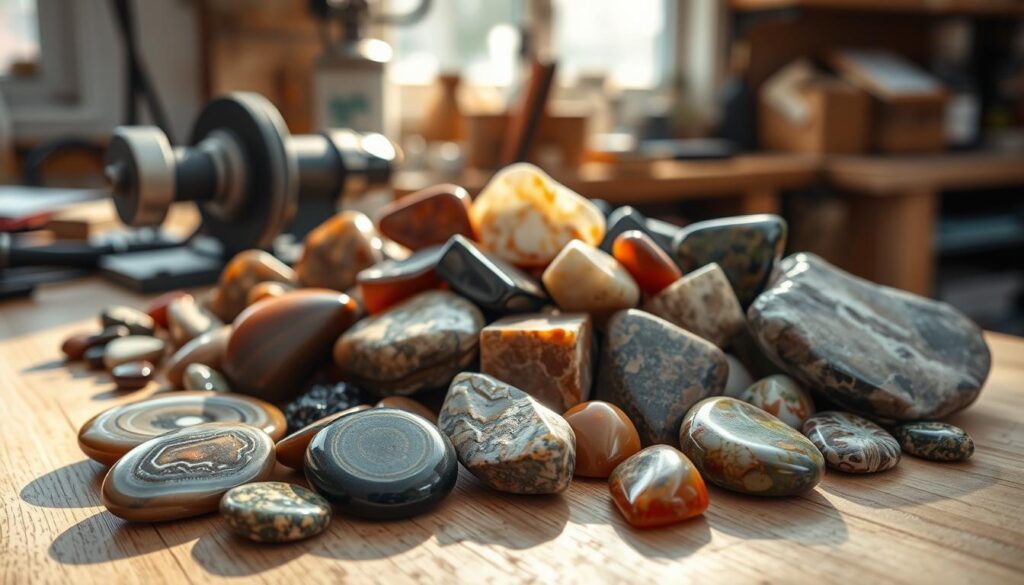
Rock tumbling is a fun hobby. It turns rough stones into shiny gems. This process shows the beauty inside the stones and is very rewarding.
Perfect Tumbling Stones: Quartz, Agate, and Jasper
Choosing the right stones is key for beginners. Quartz, agate, and jasper are great. They are hard and look beautiful when polished.
- Quartz is common and perfect for tumbling.
- Agate has cool patterns that look amazing when polished.
- Jasper is known for its bright colors, making it a favorite for tumbling.
Essential Tumbling Equipment and Grit Sequence
To start, you need some basic equipment. The most important thing is a rock tumbler. There are many sizes and types. You also need a grit sequence for polishing.
- Coarse grit (80-100) for the first grind.
- Medium grit (220-320) for smoothing.
- Fine grit (400-600) for more polishing.
- Pre-polish and polish compounds for the last steps.
Step-by-Step Tumbling Process for Beginners
The tumbling process has several stages. Each stage is important for a shiny stone.
- Stage 1: Coarse grind to shape the stone.
- Stage 2: Medium/fine grind to smooth the surface.
- Stage 3: Pre-polish to get ready for the final polish.
- Stage 4: Final polish for a shiny finish.
By following these steps and using the right tools and stones, beginners can get great results.
Cabochon Cutting and Polishing Basics
The art of cabochon cutting and polishing is a fun hobby. It lets you make beautiful, shiny stones. These stones are great for jewelry and decorations.
For beginners, picking the right stones is key. Ideal stones for cabochon cutting are strong and look good.
Ideal Stones for Your First Cabochons
Start with stones like agate, jasper, and quartz. They are pretty and easy to work with.
- Agate: Known for its vibrant colors and patterns.
- Jasper: Offers a wide range of colors and is relatively hard, making it durable.
- Quartz: A common mineral that can be found in many varieties, including amethyst and citrine.
Beginner-Friendly Cabbing Equipment
You’ll need basic tools to start. A cabbing machine or lapidary saw is key for cutting. You’ll also need different grits for sanding and polishing.
| Equipment | Purpose |
|---|---|
| Cabbing Machine | Used for grinding and polishing cabochons. |
| Lapidary Saw | Essential for cutting stones into desired shapes. |
| Sanding and Polishing Grits | Used in sequence to smooth and polish the stone surface. |
Simple Cabochon Projects from Start to Finish
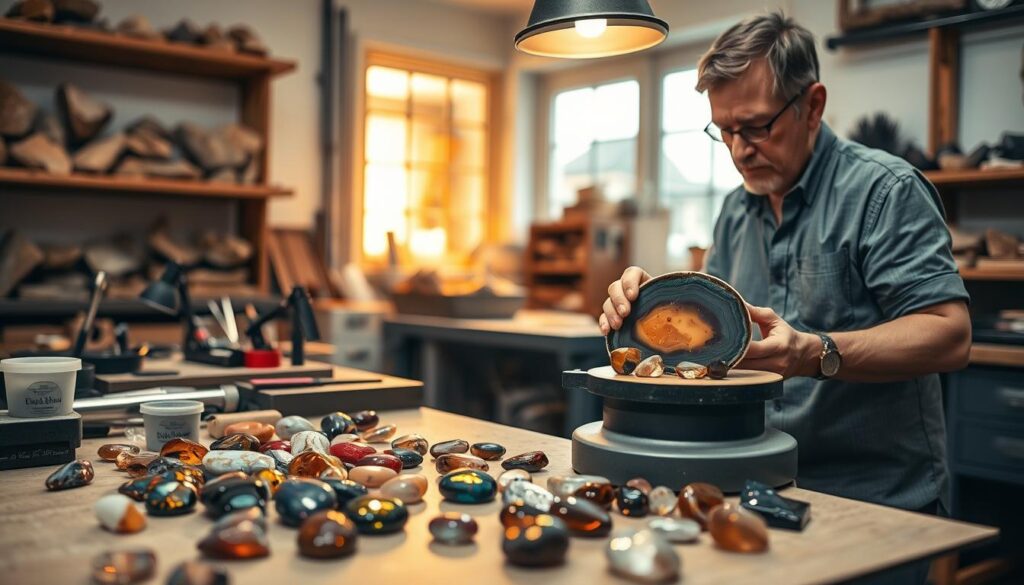
Finishing a cabochon project is rewarding. Start by picking a stone. Then, cut it with a lapidary saw. Use a cabbing machine to shape it into a cabochon.
After that, sand and polish it with finer grits. This way, you’ll get a shiny finish. By trying different stones, you’ll get better at making beautiful cabochons.
[link-whisper-related-posts]Conclusion
Starting a lapidary journey can be very rewarding. It’s great when you pick the best rocks for beginners. You can make beautiful pieces that show your creativity.
Learning the basics of lapidary art is key. Choosing the right rough is also important. This helps you create stunning pieces.
Beginner rock polishing techniques are vital for great results. Learning rock tumbling and cabochon cutting opens up new possibilities. Always follow safety rules and use the right tools for a fun experience.
With time and practice, you’ll make amazing pieces. Start your lapidary journey today. Discover the joy of working with beautiful rocks.
FAQ
What is lapidary art, and why is it a rewarding hobby?
Lapidary art is about cutting, shaping, and polishing stones. It shows their natural beauty. It’s rewarding because you can make unique pieces and improve your skills.
What are the best rocks for beginner lapidary projects?
Beginners should start with soft stones like soapstone and alabaster. Medium-hardness stones like agate and jade are also good. They are easy to work with and look great.
What is rock tumbling, and how do I get started?
Rock tumbling polishes stones to a high shine using a machine. You’ll need a rock tumbler, grit, and stones like quartz and agate to start.
What is cabochon cutting, and what equipment do I need?
Cabochon cutting shapes stones into smooth, rounded forms. You’ll need a lapidary saw, a cabochon cutting machine, or a grinder. Also, sandpaper and polishing wheels are necessary.
How do I choose the right stones for my lapidary projects?
Choose stones based on hardness, color, and pattern. Start with softer stones and move to harder ones as you get better.
What safety precautions should I take when working with lapidary equipment?
Wear safety glasses, gloves, and a dust mask when using lapidary equipment. Keep your workspace well-ventilated and follow the machine’s instructions.
Can I do lapidary projects at home, or do I need a dedicated workshop?
You can start at home with basic tools. But, as you get better, a dedicated workshop with good ventilation and storage might be needed.
How long does it take to become proficient in lapidary art?
Becoming proficient in lapidary art takes time. It depends on how much you practice and the projects you do. With regular practice, you can get better in a few months to a year.

Subscribe to Our Newsletter